Building Blocks
Subcategorias de "Building Blocks"
- Ácidos Borónicos e Derivados de Ácido Borónico(5.780 produtos)
- Building Blocks Quirais(1.241 produtos)
- Building Blocks Hidrocarbonetos(6.100 produtos)
- Building Blocks orgânicos(61.017 produtos)
Foram encontrados 205265 produtos de "Building Blocks"
{3-Fluoro-4-[(trifluoromethyl)sulfanyl]phenyl}hydrazine
CAS:Versatile small molecule scaffoldFórmula:C7H6F4N2SPureza:Min. 95%Peso molecular:226.2 g/mol2,8-Diazaspiro[4.5]decane
CAS:2,8-Diazaspiro[4.5]decane is a competitive antagonist of the receptor α-adrenergic. It has been shown to significantly activate ATP-binding cassette transporter proteins in bone cells and increase bone mass. 2,8-Diazaspiro[4.5]decane is also an enantiomer that can be used for the treatment of cancer, as well as other diseases such as depression and anxiety. The pharmacokinetic properties of this drug have been studied in rats and mice with significant concentration levels achieved in plasma after 1 hour. The half-life of 2,8-Diazaspiro[4.5]decane is 3 hours and it is metabolized by hydrolysis by carboxylesterase or hydroxylase enzymes to form an inactive compound.
Fórmula:C8H16N2Pureza:Min. 95%Peso molecular:140.23 g/mol4-Fluoro-6-methoxypyridin-3-amine
CAS:Versatile small molecule scaffold
Fórmula:C6H7FN2OPureza:Min. 95%Peso molecular:142.13 g/molRef: 3D-FXC93115
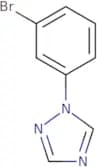
Produto descontinuado1-(3-Bromophenyl)-1H-1,2,4-triazole
CAS:Versatile small molecule scaffold
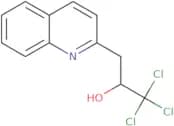
Fórmula:C8H6BrN3Pureza:Min. 95%Peso molecular:224.06 g/mol1,1,1-Trichloro-3-(quinolin-2-yl)propan-2-ol
CAS:Versatile small molecule scaffoldFórmula:C12H10Cl3NOPureza:Min. 95%Peso molecular:290.6 g/mol1-[(3-Amino-1H-pyrazol-1-yl)methyl]-1H-pyrazol-3-amine
CAS:Versatile small molecule scaffold
Fórmula:C7H10N6Pureza:Min. 95%Peso molecular:178.2 g/mol4-[Bis(2-chloroethyl)amino]benzonitrile
CAS:Versatile small molecule scaffold
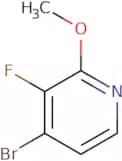
Fórmula:C11H12Cl2N2Pureza:Min. 95%Peso molecular:243.13 g/mol4-Bromo-3-fluoro-2-methoxypyridine
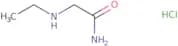
CAS:Versatile small molecule scaffoldFórmula:C6H5BrFNOPureza:Min. 95%Peso molecular:206.01 g/mol2-(Ethylamino)acetamide hydrochloride
CAS:Versatile small molecule scaffold
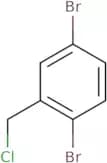
Fórmula:C4H11ClN2OPureza:Min. 95%Peso molecular:138.59 g/mol1,4-Dibromo-2-(chloromethyl)benzene
CAS:1,4-Dibromo-2-(chloromethyl)benzene is a synthetic compound that has been used as an anti-hepatitis C virus (HCV) agent. It is effective against HCV genotype 1 and 2, but not 3. It has been shown to be active in inhibiting the replication of HCV RNA by binding to the viral enzyme RNA polymerase. This drug has also been found to inhibit the growth of Mycobacterium tuberculosis and is being investigated for use in treating tuberculosis. The drug is prepared by reacting bromobenzene with sodium hydroxide and chloromethyl chloride in aqueous solution at 0°C. Dibromoethane reacts with paraformaldehyde and cuprous cyanide to form 1,4-dibromo-2-(chloromethyl)benzene, which can then be treated with hydrochloric acid to form the desired product.
Fórmula:C7H5Br2ClPureza:Min. 95%Peso molecular:284.37 g/mol4-Azatricyclo[5.2.2.0,2,6]undec-8-ene-3,5-dione
CAS:4-Azatricyclo[5.2.2.0,2,6]undec-8-ene-3,5-dione (ATU) is a chemical compound that has been shown to have antimicrobial properties. It inhibits the growth of gram-negative and gram-positive bacteria and shows significant inhibition of MT4 cells in culture. ATU also demonstrated antifungal properties against Candida albicans and Aspergillus niger in vitro. ATU has been found to be cytotoxic to cells in culture, but not to mammals. The mechanism of action is not known, but it may be due to binding with DNA or RNA.>>END>>Fórmula:C10H11NO2Pureza:Min. 95%Peso molecular:177.2 g/mol2-(5-Bromothiophen-2-yl)acetonitrile
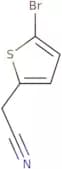
CAS:2-(5-Bromothiophen-2-yl)acetonitrile is an acceptor in organic solar cells and devices. It has a molecular weight of 122.1 g/mol and a melting point of -34 °C, with a solubility of 0.0013g/mL in water. The UV absorption spectrum shows that it absorbs at wavelengths between 270-300 nm. 2-(5-Bromothiophen-2-yl)acetonitrile can be used as an electron donor for semiconducting heterojunction photovoltaic devices and has been shown to have good transport properties. This molecule also has molecular orbitals that are lower than those found in the ground state, which may be due to the presence of hydrogen bonding groups on the phenyl rings or the presence of electron donating groups such as nitro (-NO2) or cyano (-CN).
Fórmula:C6H4NSBrPureza:Min. 95%Peso molecular:202.07 g/mol3-(4-Iodo-5-methyl-1H-pyrazol-1-yl)propanoic acid
CAS:Versatile small molecule scaffold
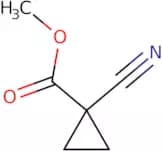
Fórmula:C7H9IN2O2Pureza:Min. 95%Peso molecular:280.06 g/molMethyl 1-cyanocyclopropanecarboxylate
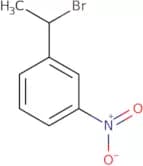
CAS:Versatile small molecule scaffoldFórmula:C6H7NO2Pureza:Min. 95%Peso molecular:125.13 g/mol1-(1-Bromoethyl)-3-nitrobenzene
CAS:Versatile small molecule scaffold
Fórmula:C8H8BrNO2Pureza:Min. 95%Peso molecular:230.06 g/mol1-(3-Bromopropyl)-3-methoxybenzene
CAS:Versatile small molecule scaffold
Fórmula:C10H13OBrPureza:Min. 95%Peso molecular:229.11 g/mol4-Iodobutanenitrile
CAS:4-Iodobutanenitrile is a synthetic compound that is used in the preparation of cyclobutanones. It can be prepared by the reaction of bromoacetic acid chloride with lysine. This procedure yields the product in high yield and purity and without significant amounts of undesired side products, such as 4-bromobutanenitrile and 2-chlorobenzene. The 4-iodobutanenitrile is synthesized using an asymmetric synthesis which includes hydrochloric acid as a reagent.
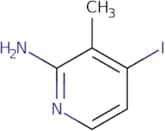
Fórmula:C4H6INPureza:Min. 95%Peso molecular:195 g/mol4-Iodo-3-methylpyridin-2-amine
CAS:Versatile small molecule scaffold
Fórmula:C6H7IN2Pureza:Min. 95%Peso molecular:234.04 g/mol2,7-Diamino-4-(3,4-dimethoxyphenyl)-4H-chromene-3-carbonitrile
CAS:Versatile small molecule scaffold
Fórmula:C18H17N3O3Pureza:Min. 95%Peso molecular:323.3 g/mol5-Iodopentanenitrile
CAS:5-Iodopentanenitrile is a reactive chemical that can be used to produce organic compounds. This compound is an intermediate in the production of 5-iodo-1,3-dihydrobenzofuran and 5-iodoquinoline. It is also used for the production of pharmaceutical intermediates such as fluoroquinolones and alkylating agents. The mechanism of this chemical's reactivity has been studied extensively, which led to the discovery that it reacts by nucleophilic addition at electron deficient carbonyls groups. These reactions are known as Grignard reactions or halolactonizations. This chemical has also been shown to be reactive with biomolecules, such as DNA and RNA, and can bind to their sugar residues.
Fórmula:C5H8INPureza:Min. 95%Peso molecular:209.03 g/mol
![{3-Fluoro-4-[(trifluoromethyl)sulfanyl]phenyl}hydrazine](/_next/image/?url=https%3A%2Fstatic.cymitquimica.com%2Fproducts%2F3D%2Fthumb-webp%2FFXC90197.webp&w=3840&q=75)

![2,8-Diazaspiro[4.5]decane](/_next/image/?url=https%3A%2Fstatic.cymitquimica.com%2Fproducts%2F3D%2Fthumb-webp%2FAAA17667.webp&w=3840&q=75)

![1-[(3-Amino-1H-pyrazol-1-yl)methyl]-1H-pyrazol-3-amine](/_next/image/?url=https%3A%2Fstatic.cymitquimica.com%2Fproducts%2F3D%2Fthumb-webp%2FLDA11167.webp&w=3840&q=75)
![4-[Bis(2-chloroethyl)amino]benzonitrile](/_next/image/?url=https%3A%2Fstatic.cymitquimica.com%2Fproducts%2F3D%2Fthumb-webp%2FWCA60135.webp&w=3840&q=75)
![4-Azatricyclo[5.2.2.0,2,6]undec-8-ene-3,5-dione](/_next/image/?url=https%3A%2Fstatic.cymitquimica.com%2Fproducts%2F3D%2Fthumb-webp%2FGAA71529.webp&w=3840&q=75)