


Building Blocks
Subcategorias de "Building Blocks"
- Ácidos Borónicos e Derivados de Ácido Borónico(5.783 produtos)
- Building Blocks Quirais(1.242 produtos)
- Building Blocks Hidrocarbonetos(6.105 produtos)
- Building Blocks orgânicos(61.055 produtos)
Foram encontrados 205383 produtos de "Building Blocks"
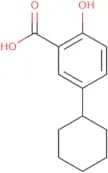
5-Cyclohexyl-2-hydroxybenzoic acid
CAS:5-Cyclohexyl-2-hydroxybenzoic acid is a compound that belongs to the group of phenolic compounds. It has been clinically used for the treatment of systemic hypertension and is used in the manufacture of dyes, resins, flavors and fragrances. 5-Cyclohexyl-2-hydroxybenzoic acid can be found in light exposure, metal cations and environmental pollution. The use of this compound may lead to depression, which may be due to its effects on the vessel diameter. This drug also has an effect on blood pressure by stimulating vasodilatation through an endothelium-dependent mechanism.
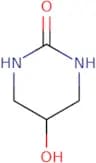
Fórmula:C13H16O3Pureza:Min. 95%Peso molecular:220.26 g/mol5-Hydroxy-1,3-diazinan-2-one
CAS:Versatile small molecule scaffold
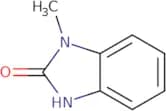
Fórmula:C4H8N2O2Pureza:Min. 95%Peso molecular:116.12 g/mol1-Methyl-2-benzimidazolinone
CAS:1-Methyl-2-benzimidazolinone is a synthetic compound that has been shown to be cytotoxic to cancer cells. It binds to metal ions and forms reactive intermediates, which are able to react with nucleophiles in cellular macromolecules. The reaction mechanism of 1-methyl-2-benzimidazolinone is similar to the reaction of picolinic acid with metal hydroxides. The heteroarylations of this compound have also been studied using chemical ligation, and it has been found that the d4 receptor may play a role in its cytotoxicity.
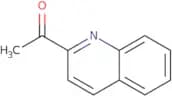
Fórmula:C8H8N2OPureza:Min. 95%Peso molecular:148.16 g/mol1-(Quinolin-2-yl)ethanone
CAS:1-(Quinolin-2-yl)ethanone is an inhibitor of proteolytic enzymes. It is a triazolopyrimidine that binds to the active site of proteases, thereby inhibiting their activity. 1-(Quinolin-2-yl)ethanone has been shown to be effective against viruses such as herpes simplex virus and Streptococcus faecalis, and bacterial infections such as streptococcus faecalis and Staphylococcus aureus. 1-(Quinolin-2-yl)ethanone also inhibits the production of matrix metalloproteinases, which play an important role in tumor development, by binding to the zinc ion in the enzyme's active site. This compound can also be used synergistically with copper chloride or hydrochloric acid to inhibit protease activity.
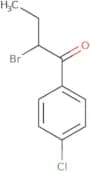
Fórmula:C11H9NOPureza:Min. 95%Peso molecular:171.2 g/mol2-Bromo-1-(4-chlorophenyl)butan-1-one
CAS:Versatile small molecule scaffold
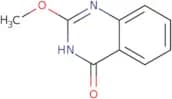
Fórmula:C10H10BrClOPureza:Min. 95%Peso molecular:261.54 g/mol2-Methoxyquinazolin-4-ol
CAS:Versatile small molecule scaffold
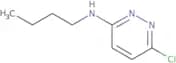
Fórmula:C9H8N2O2Pureza:Min. 95%Peso molecular:176.17 g/mol3-(Butylamino)-6-chloropyridazine
CAS:Versatile small molecule scaffold
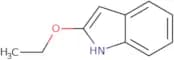
Fórmula:C8H12ClN3Pureza:Min. 95%Peso molecular:185.66 g/mol2-Ethoxy-1H-indole
CAS:2-Ethoxy-1H-indole is a synthetic, nucleophilic compound that has been shown to be an effective hydrogenation catalyst. The biological properties of 2-ethoxy-1H-indole have been studied in both animals and humans. In rats, this compound has shown to be an effective analgesic and antiinflammatory agent with few side effects. 2-Ethoxy-1H-indole also has shown efficacy in the treatment of Parkinson's disease in animal models. This drug can be used as a precursor for a variety of compounds including carboximidamides, enecarbamates, amines, or sulfoxides. It is also possible to control the stereocontrol of 2-ethoxy-1H-indole by using chiral reagents or by converting it to its chiral counterpart (2-(2'-ethoxy)-1H-indole).
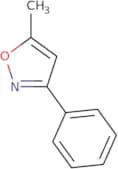
Fórmula:C10H11NOPureza:Min. 95%Peso molecular:161.2 g/mol5-Methyl-3-phenyl-1,2-oxazole
CAS:5-Methyl-3-phenyl-1,2-oxazole is a synthetic molecule that is postulated to be an isoxazole derivative. It has been shown to react with sodium chloride in the presence of organic solvents and hydrogen chloride to form a fluorinated salt. The reaction yield for this process was found to be low, however, the product was obtained in high purity. When irradiated or heated, 5-methyl-3-phenyl-1,2-oxazole undergoes thermal isomerization to form 3-(difluoromethyl)-5-(methyl)isoxazole.
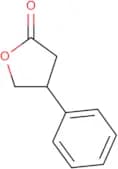
Fórmula:C10H9NOPureza:Min. 95%Peso molecular:159.18 g/mol4-Phenyloxolan-2-one
CAS:Versatile small molecule scaffold
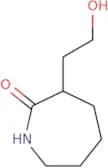
Fórmula:C10H10O2Pureza:Min. 95%Peso molecular:162.18 g/mol3-(2-Hydroxyethyl)azepan-2-one
CAS:Versatile small molecule scaffold
Fórmula:C8H15NO2Pureza:Min. 95%Peso molecular:157.2 g/molRef: 3D-BAA00684
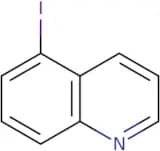
Produto descontinuado5-Iodoquinoline
CAS:5-Iodoquinoline is a serotonin transporter inhibitor that has been shown to have antidepressant properties. The compound competes with serotonin for transport and prevents it from binding to the receptor, which leads to an increase in extracellular serotonin. This active form has been synthesized by the reaction of 5-iodotriphenylenes with cyclobutanones. The pharmacological activity of 5-iodoquinoline was studied in vivo and proved that this drug may be useful for the treatment of depression.
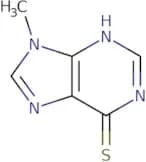
Fórmula:C9H6INPureza:Min. 95%Peso molecular:255.05 g/mol9-Methyl-9H-purine-6-thiol
CAS:9-Methyl-9H-purine-6-thiol is a photochemically reactive molecule that absorbs in the ultraviolet range. It is a nucleophilic, photophysical, and tautomeric molecule. This chemical is used to treat cancer by reacting with DNA bases. 9-Methyl-9H-purine-6-thiol can also react with thiols and form a covalent bond. The rate of this reaction increases when the pH of the solution decreases from 7 to 6.5 and it slows down when the pH is increased from 6.5 to 8. The UV spectrum for 9-methyl-9H-purine-6-thiol has been found at 215 nm, 270 nm, and 310 nm. High concentrations of this compound should be avoided because it may cause skin irritation or an allergic reaction.
Fórmula:C6H6N4SPureza:Min. 95%Peso molecular:166.21 g/mol2-Azaspiro[4.5]decan-1-one
CAS:2-Azaspiro[4.5]decan-1-one is a lactam, which is a molecule that consists of a ring of five carbon atoms and one nitrogen atom. This compound has the molecular formula C8H12N2O2 and a molecular weight of 176.17 g/mol. The lactam ring is derived from the conformation, or shape, of the molecule, which is centrosymmetric. The carbonyl group in this compound is located on the molecule's second carbon atom from the left and has two hydrogens attached to it. This lactam also has a cyclohexane ring with an n-hexane (C6H14) substituent attached to its first carbon atom from the right and a methyl group (-CH3) attached to its third carbon atom from the right. The molecule's configuration depends on whether it contains an odd or even number of each type of bond: bonds that form between two adjacent atoms
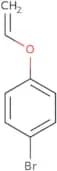
Fórmula:C9H15NOPureza:Min. 95%Peso molecular:153.22 g/mol1-Bromo-4-(ethenyloxy)benzene
CAS:1-Bromo-4-(ethenyloxy)benzene is a cationic monomer with a high polymerization degree. It is used in the production of cationic polymers and crosslinked polymers. The spectral data suggests that this monomer may be used as a vinyl acetate replacement. Potassium carbonate was used as the catalyst to polymerize 1-bromo-4-(ethenyloxy)benzene, but other catalysts are available for use.
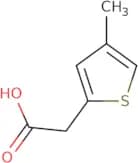
Fórmula:C8H7BrOPureza:Min. 95%Peso molecular:199.05 g/mol2-(4-Methylthiophen-2-yl)acetic acid
CAS:2-(4-Methylthiophen-2-yl)acetic acid is a carboxylic acid herbicide that inhibits the growth of plants by inhibiting photosynthesis. It has been shown to be effective against many types of weeds, including grasses and broadleaf plants. 2-(4-Methylthiophen-2-yl)acetic acid is also an herbicidal agent that has been shown to have herbicidal activity against a number of plant species, including trees. This compound can be used as a herbicide because it is readily absorbed by the leaves when applied to the surface and moves through the plant's vascular system to all parts of the plant, including roots. 2-(4-Methylthiophen-2-yl)acetic acid binds with chlorine atoms from halide ions in order to form an acid halide, which kills cells at the site of contact.
Fórmula:C7H8O2SPureza:Min. 95%Peso molecular:156.2 g/mol1-Bicyclo[4.2.0]octa-1,3,5-trien-7-ylmethanamine
CAS:1-Bicyclo[4.2.0]octa-1,3,5-trien-7-ylmethanamine is an antitussive drug that acts as a radical and analgesic by binding to the opioid receptors in cells. 1-Bicyclo[4.2.0]octa-1,3,5-trien-7-ylmethanamine has been shown to have antitussive effects in animal models with no observable side effects on the central nervous system and cardiovascular system. The identity of this compound has not yet been confirmed.END>
Fórmula:C9H11NPureza:Min. 95%Peso molecular:133.19 g/mol2-Azaspiro[4.4]nonan-1-one
CAS:Versatile small molecule scaffold
Fórmula:C8H13NOPureza:Min. 95%Peso molecular:139.19 g/mol2,6-Dimethyl-4H-pyran-4-thione
CAS:2,6-Dimethyl-4H-pyran-4-thione is a ligand that binds to metal ions and forms coordination complexes. It has been shown to be an effective catalyst for the oxidation of alcohols and amines with molecular oxygen. 2,6-Dimethyl-4H-pyran-4-thione can also be used in the synthesis of organic compounds by reacting with halides. The optical and vibrational spectra are linear at low temperatures and exponentially increase at higher temperatures. This compound can be crystallized by XRD or fluorescence methods, depending on the desired outcome. Solvents such as acetone, NMP, DMSO, THF, water, and chloroform have been shown to affect the crystal structure of this compound in varying degrees.
Fórmula:C7H8OSPureza:Min. 95%Peso molecular:140.2 g/mol3-Cyano-1-methylpyridin-1-ium iodide
CAS:3-Cyano-1-methylpyridin-1-ium iodide is a reactive chemical that can be used as an electrophilic reagent. It reacts with amines, anilines, and pyridones to produce N-substituted pyridinium salts. 3-Cyano-1-methylpyridin-1-ium iodide also reacts with chloride ions to form the corresponding chlorides. This compound has been used in the synthesis of nucleophilic attack products such as benzyl bromide and phenylacetaldehyde.
Fórmula:C7H7IN2Pureza:Min. 95%Peso molecular:246.05 g/mol

![2-Azaspiro[4.5]decan-1-one](/_next/image/?url=https%3A%2Fstatic.cymitquimica.com%2Fproducts%2F3D%2Fthumb-webp%2FBAA00585.webp&w=3840&q=75)
![1-Bicyclo[4.2.0]octa-1,3,5-trien-7-ylmethanamine](/_next/image/?url=https%3A%2Fstatic.cymitquimica.com%2Fproducts%2F3D%2Fthumb-webp%2FBAA00519.webp&w=3840&q=75)
![2-Azaspiro[4.4]nonan-1-one](/_next/image/?url=https%3A%2Fstatic.cymitquimica.com%2Fproducts%2F3D%2Fthumb-webp%2FBAA00451.webp&w=3840&q=75)

