Building Blocks
Subcategorias de "Building Blocks"
- Ácidos Borónicos e Derivados de Ácido Borónico(5.778 produtos)
- Building Blocks Quirais(1.243 produtos)
- Building Blocks Hidrocarbonetos(6.099 produtos)
- Building Blocks orgânicos(61.038 produtos)
Foram encontrados 205373 produtos de "Building Blocks"
3-(p-tolyl)propiolic acid
CAS:3-(p-tolyl)propiolic acid is a functional group that is used in organic chemistry. It is an alkynoic acid with a terminal triple bond. The compound can be synthesized by the reaction of propiolic acid with an alkyne, followed by oxidation. The 3-(p-tolyl)propiolic acid can be used as a surrogate for other functional groups in organic synthesis, and it has been shown to react as an oxidant in biomolecular systems.Fórmula:C10H8O2Pureza:Min. 95%Peso molecular:160.17 g/mol(2S,6S)-2,6-Dimethylmorpholine
CAS:(2S,6S)-2,6-Dimethylmorpholine is an optically pure compound that can be used to optimize the epoxidase reaction. It belongs to the class of morpholines and has two enantiomers. The (2R,6R)-enantiomer is more active than the (2S,6S)-enantiomer in catalyzing the epoxidase reaction. The temperature optima for both enantiomers are different with the (2R,6R)-enantiomer having a higher optimal temperature than the (2S,6S) enantiomer. This compound can be used as a chiral auxiliary to separate racemic mixtures by focusing on one enantiomer at a time. It can also be used as an analytical method for determining plate number and plate height.Fórmula:C6H13NOPureza:Min. 95%Peso molecular:115.17 g/mol4-Bromo-2-(hydroxymethyl)benzyl alcohol
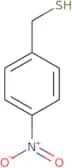
CAS:Versatile small molecule scaffoldFórmula:C8H9BrO2Pureza:Min. 95%Peso molecular:217.06 g/mol(4-Nitrophenyl)methanethiol
CAS:4-Nitrophenylmethanethiol is a reactive molecule that reacts with dopamine D3, an important cytosolic protein, to form a stable covalent bond. This reaction was shown to be pH-dependent and the products were identified by x-ray diffraction data. The disulfide bond formed by this reaction is then reduced to the corresponding sulfhydryl group with sodium borohydride or hydroxide solution. 4-Nitrophenylmethanethiol also reacts with inorganic acid and sodium carbonate to form a molecule containing carbapenem, which is a model protein used in research on chemical reactions. 4-Nitrophenylmethanethiol reacts with chloride ions and phenyl groups to yield hydrochloric acid as the final product of the chemical reaction.Fórmula:C7H7NO2SPureza:Min. 95%Peso molecular:169.2 g/moln-Butyl methanesulfonate
CAS:N-butyl methanesulfonate is a genotoxic agent that inhibits the growth of bacteria by binding to the DNA. N-butyl methanesulfonate is effective against typhimurium and has shown carcinogenic effects in hamster cells. N-butyl methanesulfonate is also capable of inhibiting quinoline derivatives, which are carcinogens that are found in tobacco smoke. This chemical can be used as a natural compound for the treatment of diabetic neuropathy and cryptococcus neoformans. It may also be used as an antiviral agent for the treatment of influenza virus.Fórmula:C5H12O3SPureza:Min. 95%Peso molecular:152.21 g/mol(1R)-1-(3-Fluoro-4-methylphenyl)ethan-1-amine hydrochloride
CAS:Versatile small molecule scaffoldFórmula:C9H13ClFNPureza:Min. 95%Peso molecular:189.66 g/mol6,7-dihydro-5h-pyrrolo[3,4-d]pyrimidin-2-amine 2hcl
CAS:Versatile small molecule scaffold
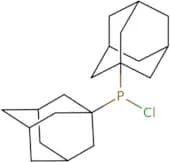
Fórmula:C6H10Cl2N4Pureza:Min. 95%Peso molecular:209.07 g/molDi(1-adamantyl)chlorophosphine
CAS:Di(1-adamantyl)chlorophosphine is a bifunctional ligand that can be used for the palladium-catalyzed coupling of aryl chlorides and amines. Di(1-adamantyl)chlorophosphine is synthesized from adamantane, phosphorous pentachloride, and anhydrous ammonia in the presence of catalytic amounts of palladium. Di(1-adamantyl)chlorophosphine is immobilized on silica gel to prevent hydrolysis. This ligand reacts with primary amines to form iminophosphoranes, which can then be reacted with aryl chlorides to form aryl chloroamines.Fórmula:C20H30ClPPureza:Min. 95%Peso molecular:336.88 g/mol5-(Methylamino)nicotinic acid
CAS:Versatile small molecule scaffoldFórmula:C7H8N2O2Pureza:Min. 95%Peso molecular:152.15 g/mol7-Chloroisoquinolin-1-ol
CAS:Versatile small molecule scaffoldFórmula:C9H6ClNOPureza:Min. 95%Peso molecular:179.6 g/molN-(4-Bromophenyl)-N-phenylacrylamide
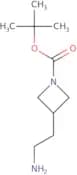
CAS:Versatile small molecule scaffoldFórmula:C15H12BrNOPureza:Min. 95%Cor e Forma:PowderPeso molecular:302.16 g/moltert-Butyl 3-(2-aminoethyl)azetidine-1-carboxylate
CAS:Versatile small molecule scaffoldFórmula:C10H20N2O2Pureza:Min. 95%Peso molecular:200.28 g/mol4-chloropyrimidine-2-carbonitrile
CAS:4-Chloropyrimidine-2-carbonitrile is an industrial chemical that belongs to the class of heterocycles. It is commonly used in the synthesis of amines, phenoxy compounds, and halides. This compound is widely used in research laboratories as a building block for the synthesis of various organic compounds. 4-Chloropyrimidine-2-carbonitrile is available in enantiopure form, making it suitable for chiral chemistry applications. It contains cyano and ethoxycarbonyl functional groups, which make it versatile for further derivatization. This compound exhibits solid catalyst properties and can be used as a methyl ether or amide precursor. Its emission properties make it useful in fluorescence-based assays and imaging techniques.
Fórmula:C5H2ClN3Pureza:Min. 95%Peso molecular:139.5 g/mol(3R)-3-Methylpyrrolidine hydrochloride
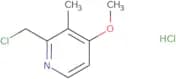
CAS:Versatile small molecule scaffoldFórmula:C5H11N•HClPureza:Min. 95%Peso molecular:121.5 g/mol2-(Chloromethyl)-4-methoxy-3-methylpyridine hydrochloride
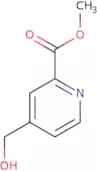
CAS:2-(Chloromethyl)-4-methoxy-3-methylpyridine hydrochloride is a lead compound that belongs to the family of pyridine derivatives. It has been shown to be a potent inhibitor of bacterial RNA synthesis, with an IC50 value of 1.2 μM for Escherichia coli and 8 μM for Bacillus subtilis. 2-(Chloromethyl)-4-methoxy-3-methylpyridine hydrochloride also inhibits the growth of Gram negative bacteria such as Pseudomonas aeruginosa and Enterobacter cloacae. The compound binds to the nucleophilic site on ribosomes, which prevents the formation of peptide bonds between amino acids in protein synthesis. This leads to cell death by inhibiting protein synthesis, leading to cell division.Fórmula:C8H11Cl2NOPureza:Min. 95%Peso molecular:208.08 g/molMethyl 4-(hydroxymethyl)pyridine-2-carboxylate
CAS:Versatile small molecule scaffoldFórmula:C8H9NO3Pureza:Min. 95%Peso molecular:167.16 g/molSugammadex diastereomer 1 sulfoxide
CAS:Please enquire for more information about Sugammadex diastereomer 1 sulfoxide including the price, delivery time and more detailed product information at the technical inquiry form on this page
Fórmula:C72H112O49S8Pureza:90%Cor e Forma:PowderPeso molecular:2,018.16 g/molSugammadex sulfoxide diastereomer-2
CAS:Please enquire for more information about Sugammadex sulfoxide diastereomer-2 including the price, delivery time and more detailed product information at the technical inquiry form on this pageFórmula:C72H112O49S8Pureza:85%Cor e Forma:PowderPeso molecular:2,018.12 g/molSHR 0302
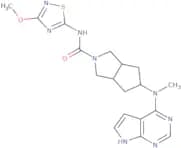
CAS:Please enquire for more information about SHR 0302 including the price, delivery time and more detailed product information at the technical inquiry form on this page
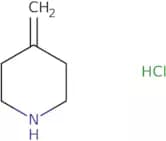
Fórmula:C18H22N8O2SPureza:Min. 95%Peso molecular:414.49 g/mol4-Methylenepiperidine hydrochloride
CAS:4-Methylenepiperidine hydrochloride is a synthetic, ethylene oxide derivative that is used as an antifungal drug. It is also used in the synthesis of other compounds and as a reagent in organic chemistry. 4-Methylenepiperidine hydrochloride can be synthesized by reacting ethylene with an alkoxide, followed by adding a metal halide such as organolithium reagents to form the desired product. The yield rate of this reaction is high and it is easy to perform on a large scale.Fórmula:C6H11N·HClPureza:Min. 95%Cor e Forma:White PowderPeso molecular:133.62 g/mol




![6,7-dihydro-5h-pyrrolo[3,4-d]pyrimidin-2-amine 2hcl](/_next/image/?url=https%3A%2Fstatic.cymitquimica.com%2Fproducts%2F3D%2Fthumb-webp%2FHGA32752.webp&w=3840&q=75)