Building Blocks
Subcategorias de "Building Blocks"
- Ácidos Borónicos e Derivados de Ácido Borónico(5.778 produtos)
- Building Blocks Quirais(1.243 produtos)
- Building Blocks Hidrocarbonetos(6.098 produtos)
- Building Blocks orgânicos(61.036 produtos)
Foram encontrados 205240 produtos de "Building Blocks"
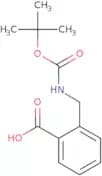
2-(Boc-aminomethyl)benzoic acid
CAS:2-(Boc-aminomethyl)benzoic acid is a versatile building block with a wide range of applications in the field of organic chemistry. It has been shown to be useful as a reagent in the synthesis of complex compounds and fine chemicals, as well as a reaction component for the preparation of pharmaceuticals. 2-(Boc-aminomethyl)benzoic acid can also be used as an intermediate in the synthesis of speciality chemicals such as herbicides, pesticides, and fungicides.
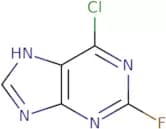
Fórmula:C13H17NO4Pureza:Min. 95%Cor e Forma:PowderPeso molecular:251.28 g/mol6-Chloro-2-fluoropurine
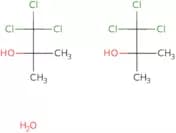
CAS:6-Chloro-2-fluoropurine is an analytical reagent with a monoclonal antibody that binds to the nucleic acid of HL-60 cells and can be used for optical analysis. 6-Chloro-2-fluoropurine has been shown to have significant cytotoxicity against HL-60 cells, which may be due to its ability to bind to intracellular targets. 6-Chloro-2-fluoropurine has also been shown to inhibit the growth of HL-60 cells in a fluorescein angiography study and is used as a diagnostic agent for diagnosis of cancer.Fórmula:C5H2ClFN4Pureza:Min. 98 Area-%Cor e Forma:Off-White PowderPeso molecular:172.55 g/molChlorbutanol hemihydrate
CAS:Chlorbutanol hemihydrate is an antimicrobial agent that is used as an intra-articular injection, and has been shown to be effective against choline chloride. Chlorbutanol hemihydrate binds to the active substances and reacts with chlorine atom to form an active substance. The reaction rate of chlorbutanol hemihydrate with chlorine atoms is slow, so it can be administered intravenously or intramuscularly. Functional assays have shown that chlorbutanol hemihydrate can inhibit the growth of cancer cells in a dose-dependent manner. It also inhibits the production of oxytocin receptor in mice tissues. Chlorbutanol hemihydrate has been shown to be safe for humans when given at doses up to 10 times higher than the recommended dosage, but may cause allergic reactions in some people.Fórmula:C4H7Cl3O•(H2O)0Pureza:Min. 95%Cor e Forma:White PowderPeso molecular:186.46 g/mol2,4-Dichloroimidazo[2,1-F][1,2,4]triazine
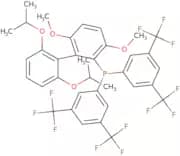
CAS:Versatile small molecule scaffoldFórmula:C5H2Cl2N4Pureza:Min. 95%Peso molecular:189 g/molBis(3,5-bis(trifluoromethyl)phenyl)(2²,6²-bis(isopropoxy)-3,6-dimethoxybiphenyl-2-yl)phosphine
CAS:Versatile small molecule scaffold
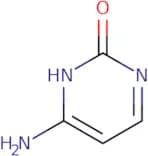
Fórmula:C36H31F12O4PPureza:Min. 95%Peso molecular:786.58 g/molCytosine
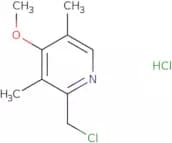
CAS:Pyrimidine nucleobase; component of nucleic acidsFórmula:C4H5N3OPureza:(Hplc) Min. 99%Cor e Forma:White PowderPeso molecular:111.1 g/mol2-(Chloromethyl)-4-methoxy-3,5-dimethylpyridine hydrochloride
CAS:2-(Chloromethyl)-4-methoxy-3,5-dimethylpyridine hydrochloride is a benzimidazole derivative. It has a chemical stability and can be used for wastewater treatment. It is also a pump inhibitor and can be used for anhydrous sodium magnesium salts. This product is synthesized from the reaction of protonated 2-bromo-4-methoxyphenol with 2,6-dimethylpyridine in the presence of hydrochloric acid. The reaction was carried out in an asymmetric synthesis using a proton transport system. 2-(Chloromethyl)-4-methoxy-3,5-dimethylpyridine hydrochloride is soluble in water and has a pH of 1 to 3. It has been shown that this product can be used as an antioxidant and as a metal chelation agent.
Fórmula:C9H13Cl2NOPureza:Min. 95%Cor e Forma:PowderPeso molecular:222.11 g/mol1-Bromo-3,3-difluorocyclobutane
CAS:Versatile small molecule scaffold
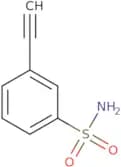
Fórmula:C4H5BrF2Pureza:Min. 95%Peso molecular:170.98 g/mol3-Ethynylbenzenesulfonamide
CAS:3-Ethynylbenzenesulfonamide is a synthetic, hydrophobic, antimicrobial compound that disrupts the cell membrane. It has been shown to be effective against both mammalian and microbial cells. The antimicrobial use of this compound is still under study, but it may provide an alternative to the current antibiotics. 3-Ethynylbenzenesulfonamide is amphipathic in nature and has an extremely large expansion ratio. This molecule is also hydrophobic, which may help with its ability to penetrate the cell membrane. Antimicrobial compounds are designed to inhibit or kill microorganisms such as bacteria or fungi by disrupting their cellular membranes. They work by interacting with specific targets on the surface of the target organism and producing a lethal effect on its function. 3-Ethynylbenzenesulfonamide interacts with proteins found on bacterial membranes called porins, resulting in a loss of osmotic stability and then permeability through the bilayer. This leadsFórmula:C8H7NO2SPureza:Min. 95%Peso molecular:181.21 g/mol4-Bromo-2-fluoropyrimidine
CAS:Versatile small molecule scaffold
Fórmula:C4H2BrFN2Pureza:Min. 95%Peso molecular:176.97 g/molMethyl 7-methoxy-4-oxo-1,4-dihydro-6-quinolinecarboxylate
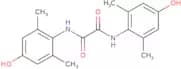
CAS:Versatile small molecule scaffoldFórmula:C12H11NO4Pureza:Min. 95%Peso molecular:233.22 g/molN1,N2-Bis(4-hydroxy-2,6-dimethylphenyl)ethanediamide
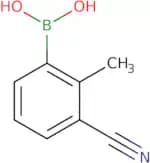
CAS:Versatile small molecule scaffoldFórmula:C18H20N2O4Pureza:Min. 95%Peso molecular:328.4 g/mol3-Cyano-2-methylphenylboronic acid
CAS:3-Cyano-2-methylphenylboronic acid is a high quality compound that can be used as a reagent, intermediate, or building block in the synthesis of complex compounds. This chemical is also useful as a speciality chemical and research chemical. 3-Cyano-2-methylphenylboronic acid has versatile uses in organic synthesis due to its versatility in reactions and building blocks.
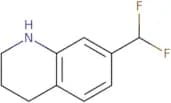
Fórmula:C8H8BNO2Pureza:Min. 95%Cor e Forma:PowderPeso molecular:160.97 g/mol7-(Difluoromethyl)-1,2,3,4-tetrahydroquinoline
CAS:Versatile small molecule scaffold
Fórmula:C10H11F2NPureza:Min. 95%Peso molecular:183.2 g/mol(1R,5S,6r)-rel-3-Oxabicyclo[3.1.0]hexane-6-carboxylic acid
CAS:Versatile small molecule scaffoldFórmula:C6H8O3Pureza:Min. 95%Peso molecular:128.13 g/molN-Carbamoyl linagliptin
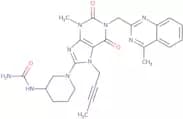
CAS:N-Carbamoyl linagliptin is a synthetic drug that is a selective, reversible inhibitor of dipeptidyl peptidase-4 (DPP-4), an enzyme that breaks down the incretin hormones GLP-1 and GIP. This drug has been shown to help control blood glucose levels in patients with type 2 diabetes. It binds to the active site of DPP-4 and prevents it from breaking down GLP-1 and GIP, which leads to increased levels of these hormones in the body. N-Carbamoyl linagliptin has a long half life, making it suitable for once daily administration. It also lacks any significant interactions with other drugs or foods.Fórmula:C26H29N9O3Pureza:Min. 95%Peso molecular:515.6 g/molABX464
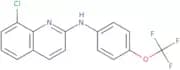
CAS:ABX464 is a monoclonal antibody that targets bacterial translocation. It has been shown to have clinical efficacy in preventing the recurrence of inflammatory bowel disease. ABX464 binds to the M2 phenotype of macrophages and blocks the binding of chemoattractant protein to its receptor, leading to decreased inflammation and less bacterial translocation. It also prevents HIV infection by blocking viral attachment to CD4 cells and inhibiting HIV-1 replication.
Fórmula:C16H10ClF3N2OPureza:Min. 95%Peso molecular:338.71 g/mol4-Hydrazinobenzoic acid
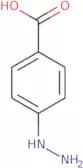
CAS:4-Hydrazinobenzoic acid is a chemical compound that is used as an inhibitor of DNA synthesis. It prevents the formation of hydrogen bonds between nucleotides in DNA, which prevents the synthesis of new DNA strands. 4-Hydrazinobenzoic acid has been shown to inhibit the growth of human breast cancer cells by reactivating the tumor suppressor genes p21 and Rb1, which are responsible for regulating cell cycle progression. This compound also inhibits the production of hydrogen chloride (HCl) in reaction solutions containing sodium hypochlorite (NaOCl).
Fórmula:C7H8N2O2Pureza:Min. 95%Cor e Forma:Slightly Yellow PowderPeso molecular:152.15 g/molPotassium (cyclopropylmethyl)trifluoroborate
CAS:Versatile small molecule scaffoldFórmula:C4H7BF3KPureza:Min. 95%Peso molecular:162 g/mol8-Hydroxyquinoline hemisulfate salt hemihydrate
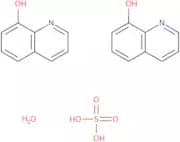
CAS:8-Hydroxyquinoline is a sweet, water soluble, and heat stable inhibitor that has been used in the treatment of kidney disease. 8-Hydoxyquinoline has been shown to inhibit the growth of the rootstock Asiaticus by interfering with cell metabolism. It is also an insecticide that kills insects by causing damage to their cells. 8-Hydoxyquinoline inhibits polymerase chain reaction (PCR) by binding to DNA polymerase, blocking its activity and reducing its ability to synthesize DNA. This drug is also a potent blocker of angiotensinogen synthesis, which leads to reduced blood pressure levels.Fórmula:C9H7NOH2SO4H2OCor e Forma:Yellow PowderPeso molecular:203.21 g/mol

![2,4-Dichloroimidazo[2,1-F][1,2,4]triazine](/_next/image/?url=https%3A%2Fstatic.cymitquimica.com%2Fproducts%2F3D%2Fthumb-webp%2FKXC70089.webp&w=3840&q=75)



![(1R,5S,6r)-rel-3-Oxabicyclo[3.1.0]hexane-6-carboxylic acid](/_next/image/?url=https%3A%2Fstatic.cymitquimica.com%2Fproducts%2F3D%2Fthumb-webp%2FFCA78088.webp&w=3840&q=75)