Building Blocks
Subcategorias de "Building Blocks"
- Ácidos Borónicos e Derivados de Ácido Borónico(5.784 produtos)
- Building Blocks Quirais(1.242 produtos)
- Building Blocks Hidrocarbonetos(6.105 produtos)
- Building Blocks orgânicos(61.061 produtos)
Foram encontrados 205399 produtos de "Building Blocks"
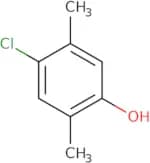
4-Chloro-2,5-dimethylphenol
CAS:4-Chloro-2,5-dimethylphenol is a phenolic compound that is used as an intermediate in the synthesis of other organic compounds. It has low ph and can form adducts with methanol at high ph. 4-Chloro-2,5-dimethylphenol can be reacted with hydrogen chloride to produce the corresponding chloride or with a coupling agent to produce the corresponding imine. 4-Chloro-2,5-dimethylphenol can also be used as an elimination agent.
Fórmula:C8H9ClOPureza:Min. 95%Peso molecular:156.61 g/mol3,3-Dimethylglutarimide
CAS:3,3-Dimethylglutarimide is a molecule that has been shown to inhibit the enzyme butyrylcholinesterase in a stepwise manner. This inhibition prevents the breakdown of acetylcholine, which leads to increased levels of this neurotransmitter and an improvement in cognition. 3,3-Dimethylglutarimide also has protonation properties that allow it to form complexes with metal ions such as zinc and copper. These complexes are formed by the interaction of functional groups on the molecules with protons on the metal ions.
Fórmula:C7H11NO2Pureza:Min. 95%Peso molecular:141.17 g/mol8-Azaspiro[4.5]decane hydrochloride
CAS:Versatile small molecule scaffold
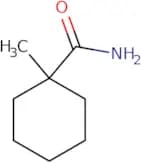
Fórmula:C9H17N·HClPureza:Min. 95%Peso molecular:175.7 g/mol1-Methylcyclohexane-1-carboxamide
CAS:1-Methylcyclohexane-1-carboxamide is a sclerotiorin, which are natural substances that have been shown to have inhibitory effects against fungi. It has been shown to be effective against Sclerotinia sclerotiorum and Gaseous Botrytis cinerea. The inhibition of sclerotiorin 1-methylcyclohexane-1-carboxamide is due to its ability to inhibit the synthesis of ergosterol, which is an important component of the fungal cell membrane. This drug has also been shown to have inhibitory effects on carbon bond formation in natural substances such as ginseng root or solid form.
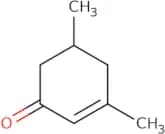
Fórmula:C8H15NOPureza:Min. 95%Peso molecular:141.21 g/mol3,5-Dimethyl-2-cyclohexen-1-one
CAS:3,5-Dimethyl-2-cyclohexen-1-one is a β-unsaturated ketone that has been synthesized using an efficient method. It has been shown to have anti-inflammatory properties and is used for the treatment of pulmonary fibrosis in humans. The compound also binds to polyene compounds and supramolecular substrates. 3,5-Dimethyl-2-cyclohexen-1-one reacts with chloride ions to form a β unsaturated ketone chloride that can undergo alkylation with an electron donor such as acetonitrile. This reaction is catalyzed by microsomal cytochrome P450 enzymes and requires a reaction time of about two hours to complete.
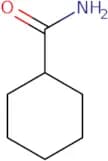
Fórmula:C8H12OPureza:Min. 95%Peso molecular:124.18 g/molCyclohexanecarboxamide
CAS:Cyclohexanecarboxamide is a carboxamide that has been shown to inhibit the growth of bacteria. It binds to the bacterial receptor and inhibits the activity of the enzyme carboxide, which is involved in the synthesis of monoamine neurotransmitters. Cyclohexanecarboxamide has also been shown to inhibit axonal growth in mammalian cells, which may be due to its ability to block potassium channels on nerve cells. Cyclohexanecarboxamide has been shown to have antimicrobial properties against a range of organisms including those resistant mutants.
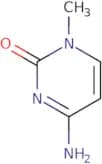
Fórmula:C7H13NOPureza:Min. 95%Peso molecular:127.18 g/mol4-Amino-1-methylpyrimidin-2(1H)-one
CAS:4-Amino-1-methylpyrimidin-2(1H)-one is a chemical compound that belongs to the group of pyrimidine compounds. It has been shown to be an inhibitor of viral life, with its activity against HIV being most well studied. The tautomers of 4-amino-1-methylpyrimidin-2(1H)-one are protonated and stable, meaning that they do not undergo any chemical change in the body. 4-Amino-1-methylpyrimidin-2(1H)-one is also able to form stable complexes with nitrogen atoms. The xray crystal structure for this compound shows that it coordinates with group P2, which contains two nitrogen atoms and one oxygen atom. The interaction between these three atoms is called a dinucleotide phosphate. This group binds to DNA by hydrogen bonds, forming intramolecular hydrogen bonds. The groups on the other side of the molecule bind
Fórmula:C5H7N3OPureza:Min. 95%Peso molecular:125.13 g/mol6-Amino-3-methylpyrimidin-4(3H)-one
CAS:Versatile small molecule scaffold
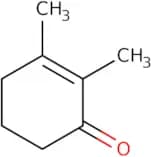
Fórmula:C5H7N3OPureza:Min. 95%Peso molecular:125.12 g/mol2,3-Dimethylcyclohex-2-en-1-one
CAS:2,3-Dimethylcyclohex-2-en-1-one is a phenylhydrazine derivative that can be converted into aporphine alkaloids. It is also an isomer of cyclohexenones and epoxides. This compound has substituents at the 2 and 3 positions which are either methyl or hydrogen, respectively. The carbonyl group in 2,3-Dimethylcyclohex-2-en-1-one is a ketone or aldehyde, depending on the substitution pattern. The oxygen function in this molecule is an ether or ester. 2,3-Dimethylcyclohex-2-en-1-one has properties that are similar to those of diketones and spirolactones because it contains both carbonyl and oxygen functions. It can be classified as an aporphine alkaloid because it has two rings fused together with one nitrogen atom between them
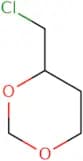
Fórmula:C8H12OPureza:Min. 95%Cor e Forma:Clear LiquidPeso molecular:124.18 g/mol4-(Chloromethyl)-1,3-dioxane
CAS:Versatile small molecule scaffold
Fórmula:C5H9ClO2Pureza:Min. 95%Peso molecular:136.58 g/mol(1R,6S,7R)-7-Bromobicyclo[4.1.0]heptane
CAS:Versatile small molecule scaffold
Fórmula:C7H11BrPureza:Min. 95%Peso molecular:175.07 g/molRef: 3D-BAA12141
Produto descontinuadoDi-n-octylamine
CAS:Di-n-octylamine is a reactive chemical that is chemically stable in the presence of nitrogen. It is used in chemical biology as a transport agent for amines and other organic compounds. Di-n-octylamine has been shown to have optimum solubility in glycol ethers, magnesium salts, and trifluoroacetic acid. This compound reacts with fatty acids to form hydroxyl groups and can be used as an extractant for glycol ethers. The mechanism of this reaction involves intramolecular hydrogen transfer from the hydroxyl group on the fatty acid to the n-octyl amine molecule.
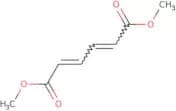
Fórmula:C16H35NPureza:Min. 95%Peso molecular:241.46 g/mol1,6-Dimethyl (2E,4E)-hexa-2,4-dienedioate
CAS:1,6-Dimethyl (2E,4E)-hexa-2,4-dienedioate is a hydrocarbon that can be synthesized from ethylene. The compound is a building block for polyunsaturated compounds and can be used as a feedstock in the production of monomers or polymers. It has been shown to have radiation catalysis properties and is sustainable with low environmental impact. 1,6-Dimethyl (2E,4E)-hexa-2,4-dienedioate has been shown to produce high yields and is not toxic to humans or animals. This product also has applications in the production of cosmetics and pharmaceuticals.
Fórmula:C8H10O4Pureza:Min. 95%Peso molecular:170.16 g/mol3-Azaspiro[5.6]dodecane-2,4-dione
CAS:Versatile small molecule scaffold
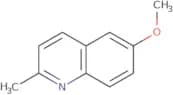
Fórmula:C11H17NO2Pureza:Min. 95%Peso molecular:195.26 g/mol6-Methoxyquinaldine
CAS:6-Methoxyquinaldine is a fluorescent chemical that is used to study the structural changes of proteins. 6-Methoxyquinaldine is oxidized by various reagents, such as anilines and sulphates, to produce fluorescent products. The fluorescence intensity of the product can be quantified using fluorimetric analysis or microscopy techniques. The fluorescent products can be visualized using UV irradiation (365 nm) or by fluorescence microscopy. 6-Methoxyquinaldine can also be used in calibrating imaging techniques, such as confocal laser scanning microscopy.
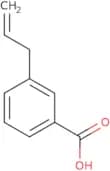
Fórmula:C11H11NOPureza:Min. 95%Peso molecular:173.21 g/mol3-(Prop-2-en-1-yl)benzoic acid
CAS:Versatile small molecule scaffold
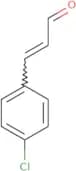
Fórmula:C10H10O2Pureza:Min. 95%Peso molecular:162.18 g/mol3-(4-Chlorophenyl)acrylaldehyde
CAS:Acrylaldehyde is a reactive compound that can bind to the enzyme tyrosinase, inhibiting its activity. 3-(4-Chlorophenyl)acrylaldehyde (3-CA) is a small molecule that has shown an inhibitory effect on the proliferation of leukemia cells in vitro and in vivo. It also has broad-spectrum antimicrobial activity against Gram-positive and Gram-negative bacteria, including methicillin-resistant Staphylococcus aureus (MRSA). Tyrosine kinases are enzymes that catalyze the transfer of phosphate groups from ATP to tyrosine residues in proteins, leading to cellular signaling and cell division. 3-(4-Chlorophenyl)acrylaldehyde binds to tyrosine kinases and inhibits their function, which may be responsible for its cytotoxic effects.
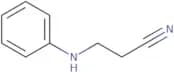
Fórmula:C9H7ClOPureza:Min. 95%Peso molecular:166.6 g/mol3-(Phenylamino)propanenitrile
CAS:3-(Phenylamino)propanenitrile (N-phenylglycine, PAG) is an amine that belongs to the class of compounds known as thermodynamic reaction intermediates. It is a chiral compound that can be used for the synthesis of β-unsaturated ketones and bichloride. The synthesis of PAG begins with the addition of phosphorus pentachloride and acrylonitrile to a solution containing thiamine pyrophosphate in an inorganic acid, such as hydrochloric acid. The reaction produces a mixture of amino acids and amides, including PAG. This process has been scaled up and shown to be selective for PAG.
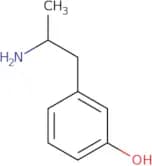
Fórmula:C9H10N2Pureza:Min. 95%Peso molecular:146.19 g/mol3-(2-Aminopropyl)phenol
CAS:Produto Controlado3-(2-Aminopropyl)phenol is a water-soluble drug that has been used as a pharmaceutical dosage to treat symptoms of autoimmune diseases and heart tissue damage. 3-(2-Aminopropyl)phenol is commonly found in the form of its salt, 3-(2-aminopropyl)benzene sulfonic acid, which is used to treat congestive heart failure. The chemical ionization of 3-(2-aminopropyl)phenol has been used to identify protein genes that encode for enzymes involved in the production of inflammatory substances. 3-(2-Aminopropyl)phenol also has anti-inflammatory properties.
Fórmula:C9H13NOPureza:Min. 95%Peso molecular:151.21 g/mol1-(Chloromethyl)-4-methylcyclohexane
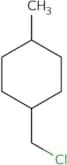
CAS:Versatile small molecule scaffold
Fórmula:C8H15ClPureza:Min. 95%Peso molecular:146.66 g/mol


![8-Azaspiro[4.5]decane hydrochloride](/_next/image/?url=https%3A%2Fstatic.cymitquimica.com%2Fproducts%2F3D%2Fthumb-webp%2FBAA12330.webp&w=3840&q=75)

![(1R,6S,7R)-7-Bromobicyclo[4.1.0]heptane](/_next/image/?url=https%3A%2Fstatic.cymitquimica.com%2Fproducts%2F3D%2Fthumb-webp%2FBAA12141.webp&w=3840&q=75)

![3-Azaspiro[5.6]dodecane-2,4-dione](/_next/image/?url=https%3A%2Fstatic.cymitquimica.com%2Fproducts%2F3D%2Fthumb-webp%2FBAA07889.webp&w=3840&q=75)