Building Blocks
Subcategorias de "Building Blocks"
- Ácidos Borónicos e Derivados de Ácido Borónico(5.783 produtos)
- Building Blocks Quirais(1.242 produtos)
- Building Blocks Hidrocarbonetos(6.105 produtos)
- Building Blocks orgânicos(61.055 produtos)
Foram encontrados 205383 produtos de "Building Blocks"
5,5,5-Trifluoro-1-pentanol
CAS:Versatile small molecule scaffold
Fórmula:C5H9F3OPureza:Min. 95%Peso molecular:142.12 g/mol2H-1,2,4-Benzothiadiazine-1,1-dione
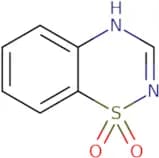
CAS:2H-1,2,4-Benzothiadiazine-1,1-dione is a pharmaceutical agent that belongs to the group of benzothiadiazine compounds. It is used as an intermediate in the synthesis of other drugs and has antihypertensive activity. 2H-1,2,4-Benzothiadiazine-1,1-dione inhibits blood pressure by acting on alpha receptors in vascular smooth muscle cells to inhibit the release of nitric oxide. This drug also blocks the binding of angiotensin II to its receptors and thus reduces the production of aldosterone and other hormones that promote sodium retention. Benzothiadiazine compounds are also known for their ability to form tautomers and isomers with each other. One such example is 2H-1,2,4-benzothiadiazine-1,1-dione (TBDT).
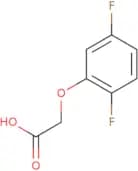
Fórmula:C7H6N2O2SPureza:Min. 95%Peso molecular:182.2 g/mol2-(2,5-Difluorophenoxy)acetic acid
CAS:Versatile small molecule scaffold
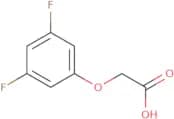
Fórmula:C8H6F2O3Pureza:Min. 95%Peso molecular:188.13 g/mol2-(3,5-Difluorophenoxy)acetic acid
CAS:Versatile small molecule scaffold
Fórmula:C8H6F2O3Pureza:Min. 95%Peso molecular:188.13 g/mol3,3,3-Trifluoro-2-methylpropanoic acid
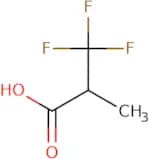
CAS:3,3,3-Trifluoro-2-methylpropanoic acid is a racemic mixture of 3,3,3-trifluoro-2-methylpropanoic acid and its enantiomer. It is an organic compound that is used as a reagent in organic synthesis. It has the property of being hydrolyzed by lipase mediated by hydrolytic enzymes to form 3,3,3-trifluoroethanol and propanoic acid. The enantiomers are racemic mixtures of 3,3,3-trifluoropropionic acid and (R)-(+)-3,3,3-trifluoropropionic acid. Both enantiomers have the same chemical properties but their kinetic behavior differs because one is a substrate for lipase while the other is not.
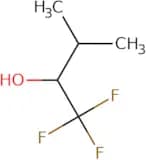
Fórmula:C4H5F3O2Pureza:Min. 95%Peso molecular:142.08 g/mol1,1,1-Trifluoro-3-methylbutan-2-ol
CAS:Versatile small molecule scaffold
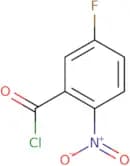
Fórmula:C5H9F3OPureza:Min. 95%Peso molecular:142.12 g/mol5-Fluoro-2-nitrobenzoyl chloride
CAS:5-Fluoro-2-nitrobenzoyl chloride is a conformationally locked macrocyclic compound that has been synthesized by solid phase synthesis. It is found in two conformational states and can be made to switch between these two states by applying a force to the molecule. This conformation can be controlled by changing the side chain of 5-fluoro-2-nitrobenzoyl chloride, which can be done experimentally. The conformational behavior of this macrocycle was studied using molecular dynamics simulations and it was found that there are four possible conformations for the molecule. The conformations with different side chains were found to have different energies, which could be used as a measure of their relative stability.
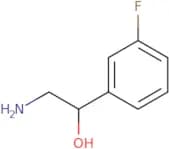
Fórmula:C7H3ClFNO3Pureza:Min. 95%Peso molecular:203.55 g/mol2-Amino-1-(3-fluorophenyl)ethanol
CAS:Versatile small molecule scaffold
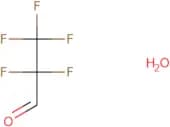
Fórmula:C8H10FNOPureza:Min. 95%Peso molecular:155.17 g/mol2,2,3,3,3-Pentafluoropropane-1,1-diol
CAS:Versatile small molecule scaffold
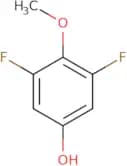
Fórmula:C3H3F5O2Pureza:Min. 95%Peso molecular:166.05 g/mol3,5-Difluoro-4-methoxyphenol
CAS:Versatile small molecule scaffold
Fórmula:C7H6F2O2Pureza:Min. 95%Peso molecular:160.12 g/mol6-Phenyl-3-thio-1,2,4-triazin-5(2H)-one
CAS:The spectral and crystallographic properties of 6-phenyl-3-thio-1,2,4-triazin-5(2H)-one were investigated in order to elucidate the molecular structures. The crystal structure of this compound was determined by x-ray crystallography. The compound is a regioisomeric mixture of two chiral isomers that are mirror images of each other. 6PST has a molecular formula of C8H6NOS and a molecular weight of 172.14 g/mol. It has been shown that the compound can be prepared by condensation reaction between 2-(phenylsulfanyl)ethanol and ethylenecarbonate. The spectroscopic studies revealed that it possesses an absorption band at 418 nm in the ultraviolet region. The crosslinked structure of this molecule was also studied using infrared spectroscopy, which showed presence of hydrogen bonds in the molecule.
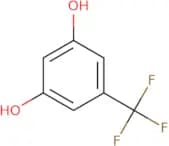
Fórmula:C9H7N3OSPureza:Min. 95%Peso molecular:205.24 g/mol5-(Trifluoromethyl)benzene-1,3-diol
CAS:Versatile small molecule scaffold
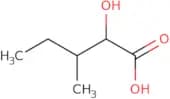
Fórmula:C7H5F3O2Pureza:Min. 95%Peso molecular:178.11 g/mol2-Hydroxy-3-methylpentanoic acid
CAS:2-Hydroxy-3-methylpentanoic acid is a natural compound that has been isolated from the bacteria Corynebacterium glutamicum. It is a cyclic pentapeptide with two ester linkages and one hydroxyl group. This molecule is an antimicrobial agent that inhibits bacterial growth by binding to the active site of enzymes, such as bacterial glutamyl endopeptidase and glutamate decarboxylase, which are involved in peptide and amino acid metabolism. 2-Hydroxy-3-methylpentanoic acid has been shown to have anti-inflammatory properties in bowel disease models, which may be due to its ability to inhibit prostaglandin synthesis. 2-Hydroxy-3-methylpentanoic acid also has cytotoxic effects on carcinoma cell lines in vitro.
Fórmula:C6H12O3Pureza:Min. 95%Peso molecular:132.16 g/mol1-Phenyl-2-buten-1-one
CAS:1-Phenyl-2-buten-1-one is a ketone that is produced by the Friedel-Crafts reaction, which entails the use of an aluminum chloride catalyst in the presence of hydroxy groups. This chemical can also be produced by a reductive carbonylation reaction using acetaldehyde and an organic solvent.
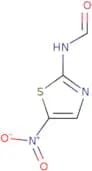
This chemical has been shown to have reductase activities and coordination geometry. It has also been shown to inhibit enzyme activities such as β-unsaturated ketones reductase, indole alkaloid reductase, and acetaldehyde dehydrogenase. The optimal reaction for this compound is borohydride reduction. 1-Phenyl-2-buten-1-one has not been isolated in yields greater than 90%.Fórmula:C10H10OPureza:Min. 95%Peso molecular:146.19 g/molN-(5-Nitro-1,3-thiazol-2-yl)formamide
CAS:N-(5-Nitro-1,3-thiazol-2-yl)formamide is a hydrogen bond donor that has been shown to be an occlusive molecule. It is soluble in organic solvents. N-(5-Nitro-1,3-thiazol-2-yl)formamide has a molecular weight of 138.18 and is a white crystalline powder. This molecule is active as an antisolvent and can be used for the preparation of microspheres with fibers.
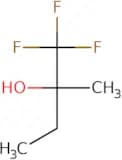
Fórmula:C4H3N3O3SPureza:Min. 95%Peso molecular:173.15 g/mol1,1,1-Trifluoro-2-methylbutan-2-ol
CAS:Versatile small molecule scaffold
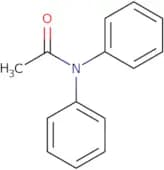
Fórmula:C5H9F3OPureza:Min. 95%Peso molecular:142.12 g/molN,N-Diphenylacetamide
CAS:N,N-Diphenylacetamide is an amide that is used in the pharmaceutical industry as a test compound. It has been shown to be effective at doses of 10 mg/kg in the treatment of inflammatory diseases. The chemical stability of N,N-diphenylacetamide is dependent on the pH and the presence of inorganic acids such as hydrochloric acid and sulfuric acid. In acidic conditions, N,N-diphenylacetamide hydrolyzes to form a sulfamic acid and an amide. The enantiomer of N,N-diphenylacetamide that can be formed under alkaline conditions is also an active ingredient in some medications for inflammatory diseases.
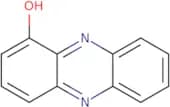
Fórmula:C14H13NOPureza:Min. 95%Peso molecular:211.26 g/mol1-Hydroxyphenazine
CAS:1-Hydroxyphenazine is an anti-fungal agent that inhibits the growth of opportunistic fungal pathogens. It has been shown to be effective in vitro against some bacteria, including Staphylococcus aureus and Pseudomonas aeruginosa, but not against others such as Escherichia coli. 1-Hydroxyphenazine reacts with intracellular Ca2+ to activate the reactive oxygen species (ROS), which are cytotoxic to fungi and other microorganisms. The compound is a structural analog of phenazone, but has higher antimicrobial activity and lower toxicity. 1-Hydroxyphenazine also chelates metal ions and forms stable complexes with them. This property may contribute to its biological properties.
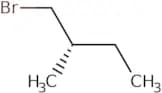
Fórmula:C12H8N2OPureza:Min. 95%Peso molecular:196.21 g/mol(S)-(+)-1-Bromo-2-methylbutane
CAS:(S)-(+)-1-Bromo-2-methylbutane is a chiral molecule with two stereoisomers, the cis and trans forms. The cis form has been observed to be the more stable of the two. It is a functional theory that these two forms are not mirror images of each other because they have different conformations. (S)-(+)-1-Bromo-2-methylbutane has been used in the synthesis of a number of important molecules. The stereoisomers can be distinguished by conformational analysis and optical microscopy. (S)-(+)-1-Bromo-2-methylbutane also has an application in biotechnology for use as a precursor for hydrazones, which are important in organic chemistry and molecular biology, such as DNA sequencing.
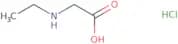
Fórmula:C5H11BrPureza:Min. 95%Peso molecular:151.04 g/molN-Ethyl-glycine hydrochloride
CAS:N-Ethylglycine hydrochloride is a pharmaceutical preparation that inhibits the enzyme cholesterol esterase. It is used to treat congestive heart failure and as a diuretic. N-Ethylglycine hydrochloride prevents the production of unsaturated fatty acids by inhibiting the enzyme cholesterol esterase, which converts cholesterol into fatty acid. This leads to lower levels of cholesterol in the blood, which can be beneficial in treating high cholesterol levels. N-Ethylglycine hydrochloride has been shown to have antiviral effects against influenza virus, with an IC50 of 0.5 μM, as well as anti-inflammatory properties.
Fórmula:C4H10ClNO2Pureza:Min. 95%Peso molecular:139.58 g/mol