Building Blocks
Subcategorias de "Building Blocks"
- Ácidos Borónicos e Derivados de Ácido Borónico(5.780 produtos)
- Building Blocks Quirais(1.239 produtos)
- Building Blocks Hidrocarbonetos(6.100 produtos)
- Building Blocks orgânicos(61.005 produtos)
Foram encontrados 205234 produtos de "Building Blocks"
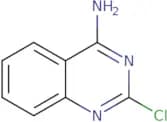
2-chloroquinazolin-4-amine
CAS:2-Chloroquinazolin-4-amine (CQA) is an anti-oxidant that exhibits significant cytotoxicity against human cancer cells. It is a competitive inhibitor of the enzyme chloride channel protein, which is involved in regulating the concentration of chloride ions in the blood. CQA has been shown to inhibit chemotaxis of white blood cells and platelets, and to have a protective effect on muscle tissue. The cytotoxic effects of CQA were shown to be due to its ability to induce apoptosis, or programmed cell death.
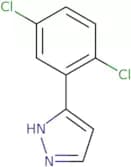
Fórmula:C8H6ClN3Pureza:Min. 95%Peso molecular:179.6 g/mol3-(2,5-Dichlorophenyl)pyrazole
CAS:Versatile small molecule scaffold
Fórmula:C9H6Cl2N2Pureza:Min. 95%Peso molecular:213.06 g/mol4-(1,2,3-Thiadiazol-4-yl)phenol
CAS:4-(1,2,3-Thiadiazol-4-yl)phenol is an antibiotic that belongs to the group of antimicrobials. It has an inhibitory concentration (IC) of 0.5 micrograms/ml against pyogenic bacteria and 1.0 micrograms/ml against a number of other bacterial strains. 4-(1,2,3-Thiadiazol-4-yl)phenol also has antimicrobial properties against fungi and may be used for the treatment of catalase-producing bacteria such as Streptococcus pyogenes or Staphylococcus aureus. Elemental analysis revealed that this compound is composed entirely of carbon, hydrogen, and oxygen. The molecular weight was found to be 166.16 g/mol. This compound inhibits bacterial growth by binding to DNA-dependent RNA polymerase and preventing transcription and replication of DNA. This active form is metabolized through a number of metabolic transformations including hydro
Fórmula:C8H6N2OSPureza:Min. 95%Peso molecular:178.21 g/mol4-bromo-3-sulfamoylbenzoic acid
CAS:Versatile small molecule scaffold
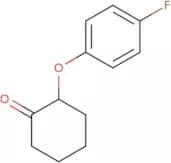
Fórmula:C7H6BrNO4SPureza:Min. 95%Peso molecular:280.1 g/mol2-(4-Fluorophenoxy)cyclohexan-1-one
CAS:Versatile small molecule scaffold
Fórmula:C12H13FO2Pureza:Min. 95%Peso molecular:208.23 g/molRef: 3D-JCA79893
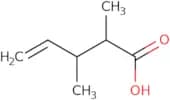
Produto descontinuado2,3-Dimethylpent-4-enoic acid
CAS:Versatile small molecule scaffold
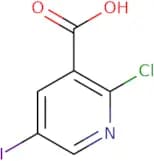
Fórmula:C7H12O2Pureza:Min. 95%Peso molecular:128.17 g/mol2-Chloro-5-iodonicotinic acid
CAS:Versatile small molecule scaffold
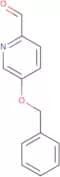
Fórmula:C6H3ClINO2Pureza:Min. 95%Peso molecular:283.45 g/mol5-(Benzyloxy)pyridine-2-carbaldehyde
CAS:Versatile small molecule scaffold
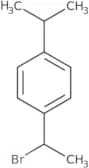
Fórmula:C13H11NO2Pureza:Min. 95%Peso molecular:213.23 g/mol1-(1-Bromoethyl)-4-(propan-2-yl)benzene
CAS:Versatile small molecule scaffold
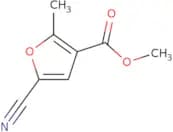
Fórmula:C11H15BrPureza:Min. 95%Peso molecular:227.14 g/molMethyl 5-cyano-2-methylfuran-3-carboxylate
CAS:Versatile small molecule scaffoldFórmula:C8H7NO3Pureza:Min. 95%Peso molecular:165.15 g/molRef: 3D-JCA76034
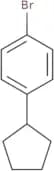
Produto descontinuado1-Bromo-4-cyclopentylbenzene
CAS:1-Bromo-4-cyclopentylbenzene (1-BCPB) is a chlorinated aromatic compound that can be synthesized by reacting 1-bromo-4-chlorobenzene and cyclopentylmagnesium bromide. The reaction sequence begins with the addition of hydrochloric acid to the first reactant, followed by magnesium chloride and ether. The mixture is heated to produce a liquid solution of ethylhexyloxy pyridine, which reacts with the second reactant in a sequence that leads to the desired product. 1-BCPB is used as an intermediate in organic synthesis. It has been shown to have moderate interaction with paraldehyde and pyridinium salts at room temperature, but it does not react with cycloalkyls or pyridinium salts at elevated temperatures.
Fórmula:C11H13BrPureza:Min. 95%Peso molecular:225.13 g/mol1-Methyl-2-((4-(methylthio)phenoxy)methyl)-5-nitro-1H-imidazole
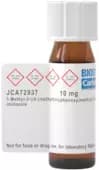
CAS:1-Methyl-2-((4-(methylthio)phenoxy)methyl)-5-nitro-1H-imidazole is a nitroheterocyclic compound that belongs to the group of antimicrobial agents. It has been shown to be active against Leishmania and is used in combination therapy with melarsoprol and sesquiterpene lactones. 1-Methyl-2-((4-(methylthio)phenoxy)methyl)-5-nitro-1H-imidazole inhibits the growth of bacteria by interfering with their electron transport system, which may lead to cell death. 1-Methyl-2-[(4-(methylthio)phenoxy)methyl]-5nitro -1H imidazole also has pharmacokinetic properties that are similar to those of fexinidazole, which makes it suitable as an experimental model for this drug's effects on humans.Fórmula:C12H13N3O3SPureza:Min. 95%Peso molecular:279.31 g/molRef: 3D-JCA72937
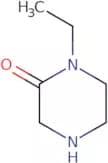
Produto descontinuado1-Ethylpiperazin-2-one
CAS:Versatile small molecule scaffold
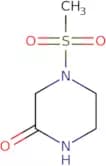
Fórmula:C6H12N2OPureza:Min. 95%Peso molecular:128.17 g/mol4-Methanesulfonylpiperazin-2-one
CAS:Versatile small molecule scaffold
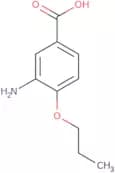
Fórmula:C5H10N2O3SPureza:Min. 95%Peso molecular:178.21 g/mol3-Amino-4-propoxybenzoic acid
CAS:3-Amino-4-propoxybenzoic acid is an ophthalmic drug that belongs to the group of anesthetics. It is used as a local anesthetic in the eye. 3-Amino-4-propoxybenzoic acid is synthesized by the reaction of 2,6-dichlorobenzoyl chloride and 4-(methoxycarbonyl)phenylacetic acid. This reaction solution contains impurities that are related to the process such as chlorinated hydrocarbons, which can be identified by chromatographic analyses. The molecular weight for 3-amino-4-propoxybenzoic acid is 169.3 g/mol.
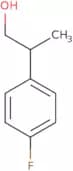
Fórmula:C10H13NO3Pureza:Min. 95%Peso molecular:195.22 g/mol2-(4-Fluorophenyl)propan-1-ol
CAS:Versatile small molecule scaffold
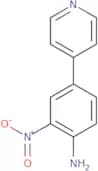
Fórmula:C9H11FOPureza:Min. 95%Peso molecular:154.18 g/mol2-Nitro-4-(pyridin-4-yl)aniline
CAS:Versatile small molecule scaffold
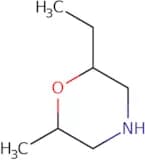
Fórmula:C11H9N3O2Pureza:Min. 95%Peso molecular:215.21 g/mol2-Ethyl-6-methylmorpholine
CAS:Versatile small molecule scaffold
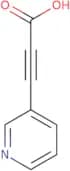
Fórmula:C7H15NOPureza:Min. 95%Peso molecular:129.2 g/mol3-(3-Pyridyl)propiolic acid
CAS:Versatile small molecule scaffold
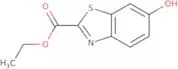
Fórmula:C8H5NO2Pureza:Min. 95%Peso molecular:147.13 g/molEthyl 6-hydroxy-1,3-benzothiazole-2-carboxylate
CAS:Ethyl 6-hydroxy-1,3-benzothiazole-2-carboxylate (EHTBC) is a heterocyclic compound that belongs to the class of fluorinated benzothiazoles. It is used in analytical chemistry as a fluorescent probe for detection of ammonium ions. The fluorescence intensity of EHTBC is proportional to the concentration of ammonium ion and can be detected by a spectrophotometer with an excitation wavelength at 360 nm and emission wavelength at 450 nm. The detection time is typically less than 30 seconds. EHTBC has also been shown to have analytical applications in detecting fluoride ion and other halide ions in water samples. Fluoride ions react with EHTBC to form the fluorescent product ethyl 2-[6-(diethylamino)hexyloxy]benzoate, which can be detected by a fluorimeter with an excitation wavelength at 365 nm and emission wavelength at 480 nm.Fórmula:C10H9NO3SPureza:Min. 95%Peso molecular:223.25 g/mol