Building Blocks
Subcategorias de "Building Blocks"
- Ácidos Borónicos e Derivados de Ácido Borónico(5.784 produtos)
- Building Blocks Quirais(1.242 produtos)
- Building Blocks Hidrocarbonetos(6.105 produtos)
- Building Blocks orgânicos(61.065 produtos)
Foram encontrados 205418 produtos de "Building Blocks"
3-[2-(2-Methoxyethoxy)ethoxy]propan-1-ol
CAS:Versatile small molecule scaffold
Fórmula:C8H18O4Pureza:Min. 95%Peso molecular:178.23 g/mol2-{4-[2-(Dimethylamino)ethoxy]phenyl}ethan-1-amine
CAS:Produto ControladoVersatile small molecule scaffold
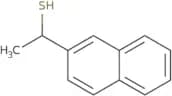
Fórmula:C12H20N2OPureza:Min. 95%Peso molecular:208.3 g/mol1-(Naphthalen-2-yl)ethane-1-thiol
CAS:Versatile small molecule scaffold
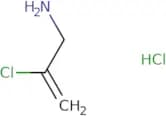
Fórmula:C12H12SPureza:Min. 95%Peso molecular:188.29 g/mol2-Chloroprop-2-en-1-amine hydrochloride
CAS:Versatile small molecule scaffold
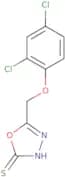
Fórmula:C3H7Cl2NPureza:Min. 95%Peso molecular:128 g/mol5-(2,4-Dichlorophenoxymethyl)-1,3,4-oxadiazole-2-thiol
CAS:Versatile small molecule scaffold
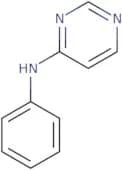
Fórmula:C9H6Cl2N2O2SPureza:Min. 95%Peso molecular:277.13 g/molN-Phenylpyrimidin-4-amine
CAS:N-Phenylpyrimidin-4-amine is a drug that binds to the bromodomain, a protein domain in the cell nucleus. It has been shown to have clinical relevance as an anti-inflammatory agent and as a potential treatment for autoimmune diseases, cancer, and nitro. N-Phenylpyrimidin-4-amine has been shown to inhibit the production of influenza virus in cells by binding to the alkylthio group on its surface. This drug is also being studied as a potential therapy for avian influenza and other viral infections. In addition, it has been shown to inhibit the replication of human immunodeficiency virus (HIV) in cultured lymphocytes.
Fórmula:C10H9N3Pureza:Min. 95%Peso molecular:171.2 g/molRef: 3D-ACA82724
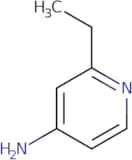
Produto descontinuado2-Ethylpyridin-4-amine
CAS:2-Ethylpyridin-4-amine is a pyridine that can be synthesized from the amination of 4-nitrophenol. It can also be synthesized by acylation of 2-ethylpyridine with ethyl chloroformate followed by cyclization. This compound has shown to have high yields in reactions involving pyridines and it is often used as a precursor for other compounds.
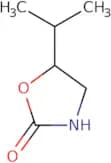
Fórmula:C7H10N2Pureza:Min. 95%Peso molecular:122.17 g/mol5-(Propan-2-yl)-1,3-oxazolidin-2-one
CAS:Versatile small molecule scaffold
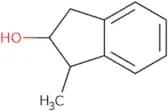
Fórmula:C6H11NO2Pureza:Min. 95%Peso molecular:129.16 g/mol1-Methyl-2,3-dihydro-1H-inden-2-ol
CAS:Versatile small molecule scaffold
Fórmula:C10H12OPureza:Min. 95%Peso molecular:148.2 g/molRef: 3D-ACA82313
Produto descontinuado3-Phenoxybenzonitrile
CAS:3-Phenoxybenzonitrile is a diphenyl ether that can be used as an anti-cancer and pesticide. It has been shown to inhibit the growth of human cancer cells in vitro, and is effective against a number of insect pests. 3-Phenoxybenzonitrile is toxic to humans, but is less toxic than other phenoxybenzamines. 3-Phenoxybenzonitrile has also been shown to be carcinogenic, with parameters such as hydrogen chloride, optimization and chloride affecting its carcinogenicity. This chemical's toxicity depends on the functional group present at the 3-position. In the presence of chloride ions, it reacts with acetonitrile to form 1,2-dioxane and hydrogen chloride. The rate of this reaction will depend on the reaction time and temperature.
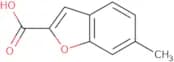
Fórmula:C13H9NOPureza:Min. 95%Peso molecular:195.22 g/mol6-Methyl-benzofuran-2-carboxylic acid
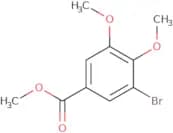
CAS:6-Methyl-benzofuran-2-carboxylic acid is a hydroxamic acid that has been shown to have pharmacological properties. It is a potent histone deacetylase inhibitor and blocks the activity of diuretic, ligand, benzofurans, and inhibitors of deacetylase. 6-Methyl-benzofuran-2-carboxylic acid also has minimal effects on the cardiovascular system.Fórmula:C10H8O3Pureza:Min. 95%Peso molecular:176.17 g/molMethyl 3-bromo-4,5-dimethoxybenzoate
CAS:Versatile small molecule scaffold
Fórmula:C10H11BrO4Pureza:Min. 95%Peso molecular:275.1 g/mol6-Chloro-3-ethyl-1,2,3,4-tetrahydropyrimidine-2,4-dione
CAS:Versatile small molecule scaffold
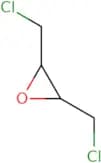
Fórmula:C6H7ClN2O2Pureza:Min. 95%Peso molecular:174.58 g/molrac-(2R,3S)-2,3-Bis(chloromethyl)oxirane
CAS:Versatile small molecule scaffold
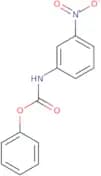
Fórmula:C4H6Cl2OPureza:Min. 95%Peso molecular:140.99 g/molPhenyl N-(3-nitrophenyl)carbamate
CAS:Versatile small molecule scaffold
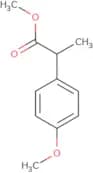
Fórmula:C13H10N2O4Pureza:Min. 95%Peso molecular:258.23 g/molMethyl 2-(4-methoxyphenyl)propanoate
CAS:Versatile small molecule scaffold
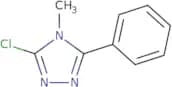
Fórmula:C11H14O3Pureza:Min. 95%Peso molecular:194.23 g/mol3-Chloro-4-methyl-5-phenyl-4H-1,2,4-triazole
CAS:Versatile small molecule scaffold
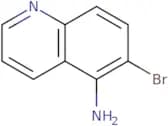
Fórmula:C9H8ClN3Pureza:Min. 95%Peso molecular:193.63 g/mol5-Amino-6-bromoquinoline
CAS:Versatile small molecule scaffold
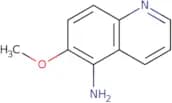
Fórmula:C9H7BrN2Pureza:Min. 95%Peso molecular:223.07 g/mol6-Methoxyquinolin-5-amine
CAS:6-Methoxyquinolin-5-amine is a cytotoxic drug that belongs to the class of quinoline derivatives. It has been shown to induce cell death in cancer cells through a caspase-independent mechanism. 6-Methoxyquinolin-5-amine is also able to induce autophagy, which is a process of self-digestion and recycling of cellular components. The chemical stability of 6-methoxyquinolin-5-amine is greater than that of most other cytotoxic drugs, making it an active analogue with improved pharmacokinetic properties. This compound induces apoptosis by binding to the mitochondria and inhibiting electron transport chain activity. 6-Methoxyquinolin-5-amine can also cause reactive oxygen species release, which leads to DNA damage and subsequent apoptosis induction.
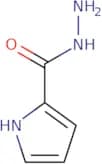
Fórmula:C10H10N2OPureza:Min. 95%Peso molecular:174.2 g/mol1H-pyrrole-2-carbohydrazide
CAS:1H-Pyrrole-2-carbohydrazide is an antimicrobial agent that belongs to the group of synthetic compounds. It can be synthesized by the cross-coupling reaction of anilines with halides, diastereomeric products being formed. The reaction product is purified by preparative high performance liquid chromatography (prep HPLC) and tested for antimycobacterial activity in vitro. 1H-pyrrole-2-carbohydrazide has been shown to inhibit the growth of Mycobacterium tuberculosis and Mycobacterium avium complex at a concentration of 10 μM. This compound also inhibits the synthesis of proteins and nucleic acids, which are essential for bacterial growth.
Fórmula:C5H7N3OPureza:Min. 95%Peso molecular:125.13 g/mol
![3-[2-(2-Methoxyethoxy)ethoxy]propan-1-ol](/_next/image/?url=https%3A%2Fstatic.cymitquimica.com%2Fproducts%2F3D%2Fthumb-webp%2FAEA68848.webp&w=3840&q=75)

![2-{4-[2-(Dimethylamino)ethoxy]phenyl}ethan-1-amine](/_next/image/?url=https%3A%2Fstatic.cymitquimica.com%2Fproducts%2F3D%2Fthumb-webp%2FAEA52569.webp&w=3840&q=75)