Building Blocks
Subcategorias de "Building Blocks"
- Ácidos Borónicos e Derivados de Ácido Borónico(5.784 produtos)
- Building Blocks Quirais(1.242 produtos)
- Building Blocks Hidrocarbonetos(6.105 produtos)
- Building Blocks orgânicos(61.061 produtos)
Foram encontrados 205399 produtos de "Building Blocks"
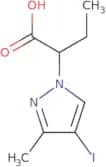
2-(4-Iodo-3-methyl-1H-pyrazol-1-yl)butanoic acid
CAS:Versatile small molecule scaffold
Fórmula:C8H11IN2O2Pureza:Min. 95%Peso molecular:294.09 g/mol4-(4-Iodo-3-methyl-1H-pyrazol-1-yl)butanoic acid
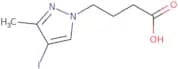
CAS:Versatile small molecule scaffold
Fórmula:C8H11IN2O2Pureza:Min. 95%Peso molecular:294.09 g/mol4-Iodo-1-propyl-1H-pyrazole-5-carboxylic acid
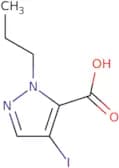
CAS:Versatile small molecule scaffold
Fórmula:C7H9IN2O2Pureza:Min. 95%Peso molecular:280.06 g/mol1-Ethyl-4-iodo-1H-pyrazole-3-carbonitrile
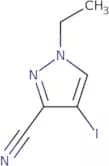
CAS:Versatile small molecule scaffold
Fórmula:C6H6IN3Pureza:Min. 95%Peso molecular:247.04 g/mol2-(4-Iodo-1-methyl-1H-pyrazol-3-yl)acetic acid
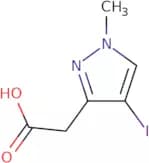
CAS:Versatile small molecule scaffold
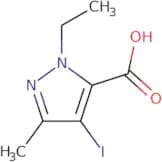
Fórmula:C6H7IN2O2Pureza:Min. 95%Peso molecular:266.04 g/mol1-Ethyl-4-iodo-3-methyl-1H-pyrazole-5-carboxylic acid
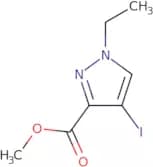
CAS:Versatile small molecule scaffoldFórmula:C7H9IN2O2Pureza:Min. 95%Peso molecular:280.06 g/molMethyl 1-ethyl-4-iodo-1H-pyrazole-3-carboxylate
CAS:Versatile small molecule scaffold
Fórmula:C7H9IN2O2Pureza:Min. 95%Peso molecular:280.06 g/mol4-[(4-Bromophenyl)methoxy]phenol
CAS:Versatile small molecule scaffold
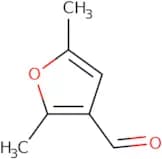
Fórmula:C13H11BrO2Pureza:Min. 95%Peso molecular:279.13 g/mol2,5-Dimethylfuran-3-carbaldehyde
CAS:Versatile small molecule scaffold
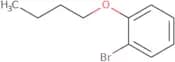
Fórmula:C7H8O2Pureza:Min. 95%Peso molecular:124.14 g/mol1-Bromo-2-butoxybenzene
CAS:1-Bromo-2-butoxybenzene is a chemical compound that is used in the manufacture of zinc oxide. It is also used as an electrolyte in dye-sensitized solar cells. In these cells, 1-bromo-2-butoxybenzene acts as an electron donor, which provides electrons to the redox dye on the surface of the semiconductor. This process leads to recombination, where electrons and holes recombine to produce electricity. The introduction of alkoxy groups into 1-bromo-2-butoxybenzene molecules allows for increased stability and efficiency in dye-sensitized solar cells.
Fórmula:C10H13BrOPureza:Min. 95%Peso molecular:229.11 g/mol1-Cyclohexylethylamine
CAS:1-Cyclohexylethylamine is a small molecule that belongs to the group of amines. It has an enantiopure structure, meaning that it has only one type of chiral centre. 1-Cyclohexylethylamine is a hydrogen bond donor and can form hydrogen bonds with the O atom in the hydroxyl group of citric acid. It has been shown to have anticancer activity against cancer cells in vitro and in vivo. The biological properties of this compound are incompletely understood due to its lack of study. 1-Cyclohexylethylamine crystallizes as a racemic mixture, which means that it contains both enantiomers. Crystallography studies show that the two enantiomers have different physical properties, including melting point and density.
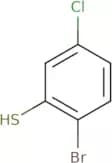
Fórmula:C8H17NPureza:Min. 95%Peso molecular:127.23 g/mol2-Bromo-5-chlorobenzenethiol
CAS:Versatile small molecule scaffold
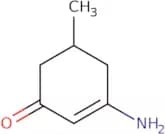
Fórmula:C6H4BrClSPureza:Min. 95%Peso molecular:223.52 g/mol3-Amino-5-methylcyclohex-2-en-1-one
CAS:Versatile small molecule scaffold
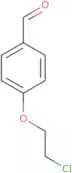
Fórmula:C7H11NOPureza:Min. 95%Peso molecular:125.17 g/mol4-(2-Chloroethoxy)benzaldehyde
CAS:4-(2-Chloroethoxy)benzaldehyde is a phenolic compound that has been shown to have antioxidant properties. It can scavenge free radicals and inhibit lipid peroxidation through its electron donating activity. 4-(2-Chloroethoxy)benzaldehyde has also been shown to have anti-inflammatory, anticancer, antifungal, and antimicrobial properties in vitro. The biological activities of this compound are most likely due to its synthesis of heterocycles and functionalities. 4-(2-Chloroethoxy)benzaldehyde has been found in the etoac extract of Moringa oleifera leaves as well as other solvents.
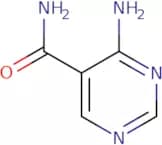
Fórmula:C9H9ClO2Pureza:Min. 95%Peso molecular:184.62 g/mol4-aminopyrimidine-5-carboxamide
CAS:4-Aminopyrimidine-5-carboxamide is an amide that is synthesized from the reaction of eosinophil and amine. This compound inhibits transcription in a dose-dependent manner, with a high potency for iminium and amines, but not primary amines. 4-Aminopyrimidine-5-carboxamide is orally bioavailable and has shown to be effective in animal models. The compound has been optimized for oral administration and has shown to produce good yields. 4-Aminopyrimidine-5-carboxamide also possesses transcription factor inhibitory activity against interleukin, which may provide therapeutic benefit for inflammatory disorders.
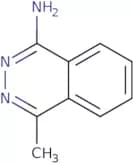
Fórmula:C5H6N4OPureza:Min. 95%Peso molecular:138.13 g/mol4-Methylphthalazin-1-amine
CAS:4-Methylphthalazin-1-amine is a heteroaromatic compound that can be synthesized by cyclization of phenacyl bromides and bromoacetates. It has been found in Australian plants and may have a role in the development of schizophrenia. 4-Methylphthalazin-1-amine is not soluble in water, but it can be dissolved in solvents such as acetone or ethanol. It is also insoluble in most organic solvents.
Fórmula:C9H9N3Pureza:Min. 95%Peso molecular:159.19 g/molRef: 3D-EAA77685
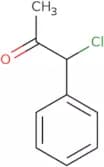
Produto descontinuado1-Chloro-1-phenylpropan-2-one
CAS:1-Chloro-1-phenylpropan-2-one is an exploratory compound that has been deployed as a mechanistic probe to probe the radical mechanism of aldehydes. It has been shown that 1-chloro-1-phenylpropan-2-one can be used to generate fluorescent compounds and study the fluorescence, UV radiation, and radical mechanism of aldehydes. This molecule also has the ability to react with electron rich compounds such as aziridines to form chiral products. The substituent on this molecule will affect its biological activity.
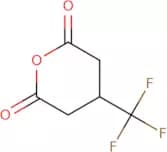
Fórmula:C9H9ClOPureza:Min. 95%Peso molecular:168.62 g/mol4-(Trifluoromethyl)oxane-2,6-dione
CAS:Versatile small molecule scaffold
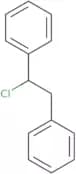
Fórmula:C6H5F3O3Pureza:Min. 95%Peso molecular:182.1 g/mol(2-Chloro-2-phenylethyl)benzene
CAS:2-Chloro-2-phenylethylbenzene is an organic compound that is used in the synthesis of other compounds. It is produced by reacting a chlorinated benzene with an alkali, such as sodium hydroxide, potassium hydroxide, or lithium hydroxide. The reaction produces a mixture of 2-chloro-2-phenylethylbenzene and phenylhydroxyethane. This compound can be converted to 2-chloro-2-(piperidin-1-yl)ethanol by refluxing it with morpholine in methanol and then adding amides such as piperidine or pyrrolidine. The resulting product can be alkylated with carbon tetrachloride to produce 2-chloro-2-(4'-methylphenoxy)ethanol. This compound can also be reduced to give 2-(4'-methylphenoxy)ethanol by heating it with sodium bor
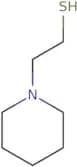
Fórmula:C14H13ClPureza:Min. 95%Peso molecular:216.7 g/mol2-(Piperidin-1-yl)ethane-1-thiol
CAS:Versatile small molecule scaffold
Fórmula:C7H15NSPureza:Min. 95%Peso molecular:145.27 g/mol

![4-[(4-Bromophenyl)methoxy]phenol](/_next/image/?url=https%3A%2Fstatic.cymitquimica.com%2Fproducts%2F3D%2Fthumb-webp%2FECA58952.webp&w=3840&q=75)