


Building Blocks
Subcategorias de "Building Blocks"
- Ácidos Borónicos e Derivados de Ácido Borónico(5.774 produtos)
- Building Blocks Quirais(1.237 produtos)
- Building Blocks Hidrocarbonetos(6.098 produtos)
- Building Blocks orgânicos(60.970 produtos)
Foram encontrados 205134 produtos de "Building Blocks"
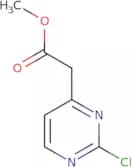
Methyl 2-(2-chloropyrimidin-4-yl)acetate
CAS:Versatile small molecule scaffold
Fórmula:C7H7ClN2O2Pureza:Min. 95%Peso molecular:186.59 g/mol1-Hydroxycyclopentane-1-carbonitrile
CAS:1-Hydroxycyclopentane-1-carbonitrile is a monomer that is hydrolyzed to form benzoin and cyanohydrins. It can be used in the production of scifinder as a monomer or dimerizer.
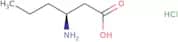
Fórmula:C6H9NOPureza:Min. 95%Peso molecular:111.14 g/mol(S)-3-Aminohexanoic acid hydrochloride ee
CAS:Versatile small molecule scaffold
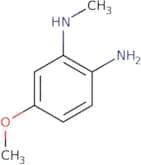
Fórmula:C6H14ClNO2Pureza:Min. 95%Peso molecular:167.63 g/mol5-Methoxy-N1-methylbenzene-1,2-diamine
CAS:Versatile small molecule scaffold
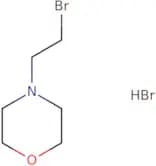
Fórmula:C8H12N2OPureza:Min. 95%Peso molecular:152.19 g/mol4-(2-Bromoethyl)morpholine hydrobromide
CAS:4-(2-Bromoethyl)morpholine hydrobromide is a solvent that is used as an agent in the production of other chemicals. It is a colorless, crystalline solid with a constant melting point of 130 to 131 degrees Celsius. 4-(2-Bromoethyl)morpholine hydrobromide is soluble in acetone, ethanol, ether, and water. This chemical has been shown to be toxic and should be handled with care.
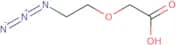
Fórmula:C6H13Br2NOPureza:Min. 95%Peso molecular:274.98 g/mol2-(2-Azidoethoxy)acetic Acid
CAS:2-(2-Azidoethoxy)acetic Acid is a hydrophobic antibacterial agent that can be used to inhibit bacterial growth by disrupting the cell membrane. It has been shown to inhibit the growth of Staphylococcus aureus and Escherichia coli, which may be due to its ability to bind to the glutathione moiety in the bacterial cell membrane. 2-(2-Azidoethoxy)acetic Acid has been shown to have antimicrobial activity against both Gram-positive and Gram-negative bacteria in vitro. This compound is also able to cross the cell membrane, inhibiting bacterial replication in vivo.
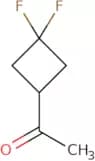
Fórmula:C4H7N3O3Pureza:Min. 95%Peso molecular:145.12 g/mol1-(3,3-Difluorocyclobutyl)ethan-1-one
CAS:Versatile small molecule scaffold
Fórmula:C6H8F2OPureza:Min. 95%Peso molecular:134.13 g/mol2,4,6-Triphenylpyridine
CAS:2,4,6-Triphenylpyridine is an aromatic heterocycle with a benzyl group and trifluoroacetic acid at the 2-, 4-, and 6-positions. It is a colorless solid that has a melting point of 183 °C. In the gas phase, it exists as three anion radicals (2-, 4-, and 6-). These radicals are responsible for its optical properties. The 2-anion radical has a blue emission spectrum while the 4- and 6-anion radicals have red emission spectra. 2,4,6-Triphenylpyridine can be used as an indicator for trifluoroacetic acid or benzonitrile. It is soluble in primary alcohols such as methanol and ethanol at lower temperatures, but becomes insoluble at higher temperatures. 2,4,6-Triphenylpyridine also has functional theory applications due to its ability to
Fórmula:C23H17NPureza:Min. 95%Peso molecular:307.4 g/molDiethyl Acetylphosphonate
CAS:Diethyl Acetylphosphonate is a synthetic chemical that is used in the production of ethyl esters, which are used as intermediates for the production of epoxides. It has shown to be a bidentate ligand and reacts with primary amines. Diethyl Acetylphosphonate can be made by reacting phosphorus pentachloride with ethyl acetate and hydrochloric acid. The reaction mechanism is similar to that of other organophosphorus compounds, in which a phosphine oxide intermediate reacts with an organic halide. Diethyl Acetylphosphonate has shown to be effective in detergent compositions and triethyl orthoformate, as well as alkanoic acid.
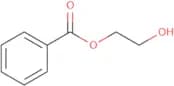
Fórmula:C6H13O4PPureza:Min. 95%Peso molecular:180.14 g/mol2-Hydroxyethyl benzoate
CAS:2-Hydroxyethyl benzoate is a model system that has been used to study the mechanism of hydrolysis of an ester with a hydroxyl group. The reaction products are a metal hydroxide and a chloride ion. 2-Hydroxyethyl benzoate is an antimicrobial agent that has shown activity against bacteria, fungi, and protozoa. It is thought to work by reacting with fatty acids in the cell membrane, leading to disruption of the membrane and leakage of cellular contents. It also reacts with chloride ions to form hydroxybenzoic acid and water molecules. The activation energy for this reaction was found to be around 19 kJ mol−1.
Fórmula:C9H10O3Pureza:Min. 95%Peso molecular:166.17 g/mol1-[4-(Propan-2-yl)phenyl]ethan-1-ol
CAS:Versatile small molecule scaffold
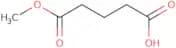
Fórmula:C11H16OPureza:Min. 95%Peso molecular:164.24 g/molMonomethyl Glutarate
CAS:Monomethyl glutarate is a monomer for the synthesis of polymers. It has been used in the past as a precursor for the production of polyacrylic acid and its copolymers. Monomethyl glutarate is synthesized by the reaction of hydrochloric acid, high salt, and an expression plasmid containing glutarate dehydrogenase. This compound is also used as a reagent in kinetic studies of fatty acids and glutaric acid. Monomethyl glutarate is an acidic compound with a pKa value of 3.5 at 25°C. It is rapidly hydrolyzed in water to form monomethyl glutarate acid, which has a pKa value of 2.4 at 25°C. Monomethyl glutarate can be ingested orally or applied topically due to its low energy requirements for hydrolysis in water.
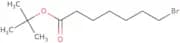
Fórmula:C6H10O4Pureza:Min. 95%Peso molecular:146.14 g/moltert-Butyl 7-bromoheptanoate
CAS:Versatile small molecule scaffold
Fórmula:C11H21BrO2Pureza:Min. 95%Peso molecular:265.19 g/mol2-Bromo-5-fluoro-4-nitroaniline
CAS:2-Bromo-5-fluoro-4-nitroaniline can be synthesized in a reaction system of ammonium chloride, hydrochloric acid, and water vapor. The reaction is carried out at a temperature of 190°C under reflux. The efficiency of this synthesis is high, and the chemical yield is about 90%.
Fórmula:C6H4BrFN2O2Pureza:Min. 95%Peso molecular:235.01 g/molPotassium tert-butyl N-[3-(trifluoroboranuidyl)propyl]carbamate
CAS:Versatile small molecule scaffold
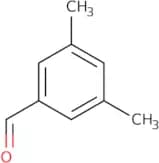
Fórmula:C8H16BF3KNO2Pureza:Min. 95%Peso molecular:265.13 g/mol3,5-Dimethylbenzaldehyde
CAS:3,5-Dimethylbenzaldehyde is an organic compound that is a colorless liquid. It has a chemical formula of C9H12O2 and is classified as an aldehyde. 3,5-Dimethylbenzaldehyde can be synthesized by the reaction of isopropyl palmitate with xylene in the presence of carbon as a source. The reaction time required for this synthesis is approximately one day. The major products of this reaction are 3,5-dimethylbenzaldehyde and 2-methylbutanal. This reaction mechanism can also be used to determine the concentration of urinary metabolites in human urine samples. Analysis of these samples requires an organic solvent such as hexane or dichloromethane. Kinetic data was collected from the rate at which zinc powder reacts with 3,5-dimethylbenzaldehyde over time at different concentrations. A kinetic experiment was conducted using c–h bond activation to produce 3,5-dimethoxy
Fórmula:C9H10OPureza:Min. 95%Cor e Forma:Colorless Clear LiquidPeso molecular:134.18 g/mol6,7-dihydro-5h-pyrrolo[3,4-d]pyrimidin-2-amine 2hcl
CAS:Versatile small molecule scaffold
Fórmula:C6H10Cl2N4Pureza:Min. 95%Peso molecular:209.07 g/mol6-Oxa-2-azaspiro[3.4]octane HCl
CAS:Versatile small molecule scaffold
Fórmula:C6H12ClNOPureza:Min. 95%Peso molecular:149.62 g/mol2,4,6-Trichloronicotinaldehyde
CAS:Versatile small molecule scaffold
Fórmula:C6H2Cl3NOPureza:Min. 95%Peso molecular:210.45 g/molethyl 6-benzyl-2-oxa-6-azaspiro[3.4]octane-8-carboxylate
CAS:Versatile small molecule scaffold
Fórmula:C16H21NO3Pureza:Min. 95%Peso molecular:275.35 g/mol




![1-[4-(Propan-2-yl)phenyl]ethan-1-ol](/_next/image/?url=https%3A%2Fstatic.cymitquimica.com%2Fproducts%2F3D%2Fthumb-webp%2FBAA47510.webp&w=3840&q=75)

![Potassium tert-butyl N-[3-(trifluoroboranuidyl)propyl]carbamate](/_next/image/?url=https%3A%2Fstatic.cymitquimica.com%2Fproducts%2F3D%2Fthumb-webp%2FCNC28926.webp&w=3840&q=75)
![6,7-dihydro-5h-pyrrolo[3,4-d]pyrimidin-2-amine 2hcl](/_next/image/?url=https%3A%2Fstatic.cymitquimica.com%2Fproducts%2F3D%2Fthumb-webp%2FHGA32752.webp&w=3840&q=75)
![6-Oxa-2-azaspiro[3.4]octane HCl](/_next/image/?url=https%3A%2Fstatic.cymitquimica.com%2Fproducts%2F3D%2Fthumb-webp%2FJEC65612.webp&w=3840&q=75)

![ethyl 6-benzyl-2-oxa-6-azaspiro[3.4]octane-8-carboxylate](/_next/image/?url=https%3A%2Fstatic.cymitquimica.com%2Fproducts%2F3D%2Fthumb-webp%2FLBC69289.webp&w=3840&q=75)