


Building Blocks
Subcategorias de "Building Blocks"
- Ácidos Borónicos e Derivados de Ácido Borónico(5.774 produtos)
- Building Blocks Quirais(1.237 produtos)
- Building Blocks Hidrocarbonetos(6.098 produtos)
- Building Blocks orgânicos(60.970 produtos)
Foram encontrados 205135 produtos de "Building Blocks"
Methyl 3-bromopyrrole-2-carboxylate
CAS:Versatile small molecule scaffoldFórmula:C6H6BrNO2Pureza:Min. 95%Peso molecular:204.02 g/mol1-[4-(Propan-2-yl)phenyl]ethan-1-ol
CAS:Versatile small molecule scaffold
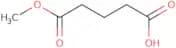
Fórmula:C11H16OPureza:Min. 95%Peso molecular:164.24 g/molMonomethyl Glutarate
CAS:Monomethyl glutarate is a monomer for the synthesis of polymers. It has been used in the past as a precursor for the production of polyacrylic acid and its copolymers. Monomethyl glutarate is synthesized by the reaction of hydrochloric acid, high salt, and an expression plasmid containing glutarate dehydrogenase. This compound is also used as a reagent in kinetic studies of fatty acids and glutaric acid. Monomethyl glutarate is an acidic compound with a pKa value of 3.5 at 25°C. It is rapidly hydrolyzed in water to form monomethyl glutarate acid, which has a pKa value of 2.4 at 25°C. Monomethyl glutarate can be ingested orally or applied topically due to its low energy requirements for hydrolysis in water.
Fórmula:C6H10O4Pureza:Min. 95%Peso molecular:146.14 g/mol1-Hydroxycyclopentane-1-carbonitrile
CAS:1-Hydroxycyclopentane-1-carbonitrile is a monomer that is hydrolyzed to form benzoin and cyanohydrins. It can be used in the production of scifinder as a monomer or dimerizer.
Fórmula:C6H9NOPureza:Min. 95%Peso molecular:111.14 g/mol1-Bromo-4-iodobenzene
CAS:1-Bromo-4-iodobenzene is an aryl halide that can be synthesized by the cross coupling of ethyl formate and hydrochloric acid. This compound is useful in analytical applications, such as chromatographic methods, due to its high solubility in organic solvents. It is also used in synthetic procedures for the preparation of other aryl halides. 1-Bromo-4-iodobenzene has been used to synthesize calcium carbonate via the Suzuki coupling reaction with sodium salts, which are nucleophiles. The carbonyl group on this molecule reacts with the nucleophile, forming an alkyl group and a metal salt. Transfer reactions involving these salts can produce other products with different functional groups.
Fórmula:C6H4BrIPureza:Min. 95%Cor e Forma:PowderPeso molecular:282.9 g/molRef: 3D-FB38228
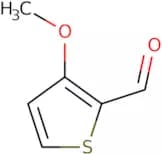
Produto descontinuado3-Methoxythiophene-2-carbaldehyde
CAS:3-Methoxythiophene-2-carbaldehyde is a ligand that has been shown to form a stable complex with potassium chloride. This compound is also reactive, and can be stabilized in the reaction vessel. In the presence of sulfate ions, 3-methoxythiophene-2-carbaldehyde will react to form a phosphotungstic acid precipitate. The dehydrated salt can be recrystallized by adding phosphotungstic acid, which stabilizes the product.
Fórmula:C6H6O2SPureza:Min. 95%Peso molecular:142.18 g/moltert-Butyl (2,2-difluoro-3-hydroxypropyl)carbamate
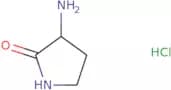
CAS:Versatile small molecule scaffoldFórmula:C10H13NO4Pureza:Min. 95%Peso molecular:211.21 g/mol3-aminopyrrolidin-2-one hcl
CAS:3-Aminopyrrolidin-2-one hcl is an antibiotic that is used to treat tuberculosis. It inhibits the enzyme transacylase, which catalyses the conversion of L-lysine into L-pipecolic acid in bacteria. This antibiotic has been shown to be effective against Mycobacterium tuberculosis and Mycobacterium avium complex. 3-Aminopyrrolidin-2-one hcl has a broad spectrum of activity against gram positive and gram negative bacteria, but it is not active against acid-fast bacteria.
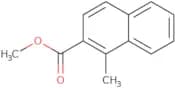
Fórmula:C4H9ClN2OPureza:Min. 95%Peso molecular:136.58 g/molMethyl 1-methylnaphthalene-2-carboxylate
CAS:Versatile small molecule scaffold
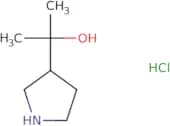
Fórmula:C13H12O2Pureza:Min. 95%Peso molecular:200.23 g/mol(S)-2-(3-Pyrrolidinyl)-2-propanol Hydrochloride ee
CAS:Versatile small molecule scaffold
Fórmula:C7H16ClNOPureza:Min. 95%Peso molecular:165.66 g/mol(S)-2-(N-Boc-aminomethyl)morpholine
CAS:Versatile small molecule scaffold
Fórmula:C10H20N2O3Pureza:Min. 95%Peso molecular:216.27 g/mol4-Bromo-2,3-difluoropyridine
CAS:Versatile small molecule scaffold
Fórmula:C5H2BrF2NPureza:Min. 95%Peso molecular:193.98 g/mol1,2-Bis(chlorodimethylsilyl)ethane
CAS:1,2-Bis(chlorodimethylsilyl)ethane is a reactive chemical that is synthesized from hydroxychloroformates and hydrogen chloride. It reacts with silicon to form chlorosilanes, which are then used in the polymerization of siloxanes. 1,2-Bis(chlorodimethylsilyl)ethane has been shown to be an effective initiator for the polymerization of methyl methacrylate and ethylene glycol dimethacrylate. 1,2-Bis(chlorodimethylsilyl)ethane is also used as a hydroxyl group donor in organic reactions.
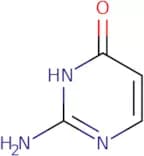
Fórmula:C6H16Cl2Si2Pureza:Min. 95 Area-%Cor e Forma:PowderPeso molecular:215.27 g/molIsocytosine
CAS:Isocytosine is a prodrug that has been synthesized with the intramolecular hydrogen on the nitrogen atoms, which makes it more chemically stable. Isocytosine is a reactive molecule, and can react with tautomers to form isocytosine derivatives. Isocytosine contains three hydrogen atoms that are transferable through reactions to other molecules. The chemical stability of isocytosine allows for its use in wastewater treatment. It also has metabolic effects, such as the inhibition of colorectal adenocarcinoma and metabolic disorders. Isocytosine can be used as a model system for studying transfer reactions and reaction mechanisms.
Fórmula:C4H5N3OPureza:Min. 95%Cor e Forma:PowderPeso molecular:111.1 g/molRef: 3D-FI07235
Produto descontinuado7-Bromo-1-methylnaphthalene
CAS:7-Bromo-1-methylnaphthalene is a fluorescent dye that can be used to measure the concentration of DNA, RNA, and proteins. This compound is an intercalator, which means that it can bind to double stranded DNA or RNA near the center of the molecule where there is a space for binding. It has been used in the study of the thymic gland because it binds to DNA and RNA in cells from this organ. 7-Bromo-1-methylnaphthalene has also been used as a skeleton for organic compounds, such as dimethylammonium. The bromine atom in this compound can be replaced with other atoms like iodine or chlorine to make different colored dyes.
Fórmula:C11H9BrPureza:Min. 95%Peso molecular:221.09 g/molDiethyl Acetylphosphonate
CAS:Diethyl Acetylphosphonate is a synthetic chemical that is used in the production of ethyl esters, which are used as intermediates for the production of epoxides. It has shown to be a bidentate ligand and reacts with primary amines. Diethyl Acetylphosphonate can be made by reacting phosphorus pentachloride with ethyl acetate and hydrochloric acid. The reaction mechanism is similar to that of other organophosphorus compounds, in which a phosphine oxide intermediate reacts with an organic halide. Diethyl Acetylphosphonate has shown to be effective in detergent compositions and triethyl orthoformate, as well as alkanoic acid.
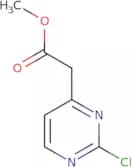
Fórmula:C6H13O4PPureza:Min. 95%Peso molecular:180.14 g/molMethyl 2-(2-chloropyrimidin-4-yl)acetate
CAS:Versatile small molecule scaffold
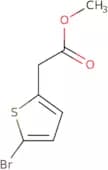
Fórmula:C7H7ClN2O2Pureza:Min. 95%Peso molecular:186.59 g/molMethyl 2-(5-bromothiophen-2-yl)acetate
CAS:Versatile small molecule scaffold
Fórmula:C7H7BrO2SPureza:Min. 95%Peso molecular:235.1 g/mol8-Bromo-2-methylimidazo[1,2-a]pyridine
CAS:Versatile small molecule scaffold
Fórmula:C8H7N2BrPureza:Min. 95%Peso molecular:211.05 g/mol4(4,4,5,5-Tetramethyl-1,3,2-dioxaborolan-2-yl)-2,3-dihydro-1H-inden-1-one
CAS:Versatile small molecule scaffold
Fórmula:C15H19BO3Pureza:Min. 95%Peso molecular:258.12 g/mol


![1-[4-(Propan-2-yl)phenyl]ethan-1-ol](/_next/image/?url=https%3A%2Fstatic.cymitquimica.com%2Fproducts%2F3D%2Fthumb-webp%2FBAA47510.webp&w=3840&q=75)







![8-Bromo-2-methylimidazo[1,2-a]pyridine](/_next/image/?url=https%3A%2Fstatic.cymitquimica.com%2Fproducts%2F3D%2Fthumb-webp%2FUXB37475.webp&w=3840&q=75)
