Building Blocks
Subcategorias de "Building Blocks"
- Ácidos Borónicos e Derivados de Ácido Borónico(5.778 produtos)
- Building Blocks Quirais(1.243 produtos)
- Building Blocks Hidrocarbonetos(6.098 produtos)
- Building Blocks orgânicos(61.036 produtos)
Foram encontrados 205240 produtos de "Building Blocks"
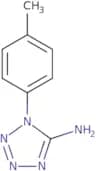
1-(4-Methylphenyl)-1H-1,2,3,4-tetrazol-5-amine
CAS:Versatile small molecule scaffold
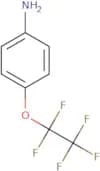
Fórmula:C8H9N5Pureza:Min. 95%Peso molecular:175.19 g/mol4-(Perfluoroethoxy)aniline
CAS:Versatile small molecule scaffold
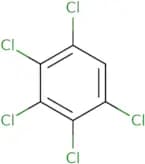
Fórmula:C8H6F5NOPureza:Min. 95%Peso molecular:227.13 g/mol1,2,3,4,5-Pentachlorobenzene
CAS:1,2,3,4,5-Pentachlorobenzene is a chlorinated hydrocarbon that is used in the production of pesticides and herbicides. It is an ingredient in the manufacturing of pentachlorophenol and pentachloronitrobenzene. 1,2,3,4,5-Pentachlorobenzene has been used as a chemical intermediate or solvent for the production of other chemicals. The emissions from this chemical can be harmful to humans and animals because it has been shown to affect enzyme activities at sublethal doses. It also affects rat liver microsomes and causes DNA damage that can lead to cancer.
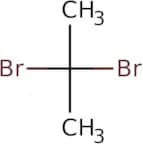
Fórmula:C6HCl5Pureza:Min. 95%Peso molecular:250.34 g/mol2,2-Dibromopropane
CAS:2,2-Dibromopropane is a synthetic chemical that has been used as a precursor in the production of nylon. It is an activator that can be used to form covalent bonds with reactive groups on other molecules. The activation energy for the reaction with piperazine is between 104 and 106 kJ/mol. 2,2-Dibromopropane undergoes acylation reactions under certain conditions, forming reaction products such as 2,2-dibromoethyl acetate and 2,2-dibromoethanol. The molecular weight of 2,2-dibromopropane is 192.19 g/mol and its structural formula is CHBrCHBrCHBrCHBrC≡C≡C≡C≡C≡C≡CC(O)OH.
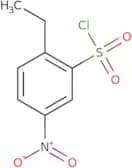
Fórmula:C3H6Br2Pureza:Min. 95%Peso molecular:201.89 g/mol2-Ethyl-5-nitrobenzene-1-sulfonyl chloride
CAS:Versatile small molecule scaffold
Fórmula:C8H8ClNO4SPureza:Min. 95%Peso molecular:249.67 g/mol3-(3-Fluorophenoxymethyl)-5H,6H,7H,8H,9H-[1,2,4]triazolo[4,3-a]azepine
CAS:Versatile small molecule scaffoldFórmula:C14H16FN3OPureza:Min. 95%Peso molecular:261.29 g/mol2-Mercaptobenzo[d]thiazole-6-carbonitrile
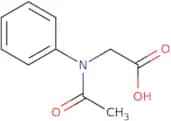
CAS:Versatile small molecule scaffoldFórmula:C8H4N2S2Pureza:Min. 95%Peso molecular:192.25 g/mol2-(N-Phenylacetamido)acetic acid
CAS:2-(N-Phenylacetamido)acetic acid is an alkyl ester that is synthesized by the reaction of acetyl chloride with toluene. This compound can be used as a pharmaceutical intermediate and a synthetic sweetener. The hydrogenation of 2-(N-phenylacetamido)acetic acid produces 2-(N-phenylacetamido)ethanoic acid, which has been shown to have antihypertensive effects. The p-toluenesulfonic acid is an acid catalyst that facilitates this reaction.
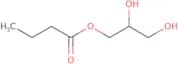
The acetylation of 2-(N-phenylacetamido)acetic acid produces 2-(N-phenylacetamido)propionic acid, which has been used in the synthesis of rhodium. The reaction also results in a number of diastereoisomeric salts; these are stereoisomers that differ from each other because they are not mirror images of one another.Fórmula:C10H11NO3Pureza:Min. 95%Peso molecular:193.2 g/mol1-Monotetranoin
CAS:1-Monotetranoin is a fatty ester that is involved in the process of lipolysis, which is the breakdown of fat cells. Lipolysis occurs when an enzyme called lipase hydrolyzes triglycerides into glycerol and three fatty acids. 1-Monotetranoin has been shown to be a potent stimulator of growth factor production and cell proliferation in vivo models. It has also been shown to be effective at inhibiting angiogenic processes in vitro, including the release of growth factors from fat cells. The neutral pH optimum for 1-monotetranoin is between 7 and 8, which may be due to its hydrophobic nature.
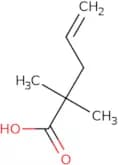
Fórmula:C7H14O4Pureza:Min. 95%Peso molecular:162.18 g/mol2,2-Dimethyl-4-pentenoic Acid
CAS:2,2-Dimethyl-4-pentenoic acid is a decarboxylating agent that converts the carboxylic acid group to an aldehyde. It is commonly used as a reducing agent in organic synthesis, especially for the conversion of esters and nitriles to alcohols and amines respectively. The synthesis of 2,2-dimethyl-4-pentenoic acid is achieved by reacting piperidine with propylene oxide. This reaction proceeds via a six-membered ring intermediate that decomposes to form the final product. The reaction can be catalyzed with peroxide or hydrogen peroxide, which leads to a high yield. 2,2-Dimethyl-4-pentenoic acid has been shown to be effective against hyperproteinemia and lipogenous disorders such as steatosis and cholestasis.
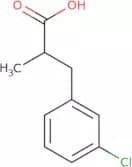
Fórmula:C7H12O2Pureza:Min. 95%Peso molecular:128.17 g/mol3-(3-Chlorophenyl)-2-methylpropanoic acid
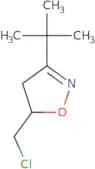
CAS:Versatile small molecule scaffoldFórmula:C10H11ClO2Pureza:Min. 95%Peso molecular:198.64 g/mol3-tert-Butyl-5-(chloromethyl)-4,5-dihydro-1,2-oxazole
CAS:Versatile small molecule scaffoldFórmula:C8H14ClNOPureza:Min. 95%Peso molecular:175.65 g/molN-(3-Methoxyphenyl)prop-2-enamide
CAS:Versatile small molecule scaffold
Fórmula:C10H11NO2Pureza:Min. 95%Peso molecular:177.2 g/mol2-Chloro-3,4-dihydronaphthalen-1(2H)-one
CAS:2-Chloro-3,4-dihydronaphthalen-1(2H)-one is a sulfoxide with significant antifungal activity. It has been shown to be effective against Candida albicans and other fungi, including Aspergillus niger and Mucor racemosus. It is commonly used as an electrolyte in electroluminescent devices, such as light emitting diodes (LEDs). The reaction time for the formation of 2-chloro-3,4-dihydronaphthalen-1(2H)-one from potassium sulfate is dependent on the acid catalyst used. Organic chemists have shown that the use of 2-chloro-3,4-dihydronaphthalen-1(2H)-one can inhibit leukotriene synthesis.
Fórmula:C10H9OClPureza:Min. 95%Peso molecular:180.63 g/mol4-(chloromethyl)-1-methyl-1H-imidazole hydrochloride
CAS:Produto ControladoVersatile small molecule scaffold
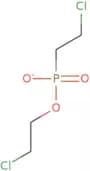
Fórmula:C5H8Cl2N2Pureza:Min. 95%Peso molecular:167.03 g/mol(2-Chloroethoxy)(2-chloroethyl)phosphinic acid
CAS:Versatile small molecule scaffold
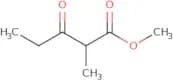
Fórmula:C4H8Cl2O3PPureza:Min. 95%Peso molecular:205.98 g/mol2-Methyl-3-oxo-pentanoicacid methyl ester
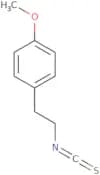
CAS:The synthesis of 2-methyl-3-oxo-pentanoic acid methyl ester is accomplished by a three step process. The first step is the intramolecular condensation of 2,2-dimethylpropionic acid with acetone to form a 1:1 mixture of 3,4-dihydroxybutyl and 4,4-dihydroxybutyl esters. The second step is the selective transesterification of the 3,4-dihydroxybutyl ester with benzaldehyde. This reaction provides an optically pure 2-methyl-3-oxo-pentanoic acid methyl ester as the major product. The third step is an aldol condensation between the ketone from the second step and acetone to produce another optically pure 2,2 dimethylpropionic acid methyl ester.Fórmula:C7H12O3Pureza:Min. 95%Peso molecular:144.17 g/mol1-(2-Isothiocyanatoethyl)-4-methoxybenzene
CAS:Versatile small molecule scaffold
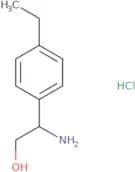
Fórmula:C10H11NOSPureza:Min. 95%Peso molecular:193.27 g/mol2-Amino-2-(4-ethylphenyl)ethan-1-ol hydrochloride
CAS:Versatile small molecule scaffold
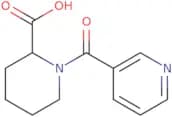
Fórmula:C10H16ClNOPureza:Min. 95%Peso molecular:201.69 g/mol1-(Pyridine-3-carbonyl)piperidine-2-carboxylic acid
CAS:Versatile small molecule scaffold
Fórmula:C12H14N2O3Pureza:Min. 95%Peso molecular:234.25 g/mol

![3-(3-Fluorophenoxymethyl)-5H,6H,7H,8H,9H-[1,2,4]triazolo[4,3-a]azepine](/_next/image/?url=https%3A%2Fstatic.cymitquimica.com%2Fproducts%2F3D%2Fthumb-webp%2FQGB27246.webp&w=3840&q=75)
![2-Mercaptobenzo[d]thiazole-6-carbonitrile](/_next/image/?url=https%3A%2Fstatic.cymitquimica.com%2Fproducts%2F3D%2Fthumb-webp%2FQMA22879.webp&w=3840&q=75)