Building Blocks
Subcategorias de "Building Blocks"
- Ácidos Borónicos e Derivados de Ácido Borónico(5.778 produtos)
- Building Blocks Quirais(1.243 produtos)
- Building Blocks Hidrocarbonetos(6.099 produtos)
- Building Blocks orgânicos(61.038 produtos)
Foram encontrados 205376 produtos de "Building Blocks"
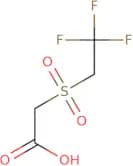
2-(2,2,2-Trifluoroethanesulfonyl)acetic acid
CAS:Trifloxacin is a broad-spectrum antibacterial drug that belongs to the class of formyloxy compounds and the cephalosporin family. It has been shown to be active against both Gram-positive and Gram-negative bacteria, with activity against strains resistant to penicillin, ampicillin, erythromycin, and chloramphenicol. Trifloxacin binds to the bacterial ribosome by displacement of a pyridyl group in the ribosomal RNA, inhibiting protein synthesis. This binding inhibits cell growth by preventing the production of proteins that are vital for cell division.
br>
Trifloxacin has also been found to inhibit DNA gyrase and topoisomerase IV in vitro. Trifloxacin's mechanism of action is similar to that of other quinolones such as norfloxacin and ciprofloxacin.Fórmula:C4H5F3O4SPureza:Min. 95%Peso molecular:206.14 g/mol5-Methylquinoline
CAS:5-Methylquinoline is a quinoline derivative that is used in the synthesis of other quinoline derivatives. It can be synthesized from cinnamaldehyde, which can be obtained from cinnamic acid or benzaldehyde. 5-Methylquinoline has been shown to have antioxidant properties and inhibit colorectal carcinoma cells in vitro. The compound also inhibits the growth of caco-2 cells. One isomer of 5-methylquinoline, ethenyl, has been shown to cause a shift in the spectrum of light absorbed by caco-2 cells.
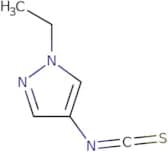
Fórmula:C10H9NPureza:Min. 95%Peso molecular:143.18 g/mol1-Ethyl-4-isothiocyanato-1H-pyrazole
CAS:Versatile small molecule scaffold
Fórmula:C6H7N3SPureza:Min. 95%Peso molecular:153.21 g/mol3-Fluoro-4-[3-(trifluoromethyl)-1H-pyrazol-1-yl]aniline
CAS:Versatile small molecule scaffold
Fórmula:C10H7F4N3Pureza:Min. 95%Peso molecular:245.18 g/mol3-Chloro-4-[3-(trifluoromethyl)-1H-pyrazol-1-yl]aniline
CAS:Versatile small molecule scaffoldFórmula:C10H7ClF3N3Pureza:Min. 95%Peso molecular:261.63 g/mol4-Methyl-1,1,3-trioxothieno[3,2-d][1,2]thiazole-5-carboxylic acid
CAS:Versatile small molecule scaffoldFórmula:C7H5NO5S2Pureza:Min. 95%Peso molecular:247.3 g/mol[4-(Thien-2-yl)phenyl]methanol
CAS:Versatile small molecule scaffold
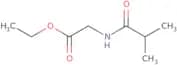
Fórmula:C11H10OSPureza:Min. 95%Peso molecular:190.26 g/molEthyl 2-(2-methylpropanamido)acetate
CAS:Versatile small molecule scaffold
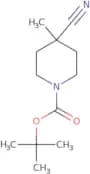
Fórmula:C8H15NO3Pureza:Min. 95%Peso molecular:173.21 g/moltert-Butyl 4-cyano-4-methylpiperidine-1-carboxylate
CAS:Versatile small molecule scaffold
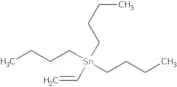
Fórmula:C12H20N2O2Pureza:Min. 95%Peso molecular:224.3 g/molVinyltributyltin
CAS:Produto ControladoVinyltributyltin is a dibutyltin oxide (DBTO) enantiomer that has been shown to inhibit the HIV-1 protease. Vinyltributyltin has also been shown to reduce inflammation in bowel disease, as well as to have synergistic effects with other drugs in the treatment of cancer and inflammatory bowel disease. The mechanism of action of vinyltributyltin is not yet known, but it may be related to its ability to inhibit the quinazolone-dependent formation of reactive oxygen species. Vinyltributyltin also inhibits the NS3 protease, which is an enzyme involved in hepatitis C virus replication.
Fórmula:C14H30SnPureza:Min. 95%Cor e Forma:Colorless Clear LiquidPeso molecular:317.1 g/mol3-Azabicyclo[3.2.1]octan-6-ol hydrochlorides
CAS:Versatile small molecule scaffoldFórmula:C7H14ClNOPureza:Min. 95%Peso molecular:163.6 g/mol1,5,5-Trimethylpyrrolidin-3-amine dihydrochloride
CAS:Versatile small molecule scaffoldFórmula:C7H18Cl2N2Pureza:Min. 95%Peso molecular:201.1 g/mol5-Methoxybicyclo[2.2.1]heptan-2-amine hydrochloride
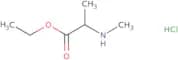
CAS:Versatile small molecule scaffoldFórmula:C8H16ClNOPureza:Min. 95%Peso molecular:177.7 g/molEthyl (2R)-2-(methylamino)propanoate hydrochloride
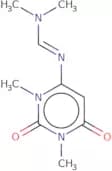
CAS:Versatile small molecule scaffoldFórmula:C6H14ClNO2Pureza:Min. 95%Peso molecular:167.6 g/mol(E)-N'-(1,3-Dimethyl-2,6-dioxo-1,2,3,6-tetrahydropyrimidin-4-yl)-N,N-dimethylmethanimidamide
CAS:Versatile small molecule scaffoldFórmula:C9H14N4O2Pureza:Min. 95%Peso molecular:210.2 g/mol[3-(Propan-2-yl)phenyl]thiourea
CAS:Versatile small molecule scaffold
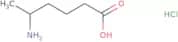
Fórmula:C10H14N2SPureza:Min. 95%Peso molecular:194.3 g/mol5-Aminohexanoic acid hydrochloride
CAS:Versatile small molecule scaffold
Fórmula:C6H14ClNO2Pureza:Min. 95%Peso molecular:167.63 g/molRef: 3D-FJB91365
Produto descontinuadoJMS-17-2
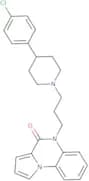
CAS:JMS-17-2 is a small molecule that was shown to have a potent and selective inhibitory effect on the production of chemokines in cancer cells. It blocks the interaction between CXCL12 and its receptor, CXCR4. This interaction is important for normal bone tissue development and function, as well as for chemotaxis and metastasis of cancer cells. JMS-17-2 has been shown to prevent tumor growth in animal models by inhibiting angiogenesis, or the formation of new blood vessels to supply nutrients to tumors. The drug also inhibits tumor growth by decreasing the number of primary tumors, reducing bone lesions, and inhibiting the progression of pancreatic cancer. Clinical trials are currently being conducted to assess the efficacy of JMS-17-2 in humans with advanced solid tumors.
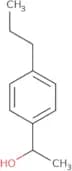
Fórmula:C25H26ClN3OPureza:Min. 95%Peso molecular:419.95 g/mol(1R)-1-(4-Propylphenyl)ethan-1-ol
CAS:Versatile small molecule scaffold
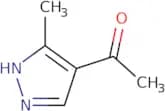
Fórmula:C11H16OPureza:Min. 95%Peso molecular:164.24 g/mol1-(5-Methyl-1H-Pyrazol-4-Yl)Ethanone
CAS:Phenylhydrazine is a white crystalline solid with a molecular weight of 150.25, and the molecular formula C6H5NHN. It is soluble in water, alcohol, ether and chloroform. Phenylhydrazine can react with an acid chloride to form a hydrazone; this reaction is used in the synthesis of some pharmaceuticals. The most common use of phenylhydrazine is as a precursor to various pharmaceuticals, such as antipyretics and anti-inflammatory agents. Phenylhydrazine reacts with zinc chloride to form 1-(5-methyl-1H-pyrazol-4-yl)ethanone.
Fórmula:C6H8N2OPureza:Min. 95%Peso molecular:124.14 g/mol


![3-Fluoro-4-[3-(trifluoromethyl)-1H-pyrazol-1-yl]aniline](/_next/image/?url=https%3A%2Fstatic.cymitquimica.com%2Fproducts%2F3D%2Fthumb-webp%2FGQB46865.webp&w=3840&q=75)
![3-Chloro-4-[3-(trifluoromethyl)-1H-pyrazol-1-yl]aniline](/_next/image/?url=https%3A%2Fstatic.cymitquimica.com%2Fproducts%2F3D%2Fthumb-webp%2FGQB46761.webp&w=3840&q=75)
![4-Methyl-1,1,3-trioxothieno[3,2-d][1,2]thiazole-5-carboxylic acid](/_next/image/?url=https%3A%2Fstatic.cymitquimica.com%2Fproducts%2F3D%2Fthumb-webp%2FGEB80217.webp&w=3840&q=75)
![[4-(Thien-2-yl)phenyl]methanol](/_next/image/?url=https%3A%2Fstatic.cymitquimica.com%2Fproducts%2F3D%2Fthumb-webp%2FGDA44344.webp&w=3840&q=75)
![3-Azabicyclo[3.2.1]octan-6-ol hydrochlorides](/_next/image/?url=https%3A%2Fstatic.cymitquimica.com%2Fproducts%2F3D%2Fthumb-webp%2FFSD25297.webp&w=3840&q=75)
![5-Methoxybicyclo[2.2.1]heptan-2-amine hydrochloride](/_next/image/?url=https%3A%2Fstatic.cymitquimica.com%2Fproducts%2F3D%2Fthumb-webp%2FFSD25240.webp&w=3840&q=75)
![[3-(Propan-2-yl)phenyl]thiourea](/_next/image/?url=https%3A%2Fstatic.cymitquimica.com%2Fproducts%2F3D%2Fthumb-webp%2FFMB39611.webp&w=3840&q=75)