Building Blocks
Esta seção contém produtos fundamentais para a síntese de compostos orgânicos e biológicos. Building blocks são os materiais de partida essenciais usados para construir moléculas complexas através de várias reações químicas. Eles desempenham um papel crítico na descoberta de medicamentos, ciência dos materiais e pesquisa química. Na CymitQuimica, oferecemos uma ampla gama de building blocks de alta qualidade para apoiar suas pesquisas inovadoras e projetos industriais, garantindo que você tenha os componentes essenciais para uma síntese bem-sucedida.
Subcategorias de "Building Blocks"
- Ácidos Borónicos e Derivados de Ácido Borónico(5.756 produtos)
- Building Blocks Quirais(1.242 produtos)
- Building Blocks Hidrocarbonetos(6.093 produtos)
- Building Blocks orgânicos(60.525 produtos)
Foram encontrados 195536 produtos de "Building Blocks"
Ordenar por
Pureza (%)
0
100
|
0
|
50
|
90
|
95
|
100
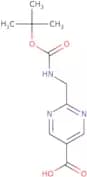
2-(((tert-Butoxycarbonyl)amino)methyl)pyrimidine-5-carboxylic acid
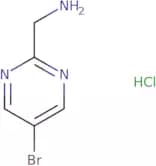
CAS:<p>Versatile small molecule scaffold</p>Fórmula:C11H15N3O4Pureza:Min. 95%Peso molecular:253.25 g/mol(5-bromopyrimidin-2-yl)methanamine hcl
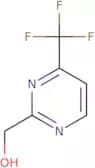
CAS:<p>Versatile small molecule scaffold</p>Fórmula:C5H7BrClN3Pureza:Min. 95%Peso molecular:224.49 g/mol(4-(Trifluoromethyl)pyrimidin-2-yl)methanol
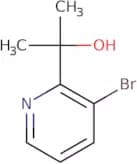
CAS:<p>Versatile small molecule scaffold</p>Fórmula:C6H5F3N2OPureza:Min. 95%Peso molecular:178.11 g/mol2-(3-Bromopyridin-2-yl)propan-2-ol
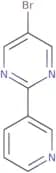
CAS:<p>Versatile small molecule scaffold</p>Fórmula:C8H10BrNOPureza:Min. 95%Peso molecular:216.08 g/mol5-Bromo-2-(pyridin-3-yl)pyrimidine
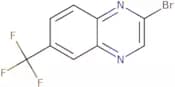
CAS:<p>Versatile small molecule scaffold</p>Fórmula:C9H6BrN3Pureza:Min. 95%Peso molecular:236.07 g/mol2-Bromo-6-(trifluoromethyl)quinoxaline
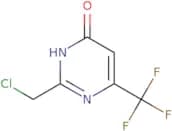
CAS:<p>Versatile small molecule scaffold</p>Fórmula:C9H4BrF3N2Pureza:Min. 95%Peso molecular:277.04 g/mol2-(Chloromethyl)-6-(trifluoromethyl)pyrimidin-4-ol
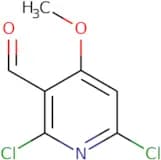
CAS:<p>Versatile small molecule scaffold</p>Fórmula:C6H4ClF3N2OPureza:Min. 95%Peso molecular:212.56 g/mol2,6-Dichloro-4-methoxypyridine-3-carbaldehyde
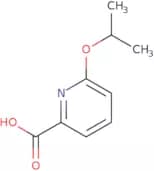
CAS:<p>Versatile small molecule scaffold</p>Fórmula:C7H5Cl2NO2Pureza:Min. 95%Peso molecular:206.02 g/mol6-(Propan-2-yloxy)pyridine-2-carboxylic acid
CAS:<p>Versatile small molecule scaffold</p>Fórmula:C9H11NO3Pureza:Min. 95%Peso molecular:181.19 g/mol5-Chloro-2-cyclopropylpyrimidine-4-carboxylic acid
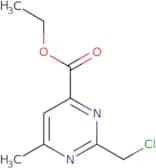
CAS:<p>5-Chloro-2-cyclopropylpyrimidine-4-carboxylic acid is a herbicide that is used in the agriculturally and environmentally. The herbicide inhibits the growth of plants by inhibiting photosynthesis, which may be due to its ability to inhibit chlorophyll synthesis. 5-Chloro-2-cyclopropylpyrimidine-4-carboxylic acid also has nitro and cyano groups that are responsible for this activity. 5-Chloro-2-cyclopropylpyrimidine-4-carboxylic acid is derived from aliphatic compounds and aromatic compounds.</p>Fórmula:C8H7ClN2O2Pureza:Min. 95%Peso molecular:198.6 g/molEthyl 2-(chloromethyl)-6-methylpyrimidine-4-carboxylate
CAS:<p>Versatile small molecule scaffold</p>Fórmula:C9H11ClN2O2Pureza:Min. 95%Peso molecular:214.65 g/mol2,4-Dibromo-1,3-oxazole
CAS:<p>2,4-Dibromo-1,3-oxazole is a nitro compound and an important intermediate in the synthesis of herbicides. It is also used to produce coatings and as a reagent for organic synthesis. The compound can be synthesized by the palladium-catalyzed coupling of phenyl bromides with 2,4-dichloro-1,3-oxazole. 2,4-Dibromo-1,3-oxazole has been shown to have potent horticultural activity against plant diseases caused by anions such as fusarium oxysporum. This compound has a pharmacokinetic profile that is favourable for oral administration in humans. The lysine analogues are converted into picolinic acid and then to 2,4-dibromo-1,3-oxazole in the body. The dialkylamino substituents on the molecule are believed to be responsible</p>Fórmula:C3HBr2NOPureza:Min. 95%Peso molecular:226.85 g/mol4-Phenyl-1,3-oxazole-5-carboxylic acid
CAS:<p>Versatile small molecule scaffold</p>Fórmula:C10H7NO3Pureza:Min. 95%Peso molecular:189.17 g/mol2-Cyclopropyl-6-methylpyrimidine-4-carboxylic acid
CAS:<p>Versatile small molecule scaffold</p>Fórmula:C9H10N2O2Pureza:Min. 95%Peso molecular:178.19 g/mol2-Chloro-5-methyl-1,3-oxazole-4-carboxylic acid
CAS:<p>Versatile small molecule scaffold</p>Fórmula:C5H4ClNO3Pureza:Min. 95%Peso molecular:161.54 g/moltert-Butyl N-[(5-aminopyrimidin-2-yl)methyl]carbamate
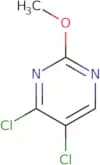
CAS:<p>Versatile small molecule scaffold</p>Fórmula:C10H16N4O2Pureza:Min. 95%Peso molecular:224.3 g/mol4,5-Dichloro-2-methoxypyrimidine
CAS:<p>Versatile small molecule scaffold</p>Fórmula:C5H4Cl2N2OPureza:Min. 95%Peso molecular:179 g/mol1-(5-Phenylpyrimidin-2-yl)methanamine hydrochloride
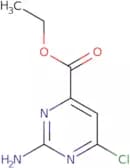
CAS:<p>Versatile small molecule scaffold</p>Fórmula:C11H12ClN3Pureza:Min. 95%Peso molecular:221.68 g/molEthyl 2-amino-6-chloropyrimidine-4-carboxylate
CAS:<p>Versatile small molecule scaffold</p>Fórmula:C7H8ClN3O2Pureza:Min. 95%Peso molecular:201.61 g/mol5-Bromo-2-(trifluoromethyl)-1,3-oxazole-4-carboxylic acid
CAS:<p>Versatile small molecule scaffold</p>Fórmula:C5HBrF3NO3Pureza:Min. 95%Peso molecular:259.97 g/mol




![tert-Butyl N-[(5-aminopyrimidin-2-yl)methyl]carbamate](/_next/image/?url=https%3A%2Fstatic.cymitquimica.com%2Fproducts%2F3D%2Fthumb-webp%2FQZB60083.webp&w=3840&q=75)