Building Blocks
Subcategorias de "Building Blocks"
- Ácidos Borónicos e Derivados de Ácido Borónico(5.781 produtos)
- Building Blocks Quirais(1.242 produtos)
- Building Blocks Hidrocarbonetos(6.101 produtos)
- Building Blocks orgânicos(61.033 produtos)
Foram encontrados 205320 produtos de "Building Blocks"
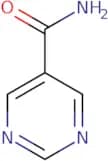
Pyrimidine-5-carboxamide
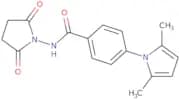
CAS:Pyrimidine-5-carboxamide is a heterocyclic compound that is used as an inhibitor of the pan-PI3K. This drug binds to the CB2 receptor, which has been found in inflammatory cells in the gastrointestinal tract. Pyrimidine-5-carboxamide inhibits inflammatory bowel disease by inhibiting the activity of p38 MAP kinase and JNK, which are key mediators of inflammation. It also inhibits insulin resistance and liver fibrosis by targeting PI3K/Akt signaling pathways. Pyrimidine-5-carboxamide has been shown to have anti-inflammatory effects on the skin, hair follicles, and intestines; it may be used for treating alopecia areata, bowel disease, or hepatic cancer.Fórmula:C5H5N3OPureza:Min. 95%Cor e Forma:PowderPeso molecular:123.11 g/mol4-(2,5-Dimethyl-1H-pyrrol-1-yl)-N-(2,5-dioxopyrrolidin-1-yl)benzamide
CAS:4-(2,5-Dimethyl-1H-pyrrol-1-yl)-N-(2,5-dioxopyrrolidin-1-yl)benzamide is a useful scaffold that can be used to synthesize high quality and versatile building blocks. This compound is also a useful intermediate in the synthesis of complex compounds. This chemical is not an approved pharmaceutical, but it has shown promising activity as an antihistamine.Fórmula:C17H17N3O3Pureza:Min. 95%Peso molecular:311.33 g/mol3-azido-4,5-dihydro-1H-benzo[b]azepin-2(3H)-one
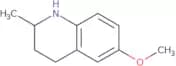
CAS:Versatile small molecule scaffoldFórmula:C10H10N4OPureza:Min. 95%Cor e Forma:PowderPeso molecular:202.21 g/mol6-Methoxy-2-methyl-1,2,3,4-tetrahydroquinoline
CAS:Versatile small molecule scaffold
Fórmula:C11H15NOPureza:Min. 95%Cor e Forma:PowderPeso molecular:177.24 g/mol4,4,5,5-Tetramethyl-2-[4-(pentafluorosulfanyl)phenyl]-1,3,2-dioxaborolane
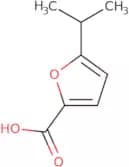
CAS:Versatile small molecule scaffoldFórmula:C12H16BF5O2SPureza:Min. 80%Peso molecular:330.13 g/mol5-(Propan-2-yl)furan-2-carboxylic acid
CAS:5-(Propan-2-yl)furan-2-carboxylic acid is a reagent that can be used in the synthesis of complex compounds. It is a speciality chemical that has been found to be useful as a building block and intermediate. 5-(Propan-2-yl)furan-2-carboxylic acid can be used in the synthesis of many different types of compounds, including pharmaceuticals, agrochemicals, and fine chemicals. The compound is also used as a research chemical and a versatile building block for more complex molecules.Fórmula:C8H10O3Pureza:Min. 95%Peso molecular:154.16 g/mol5-Et-furan-2-carboxylic acid
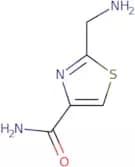
CAS:5-Ethyl-furan-2-carboxylic acid is a tetrahydrofuran that can be synthesized from benzaldehyde and lithium. It has cytotoxic properties, which may be due to its acid derivative intermediates. The regiospecificity of this compound is also notable, as it was lithiated at the 5-position. This synthetic compound is an intermediate in the synthesis of other drugs such as alpidem or zolpidem.Fórmula:C7H8O3Pureza:Min. 95%Peso molecular:140.14 g/mol2-(Aminomethyl)-1,3-thiazole-4-carboxamide
CAS:2-(Aminomethyl)-1,3-thiazole-4-carboxamide is a chemical compound that can be used as a chemical reagent and as a reaction component. It is a versatile building block with many possible uses. 2-(Aminomethyl)-1,3-thiazole-4-carboxamide has been shown to be useful in the synthesis of complex compounds and fine chemicals. It is also an intermediate for the production of pharmaceuticals and other research chemicals.Fórmula:C5H7N3OSPureza:Min. 95%Cor e Forma:PowderPeso molecular:157.2 g/mol2-Mercaptobenzimidazole zinc salt
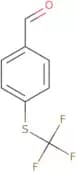
CAS:2-Mercaptobenzimidazole zinc salt is a synthetic, organic solvent that is used as an additive in the manufacture of dyes, paints, and varnishes. It is also used to make photographic film and x-ray film. 2-Mercaptobenzimidazole zinc salt is not soluble in water but can be dissolved by organic solvents such as acrylonitrile. This compound has been shown to have photocatalytic activity when activated by light. It has been found to be heat resistant up to 110°C, which makes it suitable for use in coating and printing applications. 2-Mercaptobenzimidazole zinc salt has carboxylate properties that allow it to react with calcium carbonate and hydrogen tartrate for industrial purposes.Fórmula:C14H10N4S2ZnCor e Forma:White Off-White PowderPeso molecular:363.8 g/mol4-(Trifluoromethylthio)benzaldehyde
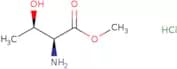
CAS:4-(Trifluoromethylthio)benzaldehyde is a magnetic, stereogenic, mononuclear compound with a thermodynamic stability that has been improved by advances in the field of thermodynamics. The compound can also be synthesized using an asymmetric synthesis and is tetrasubstituted with antiferromagnetic coupling. 4-(Trifluoromethylthio)benzaldehyde has many functions, including being able to control the oxidation-reduction potentials of lanthanide ions and ferromagnetic materials. It also has a calorimetry effect on the adsorption of water vapor onto hydrophobic surfaces.Fórmula:C8H5F3OSPureza:Min. 95%Cor e Forma:PowderPeso molecular:206.19 g/molL-Threonine methyl ester hydrochloride
CAS:L-Threonine methyl ester hydrochloride is a synthetic amino acid that has shown efficacy in treating Gram-negative infections. L-Threonine methyl ester hydrochloride is an agonist for the hyaluronic acid receptor and has been demonstrated to be potent in vitro against gram-negative bacteria such as Escherichia coli and Klebsiella pneumoniae. It also exhibits high stereoselectivity, with one enantiomer being more active than the other. L-Threonine methyl ester hydrochloride is currently in clinical development for cancer treatments, as it shows promise for inhibiting tumor growth and inducing apoptosis.Fórmula:C5H11NO3•HClPureza:Min. 97%Cor e Forma:Yellow PowderPeso molecular:169.61 g/mol2,4,6-Triisopropylbenzenesulfonyl chloride
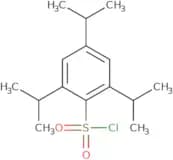
CAS:2,4,6-Triisopropylbenzenesulfonyl chloride is a molecule that belongs to the class of ethylene diamine. It has been shown to inhibit the replication of herpes simplex virus in cell culture. This compound has an intramolecular hydrogen and steric interactions with a hydroxyl group. The analog of this molecule is 2,4,6-triisopropylbenzenesulfonic acid. 2,4,6-Triisopropylbenzenesulfonyl chloride can be used as a sulfonation agent and is known for its ability to react with nitrogen nucleophiles such as amines or ammonia.Fórmula:C15H23SO2ClPureza:Min. 95%Peso molecular:302.86 g/molThianaphthene
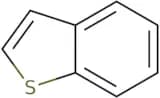
CAS:Used in raloxifene synthesis and preparation of 2-thianapthenylphenyllithiumFórmula:C8H6SPureza:Min. 94 Area-%Cor e Forma:Brown White Yellow PowderPeso molecular:134.2 g/mol1,3,5-Trimethoxybenzene
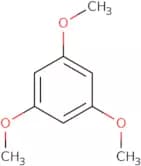
CAS:1,3,5-Trimethoxybenzene is used for the analysis of drugs in human serum and as a precursor to pharmaceuticals. It is also used as a reagent in organic synthesis. Trimethyl 1,3,5-trimethoxybenzene reacts with nitrite ion to produce an unstable intermediate that undergoes hydrolysis to form trifluoroacetic acid and hydrogen gas. The reaction mechanism involves an intramolecular hydrogen transfer from the hydroxyl group of the methoxy benzene ring to the methyl group on carbon 3. This leads to formation of a highly reactive trimethyl cation that abstracts hydrogen from water or hydroxyl groups on nearby molecules and eventually undergoes hydrolysis to produce trifluoroacetic acid and hydrogen gas.
Fórmula:C9H12O3Pureza:Min. 98.5%Cor e Forma:White PowderPeso molecular:168.19 g/mol1,2,4-Triazole-3-carboxylic acid
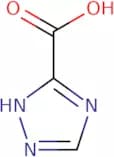
CAS:1,2,4-Triazole-3-carboxylic acid is a functional group that has been studied extensively in supramolecular chemistry for its ability to form a variety of tautomers. 1,2,4-Triazole-3-carboxylic acid can also be used to synthesize heterocycles and polymers. It has been shown to inhibit the reaction vessel of influenza virus by binding with the carboxylate groups on the viral surface. The functional group's nitrogen atoms are responsible for this type of inhibition by forming hydrogen bonds with the carboxylate groups. This type of inhibition is reversible because it is caused by an acid catalyst that can be regenerated. The vibrational spectra of 1,2,4-triazole-3-carboxylic acid have been determined using FTIR spectroscopy. The dominant vibrations are found in the region corresponding to 1028 cm−1 and 784 cm−1Fórmula:C3H3N3O2Pureza:Min. 95%Cor e Forma:White PowderPeso molecular:113.07 g/molN10-(Trifluoroacetyl)pteroic acid
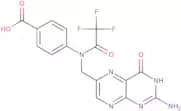
CAS:Pteroic acid is a ligand that binds to cholanic receptors in the cell membrane and induces the uptake of ethylene. This process is receptor-mediated and can be inhibited by folic and hydrophobic molecules, such as N10-(Trifluoroacetyl)pteroic acid. Pteroic acid is an important precursor of folic acid, which plays an important role in DNA synthesis and amino acid metabolism. Pteroic acid also has a hydrophobic nature that facilitates its binding to cells through hydrophobic interactions.Fórmula:C16H11F3N6O4Pureza:Min. 95 Area-%Cor e Forma:White PowderPeso molecular:408.29 g/molTaurine
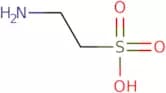
CAS:Taurine is an amino acid that is found in the body and plays a number of different roles, including in biochemical composition, energy metabolism, and cell signaling. Taurine has been shown to be effective for the treatment of bowel disease and can be used as a reaction solution. It has also been shown to increase mitochondrial membrane potential and prevent cellular death in 3T3-L1 preadipocytes. Taurine inhibits growth factor-β1, which may be responsible for the inhibition of cellular proliferation and apoptosis induction. Taurine also decreases tubulointerstitial injury by increasing the synthesis of collagen type II and decreasing the production of reactive oxygen species. Taurine may play a role in reversing neuronal death through its interactions with intracellular targets such as tubulin.Fórmula:C2H7NO3SCor e Forma:PowderPeso molecular:125.15 g/molL-Theanine
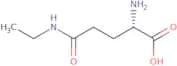
CAS:L-Theanine is an amino acid found in various types of tea and has been shown to have physiological effects. It is also found in the leaves of Camellia sinensis plants. L-Theanine is a nonprotein amino acid that does not have any chiral centers, unlike other amino acids. It is chemically similar to glutamate and glutamine. L-Theanine has been shown to bind to alpha 1-acid glycoprotein and polymerase chain, which may affect its solubility in water. This amino acid also has a number of enzyme activities, including those that produce enzymes for acetylcholine synthesis and metabolism. L-Theanine has been shown to have antioxidant properties and can decrease neuronal death in humans when given intravenously.
Fórmula:C7H14N2O3Pureza:Min. 98 Area-%Cor e Forma:White PowderPeso molecular:174.2 g/mol2,4,6-Trimethoxyaniline
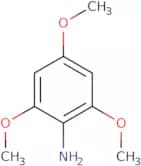
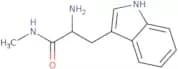
CAS:2,4,6-Trimethoxyaniline is a tetrazole compound that has been shown to inhibit glycosidases. The inhibition of these enzymes prevents the hydrolysis of glycosidic bonds in carbohydrates and other biomolecules. 2,4,6-Trimethoxyaniline is used as an antibacterial agent against methicillin-resistant Staphylococcus aureus (MRSA) and other bacteria. It also inhibits the growth of Mycobacterium tuberculosis and Mycobacterium avium complex due to its ability to inhibit protein synthesis by inhibiting RNA synthesis. 2,4,6-Trimethoxyaniline can be synthesized by demethylation of anisidine with tribromide or chloroform.Fórmula:C9H13NO3Pureza:Min. 97 Area-%Cor e Forma:Yellow PowderPeso molecular:183.2 g/mol(2S)-2-Amino-3-(1H-indol-3-yl)-N-methylpropanamide
CAS:Acetaminophen is a non-opioid analgesic and antipyretic drug. It is a common medication used to treat pain, fever, and inflammation. Acetaminophen inhibits matrix metalloproteinase (MMPs) by binding to the active site of the enzyme, thus preventing it from breaking down collagen in the extracellular matrix. This inhibition has been shown to be effective against cancer cells. Acetaminophen also has an antioxidative activity that may be due to its ability to inhibit lipid peroxidation, which is important for cell membrane integrity. Acetaminophen has been shown to reduce ulceration in animal models.Fórmula:C12H15N3OPureza:Min. 95%Cor e Forma:PowderPeso molecular:217.27 g/mol

![3-azido-4,5-dihydro-1H-benzo[b]azepin-2(3H)-one](/_next/image/?url=https%3A%2Fstatic.cymitquimica.com%2Fproducts%2F3D%2Fthumb-webp%2FLDA49924.webp&w=3840&q=75)
![4,4,5,5-Tetramethyl-2-[4-(pentafluorosulfanyl)phenyl]-1,3,2-dioxaborolane](/_next/image/?url=https%3A%2Fstatic.cymitquimica.com%2Fproducts%2F3D%2Fthumb-webp%2FLBC27834.webp&w=3840&q=75)