Building Blocks
Subcategorias de "Building Blocks"
- Ácidos Borónicos e Derivados de Ácido Borónico(5.781 produtos)
- Building Blocks Quirais(1.242 produtos)
- Building Blocks Hidrocarbonetos(6.101 produtos)
- Building Blocks orgânicos(61.033 produtos)
Foram encontrados 205320 produtos de "Building Blocks"
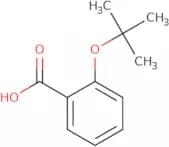
2-tert-Butoxybenzoic acid
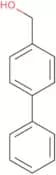
CAS:2-tert-Butoxybenzoic acid is a versatile chemical that can be used as a reagent, a speciality chemical, or as an intermediate in the synthesis of other compounds. It is typically used in organic chemistry for the preparation of esters, amides, and nitriles. 2-tert-Butoxybenzoic acid is also useful as a building block for complex molecules. This compound has been shown to react with alcohols to form esters, with amines to form amides, and with nitro groups to form nitriles.Fórmula:C11H14O3Pureza:Min. 95%Cor e Forma:PowderPeso molecular:194.23 g/mol4-Biphenylmethanol
CAS:4-Biphenylmethanol is a low potency naphthalene derivative that has been shown to be carcinogenic in animal studies. It is also an inhibitor of protein synthesis, which may play a role in its carcinogenic potential. 4-Biphenylmethanol has been shown to inhibit the growth of Salmonella typhimurium and Saccharomyces cerevisiae strain when used at concentrations of 50 μg/mL or higher. This compound can react with hydrochloric acid to form hydrogen bonding interactions, which may account for its observed antibacterial activity.
Fórmula:C13H12OPureza:Min. 95%Cor e Forma:PowderPeso molecular:184.23 g/mol2-Bromo-5-methoxytoluene
CAS:2-Bromo-5-methoxytoluene is a synthetic organic compound that is used as a chemical intermediate for cellulose derivatives. It is generated by the Friedel-Crafts reaction of bromine with toluene in the presence of aluminum chloride. 2-Bromo-5-methoxytoluene has been shown to react with cellulose derivatives and other hydrogen bond acceptors. This reaction is followed by protonation, which yields a chromophore that changes color from yellow to orange. The mechanism of this reaction can be explained by an acid catalysis mechanism, which begins with protonation of the carbonyl group (C=O) and formyl group (HC=O) groups. This causes the formation of an enolate ion, which reacts with a protonated carbonyl group to yield a formyl cation and an enolate ion. The formyl cation then reacts with another protonFórmula:C8H9OBrPureza:Min. 95%Cor e Forma:PowderPeso molecular:201.06 g/mol4-Formylcinnamic acid
CAS:4-Formylcinnamic acid is a molecule that is produced by the condensation of benzaldehyde and formic acid. The nmr spectra of 4-formylcinnamic acid show that it has a structure with two aromatic rings. It has been shown to activate Toll-like receptor 4 (TLR4) in human liver cells. The radiation induced photochemical properties of this molecule have been studied using x-ray diffraction data and the hydrochloric acid decoupling technique. This molecule has also been shown to suppress tumor xenografts in mice and primary cells in vitro, which may be due to its ability to inhibit cellular proliferation and induce cell death by apoptosis.Fórmula:C10H8O3Pureza:Min. 97 Area-%Cor e Forma:White PowderPeso molecular:176.17 g/mol4-Fluoro-3-methoxyacetophenone
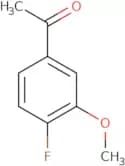
CAS:4-Fluoro-3-methoxyacetophenone is a chemical compound that can be used as a building block for the synthesis of other organic compounds. It is also a useful intermediate for the production of pharmaceuticals, pesticides, and fragrances. 4-Fluoro-3-methoxyacetophenone has been shown to react with various reagents including amines, alcohols, and thiols. This chemical is water soluble and can be stored at room temperature.
Fórmula:C9H9FO2Pureza:Min. 95%Cor e Forma:PowderPeso molecular:168.16 g/mol4-Fluoro-2-methoxybenzaldehyde
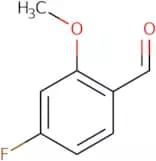
CAS:4-Fluoro-2-methoxybenzaldehyde (4FMBA) is a potential PET radioligand that binds to the serotonin 5-HT2A receptor. 4FMBA has been shown to be an efficient and selective 5-HT2A antagonist with low molecular weight and high affinity. The binding of 4FMBA to the serotonin 5-HT2A receptor can be inhibited by ketanserin, which is a nonselective 5-HT2A antagonist. This drug may be used for cancer diagnosis, as it has a low detection limit and can detect endogenous serotonin in the brain. It also shows anti-depressant properties, which may be due to its ability to bind to the orthosteric site of the serotonin 5-HT2A receptor.Fórmula:C8H7FO2Pureza:Min. 95%Cor e Forma:Off-White PowderPeso molecular:154.14 g/mol2-Hydroxy-4-methoxybenzaldehyde
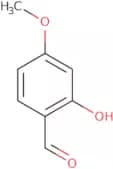
CAS:2-Hydroxy-4-methoxybenzaldehyde is an antifungal agent that has been shown to have a broad spectrum of activity against filamentous fungi. It is able to inhibit the growth of fungi by inhibiting the enzyme shikimate dehydrogenase, which is involved in the synthesis of aromatic amino acids and other essential metabolites. 2-Hydroxy-4-methoxybenzaldehyde also inhibits xylose reductase and alpha-galactosidase, enzymes that are involved in cell wall biosynthesis. This compound is effective against Candida albicans, Aspergillus niger, and Trichophyton mentagrophytes. 2-Hydroxy-4-methoxybenzaldehyde has also been shown to have bacteriostatic effects on Escherichia coli.
Fórmula:C8H8O3Pureza:Min. 95%Cor e Forma:Off-White PowderPeso molecular:152.15 g/mol1-Bromo-2-(trifluoromethoxy)ethane
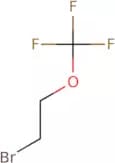
CAS:1-Bromo-2-(trifluoromethoxy)ethane is a chemical compound with the formula CBrFO. It is a colorless liquid that reacts violently with water and alkali metals. 1-Bromo-2-(trifluoromethoxy)ethane has been used as a precursor to 2-chloroethyl peroxide, which can be used in organic synthesis as an oxidant or in solvents to produce chloroprene. The bromine atom in this molecule can be replaced by fluorine or chlorine atoms, forming 1-fluoro-2-(trifluoromethoxy)ethane and 1,1,1-trichloroethylene.
Fórmula:C3H4BrF3OPureza:Min. 95%Cor e Forma:PowderPeso molecular:192.96 g/mol3-Fluoro-4-hydroxybenzaldehyde
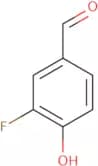
CAS:3-Fluoro-4-hydroxybenzaldehyde is a hydroxyl group with an activation energy of 87.7 kJ/mol. The molecule can be synthesized by the reaction of salicylaldehyde and 3,4-dihydroxybenzaldehyde in the presence of an organic solvent such as chloroform or methylene chloride. This compound has been shown to cause cell death in ht-29 cells and cancer cell lines, as well as human ovarian carcinoma cells. It causes apoptosis by inhibiting mitochondrial membrane potential, which leads to decreased intracellular ATP levels. 3-Fluoro-4-hydroxybenzaldehyde is most commonly used in molecular modeling studies to represent the hydroxyl group due to its simplicity in comparison to other hydroxyl groups like methanol or ethanol.Fórmula:C7H5FO2Pureza:90%Cor e Forma:White PowderPeso molecular:140.11 g/mol4-[(1E)-2-(3-Hydroxyphenyl)ethenyl]phenol
CAS:4-[(1E)-2-(3-Hydroxyphenyl)ethenyl]phenol is a metabolite of estrone sulfate. It is a potent estrogen that can be used in the treatment of prostate cancer, to inhibit the growth of cancer cells. 4-[(1E)-2-(3-Hydroxyphenyl)ethenyl]phenol has been shown to have antiestrogenic activity in breast cancer cell lines and to inhibit the formation of estrogen analogs in vitro. 4-[(1E)-2-(3-Hydroxyphenyl)ethenyl]phenol has been used as an estrogen receptor ligand in transfection experiments with human breast cancer cells, resulting in inhibition of target gene expression. The molecule also inhibits DNA polymerase activity and is believed to form carcinogenic nitrosamines and diazonium ions when subjected to nitrite and hydrogen peroxide. This molecule also exhibits weak antioxidant activity, which may beFórmula:C14H12O2Pureza:Min. 95%Cor e Forma:PowderPeso molecular:212.24 g/mol1-Hexyl-4-methylbenzene
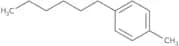
CAS:1-Hexyl-4-methylbenzene is a hydrocarbon with the chemical formula C8H18. It has an octane rating of 100 and a boiling point of 156°C. This compound is used in the preparation of pharmaceuticals, dyes, and cleaning agents. It has been shown to react with palladium catalysts to form homopolymers in the presence of oxygen or water. These polymers are used for optical purposes due to their emission properties. They also have high photophysical properties that make them suitable for use in lasers and photonic devices. The intramolecular interactions between the benzene rings give this compound its conformational stability.
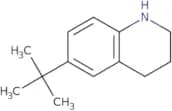
Fórmula:C13H20Pureza:Min. 95%Cor e Forma:Clear LiquidPeso molecular:176.3 g/mol6-tert-Butyl-1,2,3,4-tetrahydroquinoline
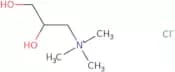
CAS:Versatile small molecule scaffoldFórmula:C13H19NPureza:Min. 95%Cor e Forma:Clear LiquidPeso molecular:189.3 g/mol2,3-Dihydroxy-N,N,N-trimethylpropan-1-aminium chloride
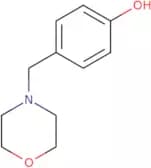
CAS:2,3-Dihydroxy-N,N,N-trimethylpropan-1-aminium chloride is a quaternary ammonium compound that has a high concentration of nitrogen. It is often used as an enhancer for the c1-c3 range of hair dyes. 2,3-Dihydroxy-N,N,N-trimethylpropan-1-aminium chloride can be used in cosmetics to reduce the appearance of fine lines and wrinkles. It is also used as an antiaging agent due to its ability to boost glycerin and polyols.Fórmula:C6H16ClNO2Pureza:Min. 95%Cor e Forma:PowderPeso molecular:169.65 g/mol4-(Morpholinomethyl)phenol
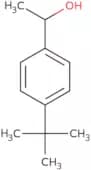
CAS:4-(Morpholinomethyl)phenol is a potent acetylcholinesterase inhibitor that binds to the active site of the enzyme and prevents its function. It has been shown to have inhibitory activity against acetylcholinesterase and may be used for the treatment of Alzheimer's disease. 4-(Morpholinomethyl)phenol is a competitive inhibitor and is structurally similar to galanthamine, an acetylcholinesterase inhibitor that has been used in the treatment of Alzheimer's disease.Fórmula:C11H15NO2Pureza:Min. 95 Area-%Cor e Forma:PowderPeso molecular:193.24 g/mol1-(4-tert-Butylphenyl)ethan-1-ol
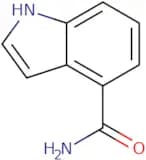
CAS:1-(4-tert-Butylphenyl)ethan-1-ol is a reagent, complex compound, useful intermediate, and fine chemical. It has CAS No. 34386-42-0 and is a useful scaffold for the synthesis of speciality chemicals. 1-(4-tert-Butylphenyl)ethan-1-ol is a versatile building block that can be used in the synthesis of many different compounds. It is also an important reaction component for the synthesis of many organic compounds.Fórmula:C12H18OPureza:Min. 95%Cor e Forma:PowderPeso molecular:178.27 g/mol1H-Indole-4-carboxamide
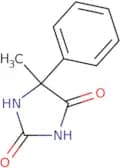
CAS:1H-Indole-4-carboxamide is a hydrogen bond inhibitor that has anticancer activity. It inhibits the growth of cancer cells by interacting with alkoxycarbonyl groups and carboxyalkyl groups in proteins. In addition, it was found to have synergistic effects when combined with Jak2 inhibitors or diazepine derivatives. 1H-Indole-4-carboxamide has been shown to inhibit the tyrosine kinase activity of the JAK2 protein and inhibit cell proliferation in murine melanoma cells.Fórmula:C9H8N2OPureza:Min. 95%Cor e Forma:PowderPeso molecular:160.17 g/mol(5R)-5-Methyl-5-phenylimidazolidine-2,4-dione
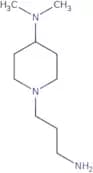
CAS:Versatile small molecule scaffoldFórmula:C10H10N2O2Pureza:Min. 95%Cor e Forma:PowderPeso molecular:190.2 g/mol1-(3-Aminopropyl)-N,N-dimethylpiperidin-4-amine
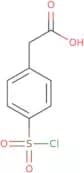
CAS:Versatile small molecule scaffoldFórmula:C10H23N3Pureza:Min. 95%Cor e Forma:PowderPeso molecular:185.31 g/mol4-Chlorosulfonylphenylacetic acid
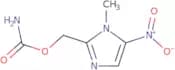
CAS:4-Chlorosulfonylphenylacetic acid is a synthetic chemical that inhibits the production of inflammatory mediators. It has been shown to inhibit LPS-induced macrophage activation and inhibitory activity in vitro. 4-Chlorosulfonylphenylacetic acid has been synthesized by the reaction of phenylacetic acid with chlorosulfonic acid. The synthesis of 4-chlorosulfonylphenylacetic acid is shown in Scheme 1 below.Fórmula:C8H7ClO4SPureza:Min. 95%Cor e Forma:White PowderPeso molecular:234.66 g/mol1-Methyl-5-nitro-1H-imidazole-2-methanol 2-carbamate
CAS:1-Methyl-5-nitro-1H-imidazole-2-methanol 2-carbamate is an antimicrobial agent that has been shown to be active against a number of bacteria, including Gram negative and Gram positive bacteria. It was shown to have a matrix effect in vivo and its kinetic energy was found to be reactive. The 1NIMC has been shown to inhibit the growth of bacteria by interfering with DNA replication and RNA synthesis. This drug has also been shown to have an analytical method that is linear in calibrations curves, which makes it suitable for quantitative analysis. It also has chemical stability, as it decomposes slowly at room temperature.Fórmula:C6H8N4O4Pureza:Min. 98.5%Cor e Forma:White PowderPeso molecular:200.15 g/mol



![4-[(1E)-2-(3-Hydroxyphenyl)ethenyl]phenol](/_next/image/?url=https%3A%2Fstatic.cymitquimica.com%2Fproducts%2F3D%2Fthumb-webp%2FNCA87776.webp&w=3840&q=75)