


Building Blocks
Esta seção contém produtos fundamentais para a síntese de compostos orgânicos e biológicos. Building blocks são os materiais de partida essenciais usados para construir moléculas complexas através de várias reações químicas. Eles desempenham um papel crítico na descoberta de medicamentos, ciência dos materiais e pesquisa química. Na CymitQuimica, oferecemos uma ampla gama de building blocks de alta qualidade para apoiar suas pesquisas inovadoras e projetos industriais, garantindo que você tenha os componentes essenciais para uma síntese bem-sucedida.
Subcategorias de "Building Blocks"
- Ácidos Borónicos e Derivados de Ácido Borónico(5.756 produtos)
- Building Blocks Quirais(1.242 produtos)
- Building Blocks Hidrocarbonetos(6.093 produtos)
- Building Blocks orgânicos(60.525 produtos)
Foram encontrados 195536 produtos de "Building Blocks"
Ordenar por
Pureza (%)
0
100
|
0
|
50
|
90
|
95
|
100
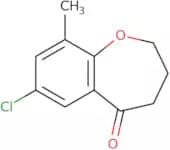
7-Chloro-9-methyl-2,3,4,5-tetrahydro-1-benzoxepin-5-one
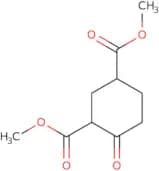
CAS:<p>Versatile small molecule scaffold</p>Fórmula:C11H11ClO2Pureza:Min. 95%Peso molecular:210.65 g/mol1,3-Dimethyl 4-oxocyclohexane-1,3-dicarboxylate
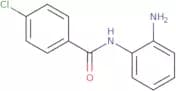
CAS:<p>Versatile small molecule scaffold</p>Fórmula:C10H14O5Pureza:Min. 95%Peso molecular:214.21 g/molN-(2-Aminophenyl)-4-chlorobenzamide
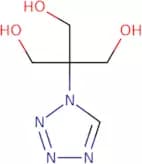
CAS:<p>N-(2-Aminophenyl)-4-chlorobenzamide (NPCB) is a synthetic drug that inhibits prostaglandin synthesis. It is an anti-inflammatory agent and has been shown to reduce the severity of inflammation in animal models. NPCB crystallizes with a monoclinic crystal system and can be used for crystal x-ray diffraction studies. The cell parameters are calculated by analyzing the crystal structure, which gives information about the chemical composition of the compound. X-ray diffraction techniques are used to study these structures, as well as other properties such as surface analysis.</p>Fórmula:C13H11ClN2OPureza:Min. 95%Peso molecular:246.69 g/mol2-(Hydroxymethyl)-2-(1H-1,2,3,4-tetrazol-1-yl)propane-1,3-diol
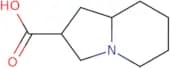
CAS:<p>2-(Hydroxymethyl)-2-(1H-1,2,3,4-tetrazol-1-yl)propane-1,3-diol is a chemical compound that contains an alkyl group with a hydroxymethyl substituent and a tetrazole substituent. The compound has been shown to be an effective inhibitor of bacterial growth in the presence of chlorides. 2-(Hydroxymethyl)-2-(1H-1,2,3,4-tetrazol-1-yl)propane-1,3-diol inhibits bacterial synthesis by binding to the active site of bacterial xanthine dehydrogenase. It also inhibits the growth of bacteria such as Staphylococcus aureus and reduces their ability to produce protein. 2-(Hydroxymethyl)-2-(1H-1,2,3,4-tetrazol-1-yl)propane 1</p>Fórmula:C5H10N4O3Pureza:Min. 95%Peso molecular:174.16 g/molOctahydroindolizine-2-carboxylic acid
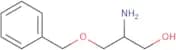
CAS:<p>Versatile small molecule scaffold</p>Fórmula:C9H15NO2Pureza:Min. 95%Peso molecular:169.22 g/mol2-Amino-3-(benzyloxy)propan-1-ol
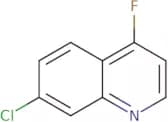
CAS:<p>Versatile small molecule scaffold</p>Fórmula:C10H15NO2Pureza:Min. 95%Peso molecular:181.23 g/mol7-Chloro-4-fluoroquinoline
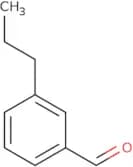
CAS:<p>7-Chloro-4-fluoroquinoline (7ClFQ) is an organometallic compound with significant growth inhibition in mammalian cells. It inhibits the oxidation of aliphatic amines and the formation of aromatic amines by reaction with 2-nitroimidazole. 7ClFQ has been shown to have antiparasitic activity against Rhodesiense, a parasite that infects snails, and cyclopentadienyl, a parasite found in fish. The inhibitory properties of 7ClFQ are due to its ability to inhibit the oxidation and hydrolysis of sulfates by inhibiting the enzyme sulfate reductase and its ability to react with amines. This reaction time is short and it is possible for 7ClFQ to be used as a catalyst in organic synthesis.</p>Fórmula:C9H5ClFNPureza:Min. 95%Peso molecular:181.59 g/mol3-Propylbenzaldehyde
CAS:<p>3-Propylbenzaldehyde is a ketone that is used as a catalyst in organic synthesis. 3-Propylbenzaldehyde has been shown to function as an electron donor and can be used as a catalyst for the hydrothermal oxidation of cyclohexanones. 3-Propylbenzaldehyde can be used in magnetic or electron donating techniques, such as nanocatalysis, which are catalytic techniques that use magnetic or electrostatic fields to increase the efficiency of reactions. This compound is also reusable and can be used with acid catalysts for increased stability.</p>Fórmula:C10H12OPureza:Min. 95%Peso molecular:148.2 g/mol(3-Methoxy-2-methylidene-3-oxopropyl)phosphonic acid
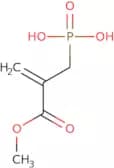
CAS:<p>Versatile small molecule scaffold</p>Fórmula:C5H9O5PPureza:Min. 95%Peso molecular:180.1 g/mol2-[2-(Trimethylsilyl)ethynyl]benzenamine
CAS:<p>2-[2-(Trimethylsilyl)ethynyl]benzenamine is an aromatic compound that is used as a starting material for the synthesis of other chemicals. It is prepared by reaction of 2-bromobenzene with ethynylmagnesium bromide and p-toluenesulfonic acid in the presence of aluminum chloride. The yield of the reaction product depends on the time and temperature. Elemental analysis reveals that the compound contains an alkyne group, which facilitates its conversion to quinoline derivatives. The chemical has been shown to react with x-rays to produce diffraction patterns, which can be analyzed to determine the structure of the molecule. X-ray diffraction analysis also revealed that this compound contains a quinoline ring system, which may contribute to its anti-inflammatory effects.</p>Fórmula:C11H15NSiPureza:Min. 95%Peso molecular:189.33 g/molMethyl 2-(2-amino-4,5-dihydro-1,3-thiazol-4-yl)acetate
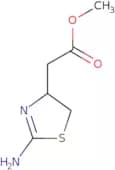
CAS:<p>Versatile small molecule scaffold</p>Fórmula:C6H10N2O2SPureza:Min. 95%Peso molecular:174.22 g/mol4-Chloro-2-methyl-6-(pyridin-4-yl)pyrimidine
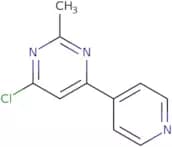
CAS:<p>Versatile small molecule scaffold</p>Fórmula:C10H8ClN3Pureza:Min. 95%Peso molecular:205.64 g/mol1-Bromo-3-(4-chlorophenyl)propan-2-one
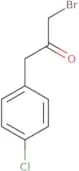
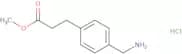
CAS:<p>Versatile small molecule scaffold</p>Fórmula:C9H8BrClOPureza:Min. 95%Peso molecular:247.51 g/mol3-(4-Aminomethyl-phenyl)-propionic acid methyl ester hydrochloride
CAS:<p>Versatile small molecule scaffold</p>Fórmula:C11H16ClNO2Pureza:Min. 95%Peso molecular:229.7 g/mol4-[(3-Methoxyphenyl)amino]butanoic acid
CAS:<p>Versatile small molecule scaffold</p>Fórmula:C11H15NO3Pureza:Min. 95%Peso molecular:209.24 g/mol2-[(2,5-Dimethylphenyl)sulfanyl]acetonitrile
CAS:<p>Versatile small molecule scaffold</p>Fórmula:C10H11NSPureza:Min. 95%Peso molecular:177.27 g/mol3-Chloro-5H,6H,7H-cyclopenta[C]pyridine-4-carbonitrile
CAS:<p>Versatile small molecule scaffold</p>Fórmula:C9H7ClN2Pureza:Min. 95%Peso molecular:178.62 g/mol4-Hydroxy-7-methoxy-2-methylquinoline
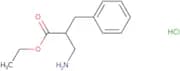
CAS:<p>Versatile small molecule scaffold</p>Fórmula:C11H11NO2Pureza:Min. 95%Peso molecular:189.21 g/molethyl 3-amino-2-benzylpropanoate hydrochloride
CAS:<p>Versatile small molecule scaffold</p>Fórmula:C12H18ClNO2Pureza:Min. 95%Peso molecular:243.7 g/mol3-[Carboxy(acetamido)methyl]benzoic acid
CAS:<p>Versatile small molecule scaffold</p>Fórmula:C11H11NO5Pureza:Min. 95%Peso molecular:237.2 g/mol

![2-[2-(Trimethylsilyl)ethynyl]benzenamine](/_next/image/?url=https%3A%2Fstatic.cymitquimica.com%2Fproducts%2F3D%2Fthumb-webp%2FDEA52916.webp&w=3840&q=75)
![4-[(3-Methoxyphenyl)amino]butanoic acid](/_next/image/?url=https%3A%2Fstatic.cymitquimica.com%2Fproducts%2F3D%2Fthumb-webp%2FDEA56546.webp&w=3840&q=75)
![2-[(2,5-Dimethylphenyl)sulfanyl]acetonitrile](/_next/image/?url=https%3A%2Fstatic.cymitquimica.com%2Fproducts%2F3D%2Fthumb-webp%2FDEA57552.webp&w=3840&q=75)
![3-Chloro-5H,6H,7H-cyclopenta[C]pyridine-4-carbonitrile](/_next/image/?url=https%3A%2Fstatic.cymitquimica.com%2Fproducts%2F3D%2Fthumb-webp%2FDEA58967.webp&w=3840&q=75)

![3-[Carboxy(acetamido)methyl]benzoic acid](/_next/image/?url=https%3A%2Fstatic.cymitquimica.com%2Fproducts%2F3D%2Fthumb-webp%2FDEA64639.webp&w=3840&q=75)