Building Blocks
Esta seção contém produtos fundamentais para a síntese de compostos orgânicos e biológicos. Building blocks são os materiais de partida essenciais usados para construir moléculas complexas através de várias reações químicas. Eles desempenham um papel crítico na descoberta de medicamentos, ciência dos materiais e pesquisa química. Na CymitQuimica, oferecemos uma ampla gama de building blocks de alta qualidade para apoiar suas pesquisas inovadoras e projetos industriais, garantindo que você tenha os componentes essenciais para uma síntese bem-sucedida.
Subcategorias de "Building Blocks"
- Ácidos Borónicos e Derivados de Ácido Borónico(5.756 produtos)
- Building Blocks Quirais(1.242 produtos)
- Building Blocks Hidrocarbonetos(6.093 produtos)
- Building Blocks orgânicos(60.533 produtos)
Foram encontrados 195534 produtos de "Building Blocks"
Ordenar por
Pureza (%)
0
100
|
0
|
50
|
90
|
95
|
100
N-Chlorosuccinimide
CAS:<p>Chlorinating agents are used in the production of pharmaceutical preparations and other chemical products. They react with amines to form diazonium salts, which can then be reduced to azo compounds. N-Chlorosuccinimide is a chlorinating agent that reacts with amines to form diazonium salts. It is used primarily as an injection solution for the treatment of trichomoniasis and other sexually transmitted diseases, but it also has been used in the preparation of pharmaceutical preparations. The reaction mechanism for N-chlorosuccinimide is not well understood, but it may involve a free radical intermediate or electron transfer from the chlorine atom to the carbon atom. Diazonium salts are formed by the reaction between an amine and an acid chloride. The addition of sodium hydroxide produces the corresponding azo compound. The reaction mechanism for N-chlorosuccinimide is not well understood, but it may involve a free radical intermediate or</p>Fórmula:C4H4ClNO2Pureza:Min. 95%Cor e Forma:White PowderPeso molecular:133.53 g/mol2-Chloro-4-fluoropyridine-5-boronic acid, pinacol ester
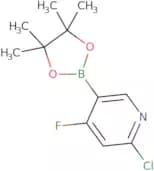
CAS:<p>Please enquire for more information about 2-Chloro-4-fluoropyridine-5-boronic acid, pinacol ester including the price, delivery time and more detailed product information at the technical inquiry form on this page</p>Fórmula:C11H14BClFNO2Pureza:Min. 95%Peso molecular:257.5 g/molCreatine phosphate di(tris) salt
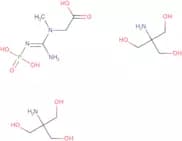
CAS:<p>Creatine phosphate di(tris) salt is a cyclase and rectifier of potassium ion channels. It is a potent activator of calcium ion channels, expressed in the cells of the ng108-15 mouse neuroblastoma line. Creatine phosphate di(tris) salt also potently activates guanylate cyclase and l-type calcium ion channels. This drug has been shown to stimulate prostaglandin synthesis and inhibit the production of prostaglandin E1 in biological chemistry studies. Creatine phosphate di(tris) salt is a cyclase and rectifier of potassium ion channels. It is a potent activator of calcium ion channels, expressed in the cells of the ng108-15 mouse neuroblastoma line. Creatine phosphate di(tris) salt also potently activates guanylate cyclase and l-type calcium ion channels. This drug has been shown to stimulate prostaglandin synthesis and inhibit the production of prostaglandin E1 in</p>Fórmula:C12H32N5O11PPureza:Min. 95%Peso molecular:453.38 g/molClonidine hydrochloride
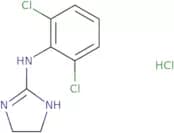
CAS:<p>Clonidine hydrochloride is a drug used in the treatment of hypertension and other cardiac diseases. It belongs to the class of drugs called centrally acting alpha-2 adrenergic agonists. Clonidine hydrochloride is also used for its antihypertensive effects in patients with neurogenic orthostatic hypotension, diabetic neuropathy, and glomerular filtration rate. The long-term efficacy and safety profile of clonidine hydrochloride has been established in clinical trials that have shown it to be effective in reducing symptoms of chronic pain and opioid withdrawal, as well as improving quality of life. Clonidine hydrochloride may be administered orally or transdermally. Clonidine binds to both alpha-1 and alpha-2 adrenergic receptors, which are responsible for vasoconstriction, inhibition of renin secretion from the kidneys, decreased sympathetic nerve activity, and increased parasympathetic nerve activity. This drug also has a protective effect on bone cancer cells</p>Fórmula:C9H9Cl2N3•HClPureza:Min. 95%Cor e Forma:PowderPeso molecular:266.55 g/mol4-Chloro-2-nitrotoluene
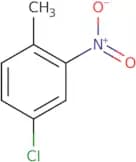
CAS:<p>4-Chloro-2-nitrotoluene is a chemical compound that is a nitro derivative of toluene. It is a white crystalline solid with the formula CHClNO. 4-Chloro-2-nitrotoluene has been shown to have constant boiling point, vibrational frequency and zirconium content at constant pressure. The thermodynamic properties of this compound are also constant, with values for free energy and entropy being -28.5 and 115.5 respectively. The molecule can be described by the functional theory, which states that it contains one nitro group and one monocarboxylic acid group in its molecular structure. 4-Chloro-2-nitrotoluene can be optimised using computational methods such as databases or molecular modeling software where it can be introduced into other molecules to form new compounds.BR>BR> 4-Chloro-2-nitrotoluene (CH</p>Fórmula:C7H6ClNO2Pureza:Min. 95%Peso molecular:171.58 g/molCyclopropanesulfonyl chloride
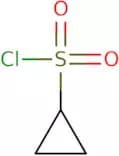
CAS:<p>Cyclopropanesulfonyl chloride (CPSC) is a bicyclic heterocycle that has been shown to have potent inhibitory activity against the human pathogens hepatitis B virus, dengue virus, and influenza A virus. CPSC inhibits the NS3 protease of these viruses by forming hydrogen bonding interactions with the nucleophilic nitrogen atom of the enzyme and also by competing with a chloride ion for binding to the chlorine atom on the enzyme. It also inhibits HIV-1 infection in cell culture experiments. CPSC has been found to be effective in preventing inflammation caused by cytokines, such as interleukin-1β, tumor necrosis factor-α, and prostaglandin E2. The inhibition of inflammatory cytokines may be due to its ability to bind glucocorticoid receptors.</p>Fórmula:C3H5ClO2SPureza:Min. 99.0%Cor e Forma:Clear LiquidPeso molecular:140.59 g/mol4-Chloro-6-methyl-2-(methylsulfonyl)pyrimidine
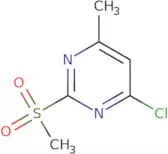
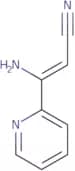
CAS:<p>Versatile small molecule scaffold</p>Fórmula:C6H7ClN2O2SPureza:Min. 95%Peso molecular:206.65 g/mol3-Amino-3-(2-pyridinyl)acrylonitrile
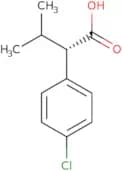
CAS:<p>Versatile small molecule scaffold</p>Fórmula:C8H7N3Pureza:Min. 95%Peso molecular:145.17 g/mol(S)-2-(4-Chlorophenyl)-3-methylbutanoic acid
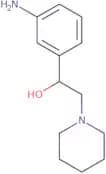
CAS:<p>(S)-2-(4-Chlorophenyl)-3-methylbutanoic acid is a chiral molecule that has been shown to be an inhibitor of isovaleric acid. It can be used as a marker for the amino acid sequence. It has been reported that (S)-2-(4-chlorophenyl)-3-methylbutanoic acid is an endogenous metabolite in humans and its concentration can be measured by enzyme-linked immunosorbent assay, high-performance liquid chromatography, and optical monitoring. This compound has also been studied as a potential therapeutic agent for the treatment of Alzheimer's disease due to its ability to inhibit acetylcholinesterase activity. It can also be conjugated with other molecules to form amide or ester conjugates.</p>Fórmula:C11H13ClO2Pureza:Min. 95%Peso molecular:212.67 g/mol1-(3-Aminophenyl)-2-(piperidin-1-yl)ethan-1-ol
CAS:<p>Versatile small molecule scaffold</p>Fórmula:C13H20N2OPureza:Min. 95%Peso molecular:220.31 g/mol6-Methylindolo[1,2-c]quinazolin-12-amine
CAS:<p>6-Methylindolo[1,2-c]quinazolin-12-amine is a heterotetracyclic compound that contains a heterocyclic ring. It has been shown to inhibit the growth of bacteria and fungi, as well as promote apoptosis in cancer cells. 6-Methylindolo[1,2-c]quinazolin-12-amine also exhibits anti-inflammatory properties and can be used for the treatment of inflammatory diseases such as asthma.</p>Fórmula:C16H13N3Pureza:Min. 95%Peso molecular:247.29 g/molCyclooctane-1,5-diol
CAS:<p>Cyclooctane-1,5-diol is a compound that consists of a carbonyl group and a hydroxyl group. It can be synthesized by the dehydrogenation of α-pinene. Cyclooctane-1,5-diol has been shown to have vibrational properties that are similar to those of intramolecular hydrogen. The 13C NMR spectrum displays strong signals at δ=54.7, δ=61.2, and δ=71.8 ppm corresponding to the carbonyl group and hydroxyl groups in the molecule. Cyclooctane-1,5-diol also has an ultraviolet absorption maximum at 265 nm and is a good nucleophile because it contains a reactive proton on its carbonyl group. Cyclooctane-1,5-diol is soluble in water and has chemical reactions with other compounds such as flavin or dinucleotide phosphate.br>br></p>Fórmula:C8H16O2Pureza:Min. 95%Peso molecular:144.21 g/mol4-[(4-Methylphenyl)amino]-2,3-dihydro-1,6-thiophene-1,1-dione
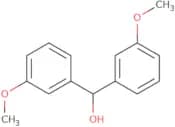
CAS:<p>Versatile small molecule scaffold</p>Fórmula:C11H13NO2SPureza:Min. 95%Peso molecular:223.29 g/molBis(3-methoxyphenyl)methanol
CAS:<p>Versatile small molecule scaffold</p>Fórmula:C15H16O3Pureza:Min. 95%Peso molecular:244.28 g/mol2-{[(tert-butoxy)carbonyl]amino}-2-(4-methoxyphenyl)acetic acid
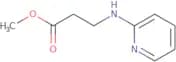
CAS:<p>Versatile small molecule scaffold</p>Fórmula:C14H19NO5Pureza:Min. 95%Peso molecular:281.3 g/molMethyl 3-(pyridin-2-ylamino)propanoate
CAS:<p>Versatile small molecule scaffold</p>Fórmula:C9H12N2O2Pureza:Min. 95%Peso molecular:180.2 g/mol5H,6H,7H,8H-Imidazo[1,2-a]pyridine-3-carboxylic acid
CAS:<p>Versatile small molecule scaffold</p>Fórmula:C8H10N2O2Pureza:Min. 95%Peso molecular:166.18 g/mol[1,2,4]Triazolo[1,5-a]pyrazin-8-amine
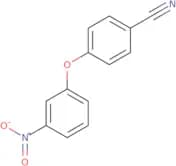
CAS:<p>Versatile small molecule scaffold</p>Fórmula:C5H5N5Pureza:Min. 95%Peso molecular:135.13 g/mol4-(3-Nitrophenoxy)benzonitrile
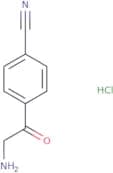
CAS:<p>Versatile small molecule scaffold</p>Fórmula:C13H8N2O3Pureza:Min. 95%Peso molecular:240.21 g/mol4-(2-Aminoacetyl)benzonitrile hydrochloride
CAS:<p>Versatile small molecule scaffold</p>Fórmula:C9H9ClN2OPureza:Min. 95%Peso molecular:196.63 g/mol


![6-Methylindolo[1,2-c]quinazolin-12-amine](/_next/image/?url=https%3A%2Fstatic.cymitquimica.com%2Fproducts%2F3D%2Fthumb-webp%2FFCA33812.webp&w=3840&q=75)

![4-[(4-Methylphenyl)amino]-2,3-dihydro-1,6-thiophene-1,1-dione](/_next/image/?url=https%3A%2Fstatic.cymitquimica.com%2Fproducts%2F3D%2Fthumb-webp%2FFCA35770.webp&w=3840&q=75)
![2-{[(tert-butoxy)carbonyl]amino}-2-(4-methoxyphenyl)acetic acid](/_next/image/?url=https%3A%2Fstatic.cymitquimica.com%2Fproducts%2F3D%2Fthumb-webp%2FFCA36276.webp&w=3840&q=75)
![5H,6H,7H,8H-Imidazo[1,2-a]pyridine-3-carboxylic acid](/_next/image/?url=https%3A%2Fstatic.cymitquimica.com%2Fproducts%2F3D%2Fthumb-webp%2FFCA36504.webp&w=3840&q=75)
![[1,2,4]Triazolo[1,5-a]pyrazin-8-amine](/_next/image/?url=https%3A%2Fstatic.cymitquimica.com%2Fproducts%2F3D%2Fthumb-webp%2FFCA36618.webp&w=3840&q=75)