


Building Blocks
Esta seção contém produtos fundamentais para a síntese de compostos orgânicos e biológicos. Building blocks são os materiais de partida essenciais usados para construir moléculas complexas através de várias reações químicas. Eles desempenham um papel crítico na descoberta de medicamentos, ciência dos materiais e pesquisa química. Na CymitQuimica, oferecemos uma ampla gama de building blocks de alta qualidade para apoiar suas pesquisas inovadoras e projetos industriais, garantindo que você tenha os componentes essenciais para uma síntese bem-sucedida.
Subcategorias de "Building Blocks"
- Ácidos Borónicos e Derivados de Ácido Borónico(5.756 produtos)
- Building Blocks Quirais(1.242 produtos)
- Building Blocks Hidrocarbonetos(6.093 produtos)
- Building Blocks orgânicos(60.532 produtos)
Foram encontrados 195533 produtos de "Building Blocks"
Ordenar por
Pureza (%)
0
100
|
0
|
50
|
90
|
95
|
100
1-Thia-4-azaspiro[5.5]undecane
CAS:<p>Versatile small molecule scaffold</p>Fórmula:C9H17NSPureza:Min. 95%Peso molecular:171.31 g/molrac-(1R,2R)-2-(Thiophen-2-yl)cyclopropane-1-carboxylic acid
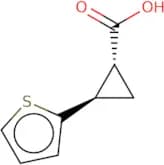
CAS:<p>Versatile small molecule scaffold</p>Fórmula:C8H8O2SPureza:Min. 95%Peso molecular:168.2 g/mol6,7,8,9-Tetrahydro-5H-benzo[7]annulene-1-carboxylic acid
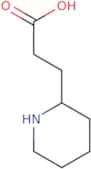
CAS:<p>Versatile small molecule scaffold</p>Fórmula:C12H14O2Pureza:Min. 95%Peso molecular:190.24 g/mol3-(Piperidin-2-yl)propanoic acid
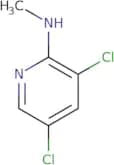
CAS:<p>Versatile small molecule scaffold</p>Fórmula:C8H15NO2Pureza:Min. 95%Peso molecular:157.21 g/mol3,5-Dichloro-N-methylpyridin-2-amine
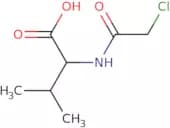
CAS:<p>Versatile small molecule scaffold</p>Fórmula:C6H6Cl2N2Pureza:Min. 95%Peso molecular:177.03 g/molN-Chloroacetyl-DL-valine
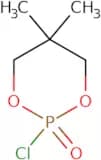
CAS:<p>N-Chloroacetyl-DL-valine is a natural amino acid with the formula CH3C(O)NH2. It is one of the 22 proteinogenic amino acids. The N-chloroacetyl group in this compound is attached to nitrogen at the α-position, and its carboxylic acid moiety is attached to the β-position of the amino acid backbone. In crystallized form, it has a n-terminal pyrolysable amide bond that can be cleaved by heat. In solution, it hydrolyzes readily to DL-alanine and chloroacetic acid. Aminoacylase and dipeptidase enzymes catalyze this reaction in vivo. NCA is an L-amino acid that contains an α-carbon atom with two substituents: an amide group (NHCOCH3) and a chloroacetyl group (CH3C(O)Cl). The molecular weight</p>Fórmula:C7H12ClNO3Pureza:Min. 95%Peso molecular:193.63 g/mol2-Chloro-5,5-dimethyl-1,3,2-dioxaphosphorinane 2-oxide
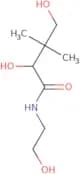
CAS:<p>2-Chloro-5,5-dimethyl-1,3,2-dioxaphosphorinane 2-oxide is a molecule with two chlorine atoms and one oxygen atom. The phosphoryl group has two phosphoranes that are linked by a pyrophosphate bond. The molecule also has a nucleophilic hydrogen chloride and an oxygen carbon double bond. The conformation of the molecule can be determined by the three cyclic groups on the left side of the molecule. This compound is used as an intermediate in organic synthesis for the preparation of other molecules. This reinvestigation shows that this compound bonds to a nucleophilic atom or group to form a new carbon chain and an oxo bridge.</p>Fórmula:C5H10ClO3PPureza:Min. 95%Peso molecular:184.56 g/mol2,4-Dihydroxy-N-(2-hydroxyethyl)-3,3-dimethylbutanamide
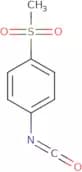
CAS:<p>Versatile small molecule scaffold</p>Fórmula:C8H17NO4Pureza:Min. 95%Peso molecular:191.22 g/mol1-Isocyanato-4-methanesulfonylbenzene
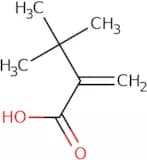
CAS:<p>Versatile small molecule scaffold</p>Fórmula:C8H7NO3SPureza:Min. 95%Peso molecular:197.21 g/mol3,3-Dimethyl-2-methylidenebutanoic acid
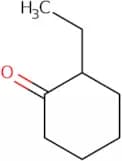
CAS:<p>Versatile small molecule scaffold</p>Fórmula:C7H12O2Pureza:Min. 95%Peso molecular:128.17 g/mol2-Ethylcyclohexanone
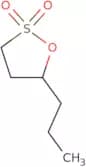
CAS:<p>2-Ethylcyclohexanone is a colorless liquid that has a pungent, sweet odor. It is an alkyl substituent with a conformational isomerization reaction. This process can be catalyzed by sulfide and ethyl bromoacetate. 2-Ethylcyclohexanone also has the ability to form carbonyl groups, which are susceptible to electrophilic substitution reactions with hydroxyl groups. The carbonyl group of 2-ethylcyclohexanone can undergo conformational changes because of its electron donating properties. The carbonyl group in this compound can also react with other nucleophiles that include amines, thiols, and alcohols. 2-Ethylcyclohexanone has been detected in rat brain tissue by nmr spectra and diffraction experiments.</p>Fórmula:C8H14OPureza:Min. 95%Peso molecular:126.2 g/mol5-Propyl-1,2-oxathiolane-2,2-dioxide
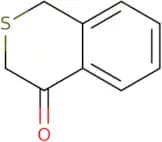
CAS:<p>Versatile small molecule scaffold</p>Fórmula:C6H12O3SPureza:Min. 95%Peso molecular:164.22 g/mol2-Thioisochroman-4-one
CAS:<p>2-Thioisochroman-4-one is a hydrogen bond inhibitor that binds to the hydroxyl group of the enzyme. It has antiinflammatory activity, and has been shown to inhibit prostaglandin synthesis in vitro. 2-Thioisochroman-4-one also inhibits arachidonic acid release from membrane phospholipids by inhibiting phospholipase A2, and is thought to be an endogenous inhibitor of cyclooxygenase (COX) enzymes. 2-Thioisochroman-4-one is a type of fatty acid that contains a nitro group, which can be reduced to form an intramolecular hydrogen bond with the carbonyl group. 2-Thioisochroman-4-one has been studied using X-ray diffraction data and molecular modeling techniques.</p>Fórmula:C9H8OSPureza:Min. 95%Peso molecular:164.23 g/mol[4-(Propan-2-yl)phenyl]methanethiol
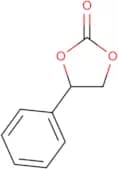
CAS:<p>Versatile small molecule scaffold</p>Fórmula:C10H14SPureza:Min. 95%Peso molecular:166.29 g/mol4-Phenyl-1,3-dioxolan-2-one
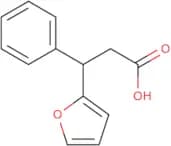
CAS:<p>4-Phenyl-1,3-dioxolan-2-one is a chemical compound that can be synthesized using styrene and an asymmetric synthesis. It is a nonaqueous reaction with a solid catalyst and has been shown to react with halides. 4-Phenyl-1,3-dioxolan-2-one is an aromatic hydrocarbon that reacts with zirconium oxide in the presence of hydrogen fluoride to produce carbonate. This interaction produces a molecule that can be used as an intermediate in other reactions. 4-Phenyl-1,3-dioxolan-2-one has been shown to have synergistic interactions with other chemicals during experiments involving its use as a catalyst for carbonate production.</p>Fórmula:C9H8O3Pureza:Min. 95%Peso molecular:164.16 g/mol3-(2-Furyl)-3-phenylpropanoic acid
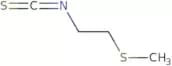
CAS:<p>Versatile small molecule scaffold</p>Fórmula:C13H12O3Pureza:Min. 95%Peso molecular:216.23 g/mol1-Isothiocyanato-2-(methylsulfanyl)ethane
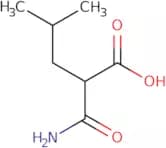
CAS:<p>Versatile small molecule scaffold</p>Fórmula:C4H7NS2Pureza:Min. 95%Peso molecular:133.2 g/mol2-Carbamoyl-4-methylpentanoic acid
CAS:<p>Versatile small molecule scaffold</p>Fórmula:C7H13NO3Pureza:Min. 95%Peso molecular:159.18 g/mol2-[1-(Carboxymethyl)cycloheptyl]acetic acid
CAS:<p>Versatile small molecule scaffold</p>Fórmula:C11H18O4Pureza:Min. 95%Peso molecular:214.26 g/mol3-Oxaspiro[5.6]dodecane-2,4-dione
CAS:<p>Versatile small molecule scaffold</p>Fórmula:C11H16O3Pureza:Min. 95%Peso molecular:196.24 g/mol
![1-Thia-4-azaspiro[5.5]undecane](/_next/image/?url=https%3A%2Fstatic.cymitquimica.com%2Fproducts%2F3D%2Fthumb-webp%2FEAA08356.webp&w=3840&q=75)

![6,7,8,9-Tetrahydro-5H-benzo[7]annulene-1-carboxylic acid](/_next/image/?url=https%3A%2Fstatic.cymitquimica.com%2Fproducts%2F3D%2Fthumb-webp%2FEAA08743.webp&w=3840&q=75)
![[4-(Propan-2-yl)phenyl]methanethiol](/_next/image/?url=https%3A%2Fstatic.cymitquimica.com%2Fproducts%2F3D%2Fthumb-webp%2FEAA42753.webp&w=3840&q=75)
![2-[1-(Carboxymethyl)cycloheptyl]acetic acid](/_next/image/?url=https%3A%2Fstatic.cymitquimica.com%2Fproducts%2F3D%2Fthumb-webp%2FEAA43218.webp&w=3840&q=75)
![3-Oxaspiro[5.6]dodecane-2,4-dione](/_next/image/?url=https%3A%2Fstatic.cymitquimica.com%2Fproducts%2F3D%2Fthumb-webp%2FEAA43219.webp&w=3840&q=75)