Building Blocks
Esta seção contém produtos fundamentais para a síntese de compostos orgânicos e biológicos. Building blocks são os materiais de partida essenciais usados para construir moléculas complexas através de várias reações químicas. Eles desempenham um papel crítico na descoberta de medicamentos, ciência dos materiais e pesquisa química. Na CymitQuimica, oferecemos uma ampla gama de building blocks de alta qualidade para apoiar suas pesquisas inovadoras e projetos industriais, garantindo que você tenha os componentes essenciais para uma síntese bem-sucedida.
Subcategorias de "Building Blocks"
- Ácidos Borónicos e Derivados de Ácido Borónico(5.756 produtos)
- Building Blocks Quirais(1.242 produtos)
- Building Blocks Hidrocarbonetos(6.093 produtos)
- Building Blocks orgânicos(60.532 produtos)
Foram encontrados 195534 produtos de "Building Blocks"
Ordenar por
Pureza (%)
0
100
|
0
|
50
|
90
|
95
|
100
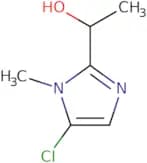
1-(5-Chloro-1-methyl-1H-imidazol-2-yl)ethan-1-ol
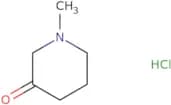
CAS:<p>Versatile small molecule scaffold</p>Fórmula:C6H9ClN2OPureza:Min. 95%Peso molecular:160.6 g/mol1-Methylpiperidin-3-one hydrochloride
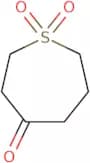
CAS:<p>Versatile small molecule scaffold</p>Fórmula:C6H12ClNOPureza:Min. 95%Peso molecular:149.62 g/mol4-Thiepanone 1,1-dioxide
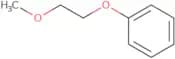
CAS:<p>Versatile small molecule scaffold</p>Fórmula:C6H10O3SPureza:Min. 95%Peso molecular:162.21 g/mol(2-Methoxyethoxy)benzene
CAS:<p>2-Methoxyethoxybenzene is a supramolecular compound that is made up of two parts: a benzene ring with a methoxy group on one side and an ether group on the other. The conformers of this molecule can be studied by Raman spectroscopy and electron diffraction techniques. The resonance in the molecule gives 2-methoxyethoxybenzene its low vibrational frequency, which makes it easier to study using resonance techniques.</p>Fórmula:C9H12O2Pureza:Min. 95%Peso molecular:152.19 g/molEthyl N-(2-cyanophenyl)carbamate
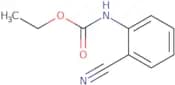
CAS:<p>Ethyl N-(2-cyanophenyl)carbamate is a cytostatic agent that binds to the alpha-tubulin monomer and inhibits its polymerization, leading to cell death. It has been shown to have an antiproliferative effect in vitro. This compound is synthesized by ring-opening of ethyl carbamic acid with 2-cyanophenyl chloroformate followed by deamination with methylamine hydrochloride. The yield of this reaction can be increased by using a microreactor for the synthesis steps.</p>Fórmula:C10H10N2O2Pureza:Min. 95%Peso molecular:190.2 g/mol5-Bromo-2,3-dihydro-1-benzothiophene
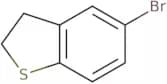
CAS:<p>Versatile small molecule scaffold</p>Fórmula:C8H7BrSPureza:Min. 95%Peso molecular:215.11 g/mol5-Methyl-1,2,3,4-tetrahydroisoquinoline hydrochloride
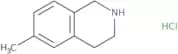
CAS:<p>Versatile small molecule scaffold</p>Fórmula:C10H14ClNPureza:Min. 95%Peso molecular:183.68 g/mol6-Methyl-1,2,3,4-tetrahydroisoquinoline hydrochloride
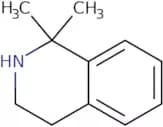
CAS:<p>Versatile small molecule scaffold</p>Fórmula:C10H14ClNPureza:Min. 95%Peso molecular:183.68 g/mol1,1-Dimethyl-1,2,3,4-tetrahydroisoquinoline
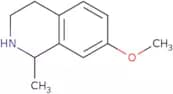
CAS:<p>Versatile small molecule scaffold</p>Fórmula:C11H15NPureza:Min. 95%Peso molecular:161.24 g/mol7-Methoxy-1-methyl-1,2,3,4-tetrahydroisoquinoline
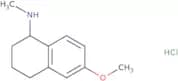
CAS:<p>Versatile small molecule scaffold</p>Fórmula:C11H15NOPureza:Min. 95%Peso molecular:177.24 g/mol6-Methoxy-N-methyl-1,2,3,4-tetrahydronaphthalen-1-amine hydrochloride
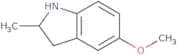
CAS:<p>Versatile small molecule scaffold</p>Fórmula:C12H18ClNOPureza:Min. 95%Peso molecular:227.73 g/mol5-Methoxy-2-methylindoline Hydrochloride
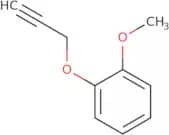
CAS:<p>Versatile small molecule scaffold</p>Fórmula:C10H13NO•HClPureza:Min. 95%Peso molecular:163.22 g/mol1-Methoxy-2-(prop-2-yn-1-yloxy)benzene
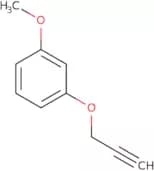
CAS:<p>Versatile small molecule scaffold</p>Fórmula:C10H10O2Pureza:Min. 95%Peso molecular:162.19 g/mol1-Methoxy-3-(prop-2-yn-1-yloxy)benzene
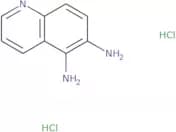
CAS:<p>Versatile small molecule scaffold</p>Fórmula:C10H10O2Pureza:Min. 95%Peso molecular:162.18 g/molQuinoline-5,6-diamine dihydrochloride
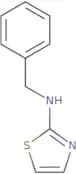
CAS:<p>Versatile small molecule scaffold</p>Fórmula:C9H11Cl2N3Pureza:Min. 95%Peso molecular:232.11 g/molN-Benzyl-1,3-thiazol-2-amine
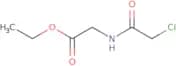
CAS:<p>Versatile small molecule scaffold</p>Fórmula:C10H10N2SPureza:Min. 95%Peso molecular:190.27 g/molN-(Chloroacetyl)glycine ethyl ester
CAS:<p>N-(Chloroacetyl)glycine ethyl ester (CAGE) is a reactive, nucleophilic hydroxyl compound that has antibacterial activity. It is an amide of glycine and chloroacetic acid. CAGE has been shown to have good in vitro activity against gram-positive bacteria, such as methicillin-resistant Staphylococcus aureus and Clostridium perfringens. CAGE can be used in the preparation of polymeric matrices for drug delivery systems. N-(Chloroacetyl)glycine ethyl ester has been shown to yield chloride in the presence of protonation agents such as ethyl bromoacetate or sodium acetate.</p>Fórmula:C6H10ClNO3Pureza:Min. 95%Peso molecular:179.6 g/molEthyl (2-Methoxybenzoyl)acetate
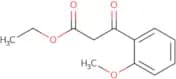
CAS:<p>Ethyl (2-methoxybenzoyl)acetate is a furan derivative that has two dihedral angles. It has a crystal structure with a benzene ring and a furan ring. Ethyl (2-methoxybenzoyl)acetate is soluble in most organic solvents and water but not in ether or hexane. It has a boiling point of 180 degrees Celsius and the molecular weight is 170.3 g/mol.</p>Fórmula:C12H14O4Pureza:Min. 95%Peso molecular:222.24 g/mol5-Amino-N,N'-dimethylisophthalamide
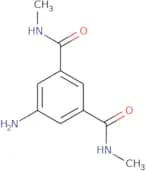
CAS:<p>Versatile small molecule scaffold</p>Fórmula:C10H13N3O2Pureza:Min. 95%Peso molecular:207.23 g/mol1-(Pyrimidin-2-yl)-1H-pyrazol-5-amine
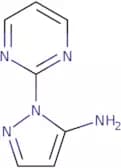
CAS:<p>Versatile small molecule scaffold</p>Fórmula:C7H7N5Pureza:Min. 95%Peso molecular:161.16 g/mol