Building Blocks
Esta seção contém produtos fundamentais para a síntese de compostos orgânicos e biológicos. Building blocks são os materiais de partida essenciais usados para construir moléculas complexas através de várias reações químicas. Eles desempenham um papel crítico na descoberta de medicamentos, ciência dos materiais e pesquisa química. Na CymitQuimica, oferecemos uma ampla gama de building blocks de alta qualidade para apoiar suas pesquisas inovadoras e projetos industriais, garantindo que você tenha os componentes essenciais para uma síntese bem-sucedida.
Subcategorias de "Building Blocks"
- Ácidos Borónicos e Derivados de Ácido Borónico(5.756 produtos)
- Building Blocks Quirais(1.242 produtos)
- Building Blocks Hidrocarbonetos(6.095 produtos)
- Building Blocks orgânicos(61.038 produtos)
Foram encontrados 196817 produtos de "Building Blocks"
Ordenar por
Pureza (%)
0
100
|
0
|
50
|
90
|
95
|
100
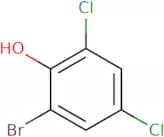
2-Bromo-4,6-dichlorophenol
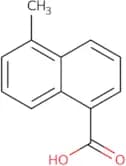
CAS:<p>Versatile small molecule scaffold</p>Fórmula:C6H3BrCl2OPureza:Min. 95%Peso molecular:241.91 g/mol5-Methylnaphthalene-1-carboxylic acid
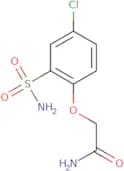
CAS:<p>5-Methylnaphthalene-1-carboxylic acid is a synthetic compound that has been shown to increase the effects of adriamycin, which is an anticancer drug. It has also been shown to have anti-inflammatory and anti-tumor properties. The 5-methylnaphthalene ring in 5-methylnaphthalene-1-carboxylic acid is very rigid and lacks conformational freedom, which may account for its low activity against bacteria. The methyl group in this molecule could be transferred to other molecules as a methyl group donor, making it a potential precursor for synthesis of antibiotics.</p>Fórmula:C12H10O2Pureza:Min. 95%Peso molecular:186.21 g/mol2-(4-Chloro-2-sulfamoylphenoxy)acetamide
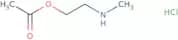
CAS:<p>Versatile small molecule scaffold</p>Fórmula:C8H9ClN2O4SPureza:Min. 95%Peso molecular:264.69 g/mol2-(Methylamino)ethyl acetate hydrochloride
CAS:<p>Versatile small molecule scaffold</p>Fórmula:C5H12ClNO2Pureza:Min. 95%Peso molecular:153.61 g/mol3-Nitro-N-phenylaniline
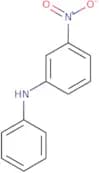
CAS:<p>3-Nitro-N-phenylaniline is a monosubstituted aniline derivative that is optimal for the synthesis of 3-nitrosobenzene. It has been shown to react with sodium carbonate in an acidic medium at room temperature to produce sodium nitrite and benzoic acid. The reaction time for this process depends on the substituent effects on the aromatic ring. The protonation of the nitro group leads to the formation of nitrous acid, which can be detected by its fluorescence. 3-Nitro-N-phenylaniline is synthesized from phenylhydrazine and formaldehyde in an inorganic setting with constant stirring.</p>Fórmula:C12H10N2O2Pureza:Min. 95%Peso molecular:214.22 g/mol1-Methoxy-3-methyl-9H-carbazole
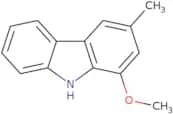
CAS:<p>Vinorelbine tartrate is a semisynthetic anti-cancer drug that inhibits the growth of cancer cells. It is structurally related to natural products and has an inhibitory effect on cell growth. Vinorelbine tartrate binds to the cell membrane receptor, which causes an increase in intracellular calcium levels and subsequent activation of protein kinases. It also inhibits the production of certain growth factors and increases the synthesis of wst-1, a marker for cellular proliferation. Vinorelbine tartrate has been shown to cause significant cytotoxicity in cardiomyocytes from rats and ventricular myocytes from humans. This chemical has been shown to enhance the cytotoxicity of other chemotherapeutic agents, such as doxorubicin, vincristine sulfate, cisplatin, and etoposide phosphate. Vinorelbine tartrate binds to ryanodine receptors on the sarcoplasmic reticulum membrane, causing an</p>Fórmula:C14H13NOPureza:Min. 95%Peso molecular:211.26 g/mol4-Ethylcyclohexanol (cis- and trans- mixture)
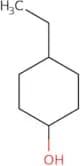
CAS:<p>4-Ethylcyclohexanol (4EC) is a chemical that has been shown to have many pharmacological activities. It binds to the dopamine, serotonin and norepinephrine receptors in the brain, which may be responsible for its effects on mood and behaviour. 4EC also blocks the reuptake of monoamines by competing with them for binding sites at the synapse. The mechanism of action of 4EC is not fully understood, but it may involve inhibition of enzymes involved in fat metabolism. This chemical has been shown to block fatty acid oxidation and promote lipolysis in adipocytes. 4EC also inhibits malic acid synthesis and increases levels of pentenoic acid in diabetic neuropathy patients.</p>Fórmula:C8H16OPureza:Min. 95%Peso molecular:128.22 g/mol3-Ethylcyclohexan-1-ol
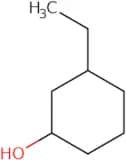
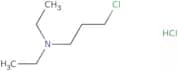
CAS:<p>3-Ethylcyclohexan-1-ol is a liquid that is used as a solvent in paints, lacquers, and varnishes. It has an experimental boiling point of 198 degrees Celsius and a density of 0.8 g/cm3. The enthalpy of vaporization is -14.2 kJ/mol and the entropy for the liquid phase is 1.04 J/(K*mol). 3-Ethylcyclohexan-1-ol dissolves in water to form a solution with an experimental freezing point of -5 degrees Celsius and an experimental boiling point of 118 degrees Celsius.</p>Fórmula:C8H16OPureza:Min. 95%Peso molecular:128.21 g/mol3-Diethylaminopropyl chloride HCl
CAS:<p>3-Diethylaminopropyl chloride HCl is a pharmaceutical preparation with antiviral properties. 3-Diethylaminopropyl chloride HCl inhibits the biosynthesis of oxindole and dialkylamines, which are found in certain cancers and cardiovascular disorders. The drug also has inhibitory properties on cholesterol acyltransferase and tyrosine kinase, which are proteins that regulate cellular growth. 3-Diethylaminopropyl chloride HCl is commercially available as an inactive pharmaceutical ingredient.</p>Fórmula:C7H17Cl2NPureza:Min. 95%Peso molecular:186.12 g/mol(2-Chloroethyl)(ethyl)amine hydrochloride
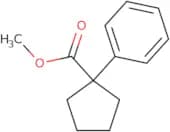
CAS:<p>Versatile small molecule scaffold</p>Fórmula:C4H11Cl2NPureza:Min. 95%Peso molecular:144.04 g/molcyclopentanecarboxylic acid, 1-phenyl-, methyl ester
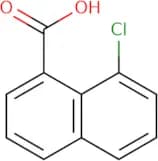
CAS:<p>Cyclopentanecarboxylic acid, 1-phenyl-, methyl ester is a synthetic chemical that belongs to the group of quaternary ammonium salts. It is used as a catalyst and has been shown to interact with benzene, thionyl chloride, carbonium ion and atropine. Cyclopentanecarboxylic acid, 1-phenyl-, methyl ester can be used in the manufacture of anhydrous hydrogen chloride and anhydrous chloride. The chemical is insoluble in water and reacts with alcohols to form esters. This product is not soluble in water but reacts with alcohols to form esters.</p>Fórmula:C13H16O2Pureza:Min. 95%Peso molecular:204.27 g/mol8-Chloronaphthalene-1-carboxylic acid
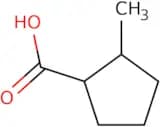
CAS:<p>8-Chloronaphthalene-1-carboxylic acid is a cannabinoid receptor agonist. It has affinity for both CB1 and CB2 receptors and has been shown to have activity in vivo. 8-Chloronaphthalene-1-carboxylic acid is an analog of the natural cannabinoid, anandamide, which activates CB1 and CB2 receptors. The chloro substituent on the phenyl ring of 8-chloronaphthalene-1-carboxylic acid can be substituted with electron withdrawing groups such as bromo or chloro to increase affinity for cb2 receptors. This substitution decreases affinity for cb1 receptors, but increases affinity for cb2 receptors.</p>Fórmula:C11H7ClO2Pureza:Min. 95%Peso molecular:206.62 g/molrac-(1R,2R)-2-Methylcyclopentane-1-carboxylic acid
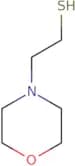
CAS:<p>Versatile small molecule scaffold</p>Fórmula:C7H12O2Pureza:Min. 95%Peso molecular:128.2 g/mol2-(Morpholin-4-yl)ethane-1-thiol
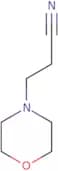
CAS:<p>Versatile small molecule scaffold</p>Fórmula:C6H13NOSPureza:Min. 95%Peso molecular:147.24 g/molN-(2-Cyanoethyl)morpholine
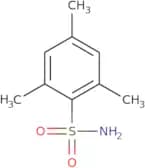
CAS:<p>N-(2-Cyanoethyl)morpholine is an antibacterial agent that inhibits cell growth by binding to the ribosomal RNA of bacteria, thereby inhibiting protein synthesis. This drug has been shown to inhibit the growth of staphylococcus and leukemia cells in vitro. N-(2-Cyanoethyl)morpholine also inhibits the production of polyamines, which are involved in cell proliferation. These inhibitory properties have been attributed to amines on the molecule that bind to bacterial ribosomes and prevent the production of proteins. N-(2-Cyanoethyl)morpholine has been shown to be effective against Mycobacterium avium complex, but not Mycobacterium tuberculosis or other acid-fast bacteria.</p>Fórmula:C7H12N2OPureza:Min. 95%Peso molecular:140.19 g/mol2,4,6-Trimethylbenzenesulfonamide
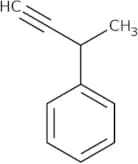
CAS:<p>2,4,6-Trimethylbenzenesulfonamide is an organic solvent that has a range of uses in the manufacture of plastics and elastomers. It also has inflammatory properties and may be used to induce symptoms of dermatitis. This compound competitively inhibits the production of imine from amino acid precursors and reactive oxygen species (ROS) formation by neutrophils. 2,4,6-Trimethylbenzenesulfonamide has been shown to have antibacterial activity against thp-1 cells and chloride ion channels. The inhibitory properties of this compound are due to its ability to interfere with the transepidermal water loss (TEWL).</p>Fórmula:C9H13NO2SPureza:Min. 95%Peso molecular:199.27 g/molBut-3-yn-2-ylbenzene
CAS:<p>But-3-yn-2-ylbenzene is a substance that is found in the oil of plant seeds. It is a hydrocarbon molecule, meaning it contains only hydrogen and carbon atoms. The but-3-yn-2-ylbenzene molecule has been studied with high level optimizations and frequency calculations to determine its transition states, molecular mechanisms, and functions. This substance can be used as a biofuel because it has high energy density. But-3-yn-2-ylbenzene has been studied by chemists to determine its chemical constants and viscosity.</p>Fórmula:C10H10Pureza:Min. 95%Peso molecular:130.19 g/mol4-Bromobut-3-yn-1-ol
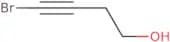
CAS:<p>4-Bromobut-3-yn-1-ol is a monomer that belongs to the class of methacrylates. It is a stereoselective monomer and can be used to prepare acrylates. 4-Bromobut-3-yn-1-ol has been shown to have an attractant activity in lepidoptera, which may be due to its unsymmetrical structure. This molecule also has a piperidine skeleton, which can be used in synthetic methods for the preparation of cross-coupling products.</p>Fórmula:C4H5BrOPureza:Min. 95%Peso molecular:148.99 g/mol(+)-Tranylcypromine hydrochloride
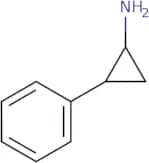
CAS:Produto Controlado<p>(+)-Tranylcypromine hydrochloride is a drug that is used for the treatment of depression. It inhibits monoamine oxidase (MAO) and reversibly inhibits the activity of tyrosine hydroxylase, which are enzymes involved in the production of amines. The binding of this drug to lysine residues on the enzyme MAO-A prevents the oxidation of dopamine and other neurotransmitters, such as serotonin. This drug has shown to have pluripotent effects in animal studies. (+)-Tranylcypromine hydrochloride has been shown to induce dedifferentiation in human liver cells grown in culture, which may be due to its ability to inhibit protein synthesis. There are many known drug interactions with (+)-tranylcypromine hydrochloride. Clinical studies have found that it increases cardiovascular toxicity when taken with drugs such as beta blockers, calcium channel blockers, and clonidine.</p>Fórmula:C9H11N·HClPureza:Min. 95%Peso molecular:169.65 g/mol1,7-Dibromoheptane
CAS:<p>1,7-Dibromoheptane is an α2-adrenergic receptor antagonist that prevents the activation of these receptors by blocking the binding of endogenous noradrenaline and adrenaline. It has been shown to inhibit hydrochloric acid-induced gastric ulceration in rats. 1,7-Dibromoheptane also has a high detection sensitivity and can be used for the qualitative identification of fatty acids. The compound's viscosity is affected by changes in temperature and it forms dipoles due to its structure. This compound has been used as a covid-19 pandemic flu vaccine adjuvant.</p>Fórmula:C7H14Br2Pureza:Min. 95%Peso molecular:258 g/mol