Building Blocks
Esta seção contém produtos fundamentais para a síntese de compostos orgânicos e biológicos. Building blocks são os materiais de partida essenciais usados para construir moléculas complexas através de várias reações químicas. Eles desempenham um papel crítico na descoberta de medicamentos, ciência dos materiais e pesquisa química. Na CymitQuimica, oferecemos uma ampla gama de building blocks de alta qualidade para apoiar suas pesquisas inovadoras e projetos industriais, garantindo que você tenha os componentes essenciais para uma síntese bem-sucedida.
Subcategorias de "Building Blocks"
- Ácidos Borónicos e Derivados de Ácido Borónico(5.756 produtos)
- Building Blocks Quirais(1.242 produtos)
- Building Blocks Hidrocarbonetos(6.095 produtos)
- Building Blocks orgânicos(61.038 produtos)
Foram encontrados 196817 produtos de "Building Blocks"
Ordenar por
Pureza (%)
0
100
|
0
|
50
|
90
|
95
|
100
4-(Dibromomethyl)-2(1H)-quinolinone
CAS:<p>Please enquire for more information about 4-(Dibromomethyl)-2(1H)-quinolinone including the price, delivery time and more detailed product information at the technical inquiry form on this page</p>Fórmula:C10H7Br2NOPureza:Min. 95%Peso molecular:316.98 g/mol4-[(1,1-Dimethylethoxy)carbonyl]-2-thiomorpholineacetic acid
CAS:<p>Please enquire for more information about 4-[(1,1-Dimethylethoxy)carbonyl]-2-thiomorpholineacetic acid including the price, delivery time and more detailed product information at the technical inquiry form on this page</p>Fórmula:C11H19NO4SPureza:Min. 95%Peso molecular:261.34 g/mol2,6-Di-tert-butyl-4-(morpholinomethyl)phenol
CAS:<p>Please enquire for more information about 2,6-Di-tert-butyl-4-(morpholinomethyl)phenol including the price, delivery time and more detailed product information at the technical inquiry form on this page</p>Fórmula:C19H31NO2Pureza:Min. 95%Peso molecular:305.46 g/mol1-(4-Iodophenyl)ethan-1-ol
CAS:<p>Versatile small molecule scaffold</p>Fórmula:C8H9IOPureza:Min. 95%Peso molecular:248.06 g/mol2-[(tert-Butoxy)carbonyl]-2-azabicyclo[3.1.0]hexane-5-carboxylic acid
CAS:<p>Versatile small molecule scaffold</p>Fórmula:C11H17NO4Pureza:Min. 95%Peso molecular:227.26 g/mol1-(3-Amino-1H-pyrazol-1-yl)-2-methylpropan-2-ol
CAS:<p>Versatile small molecule scaffold</p>Fórmula:C7H13N3OPureza:Min. 95%Peso molecular:155.2 g/molDebacarb
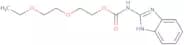
CAS:<p>Debacarb is a subtilis mutant strain that produces the active substances debacarb and debacin. Debacarb inhibits the mitochondrial cytochrome b-245, which is an enzyme in the electron transport chain of mitochondria. It also inhibits bacterial growth by binding to nicotinic acetylcholine, which is an enzyme involved in the synthesis of bacterial cell walls. The target enzymes for this compound are not yet known. The bacterium Agrobacterium tumefaciens was found to be sensitive to Debacarb, but resistant strains were also obtained. Debacarb has been used as an agrochemical against bacterial strains such as Pseudomonas syringae and Erwinia carotovora. The effective dose for Debacarb varies depending on the bacterial strain. The most common effective doses are between 2 and 5 ppm, but higher concentrations may be needed against some bacteria.br> Debacarb can inhibit polymerase chain reactions, which</p>Fórmula:C14H19N3O4Pureza:Min. 95%Peso molecular:293.32 g/mol6-Bromocinnolin-4-ol
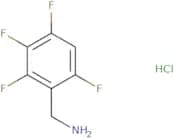
CAS:<p>Versatile small molecule scaffold</p>Fórmula:C8H5BrN2OPureza:Min. 95%Peso molecular:225.04 g/mol2,3,4,6-Tetrafluorobenzylamine hydrochloride
CAS:<p>2,3,4,6-Tetrafluorobenzylamine hydrochloride is a fluorescent organic dye that binds to the antibody and can be used as a research tool for studying protein interactions. 2,3,4,6-Tetrafluorobenzylamine hydrochloride is also an inhibitor of the ion channel TRPV1. This compound has been shown to be a ligand and activator of nicotinic acetylcholine receptors. It binds to the receptor with high affinity and is an excellent fluorescent probe for covalent labeling of peptides and proteins.</p>Fórmula:C7H6ClF4NPureza:Min. 95%Peso molecular:215.57 g/mol[3-Fluoro-4-(1H-imidazol-1-yl)phenyl]methanamine
CAS:<p>Versatile small molecule scaffold</p>Fórmula:C10H10FN3Pureza:Min. 95%Peso molecular:191.2 g/molBenzal Chloride
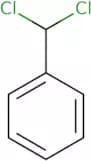
CAS:Produto Controlado<p>Benzal Chloride is a chlorinating agent that exhibits reactive properties. It is used in wastewater treatment to disinfect and oxidize organic matter, as well as to remove hydrogen sulfide and other volatile organics. Benzal Chloride is also used for the preparation of benzalkonium chloride, which has been shown to have antimicrobial properties. The pharmacokinetic properties of benzal chloride are similar to those of chloride, but it has not been studied extensively in humans.</p>Fórmula:C7H6Cl2Pureza:Min. 95%Cor e Forma:Clear LiquidPeso molecular:161.03 g/mol1-Oxo-1,3-dihydro-2-benzofuran-4-carboxylic acid
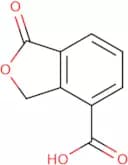
CAS:<p>Versatile small molecule scaffold</p>Fórmula:C9H6O4Pureza:Min. 95%Peso molecular:178.14 g/mol2-(2-Oxotetrahydrofuran-3-yl)-1H-isoindole-1,3(2H)-dione
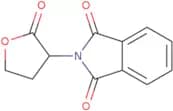
CAS:<p>Versatile small molecule scaffold</p>Fórmula:C12H9NO4Pureza:Min. 95%Peso molecular:231.2 g/molD-allo-Threoninol
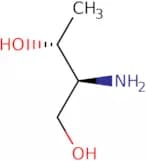
CAS:<p>D-allo-Threoninol is a conformational analogue of threonine. It has been shown to inhibit the growth of Escherichia coli, Bacillus subtilis, and Staphylococcus aureus in vitro. D-allo-Threoninol binds to the enzyme methionine adenosyltransferase (MAT) by forming hydrogen bonds with its amino acid side chains. This binding prevents the formation of the MAT-coenzyme A complex, inhibiting protein synthesis and cell division.</p>Fórmula:C4H11NO2Pureza:Min. 95%Cor e Forma:PowderPeso molecular:105.14 g/molMacaridine
CAS:<p>Please enquire for more information about Macaridine including the price, delivery time and more detailed product information at the technical inquiry form on this page</p>Fórmula:C13H13NO2Pureza:Min. 95%Peso molecular:215.25 g/mol2,5-Dimethoxytetrahydrofuran
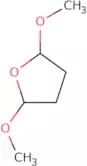
CAS:<p>2,5-Dimethoxytetrahydrofuran is an organic compound that can be synthesized from 2,5-dimethoxybenzaldehyde and tetrahydrofuran. The asymmetric synthesis of this compound was first reported in 1968. The nmr spectrum of 2,5-dimethoxytetrahydrofuran shows two signals at δ 5.89 and δ 7.03 ppm. This compound is soluble in water and organic solvents such as dichloromethane, benzene, toluene, chloroform, and methanol. 2,5-Dimethoxytetrahydrofuran has been shown to have pain-relieving effects using the formalin test in mice and rats. It also has antineoplastic properties when used with other quinoline derivatives.br>br> 2,5-Dimethoxytetrahydrofuran is a white solid</p>Fórmula:C6H12O3Pureza:Min. 95%Cor e Forma:PowderPeso molecular:132.16 g/molPyr-Gln-OH trifluoroacetate
CAS:<p>Please enquire for more information about Pyr-Gln-OH trifluoroacetate including the price, delivery time and more detailed product information at the technical inquiry form on this page</p>Fórmula:C10H15N3O5•(C2HF3O2)xPureza:Min. 95%trans-Bilastine N-oxide
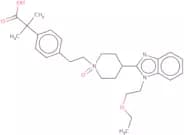
CAS:<p>Please enquire for more information about trans-Bilastine N-oxide including the price, delivery time and more detailed product information at the technical inquiry form on this page</p>Fórmula:C28H37N3O4Pureza:Min. 95%Peso molecular:479.61 g/molNor reticuline
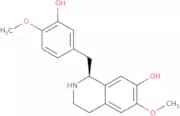
CAS:<p>Norreticuline is a virus-induced gene that is primarily found in the opium poppy, Papaver somniferum. Norreticuline has been shown to be biosynthesized from reticuline by a series of enzymatic reactions. It is also involved in the metabolic pathway of papaverine, which is an alkaloid that has been used as a vasodilator and anti-hypertensive drug. The optimum pH for norreticuline production is between 6 and 7. Norreticuline has demonstrated anticancer activity against various tumor cells, such as breast cancer cells and colon cancer cells. Norreticuline may also have antiviral properties due to its ability to inhibit viral DNA replication and synthesis of viral proteins.</p>Fórmula:C18H21NO4Pureza:Min. 95%Peso molecular:315.36 g/molrac-tert-Butyl (3R,5S)-3,5-dimethyl-4-oxopiperidine-1-carboxylate
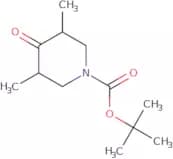
CAS:<p>Versatile small molecule scaffold</p>Fórmula:C12H21NO3Pureza:Min. 95%Peso molecular:227.3 g/mol

![4-[(1,1-Dimethylethoxy)carbonyl]-2-thiomorpholineacetic acid](/_next/image/?url=https%3A%2Fstatic.cymitquimica.com%2Fproducts%2F3D%2Fthumb-webp%2FFD183547.webp&w=3840&q=75)

![2-[(tert-Butoxy)carbonyl]-2-azabicyclo[3.1.0]hexane-5-carboxylic acid](/_next/image/?url=https%3A%2Fstatic.cymitquimica.com%2Fproducts%2F3D%2Fthumb-webp%2FBAC00454.webp&w=3840&q=75)


![[3-Fluoro-4-(1H-imidazol-1-yl)phenyl]methanamine](/_next/image/?url=https%3A%2Fstatic.cymitquimica.com%2Fproducts%2F3D%2Fthumb-webp%2FBNB90714.webp&w=3840&q=75)