Building Blocks
Esta seção contém produtos fundamentais para a síntese de compostos orgânicos e biológicos. Building blocks são os materiais de partida essenciais usados para construir moléculas complexas através de várias reações químicas. Eles desempenham um papel crítico na descoberta de medicamentos, ciência dos materiais e pesquisa química. Na CymitQuimica, oferecemos uma ampla gama de building blocks de alta qualidade para apoiar suas pesquisas inovadoras e projetos industriais, garantindo que você tenha os componentes essenciais para uma síntese bem-sucedida.
Subcategorias de "Building Blocks"
- Ácidos Borónicos e Derivados de Ácido Borónico(5.778 produtos)
- Building Blocks Quirais(1.243 produtos)
- Building Blocks Hidrocarbonetos(6.098 produtos)
- Building Blocks orgânicos(61.057 produtos)
Foram encontrados 200716 produtos de "Building Blocks"
Ordenar por
Pureza (%)
0
100
|
0
|
50
|
90
|
95
|
100
1,4-(Diamidino)benzene dihydrochloride
CAS:<p>1,4-Diamidino-benzene dihydrochloride (DABD) is a synthetic, crystalline organic compound that is insoluble in water. This chemical compound has been shown to be a reactive electron donor towards carbamazepine and its derivatives. DABD has also been immobilized on an electrode surface for use as a stable and sustainable electrode material. The immobilization of DABD on an electrode surface was done by covalently binding the DABD molecule to the surface with triazine molecules by covalent bonds. This process resulted in a stable and functional electrode material that can be used for up to 12 hours.</p>Fórmula:C8H12Cl2N4Pureza:Min. 95%Peso molecular:235.11 g/molProp-2-ene-1-sulfonyl chloride
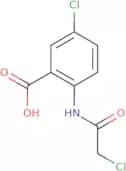
CAS:<p>Prop-2-ene-1-sulfonyl chloride is an organic compound that is used as a pharmaceutical intermediate. It has been shown to have potent inhibitory activity against pancreatic lipase, which makes it a potential treatment for inflammatory diseases such as arthritis. The active form of prop-2-ene-1-sulfonyl chloride binds to the receptor site of the molecule and prevents it from binding with other molecules, thereby blocking the inflammatory response. Prop-2-ene-1-sulfonyl chloride also binds to cholesterol esters in cells and prevents them from being transferred. This inhibits cholesterol production and reduces inflammation caused by high levels of cholesterol.</p>Fórmula:C3H5ClO2SPureza:Min. 95%Peso molecular:140.59 g/mol5-Chloro-2-(2-chloroacetamido)benzoic acid
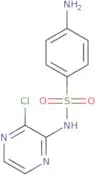
CAS:Versatile small molecule scaffoldFórmula:C9H7Cl2NO3Pureza:Min. 95%Peso molecular:248.06 g/mol4-Amino-N-(3-chloropyrazin-2-yl)benzenesulfonamide
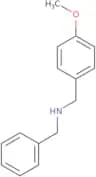
CAS:<p>Versatile small molecule scaffold</p>Fórmula:C10H9ClN4O2SPureza:Min. 95%Peso molecular:284.72 g/molBenzyl-(4-methoxy-benzyl)-amine
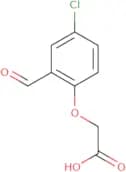
CAS:<p>Benzyl-(4-methoxy-benzyl)-amine is a chemical compound that has the molecular formula CHNO. It is an organic compound with a nitrate group, which are common in esters and phenolates. This compound can be synthesized by debenzylating benzyl amines and reacting them with nitric acid. Benzyl-(4-methoxy-benzyl)-amine may also be prepared by reacting benzaldehyde with ammonium hydroxide or ammonia gas. The synthesis of this compound is chemoselective, meaning it only reacts at one point on the molecule, rather than two. Benzyl-(4-methoxy-benzyl)-amine is used as a precursor to other compounds such as ammonium nitrate, esters, phenolates, and amides.</p>Fórmula:C15H17NOPureza:Min. 95%Peso molecular:227.3 g/mol2-(4-Chloro-2-formylphenoxy)acetic acid
CAS:<p>2-(4-Chloro-2-formylphenoxy)acetic acid is a chemical compound that is found in microalgae. The compound has been shown to inhibit the growth of bacteria by binding to glucose transporters and inhibiting their ability to absorb glucose. This process leads to a decrease in ATP levels, energy depletion, and cell death. In addition, this compound has been shown to have trophic effects on microalgae. This compound also inhibits the expression of malic enzyme genes and ammonium transporter genes in bacteria. 2-(4-Chloro-2-formylphenoxy)acetic acid is a steerable molecule that can be used for sectioning biological material with ultrafast lasers due to its high fluorescence.</p>Fórmula:C9H7ClO4Pureza:Min. 95%Peso molecular:214.6 g/mol2-{[2-({2-[(2-Hydroxyethyl)sulfanyl]ethyl}sulfanyl)ethyl]sulfanyl}ethan-1-ol
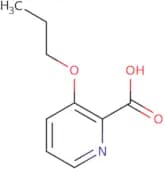
CAS:<p>2-{[2-({2-[(2-Hydroxyethyl)sulfanyl]ethyl}sulfanyl)ethyl]sulfanyl}ethan-1-ol is a polymer with a heterocyclic ring that is soluble in organic solvents. It has been used as an activator, coactivator and/or stabilizer for the thermal treatment of inorganic acids to produce imidazolines and halogens. 2-{[2-({2-[(2-Hydroxyethyl)sulfanyl]ethyl}sulfanyl)ethyl]sulfanyl}ethan-1-ol has been shown to be effective in the production of polymeric materials with good stability and low volatility.</p>Fórmula:C8H18O2S3Pureza:Min. 95%Peso molecular:242.4 g/mol3-Propoxypyridine-2-carboxylic acid
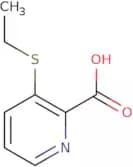
CAS:<p>3-Propoxypyridine-2-carboxylic acid is a benzene ring containing piperidine with a carboxamide substituent. It has shown to be selective for human eosinophils, and is an antagonist at the benzodiazepine site of GABAA receptors. 3-Propoxypyridine-2-carboxylic acid can also be derivatized to form a potent antagonist of benzodiazepine sites on GABAA receptors.</p>Fórmula:C9H11NO3Pureza:Min. 95%Peso molecular:181.19 g/mol3-(Ethylsulfanyl)pyridine-2-carboxylic acid
CAS:Versatile small molecule scaffoldFórmula:C8H9NO2SPureza:Min. 95%Peso molecular:183.23 g/mol3-{[(Benzyloxy)carbonyl]amino}-3-phenylpropanoic acid
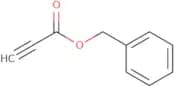
CAS:<p>Versatile small molecule scaffold</p>Fórmula:C17H17NO4Pureza:Min. 95%Peso molecular:299.32 g/molBenzyl propiolate
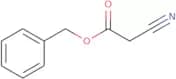
CAS:<p>Benzyl propiolate is a molecule that is structurally related to propiolic acid. It has been shown to act as an adrenergic receptor agonist, which leads to platelet aggregation and thrombocytopenia. Benzyl propiolate also forms methyl esters with alcohols and is synthesized by methyl esterification of benzyl alcohol and propionic acid. This compound is electron deficient, which allows it to react with electron-rich substances, such as thromboplastin in the reaction solution for heparin-induced thrombocytopenia.</p>Fórmula:C10H8O2Pureza:Min. 95%Peso molecular:160.17 g/molBenzyl 2-cyanoacetate
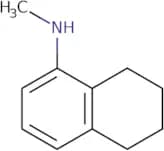
CAS:Benzyl 2-cyanoacetate is an aliphatic hydrocarbon that has been used in the synthesis of various quinoline derivatives. It can be prepared by the reaction of malonic acid with hydrochloric acid, followed by borohydride reduction and the addition of active methylene. Benzyl 2-cyanoacetate is also a precursor to a number of other compounds, including β-amino acids, which are used as pharmaceutical preparations. The chloride ions in benzyl 2-cyanoacetate react with nitro groups to form chloroquinolines. This compound is also an efflux pump inhibitor that blocks bacterial cells from exporting antibiotic molecules out of the cell.Fórmula:C10H9NO2Pureza:Min. 95%Peso molecular:175.19 g/molN-Methyl-5,6,7,8-tetrahydronaphthalen-1-amine
CAS:<p>Versatile small molecule scaffold</p>Fórmula:C11H15NPureza:Min. 95%Peso molecular:161.24 g/mol4-[(4-Methoxyphenyl)sulfanyl]aniline
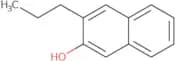
CAS:Versatile small molecule scaffoldFórmula:C13H13NOSPureza:Min. 95%Peso molecular:231.32 g/mol3-Propylnaphthalen-2-ol
CAS:Versatile small molecule scaffoldFórmula:C13H14OPureza:Min. 95%Peso molecular:186.25 g/mol3-Phenyl-2-[(prop-2-en-1-yl)amino]propanoic acid
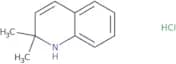
CAS:<p>Versatile small molecule scaffold</p>Fórmula:C12H15NO2Pureza:Min. 95%Peso molecular:205.25 g/mol2,2-Dimethyl-1,2-dihydroquinoline hydrochloride
CAS:<p>Versatile small molecule scaffold</p>Fórmula:C11H14ClNPureza:Min. 95%Peso molecular:195.69 g/molPhenyl-prop-2-ynyl-amine
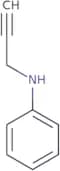
CAS:Phenyl-prop-2-ynyl-amine is a primary amine with neuroprotective properties. It can be activated to the corresponding aniline by treatment with a base. Phenyl-prop-2-ynyl-amine has been shown to have neuroprotective effects in a model system of Parkinson's disease. It also possesses ring-opening activity on quinoline derivatives and gold nanoparticles. This reaction is slow, but it can be accelerated by the addition of a carboxylic acid. The use of this method for the synthesis of phenylpropene derivatives provides an efficient route for the construction of complex molecules with functional groups in their skeletons.Fórmula:C9H9NPureza:Min. 95%Peso molecular:131.17 g/mol1-Z-2-Pyrrolidinone
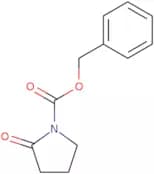
CAS:Versatile small molecule scaffoldFórmula:C12H13NO3Pureza:Min. 95%Peso molecular:219.24 g/mol4-Bromopentanenitrile
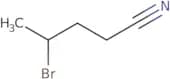
CAS:<p>4-Bromopentanenitrile is a medicinal molecule that has been shown to have oral bioavailability. This compound is an antagonist of the chemokine receptor CXCR4 and blocks the binding of SDF-1α and other ligands to this receptor, which inhibits the migration of lymphocytes from bone marrow into peripheral tissues. 4-Bromopentanenitrile has also been shown to inhibit cell proliferation in vitro and in vivo, which may be due to its ability to block DNA replication. 4-Bromopentanenitrile has been tested for its ability to inhibit the growth of cancer cells in mice models.</p>Fórmula:C5H8BrNPureza:Min. 95%Peso molecular:162.03 g/mol


![2-{[2-({2-[(2-Hydroxyethyl)sulfanyl]ethyl}sulfanyl)ethyl]sulfanyl}ethan-1-ol](/_next/image/?url=https%3A%2Fstatic.cymitquimica.com%2Fproducts%2F3D%2Fthumb-webp%2FPAA44077.webp&w=3840&q=75)
![3-{[(Benzyloxy)carbonyl]amino}-3-phenylpropanoic acid](/_next/image/?url=https%3A%2Fstatic.cymitquimica.com%2Fproducts%2F3D%2Fthumb-webp%2FPAA44098.webp&w=3840&q=75)
![4-[(4-Methoxyphenyl)sulfanyl]aniline](/_next/image/?url=https%3A%2Fstatic.cymitquimica.com%2Fproducts%2F3D%2Fthumb-webp%2FPAA45385.webp&w=3840&q=75)
![3-Phenyl-2-[(prop-2-en-1-yl)amino]propanoic acid](/_next/image/?url=https%3A%2Fstatic.cymitquimica.com%2Fproducts%2F3D%2Fthumb-webp%2FPAA46399.webp&w=3840&q=75)