Building Blocks
Esta seção contém produtos fundamentais para a síntese de compostos orgânicos e biológicos. Building blocks são os materiais de partida essenciais usados para construir moléculas complexas através de várias reações químicas. Eles desempenham um papel crítico na descoberta de medicamentos, ciência dos materiais e pesquisa química. Na CymitQuimica, oferecemos uma ampla gama de building blocks de alta qualidade para apoiar suas pesquisas inovadoras e projetos industriais, garantindo que você tenha os componentes essenciais para uma síntese bem-sucedida.
Subcategorias de "Building Blocks"
- Ácidos Borónicos e Derivados de Ácido Borónico(5.778 produtos)
- Building Blocks Quirais(1.242 produtos)
- Building Blocks Hidrocarbonetos(6.098 produtos)
- Building Blocks orgânicos(61.059 produtos)
Foram encontrados 199580 produtos de "Building Blocks"
Ordenar por
Pureza (%)
0
100
|
0
|
50
|
90
|
95
|
100
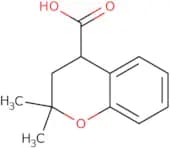
2,2-Dimethyl-3,4-dihydro-2H-1-benzopyran-4-carboxylic acid
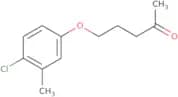
CAS:<p>Versatile small molecule scaffold</p>Fórmula:C12H14O3Pureza:Min. 95%Peso molecular:206.24 g/mol5-(4-Chloro-3-methylphenoxy)pentan-2-one
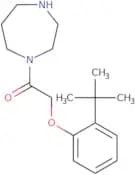
CAS:<p>Versatile small molecule scaffold</p>Fórmula:C12H15ClO2Pureza:Min. 95%Peso molecular:226.7 g/mol2-(2-tert-Butylphenoxy)-1-(1,4-diazepan-1-yl)ethan-1-one
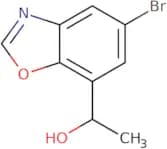
CAS:<p>Versatile small molecule scaffold</p>Fórmula:C17H26N2O2Pureza:Min. 95%Peso molecular:290.4 g/mol1-(5-Bromo-1,3-benzoxazol-7-yl)ethan-1-ol
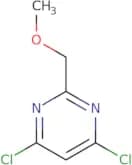
CAS:<p>Versatile small molecule scaffold</p>Fórmula:C9H8BrNO2Pureza:Min. 95%Peso molecular:242.07 g/mol4,6-dichloro-2-(methoxymethyl)pyrimidine
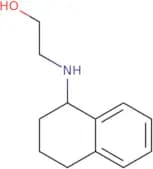
CAS:<p>Versatile small molecule scaffold</p>Fórmula:C6H6Cl2N2OPureza:Min. 95%Peso molecular:193 g/mol2-((1,2,3,4-Tetrahydronaphthalen-1-yl)amino)ethanol
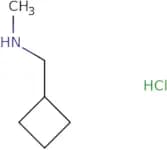
CAS:<p>Versatile small molecule scaffold</p>Fórmula:C12H17NOPureza:Min. 95%Peso molecular:191.27 g/mol(Cyclobutylmethyl)methylamine hydrochloride
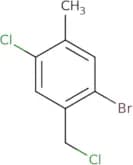
CAS:<p>Versatile small molecule scaffold</p>Fórmula:C6H14ClNPureza:Min. 95%Peso molecular:135.64 g/mol1-Bromo-4-chloro-2-(chloromethyl)-5-methylbenzene
CAS:<p>Versatile small molecule scaffold</p>Fórmula:C8H7BrCl2Pureza:Min. 95%Peso molecular:253.95 g/molN'-Hydroxy-4-(morpholin-4-ylmethyl)benzene-1-carboximidamide
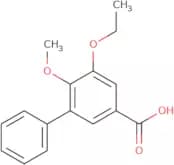
CAS:<p>Versatile small molecule scaffold</p>Fórmula:C12H17N3O2Pureza:Min. 95%Peso molecular:235.28 g/mol3-Ethoxy-4-methoxy-5-phenylbenzoic acid
CAS:<p>Versatile small molecule scaffold</p>Fórmula:C16H16O4Pureza:Min. 95%Peso molecular:272.29 g/molRef: 3D-BMB20081
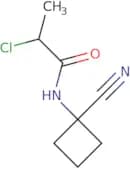
Produto descontinuado2-Chloro-N-(1-cyanocyclobutyl)propanamide
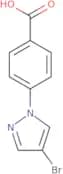
CAS:<p>Versatile small molecule scaffold</p>Fórmula:C8H11ClN2OPureza:Min. 95%Peso molecular:186.64 g/mol4-(4-bromo-1H-pyrazol-1-yl)benzoic acid
CAS:<p>Versatile small molecule scaffold</p>Fórmula:C10H7BrN2O2Pureza:Min. 95%Peso molecular:267.1 g/molRef: 3D-BMB21284
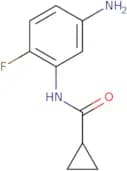
Produto descontinuadoN-(5-Amino-2-fluorophenyl)cyclopropanecarboxamide
CAS:<p>Versatile small molecule scaffold</p>Fórmula:C10H11FN2OPureza:Min. 95%Peso molecular:194.21 g/mol1-(1-Benzothiophen-2-yl)-2-methoxyethan-1-one
CAS:<p>Versatile small molecule scaffold</p>Fórmula:C11H10O2SPureza:Min. 95%Peso molecular:206.3 g/molRef: 3D-BPC71122
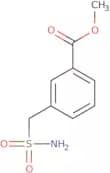
Produto descontinuadoMethyl 3-(sulfamoylmethyl)benzoate
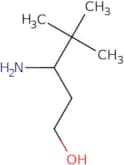
CAS:<p>Versatile small molecule scaffold</p>Fórmula:C9H11NO4SPureza:Min. 95%Peso molecular:229.26 g/mol3-Amino-4,4-dimethylpentan-1-ol
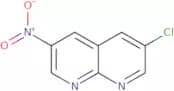
CAS:<p>Versatile small molecule scaffold</p>Fórmula:C7H17NOPureza:Min. 95%Peso molecular:131.22 g/mol3-Chloro-6-nitro-1,8-naphthyridine
CAS:<p>Versatile small molecule scaffold</p>Fórmula:C8H4ClN3O2Pureza:Min. 95%Peso molecular:209.59 g/molRef: 3D-BSB37261
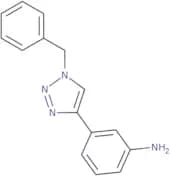
Produto descontinuado3-(1-Benzyl-1H-1,2,3-triazol-4-yl)aniline
CAS:<p>Versatile small molecule scaffold</p>Fórmula:C15H14N4Pureza:Min. 95%Peso molecular:250.3 g/mol1-Bromo-4-(heptafluoropropan-2-yl)benzene
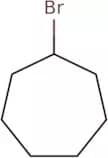
CAS:<p>Versatile small molecule scaffold</p>Fórmula:C9H4BrF7Pureza:Min. 95%Peso molecular:325.02 g/molBromocycloheptane
CAS:<p>Bromocycloheptane is a c6 alkyl that functions as an uptake inhibitor. It is used in the synthesis of other organic compounds, such as imidazole derivatives. Bromocycloheptane has been shown to inhibit uptake in the brain and consequently reduce infarctions in animal models of Alzheimer's disease. Bromocycloheptane inhibits uptake by blocking the function of the carrier protein, which carries neurotransmitters from synapses to axons and dendrites. Bromocycloheptane binds to magnesium ions, which are necessary for hydrolysis of ATP and therefore for uptake into cells. The magnesium ion is found in many enzymes involved in cellular processes, including those that produce ATP, so bromocycloheptane may interfere with cell function by interfering with these enzymes. This drug also blocks the production of lactam, a precursor molecule to GABA, which can be synthesized by glutamic acid decarboxyl</p>Fórmula:C7H13BrPureza:Min. 95%Peso molecular:177.09 g/mol