Álcoois
Subcategorias de "Álcoois"
Foram encontrados 5818 produtos de "Álcoois"
1,5-Naphthalenediol
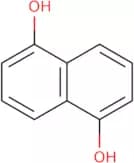
CAS:1,5-Naphthalenediol is a metabolite of naphthalene and has been found to be an electrochemical marker for the detection of naphthalene. It is considered a chemical indicator for naphthalene exposure, as it can be detected in urine and blood samples. 1,5-Naphthalenediol is a heterocyclic organic compound that has been shown to have potential medical uses. It has been shown to function as an anti-inflammatory agent by inhibiting prostaglandin synthesis and can also inhibit the growth of keratinocytes. The detection time for 1,5-naphthalenediol is about 2 hours after exposure.Fórmula:C10H8O2Pureza:Min. 95%Peso molecular:160.17 g/mol(5Z,8Z,11Z)-5,8,11-Eicosatrienoic acid
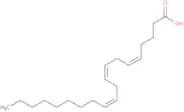
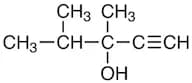
CAS:(5Z,8Z,11Z)-5,8,11-Icosatrienoic acid is a fatty acid that has anti-angiogenic effects. This compound is synthesized from arachidonic acid by the enzyme delta-5-desaturase and inhibits the formation of new blood vessels by promoting the death of endothelial cells. The synthesis of (5Z,8Z,11Z)-5,8,11-Icosatrienoic acid in liver cells is stimulated by an increase in body mass index and a decrease in fatty acids. This molecule has been shown to have physiological effects on brain function and to have anti-inflammatory properties. It also binds to the CB2 receptor.Fórmula:C20H34O2Pureza:Min. 95%Peso molecular:306.48 g/mol3,4-Dimethyl-1-pentyn-3-ol
CAS:Fórmula:C7H12OPureza:>96.0%(GC)Cor e Forma:Colorless to Light orange to Yellow clear liquidPeso molecular:112.1717alpha-Hydroxypregnenolone
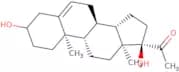
CAS:Produto Controlado17alpha-Hydroxypregnenolone is a steroid hormone that has been shown to have effects on the metabolism of lipids, glucose and protein. This compound is synthesized from progesterone by the enzyme 17alpha-hydroxylase and is converted to 17beta-hydroxyprogesterone by the enzyme 17,20 lyase. It has been shown to have an effect on body mass index in humans and model organisms such as mice. The tissue culture studies showed that 17alpha-Hydroxypregnenolone led to an increase in serum bile acids. In adrenocortical carcinoma cell lines, this compound was found to inhibit the growth of cancer cells through inhibition of DNA synthesis and protein synthesis through inhibition of RNA polymerase II activity. It also inhibits infectious diseases by decreasing virus production and increasing the production of interferon alpha. When synthesized for use in experimental models, this compound can be used as a marker for metabolic disorders or cation
Fórmula:C21H32O3Pureza:Min. 95%Cor e Forma:White PowderPeso molecular:332.48 g/molVanillyl alcohol
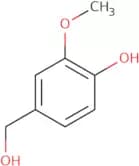
CAS:Vanillyl alcohol is a vanillin derivative that exhibits strong antibacterial activity. It can be used in the food industry as a natural preservative, and it has synergic effects with eugenol. Vanillyl alcohol shows antimicrobial properties against Gram-positive and Gram-negative bacteria, including Staphylococcus aureus, Pseudomonas aeruginosa, Escherichia coli, and Enterococcus faecalis. Vanillyl alcohol exhibits synergic effects with eugenol. In vivo models show that vanillyl alcohol is not toxic to humans, but it may be toxic to wild-type strains of bacteria.Fórmula:C8H10O3Pureza:Min. 98 Area-%Cor e Forma:White PowderPeso molecular:154.16 g/mol2-(Dimethylamino)phenol
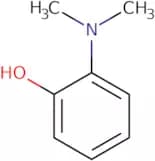
CAS:2-(Dimethylamino)phenol (DMP) is a neutral organic compound that is used as an analytical reagent. It reacts with hydrochloric acid to form phenols, which are then analyzed by fluorescence probe. DMP can also be used in the synthesis of aminophenols, which are used in the manufacture of dyes, pharmaceuticals, and other chemical products. It has been shown to inhibit mitochondrial functions and fatty acid synthesis. DMP binds to receptors on the surface of cells and can block the binding of drugs that target these receptors. DMP may also act as a hydrogen bond donor or acceptor depending on its environment.
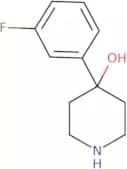
Fórmula:C8H11NOPureza:Min. 95 Area-%Cor e Forma:White PowderPeso molecular:137.18 g/mol4-(3-Fluorophenyl)-4-piperidinol
CAS:4-(3-Fluorophenyl)-4-piperidinol is a useful chemical intermediate that can be used as a versatile building block in organic synthesis. It can be used as a reaction component and can serve as a speciality chemical, complex compound, or reagent. 4-(3-Fluorophenyl)-4-piperidinol has been identified by the Chemical Abstracts Service (CAS) number 80119-54-6. This product is of high quality and is not harmful to humans.Fórmula:C11H14FNOPureza:Min. 95%Cor e Forma:Orange PowderPeso molecular:195.23 g/mol2-Pyrimidinol
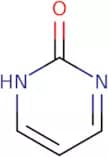
CAS:2-Pyrimidinol is a sodium salt that is used as an antimicrobial agent. It has significant cytotoxicity against skin cancer cells and is also used to treat HIV infection. 2-Pyrimidinol inhibits the activity of inhibitor molecules, which are small molecules that inhibit the activity of important enzymes in cells. This inhibition results in increased production of ATP, which leads to cell death. 2-Pyrimidinol also binds to dna duplexes and prevents them from being opened by helicase, thus inhibiting cellular replication. The molecular structure of 2-pyrimidinol was determined using X-ray crystallography and molecular docking analysis. This compound has been shown to have a potential use in treating metabolic disorders due to its ability to inhibit glycolysis, or the breakdown of glucose, through competitive inhibition with phosphofructokinase (PFK).
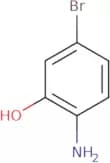
Fórmula:C4H4N2OPureza:(%) Min. 98%Cor e Forma:PowderPeso molecular:96.09 g/mol2-Amino-5-bromophenol
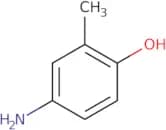
CAS:2-Amino-5-bromophenol is a chemical that is used as a substrate in the study of intracellular Ca2+ levels. 2-Amino-5-bromophenol can also be used to study the activity of microperoxidases, enzymes that are involved in the metabolism of hydrogen peroxide and organic hydroperoxides. 2-Amino-5-bromophenol has been shown to have anticancer activity against MCF7 cells, an estrogen receptor positive cell line. The anticancer activity may be due to the inhibition of protein synthesis by 2-amino-5-bromophenol binding to DNA. This binding prevents transcription and translation of genes that code for proteins involved in cancer cell proliferation and survival.Fórmula:C6H6BrNOPureza:Min. 95%Cor e Forma:Off-White To Brown SolidPeso molecular:188.02 g/mol4-Amino-2-methylphenol
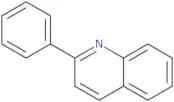
CAS:4-Amino-2-methylphenol is a chemical substance that is used in the production of dyes, cationic surfactants, and basic dyes. It can be produced through oxidation of phenol or by dehydration of aniline. 4-Amino-2-methylphenol has been shown to have potential use as a surface enhancer for Raman spectroscopy. This compound has also been used to extract amines and ethers from organic solvents.Fórmula:C7H9NOPureza:Min. 95%Cor e Forma:SolidPeso molecular:123.15 g/mol2-phenyl-quinoline
CAS:2-Phenyl-quinoline is a naturally occurring compound that exhibits antimicrobial activity. It has been shown to inhibit the growth of bacteria by interfering with the synthesis of ATP, which is necessary for bacterial cell division. 2-Phenyl-quinoline also possesses antioxidative properties and has been shown to have inhibitory effects on a number of bacterial strains. 2-Phenyl-quinoline has been shown to induce necrotic cell death in S. aureus strains, as well as anti-inflammatory and antinociceptive properties.Fórmula:C15H11NPureza:Min. 98 Area-%Cor e Forma:PowderPeso molecular:205.25 g/mol4-Phenoxybenzyl alcohol
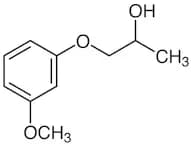
CAS:4-Phenoxybenzyl alcohol is an organic compound that is used as a reagent in the introduction of fatty acids. It has been used to study the fluidity, disulfides, and amide bonds of fatty acid chains. 4-Phenoxybenzyl alcohol also has been shown to inhibit lipase activity. In vitro assays have demonstrated that it can inhibit monoacylglycerol lipase, which is a key enzyme for the hydrolysis of endocannabinoids such as 2-arachidonoylglycerol. 4-Phenoxybenzyl alcohol has also been shown to be a potent inhibitor of potassium phosphate esterase and monoacylglycerol lipase in vitro.Fórmula:C13H12O2Pureza:Min. 95%Cor e Forma:PowderPeso molecular:200.23 g/mol1-(3-Methoxyphenoxy)-2-propanol
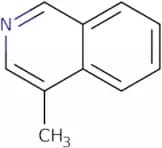
CAS:Fórmula:C10H14O3Pureza:>90.0%(GC)Cor e Forma:Colorless to Light yellow to Light orange clear liquidPeso molecular:182.224-Methylisoquinoline
CAS:Isomeric 4-methylisoquinoline is a molecule that is structurally similar to protopine and berberine chloride. It has been shown to be an effective photosensitizer for the production of reactive oxygen species (ROS) in cells, which can lead to DNA damage and cell death. The functional groups on this molecule are the chloro group, which is a halogen, and the isoquinoline ring system with two methyl groups. The chemistry of this compound involves alkylation, yielding a new compound with one less methyl group than the original molecule. This process is called enamine formation.Fórmula:C10H9NPureza:Min. 95%Cor e Forma:Yellow PowderPeso molecular:143.19 g/mol4-(Hydroxymethyl)cyclohexanol
CAS:4-(Hydroxymethyl)cyclohexanol is a versatile building block that can be used in the synthesis of complex compounds. This chemical has been shown to have a high degree of purity and is a useful intermediate or reaction component for many different reactions. It is also an excellent scaffold for synthesizing other organic molecules.Fórmula:C7H14O2Pureza:Min. 95%Cor e Forma:Clear To White To Off-White SolidPeso molecular:130.18 g/mol2-(2,2-Diethoxyethyl)-1,3-propanediol
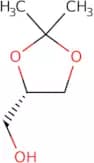
CAS:Fórmula:C9H20O4Pureza:>88.0%(GC)Cor e Forma:Colorless to Light yellow clear liquidPeso molecular:192.261,2-O-Isopropylidene-sn-glycerol
CAS:1,2-O-Isopropylidene-sn-glycerol (1,2-OIPG) is a synthetic molecule. It is synthesized from potassium thioacetate and chloride in an organic solvent with hexadecyl methanesulfonate as the catalyst. The product is obtained by intramolecular hydrogenation of the glyceride to produce 1,2-OIPG. This compound has been used as a strategy to generate hydrogen bonds in asymmetric synthesis, for example in the formation of d-mannitol with activated hydrogen bonds. The compound also has potential applications in the production of fatty acids.
Fórmula:C6H12O3Pureza:Min. 98 Area-%Cor e Forma:Colorless Clear LiquidPeso molecular:132.15 g/mol[3-Methyl-4-(2,2,2-trifluoro-ethoxy)-pyridin-2-yl]-methanol
CAS:[3-Methyl-4-(2,2,2-trifluoro-ethoxy)-pyridin-2-yl]-methanol is a synthetic organic compound that is used in the synthesis of other organic compounds. It can be purified by filtration or gasification and recrystallization.Pureza:Min. 95%Cor e Forma:Powder4-Mercaptobenzyl alcohol, 90%
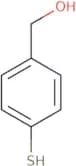
CAS:4-Mercaptobenzyl alcohol (MBBA) is a bifunctional molecule that can act as an electron donor and electron acceptor. It has been shown to have proapoptotic activity, which may be due to its ability to interact with cellular components and induce DNA damage. MBBA has also been shown to inhibit the growth of bacteria by attacking their cell walls and inhibiting their ability to synthesize proteins. The antibacterial activity of MBBA was found to be enhanced on metal surfaces, such as aluminum and copper, which are commonly used in cancer therapy equipment or for antimicrobial resistance. MBBA also has diagnostic properties, which can be used for the detection of cancer cells or bacterial infections.
MBBA is absorbed into cells through the carboxylate groups on the surface of the cell membrane. Electrons are then transferred from the molecule to the cell's electron transport chain, thereby increasing ATP production and inducing apoptosis in cancer cells.Fórmula:C7H8OSPureza:Min. 90%Cor e Forma:Off-White PowderPeso molecular:140.2 g/molBithionol sulfoxide
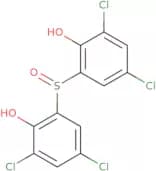
CAS:Bithionol sulfoxide is a glycol ether that has been used in the treatment of endoparasites. It is a toxic chemical that is metabolized to bithionol sulfoxide glucuronide conjugate (BSG). BSG has been shown to have pharmacological effects on animals, and as such it has been used in clinical treatments. BSG has also been shown to be effective against parasites and worms, with no significant side effects. BSG is an oily liquid at room temperature that can be soluble in alcohols, fatty acids and glycol esters. Bithionol sulfoxide can be dissolved in chloroform and ethyl acetate for use as a chromatographic solvent.Fórmula:C12H6Cl4O3SPureza:Min. 95%Cor e Forma:Off-White PowderPeso molecular:372.05 g/mol





![[3-Methyl-4-(2,2,2-trifluoro-ethoxy)-pyridin-2-yl]-methanol](/_next/image/?url=https%3A%2Fstatic.cymitquimica.com%2Fproducts%2F3D%2Fthumb-webp%2FFM38829.webp&w=3840&q=75)