Álcoois
Subcategorias de "Álcoois"
Foram encontrados 5816 produtos de "Álcoois"
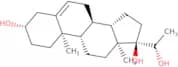
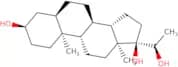
(3b,20S)-Pregn-5-ene-3,17,20-triol
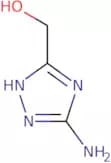
CAS:Produto Controlado(3b,20S)-Pregn-5-ene-3,17,20-triol is a metabolite of the adrenal and ovarian hormones dehydroepiandrosterone (DHEA) and pregnenolone, respectively. It can be detected in urine samples for up to 2 days after administration of a single dose of DHEA. The measurement of this metabolite may be used as an aid in the diagnosis of polycystic ovary syndrome (PCOS). In women with PCOS, high levels of 3b,20S)-pregn-5-ene-3,17,20-triol are found in urine samples together with high levels of sulphates.Fórmula:C21H34O3Pureza:Min. 95%Peso molecular:334.49 g/mol(5-Amino-1H-1,2,4-triazol-3-yl)methanol
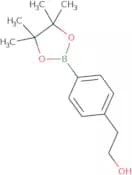
CAS:Please enquire for more information about (5-Amino-1H-1,2,4-triazol-3-yl)methanol including the price, delivery time and more detailed product information at the technical inquiry form on this pageFórmula:C3H6N4OPureza:Min. 95%Peso molecular:114.11 g/mol2-(4-(4,4,5,5-Tetramethyl-l.3,2-dioxaborolan-2-yl)phenyl)ethanol
CAS:2-(4-(4,4,5,5-Tetramethyl-l,3,2-dioxaborolan-2-yl)phenyl)ethanol is a fine chemical that has been used as a reagent and as a building block for the synthesis of complex compounds. It is also an intermediate in organic reactions and has been used as a reaction component in the synthesis of various drugs and agrochemicals. 2-(4-(4,4,5,5-Tetramethyl-l,3,2-dioxaborolan-2-yl)phenyl)ethanol is useful as a scaffold in organic synthesis. This compound can be converted to other useful chemicals such as tetrahydropyranones and dibenzalacetone derivatives. 2-(4-(4,4,5,5-Tetramethyl-l,3,2-dioxaborolan-2-yl)phenyl)ethanolFórmula:C14H21BO3Pureza:Min. 95%Cor e Forma:White PowderPeso molecular:248.13 g/mol20-Epipregnantriol
CAS:Produto Controlado20-Epipregnantriol is a natural metabolite of pregnancy, which is a mixture of 20-hydroxyprogesterone, 17-hydroxyprogesterone, and pregnanediol. This hormone has been shown to be produced in the testes and ovaries. It stimulates the production of estrogen by the ovaries and may have an effect on inhibiting testosterone production in the testes. 20-Epipregnantriol has been used as an analytical control in studies on steroidogenesis.Fórmula:C21H36O3Pureza:Min. 95%Peso molecular:336.51 g/molGestadienol
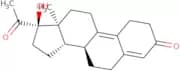
CAS:Produto ControladoGestadienol is a synthetic, reconstituted drug that is used to treat congestive heart failure. Gestadienol is produced by reacting hydrochloric acid with isopropyl palmitate and diluent. The reaction yield of this process can be increased by implanting the drug into animal tissue for a period of time before extraction. Gestadienol binds to glucuronidated compounds in the blood, which may be due to its chemical similarity to estradiol. This binding prevents the glucuronidated compound from being excreted in urine and increases their concentration in the bloodstream. Gestadienol has been shown to increase postnatal development in rats, which may be due to its ability to bind progesterone receptors on cells and inhibit progesterone-mediated effects.Fórmula:C20H26O3Pureza:Min. 95%Peso molecular:314.42 g/mol1-Dodecanol
CAS:Dodecanol is a saturated fatty alcohol that has the molecular formula CH(CH)CHOH. It has two hydroxyl groups and exists as a colourless liquid at room temperature. Dodecanol is used in the preparation of sodium citrate, which is sometimes used in the treatment of kidney stones. Dodecanol reacts with sodium citrate to form dodecanedioic acid and hydrogen bonding interactions between dodecanedioic acid and linoleyl alcohol occur. This reaction mechanism can be explained by kinetic data. Dodecanol also has high values for chemical stability, sample preparation, hydroxyl group, and alcohol residue. The phase transition temperature of dodecanol ranges from -98°C to -42°C. Dodecanol can be oxidized by catalysts such as potassium permanganate or potassium dichromate.Fórmula:C12H26OPureza:Min. 98 Area-%Cor e Forma:White PowderPeso molecular:186.33 g/mol11alpha-Methylandrostan-17beta-ol-3-one
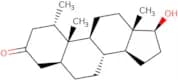
CAS:Produto Controlado11alpha-Methylandrostan-17beta-ol-3-one is a pharmacological agent that belongs to the group of androgens. It is an oral preparation and has been used in the treatment of infectious diseases, autoimmune diseases, and metabolic disorders. It has also been used as a matrix effect control in biological samples. The biological effects of 11alpha-Methylandrostan-17beta-ol-3-one are mediated by its direct action on cells or through conversion to testosterone or dihydrotestosterone (DHT). These effects include increasing protein synthesis, promoting bone formation, lowering cholesterol levels, stimulating the production of red blood cells, and decreasing fat deposition. The main side effects are acne vulgaris, male pattern baldness, prostate enlargement, increased risk for prostate cancer, and increased risk for developing breast cancer.Fórmula:C20H32O2Pureza:Min. 95%Cor e Forma:PowderPeso molecular:304.47 g/mol2-Cyclohexyl-4,6-dinitrophenol
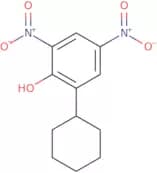
CAS:2-Cyclohexyl-4,6-dinitrophenol is a chemical that inhibits the synthesis of viral DNA. It has been shown to have minimal toxicity in animal models and may be used for the treatment of metabolic disorders, such as hepatic steatosis or hepatitis. 2-Cyclohexyl-4,6-dinitrophenol has also been shown to inhibit the toll-like receptor (TLR) pathway and induce an antiviral state in vitro. In addition, it was found to have an effect on mitochondrial membrane potential, which may explain its antiviral activity. 2-Cyclohexyl-4,6-dinitrophenol has also been shown to inhibit viral replication in cells infected with HIV and other viruses such as Hepatitis C virus.Fórmula:C12H14N2O5Pureza:Min. 95%Peso molecular:266.25 g/mol3-[4-(2-Chlorophenyl)-9-methyl-6H-thieno[3,2-f][1,2,4]triazolo[4,3-a][1,4]diazepin-2-yl]-2-propyn-1-ol
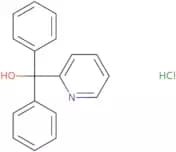
CAS:Produto ControladoPlease enquire for more information about 3-[4-(2-Chlorophenyl)-9-methyl-6H-thieno[3,2-f][1,2,4]triazolo[4,3-a][1,4]diazepin-2-yl]-2-propyn-1-ol including the price, delivery time and more detailed product information at the technical inquiry form on this pageFórmula:C18H13ClN4OSPureza:Min. 95%Peso molecular:368.84 g/mola,a-Diphenyl-2-pyridinemethanol hydrochloride
CAS:Produto ControladoPlease enquire for more information about a,a-Diphenyl-2-pyridinemethanol hydrochloride including the price, delivery time and more detailed product information at the technical inquiry form on this pageFórmula:C18H16ClNOPureza:Min. 95%Peso molecular:297.78 g/mol2(2-Ethoxyethoxy)ethanol
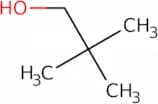
CAS:2(2-Ethoxyethoxy)ethanol is a glycol ether that is used as a substrate film in analytical methods, such as thin layer chromatography. It has been shown to be toxic to the liver and kidney, but not the heart. 2(2-Ethoxyethoxy)ethanol is also an experimental solubility data and can be used to measure the hydrophobic effect of organic compounds. This substance has high values for solubility, which may be due to its glycol ester type. 2(2-Ethoxyethoxy)ethanol does not show toxicity to the heart when administered orally or by inhalation, but does show toxicity to the liver and kidney at high doses.Fórmula:C6H14O3Pureza:Min. 98 Area-%Cor e Forma:PowderPeso molecular:134.17 g/mol2,2-Dimethyl-1-propanol
CAS:2,2-Dimethyl-1-propanol (DMPA) is an inorganic acid that can be used as a coagulant for wastewater treatment. It has been shown to be effective in removing malonic acid from water at pH 4.0 and below. The reaction mechanism of DMPA is not fully understood, but it is thought to involve the formation of a hydroxyl group on the methyl group of DMPA, which then reacts with the acid and releases hydrogen ions. The hydrogen ions react with sodium carbonate to form sodium bicarbonate and release water vapor. This process continues until all the DMPA has reacted or until there is no more acid present. Asymmetric synthesis of DMPA is possible using neopentyl alcohol and fatty acids as starting materials.
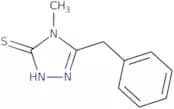
Fórmula:C5H12OPureza:Min. 95%Cor e Forma:White Clear LiquidPeso molecular:88.15 g/mol5-Benzyl-4-methyl-4H-1,2,4-triazole-3-thiol
CAS:Please enquire for more information about 5-Benzyl-4-methyl-4H-1,2,4-triazole-3-thiol including the price, delivery time and more detailed product information at the technical inquiry form on this pageFórmula:C10H11N3SPureza:Min. 95%Peso molecular:205.28 g/molBromadiolone
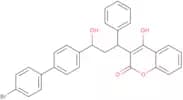
CAS:Bromadiolone NA is a rodenticide that is used in the treatment of rodents in wastewater treatment. Bromadiolone NA has been shown to inhibit the mitochondrial membrane potential, which leads to the release of cytochrome C and activation of caspase 3. Bromadiolone NA also has antioxidative properties that protect against oxidative injury and its metabolites have been found to inhibit human serum albumin. This compound has been used as an antimicrobial agent to control biofilm formation and prevent microbial growth. The mode of action for bromadiolone is through the inhibition of chitosan polymerization, which prevents bacterial attachment and biofilm formation on surfaces. Bromadiolone NA was also shown to bind with DNA, inhibiting replication and transcription.
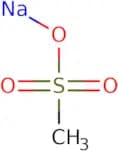
Fórmula:C30H23BrO4Pureza:Min. 95%Cor e Forma:PowderPeso molecular:527.41 g/molSodium methanethiolate - 15% aqueous solution
CAS:Sodium methanethiolate is an antimicrobial agent that is a white, crystalline solid. It reacts with trifluoroacetic acid and water to produce the active form of sodium trifluoroacetate. The reaction mechanism is likely due to the formation of a bicyclic heterocycle that has been shown to be effective against a number of bacteria. Sodium methanethiolate has been used for the treatment of infectious diseases, such as respiratory infections and skin infections, as well as autoimmune diseases and cardiovascular disorders. The oxidation catalyst in this compound may also have physiological effects on the body's cells and tissues.Fórmula:CH3NaSPureza:Min. 95%Cor e Forma:Clear LiquidPeso molecular:70.09 g/mol(3b,7a)-Cholest-5-ene-3,7-diol 3-benzoate
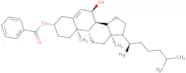
CAS:Produto ControladoPlease enquire for more information about (3b,7a)-Cholest-5-ene-3,7-diol 3-benzoate including the price, delivery time and more detailed product information at the technical inquiry form on this pageFórmula:C34H50O3Pureza:Min. 95%Peso molecular:506.76 g/mol5-Methoxyquinoline
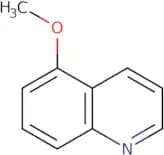
CAS:5-Methoxyquinoline (5MQ) is a chemical compound that belongs to the quinoline derivatives. It has shown anticancer activity in tumor models through a proton-transfer mechanism. 5MQ reacts with an acidic proton, such as the hydronium ion, to produce a reactive intermediate that can react with DNA and other cellular macromolecules. The drug also has been shown to inhibit the growth of bacteria by inhibiting protein synthesis. This inhibition is due to its ability to transfer protons from one molecule to another, which alters the charge distribution on that molecule and prevents it from reacting with other molecules.Fórmula:C10H9NOPureza:Min. 95%Cor e Forma:LiquidPeso molecular:159.18 g/mol(3α,5α,17Z)-Pregn-17(20)-en-3-ol
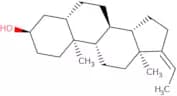
CAS:Produto ControladoPlease enquire for more information about (3α,5α,17Z)-Pregn-17(20)-en-3-ol including the price, delivery time and more detailed product information at the technical inquiry form on this page
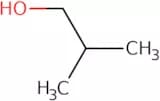
Fórmula:C21H34OPureza:Min. 95%Peso molecular:302.49 g/mol2-Methyl-1-propanol
CAS:Produto Controlado2-Methyl-1-propanol is a small molecule that inhibits the activity of certain enzymes. It is an inhibitor of alcohol dehydrogenase, which converts ethanol to acetaldehyde. 2-Methyl-1-propanol also inhibits the enzyme pyruvate decarboxylase, which catalyzes the conversion of pyruvic acid to acetaldehyde. These two effects result in increased levels of acetaldehyde in the blood and reduced levels of acetate in the blood. The effect on alcohol dehydrogenase has been shown in recombinant cells and in yeast cells with a mutation that leads to decreased alcohol dehydrogenase activity. 2-Methyl-1-propanol has been shown to inhibit the growth of wild type strains but not mutant strains of Escherichia coli, suggesting that its physiological effects are due to inhibition of alcohol dehydrogenase and pyruvate decarboxylase activities.
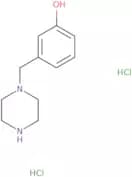
Fórmula:C4H10OPureza:Min. 95%Cor e Forma:Clear LiquidPeso molecular:74.12 g/mol3-(Piperazin-1-ylmethyl)phenol dihydrochloride
CAS:Produto ControladoPlease enquire for more information about 3-(Piperazin-1-ylmethyl)phenol dihydrochloride including the price, delivery time and more detailed product information at the technical inquiry form on this pageFórmula:C11H16N2OPureza:Min. 95%Peso molecular:192.26 g/mol


![3-[4-(2-Chlorophenyl)-9-methyl-6H-thieno[3,2-f][1,2,4]triazolo[4,3-a][1,4]diazepin-2-yl]-2-propyn-…](/_next/image/?url=https%3A%2Fstatic.cymitquimica.com%2Fproducts%2F3D%2Fthumb-webp%2FFC20335.webp&w=3840&q=75)