Álcoois
Subcategorias de "Álcoois"
Foram encontrados 5817 produtos de "Álcoois"
all-trans-13,14-Dihydro retinol
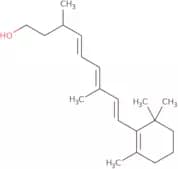
CAS:Retinol is a form of vitamin A that is used for the treatment of insulin resistance. It can be synthesized by the body from all-trans-retinol, which is found in many animal and plant sources. Retinol can also be obtained from supplements, although it is poorly absorbed by the body. Retinol has been shown to improve insulin sensitivity in a cell culture model system, as well as in wild-type mice with diabetes mellitus. This drug has been shown to have strong anti-inflammatory effects and may also be useful for the treatment of hepatic steatosis. Retinol binds competitively to cellular retinoic acid receptors, leading to transcriptional activation of target genes, such as those involved in fatty acid metabolism.Fórmula:C20H32OPureza:Min. 95 Area-%Cor e Forma:Clear Viscous LiquidPeso molecular:288.47 g/mol1-[(2-Chlorophenyl)-N-(methylimino)methyl]cyclopentanol hydrochloride
CAS:Produto ControladoPlease enquire for more information about 1-[(2-Chlorophenyl)-N-(methylimino)methyl]cyclopentanol hydrochloride including the price, delivery time and more detailed product information at the technical inquiry form on this pageFórmula:C13H16ClNO•HClPureza:Min. 95%Peso molecular:274.19 g/mol2,2-Dimethyl-1-propanol
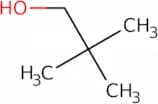
CAS:2,2-Dimethyl-1-propanol (DMPA) is an inorganic acid that can be used as a coagulant for wastewater treatment. It has been shown to be effective in removing malonic acid from water at pH 4.0 and below. The reaction mechanism of DMPA is not fully understood, but it is thought to involve the formation of a hydroxyl group on the methyl group of DMPA, which then reacts with the acid and releases hydrogen ions. The hydrogen ions react with sodium carbonate to form sodium bicarbonate and release water vapor. This process continues until all the DMPA has reacted or until there is no more acid present. Asymmetric synthesis of DMPA is possible using neopentyl alcohol and fatty acids as starting materials.
Fórmula:C5H12OPureza:Min. 95%Cor e Forma:White Clear LiquidPeso molecular:88.15 g/mol5-Nitrosoquinolin-8-ol
CAS:5-Nitrosoquinolin-8-ol is a chemical inhibitor that can be used in the study of enzyme function. It reacts with the active site of the enzymes and prevents them from carrying out their normal functions. 5-Nitrosoquinolin-8-ol has been shown to inhibit the growth of cancer cells and to have antiinflammatory properties. 5-Nitrosoquinolin-8-ol has been shown to bind to sephadex G-100 and potassium dichromate, which are both types of ion exchangers. The redox potential for this compound is -0.84 V. This means it will not react easily with other compounds, which makes it a good candidate for use as an inhibitor in biochemical studies. The nitrogen atoms in this compound are reactive, which means they can form covalent bonds with other molecules in a reaction called nitrosation. Structural biology is a branch of science that deals with studying the three dimensional structure of biological macFórmula:C9H6N2O2Pureza:Min. 95%Cor e Forma:Yellow To Green SolidPeso molecular:174.16 g/mol4-(N-Methyl-N-nitrosamino)-4-(3-pyridyl)butane-1-ol
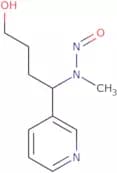
CAS:4-(N-Methyl-N-nitrosamino)-4-(3-pyridyl)butane-1-ol is a chemical that can be found in tobacco smoke. It has been shown that chronic exposure to 4-(N-methyl-N-nitrosamino)-4-(3-pyridyl)butane-1-ol causes cancer in rodents, as evidenced by increased rates of tumorigenesis. This chemical also has the ability to inhibit butyric acid formation, which may reduce the risk of colon cancer. The carcinogenic effect of this chemical is due to its ability to react with DNA and form adducts that cause methylation at C8 position on guanine nucleotide (G). These adducts lead to mutations, which can lead to cancer.Fórmula:C10H15N3O2Pureza:Min. 95%Peso molecular:209.25 g/mol4,4'-Bis(dimethylamino)diphenyl carbinol
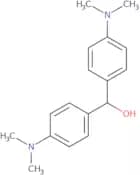
CAS:4,4'-Bis(dimethylamino)diphenyl carbinol is a bathochromic compound that belongs to the group of amines. It has been synthesized from 4,4'-diaminodiphenylmethane and hydrochloric acid. This molecule has been shown to react with protonated nitrogen atoms in an oxidation-reduction reaction. The protonation process occurs via kinetic, thermodynamic, and photophysical mechanisms. 4,4'-Bis(dimethylamino)diphenyl carbinol was used to study the proton transfer reactions between chlorine and nitrogen atoms in molecular modeling studies. On the other hand, this molecule has been shown to have fluorescence properties due to its carbonyl group.Fórmula:C17H22N2OPureza:Min. 95%Cor e Forma:White PowderPeso molecular:270.37 g/mol(1R,2S)-(-)-2-Amino-1,2-diphenylethanol
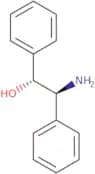
CAS:Produto ControladoThe compound is a stereoselective amine. The molecule has two diastereomers, one of which is the (1R,2S) configuration and the other of which is the (1S,2R) configuration. The compound is an efficient method for preparing fatty acid esters with aromatic hydrocarbons. The chemical structure of the molecule provides a cavity that can be used to bind with ethyl bromoacetate. This cavity has been shown in x-ray crystal structures to be able to bind with ethyl bromoacetate and provide an efficient method for preparing fatty acid esters with aromatic hydrocarbons.Fórmula:C14H15NOPureza:Min. 95%Peso molecular:213.28 g/molPetromyzonol
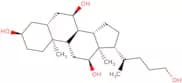
CAS:Produto ControladoPetromyzonol is an analytical agent for the determination of insulin resistance. It has been shown to be a potent inhibitor of ATP-binding cassette transporter A1 (ABCA1), which is responsible for the transport of cholesterol from peripheral tissues to the liver. Petromyzonol has also been shown to inhibit fatty acid and cholesterol synthesis, which may be due to its ability to bind disulfate groups and inhibit structural studies.
Fórmula:C24H42O4Pureza:Min. 95%Peso molecular:394.59 g/mol(S)-1,2-Butanediol
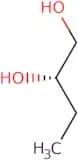
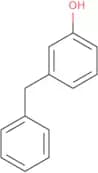
CAS:(S)-1,2-Butanediol is a chemical with formula C4H10O. It is a colorless liquid that is soluble in water and miscible with most organic solvents. The compound has been shown to be an effective solvent for the extraction of proteins, lipids, and other compounds from plants. (S)-1,2-Butanediol has also been used as a reagent in the synthesis of pharmaceuticals such as antibiotics and antihistamines.Fórmula:C4H10O2Pureza:Min. 95%Peso molecular:90.12 g/mol3-Benzyl-phenol
CAS:3-Benzyl-phenol is a formaldehyde and aliphatic compound that is used as a chemical intermediate. It can be synthesized from 3-phenylglycine, which is an amino acid with the formula CH(CH)CONH. The hydroxyl group of 3-benzyl-phenol can be converted to a sulphonic or salicylic acid by hydrolysis with hydrochloric acid or salicylic acid respectively. 3-Benzyl phenol also catalyzes the reaction between paraformaldehyde and hexamine in the presence of water, yielding acetaldehyde and hydrogen gas.Pureza:Min. 95%L-Phenylalaninol 2-chlorotrityl resin
Please enquire for more information about L-Phenylalaninol 2-chlorotrityl resin including the price, delivery time and more detailed product information at the technical inquiry form on this page
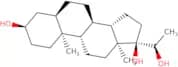
Pureza:Min. 95%20-Epipregnantriol
CAS:Produto Controlado20-Epipregnantriol is a natural metabolite of pregnancy, which is a mixture of 20-hydroxyprogesterone, 17-hydroxyprogesterone, and pregnanediol. This hormone has been shown to be produced in the testes and ovaries. It stimulates the production of estrogen by the ovaries and may have an effect on inhibiting testosterone production in the testes. 20-Epipregnantriol has been used as an analytical control in studies on steroidogenesis.Fórmula:C21H36O3Pureza:Min. 95%Peso molecular:336.51 g/mol4-Pregnen-17a,20b-diol-3-one
CAS:Produto Controlado4-Pregnen-17a,20b-diol-3-one is a synthetic androgen with anabolic and androgenic activity. It has been shown in animal studies to increase maximal responses of the reproductive tract to gonadotropin stimulation. 4-Pregnen-17a,20b-diol-3-one binds to the activin receptor on the cell membrane, which leads to increased expression of a gene encoding for 3β-hydroxysteroid dehydrogenase (3βHSD), an enzyme involved in testosterone synthesis. This drug also increases the sensitivity of ovarian follicles to gonadotropins and decreases basal plasma levels of LH and FSH. 4-Pregnen-17a,20b-diol-3-one has not been found to be toxicologically significant at doses up to 10 mg/kg body weight per day.
Fórmula:C21H32O3Pureza:Min. 95%Peso molecular:332.48 g/mol{1-[2-(4-Methylphenoxy)ethyl]-1H-benzimidazol-2-yl}methanol
CAS:Produto ControladoPlease enquire for more information about {1-[2-(4-Methylphenoxy)ethyl]-1H-benzimidazol-2-yl}methanol including the price, delivery time and more detailed product information at the technical inquiry form on this page
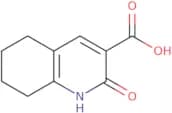
Fórmula:C17H18N2O2Pureza:Min. 95%Peso molecular:282.34 g/mol2-Oxo-1,2,5,6,7,8-hexahydroquinoline-3-carboxylic acid
CAS:Please enquire for more information about 2-Oxo-1,2,5,6,7,8-hexahydroquinoline-3-carboxylic acid including the price, delivery time and more detailed product information at the technical inquiry form on this page
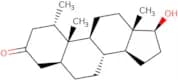
Fórmula:C10H11NO3Pureza:Min. 95%Peso molecular:193.2 g/mol11alpha-Methylandrostan-17beta-ol-3-one
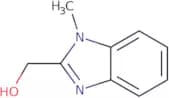
CAS:Produto Controlado11alpha-Methylandrostan-17beta-ol-3-one is a pharmacological agent that belongs to the group of androgens. It is an oral preparation and has been used in the treatment of infectious diseases, autoimmune diseases, and metabolic disorders. It has also been used as a matrix effect control in biological samples. The biological effects of 11alpha-Methylandrostan-17beta-ol-3-one are mediated by its direct action on cells or through conversion to testosterone or dihydrotestosterone (DHT). These effects include increasing protein synthesis, promoting bone formation, lowering cholesterol levels, stimulating the production of red blood cells, and decreasing fat deposition. The main side effects are acne vulgaris, male pattern baldness, prostate enlargement, increased risk for prostate cancer, and increased risk for developing breast cancer.Fórmula:C20H32O2Pureza:Min. 95%Cor e Forma:PowderPeso molecular:304.47 g/mol(1-Methyl-1H-benzimidazol-2-yl)methanol
CAS:Produto Controlado1-Methyl-1H-benzimidazol-2-yl)methanol is a mononuclear, ligand anion with a sulfate group. The compound has a molecular weight of 180.07 and its chemical formula is C6H5NOSO3S. It is soluble in water and alcohols, but insoluble in ethers and chloroform. 1-Methyl-1H-benzimidazol-2-yl)methanol reacts with oxygen to form the corresponding peroxide, which has a boiling point of 228°C at 760 mm Hg pressure. This compound also reacts with nitric acid to form the corresponding nitrate salt, which can be precipitated by adding sodium chloride or ammonium chloride.Fórmula:C9H10N2OPureza:Min. 95%Peso molecular:162.19 g/mol(5-Methoxy-1-methyl-1H-benzimidazol-2-yl)methanol
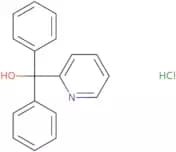
CAS:Produto ControladoPlease enquire for more information about (5-Methoxy-1-methyl-1H-benzimidazol-2-yl)methanol including the price, delivery time and more detailed product information at the technical inquiry form on this pageFórmula:C10H12N2O2Pureza:Min. 95%Peso molecular:192.21 g/mola,a-Diphenyl-2-pyridinemethanol hydrochloride
CAS:Produto ControladoPlease enquire for more information about a,a-Diphenyl-2-pyridinemethanol hydrochloride including the price, delivery time and more detailed product information at the technical inquiry form on this pageFórmula:C18H16ClNOPureza:Min. 95%Peso molecular:297.78 g/molEltrombopag olamine
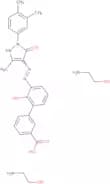
CAS:Eltrombopag olamine is an orally active drug that belongs to the class of thiazolidinones. It has been used for the treatment of thrombocytopenia in patients with chronic liver disease and myelodysplastic syndrome. Eltrombopag olamine inhibits platelet aggregation by binding to glycoprotein IIb/IIIa receptors on the surface of platelets. The drug is a prodrug that is metabolized in vivo to its active form, eltrombopag. This conversion is catalysed by CYP3A4 and CYP2D6 enzymes and can be inhibited by drugs that inhibit these enzymes, such as trifluoroacetic acid and hydroxyl group-containing compounds. Eltrombopag olamine binds to erythrocytes, which may be due to its ability to form intramolecular hydrogen bonds with nitrogen atoms. The synthesis of eltFórmula:C25H22N4O4•(C2H7NO)2Pureza:Min. 95%Cor e Forma:PowderPeso molecular:564.63 g/mol

![1-[(2-Chlorophenyl)-N-(methylimino)methyl]cyclopentanol hydrochloride](/_next/image/?url=https%3A%2Fstatic.cymitquimica.com%2Fproducts%2F3D%2Fthumb-webp%2FFC146990.webp&w=3840&q=75)


![{1-[2-(4-Methylphenoxy)ethyl]-1H-benzimidazol-2-yl}methanol](/_next/image/?url=https%3A%2Fstatic.cymitquimica.com%2Fproducts%2F3D%2Fthumb-webp%2FFM135811.webp&w=3840&q=75)