Álcoois
Os álcoois são uma ampla gama de moléculas orgânicas derivadas de hidrocarbonetos que contêm um ou mais grupos hidroxila (grupo OH). Estes compostos são essenciais em várias reações químicas e são amplamente utilizados em laboratórios para síntese, como solventes e em química analítica. Na CymitQuimica, oferecemos álcoois de alta qualidade preparados para uso laboratorial, apoiando suas pesquisas e aplicações industriais com produtos confiáveis e eficazes. Nossa seleção garante que você tenha os álcoois adequados para suas necessidades específicas, seja para trabalhos de laboratório de rotina ou para projetos de pesquisa especializados.
Subcategorias de "Álcoois"
Foram encontrados 5814 produtos de "Álcoois"
Ordenar por
Pureza (%)
0
100
|
0
|
50
|
90
|
95
|
100
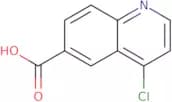
4-Chloroquinoline-6-carboxylicacid
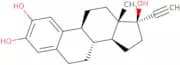
CAS:Please enquire for more information about 4-Chloroquinoline-6-carboxylicacid including the price, delivery time and more detailed product information at the technical inquiry form on this pageFórmula:C10H6ClNO2Pureza:Min. 95%Peso molecular:207.61 g/mol2-Hydroxy ethynyl estradiol
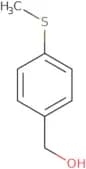
CAS:<p>2-Hydroxy ethynyl estradiol is a synthetic estrogen that has been used in animal studies to study the effects of estrogens on the brain. It is active as an antiestrogen at high doses and has been shown to be a potent inhibitor of brain norepinephrine uptake. 2-Hydroxy ethynyl estradiol has been used as a marker for cytochrome P450 enzymes and NADPH-cytochrome P450 reductase in rat brain. This compound also binds to estrogen receptors in women, although it does not have any biological activity due to its lack of a 17β-hydroxyl group. The drug has also been shown to inhibit noradrenergic neurons in the central nervous system.</p>Fórmula:C20H24O3Pureza:Min. 95%Peso molecular:312.4 g/mol4-(Methylthio)benzyl Alcohol
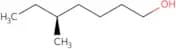
CAS:<p>4-(Methylthio)benzyl Alcohol (MSBA) is a sulfate salt of 4-(methylthio)benzol, which is used as an inhibitor for cytochrome P450 enzymes. MSBA forms a covalent bond with cytochrome P450 and inhibits the oxidation of substrates to form reactive metabolites. This inhibitor can also be used to identify the active site of cytochrome P450 enzymes by docking analysis. The inhibition by MSBA has been demonstrated in recombinant cytochrome P450s using acetonitrile and stilbene derivatives as substrates. The inhibitory potency of MSBA is related to its methoxy groups and sulfate salt groups, which are important for binding with the enzyme. MSBA has been shown to metabolize into primary alcohols, such as 2-propynyl ethyl alcohol, that have inhibitory activities against cytochrome P450 enzymes.</p>Fórmula:C8H10OSPureza:Min. 95%Peso molecular:154.23 g/mol(S)-(+)-5-Methyl-1-heptanol
CAS:(S)-(+)-5-Methyl-1-heptanol is a naturally occurring chemical compound that has been found to be effective against bacteria, fungi, and viruses. It is a volatile liquid that is soluble in water. The (S)-(+)-5-Methyl-1-heptanol molecule contains a hydroxyl group, which can bind to the bacterial cell wall and inhibit the synthesis of proteins necessary for cell division. This compound also has the ability to inhibit fungal growth by binding to ergosterol, which is an important component of fungal cell membranes. The (S)-(+)-5-Methyl-1-heptanol molecule inhibits microbial growth by inhibiting protein synthesis and DNA replication.Fórmula:C8H18OPureza:Min. 95%Peso molecular:130.23 g/mol4-(Dimethylamino)cyclohexanol
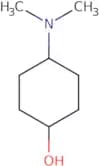
CAS:<p>4-(Dimethylamino)cyclohexanol is a colorless liquid that has a sweet odor. It is insoluble in water but soluble in alcohol, ether, and chloroform. This compound has been used as a solvent for fats, oils, waxes, resins, and rubber. 4-(Dimethylamino)cyclohexanol is found in the environment as a result of its use in insecticides and herbicides. 4-(Dimethylamino)cyclohexanol has been shown to be carcinogenic in animal studies.</p>Fórmula:C8H17NOPureza:Min. 95%Peso molecular:143.23 g/mol4-Hydroxy ethynyl estradiol
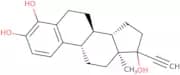
CAS:4-Hydroxy ethynyl estradiol is a synthetic estrogen that is used in the treatment of hormone-dependent cancers, such as breast cancer. It has been shown to induce cellular proliferation and promote tumor growth by binding to estrogen receptors and inhibiting the synthesis of proteins in cells. 4-Hydroxy ethynyl estradiol may be carcinogenic due to its ability to form covalent adducts with DNA, which causes mutations that may lead to cancer. The drug also damages protein targets, including enzymes responsible for regulating cell division or protecting against oxidative stress.Fórmula:C20H24O3Pureza:Min. 95%Peso molecular:312.4 g/mol5-Bromo-2-(hydroxymethyl)phenol
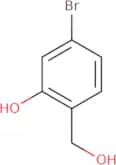
CAS:5-Bromo-2-(hydroxymethyl)phenol (5-BHP) is a synthetic small molecule that activates the death receptor CD95. It has been shown to induce tumor regression in experimental models of cancer. 5-BHP can be used as a cancer therapeutic or for the treatment of inflammatory conditions such as rheumatoid arthritis and psoriasis. 5-BHP binds to the death protein pd-l1, which initiates downstream signaling pathways that lead to activation of caspases and apoptosis. This agent also interacts with programmed death ligand 1 (PD-L1), which is expressed on activated T cells and may be involved in antitumor responses. These interactions are being investigated for their potential use in drug development, including optimization and biochemical techniques to characterize the binding affinity of 5-BHP with PD-L1.Fórmula:C7H7BrO2Pureza:Min. 95%Peso molecular:203.03 g/mol(S)-1,2-Butanediol
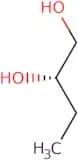
CAS:(S)-1,2-Butanediol is a chemical with formula C4H10O. It is a colorless liquid that is soluble in water and miscible with most organic solvents. The compound has been shown to be an effective solvent for the extraction of proteins, lipids, and other compounds from plants. (S)-1,2-Butanediol has also been used as a reagent in the synthesis of pharmaceuticals such as antibiotics and antihistamines.Fórmula:C4H10O2Pureza:Min. 95%Peso molecular:90.12 g/mol3-O-Methyl 17a-estradiol
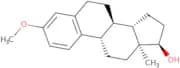
CAS:Produto ControladoPlease enquire for more information about 3-O-Methyl 17a-estradiol including the price, delivery time and more detailed product information at the technical inquiry form on this pageFórmula:C19H26O2Pureza:Min. 95%Peso molecular:286.41 g/mol(1-Chloroisoquinolin-4-yl)boronic acid
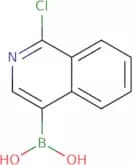
CAS:Please enquire for more information about (1-Chloroisoquinolin-4-yl)boronic acid including the price, delivery time and more detailed product information at the technical inquiry form on this pageFórmula:C9H7BClNO2Pureza:Min. 95%Peso molecular:207.42 g/molL-Alaninol-2-chlorotrityl resin
<p>Please enquire for more information about L-Alaninol-2-chlorotrityl resin including the price, delivery time and more detailed product information at the technical inquiry form on this page</p>Pureza:Min. 95%Iodophenol blue
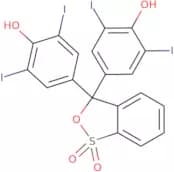
CAS:Iodophenol blue is a dye that has been used in biological research. It is used to stain DNA samples, as it binds to phosphoenolpyruvate (PEP) and sodium carbonate. Iodophenol blue can be used to differentiate tumor cells from the surrounding tissue in biopsy samples. The dye also interacts with amines, resulting in the release of bromophenols and cleavage products. Iodophenol blue can be used as a visual indicator for chemical reactions.Fórmula:C19H10I4O5SPureza:Min. 80 Area-%Cor e Forma:PowderPeso molecular:857.96 g/mol6-Heptyn-1-ol
CAS:6-Heptyn-1-ol is a naturally occurring chemical compound that has been isolated from the human colon and shown to have potent cytotoxicity against human colon carcinoma cells. 6-Heptyn-1-ol inhibits the growth of cancer cells by inducing apoptosis, the process by which a cell commits suicide. It also inhibits pancreatic lipase, an enzyme involved in fat digestion. 6-Heptyn-1-ol has been shown to be a chiral molecule with two enantiomers that can be synthesized artificially. The (R) form of 6-heptyn-1-ol is more potent than the (S) form in inducing apoptosis and inhibiting pancreatic lipase activity.Fórmula:C7H12OPureza:Min. 95%Peso molecular:112.17 g/mol1-(3',4'-Dimethoxyphenyl)-1-propanol
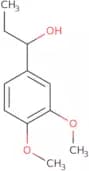
CAS:1-(3’,4’-Dimethoxyphenyl)-1-propanol is a naturally occurring chemical with the molecular formula C10H14O2. It has been found in the bark of Pinus pinaster and the rhizome of Piper auritum. This compound has been shown to have an antiinflammatory effect by inhibiting prostaglandin synthesis. It also inhibits nitrosation reactions and is being studied for its potential as a cancer chemopreventive agent. 1-(3’,4’-Dimethoxyphenyl)-1-propanol is an enantiomer of 2-(3',4'-dimethoxyphenyl)propane-1,3-diol.Fórmula:C11H16O3Pureza:Min. 95%Peso molecular:196.24 g/moltrans-Decahydroquinoline
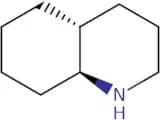
CAS:<p>Trans-decahydroquinoline is a chiral compound that can be synthesized by an asymmetric synthesis. It is an amide with a carbonyl group and a dialkylamino group. Trans-decahydroquinoline can be used to synthesize different compounds, such as enantiopure drugs, pharmaceuticals, and agrochemicals. The synthesis of trans-decahydroquinoline can be accomplished through the aldol cyclization or the addition of an acid to the carbonyl group. The magnetic resonance spectroscopy (NMR) and molecular modeling techniques have been used to study its structure and properties.</p>Fórmula:C9H17NPureza:Min. 95%Peso molecular:139.24 g/mol1,2-Dilinoleoyl-3-palmitoyl-rac-glycerol
CAS:<p>1,2-Dilinoleoyl-3-palmitoyl-rac-glycerol (DLPG) is a lipid molecule that is structurally similar to the sphingolipid ceramide. It has been shown to be an inhibitor of cellular uptake and growth rate and also has long-term toxicity effects. DLPG has been shown to inhibit the signal transduction pathway by binding to microprocessors in the cell membrane and changing their frequency. DLPG also has a profile that can be used as an analog for dextran sulfate, which is a chemical compound that inhibits the uptake of glucose in mammalian cells. The uptake of DLPG can be decoupled from its signaling activity by using constant magnetic fields, which can be generated with superparamagnetic iron oxides or iron particles.</p>Fórmula:C55H98O6Pureza:Min. 95%Peso molecular:855.36 g/molRITA
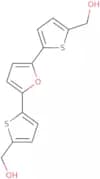
CAS:<p>RITA is a novel compound that has been shown to have anticancer activity in vivo in a rat model. RITA is a small molecule with high potency and low toxicity. It binds selectively to the α subunit of the enzyme topoisomerase II, which is involved in DNA replication and repair. RITA has been shown to induce apoptosis in cancer cells by pro-apoptotic proteins such as Bax and Bak. These proteins are known for their ability to induce apoptosis by increasing mitochondrial membrane permeability, inhibiting mitochondrial functions, or destabilizing the mitochondrial membrane potential. The compound class of RITA is not yet known, but it has been shown to be chemically stable at physiological pH levels and does not require metabolic activation for its cytotoxicity. The pharmacokinetics of this drug have also been studied in human liver cells and humans, indicating that this drug may be able to cross the blood-brain barrier.</p>Fórmula:C14H12O3S2Pureza:Min. 95%Peso molecular:292.38 g/mol3-(2-Methyl-1H-imidazol-1-yl)propan-1-ol hydrochloride
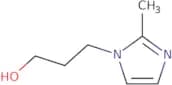
CAS:<p>Please enquire for more information about 3-(2-Methyl-1H-imidazol-1-yl)propan-1-ol hydrochloride including the price, delivery time and more detailed product information at the technical inquiry form on this page</p>Fórmula:C7H12N2OPureza:Min. 95%Peso molecular:140.18 g/mol3-Methyl-1-pentyn-3-ol
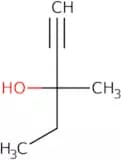
CAS:Produto Controlado<p>3-Methyl-1-pentyn-3-ol is a chemical that has been shown to have interactive effects on the metabolism of urea nitrogen and low light. 3-Methyl-1-pentyn-3-ol has been shown to produce a depressant effect in animals, which may be due to its ability to inhibit the production of acetylcholine by blocking the enzyme cholinesterase. This chemical has also been shown to react with hydroxyl groups, producing a pharmacological agent. The reaction mechanism for 3-methyl pentynol is via hydrolysis by hydrochloric acid or pentobarbital sodium.</p>Fórmula:C6H10OPureza:Min. 95%Peso molecular:98.14 g/mol3-Phenyl-1-propanol
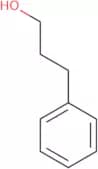
CAS:<p>3-Phenyl-1-propanol is an organic compound that belongs to the class of trifluoroacetic acids. It has a molecular weight of 134.24 and a molecular formula of C8H12O2F3. 3-Phenyl-1-propanol is a reactive compound that reacts with germinating seeds, causing them to stop growing. The reaction products are fatty acid esters, which may be responsible for the inhibition of seed germination. 3-Phenyl-1-propanol can be prepared by reacting phenylacetaldehyde with trifluoroacetic acid in the presence of potassium hydroxide at high temperature and pressure. This method also produces 4-vinylbenzyl alcohol as a side product, which is used in the production of polymers and plastics.</p>Fórmula:C9H12OPureza:Min. 95%Peso molecular:136.19 g/mol