Álcoois
Subcategorias de "Álcoois"
Foram encontrados 5814 produtos de "Álcoois"
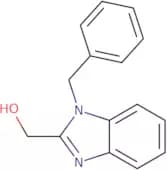
(1-Benzyl-1H-benzimidazol-2-yl)methanol
CAS:Produto ControladoPlease enquire for more information about (1-Benzyl-1H-benzimidazol-2-yl)methanol including the price, delivery time and more detailed product information at the technical inquiry form on this page
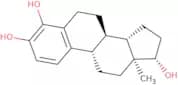
Fórmula:C15H14N2OPureza:Min. 95%Peso molecular:238.28 g/mol4-Hydroxy-17b-estradiol
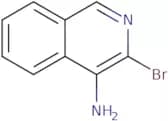
CAS:Produto Controlado4-Hydroxy-17β-estradiol (4-OHE2) is a reactive metabolite of 17β-estradiol that binds to DNA and has been shown to have carcinogenic potential. The catechol-o-methyltransferase enzyme catalyzes the conversion of 4-OHE2 to 4-hydroxycatechol, which can then be further methylated by estrogen sulfotransferase or sulfatase to estrone and estrone sulfate. It has been shown that 4-OHE2 may be a potential biomarker for breast cancer. Experimental studies have shown that 4-OHE2 may act as an antioxidant in cancer tissues, but its activity has not been demonstrated in normal tissues. In order to demonstrate the ability of 4-OHE2 as an antioxidant, its activity was tested in vitro using human breast cancer cells (MDA MB 231). Results showed that 4-OHE2 decreased oxidative stress levels in these cells,Fórmula:C18H24O3Pureza:Min. 95%Cor e Forma:SolidPeso molecular:288.38 g/mol4-Amino-3-bromoisoquinoline
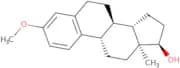
CAS:4-Amino-3-bromoisoquinoline is an isocyanide that reacts with nucleophilic heteroatoms such as the amino group. It also reacts with bromine to form a bromopyridine. The nitrile group of 4-amino-3-bromoisoquinoline can be reduced with sodium borohydride to produce 4-aminoquinoline. This compound has shown potential for use in chemotherapy and treating bacterial infections.Pureza:Min. 95%3-O-Methyl 17a-estradiol
CAS:Produto ControladoPlease enquire for more information about 3-O-Methyl 17a-estradiol including the price, delivery time and more detailed product information at the technical inquiry form on this pageFórmula:C19H26O2Pureza:Min. 95%Peso molecular:286.41 g/molN-Acetyl-4-S-cysteaminylphenol
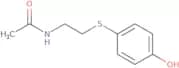
CAS:N-Acetyl-4-S-cysteaminylphenol is a tyrosinase inhibitor that is used in the treatment of skin disorders such as melasma and vitiligo. It slows the production of melanin by inhibiting tyrosinase activity and may be useful for treating some types of skin cancer. N-Acetyl-4-S-cysteaminylphenol also inhibits the growth of tumor cells, but not normal cells, which may be due to its ability to inhibit protein synthesis. This compound has been shown to inhibit cyclic nucleotide phosphodiesterases and cellular processes associated with the proliferation of cancer cells.Fórmula:C10H13NO2SPureza:Min. 95%Cor e Forma:White PowderPeso molecular:211.28 g/molIodophenol blue
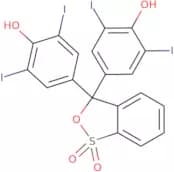
CAS:Iodophenol blue is a dye that has been used in biological research. It is used to stain DNA samples, as it binds to phosphoenolpyruvate (PEP) and sodium carbonate. Iodophenol blue can be used to differentiate tumor cells from the surrounding tissue in biopsy samples. The dye also interacts with amines, resulting in the release of bromophenols and cleavage products. Iodophenol blue can be used as a visual indicator for chemical reactions.Fórmula:C19H10I4O5SPureza:Min. 80 Area-%Cor e Forma:PowderPeso molecular:857.96 g/mol2-Heptanol
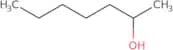
CAS:2-Heptanol is a colorless liquid with a pungent odor. It is soluble in water and has a high boiling point. 2-Heptanol is an intermediate in the synthesis of fatty acids, which are used for the production of soaps, lubricants, and waxes. 2-Heptanol reacts with potassium hydroxide to produce potassium 2-heptoxide, which is soluble in water. The reaction products are caproic acid and hydroxy group. The transport properties of this compound are not well known.
Fórmula:C7H16OPureza:Min. 95%Cor e Forma:Clear LiquidPeso molecular:116.2 g/molBisphenol A
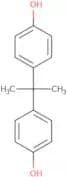
CAS:Bisphenol A is a chemical compound used to make polycarbonate plastics and epoxy resins. It is also used in the production of some dental sealants and composites. Bisphenol A has been shown to have an adverse effect on human health, as it has been linked to various diseases such as coronary heart disease, type 2 diabetes, and breast cancer. The most sensitive route of exposure is through the maternal blood during pregnancy. This chemical can be found in some common food containers, including baby bottles and food cans. Bisphenol A binds to estrogen receptors and alters their activity levels by mimicking the natural hormone estradiol. The optimum concentration for binding varies depending on the cell type and receptor present. Bisphenol A can also increase or decrease certain enzyme activities in vitro depending on the concentrations used. Bisphenol A is also an analytical reagent that can be used for polymerase chain reactions (PCR) to identify genes from specific
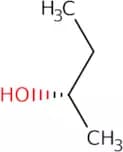
Fórmula:C15H16O2Pureza:Min. 95%Cor e Forma:PowderPeso molecular:228.29 g/mol(S)-(+)-2-Butanol
CAS:Produto ControladoThe compound (S)-(+)-2-Butanol is a chiral molecule that is used in the synthesis of benzodiazepines. The (+) enantiomer of 2-butanol has been shown to bind to the GABA receptor and has an inhibitory effect on benzodiazepine binding. It is also a competitive inhibitor for the enzyme dehydrogenase, which converts 2-butanol to acetaldehyde. The (-) enantiomer of 2-butanol does not have any effect on the GABA receptor or dehydrogenase activity. This means that the (+) enantiomer is responsible for the activation energy and stereoselectivity of this reaction. The activation energy for this reaction can be calculated by measuring the amount of heat released during the reaction. This process can be done through vibrational spectroscopy or by running control experiments with a known concentration of reactants and products. There are many ways to determine whether this reaction follows an elimination or dehydration mechanism,
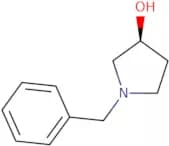
Fórmula:C4H10OPureza:Min. 95%Cor e Forma:Clear LiquidPeso molecular:74.12 g/mol(S)-1-Benzyl-pyrrolidin-3-ol
CAS:(S)-1-Benzyl-pyrrolidin-3-ol is an enantiopure chiral drug that is used as a reagent for the synthesis of sodium salts. It is also used in environmental pollution studies, where it was found to inhibit the reaction between sulfate and sodium salts. (S)-1-Benzyl-pyrrolidin-3-ol has been shown to be stereoselective and has been used for the analysis of sulfate fractions in environmental samples. The compound can also be alkylated with various alcohols to form compounds with different properties, such as antiviral properties. (S)-1-Benzyl-pyrrolidin-3-ol is a chiral molecule that exists as two enantiomers: capitatum and helicatum. When analyzed by HPLC, these two forms can be distinguished by their retention times on a sds polyacrylamide gel electrophoresis system.
Fórmula:C11H15NOPureza:Min. 95%Peso molecular:177.24 g/molSorbitan trioleate
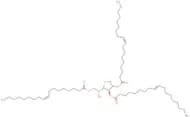
CAS:Sorbitan trioleate is a model system used in pharmaceutical preparations. It is also a particle that consists of three fatty acid chains attached to a hydroxyl group. Sorbitan trioleate has been shown to have many pharmacological effects, including receptor activity and treating allergic reactions. It is also used as a cationic surfactant with magnetic particles for the treatment of bacterial infections. The type strain for this compound is Staphylococcus epidermidis ATCC 12228.
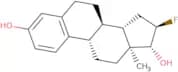
Fórmula:C60H108O8Cor e Forma:Clear LiquidPeso molecular:957.49 g/mol(16α,17β)-16-Fluoroestra-1,3,5(10)-triene-3,17-diol
CAS:Produto Controlado16alpha,17beta)-16-Fluoroestra-1,3,5(10)-triene-3,17-diol is a potent estrogen receptor modulator that has been shown to inhibit tumor growth in clinical oncology. It acts by binding to the estrogen receptor and blocking its ability to activate gene transcription. This compound can also be used as a pharmaceutical preparation in liquid chromatography. 16alpha,17beta)-16-Fluoroestra-1,3,5(10)-triene-3,17-diol is a liquid at room temperature and can be soluble in organic solvents such as chloroform or acetone. It does not react with hydrochloric acid.Fórmula:C18H23FO2Pureza:Min. 95%Cor e Forma:PowderPeso molecular:290.37 g/mol2-Methylaminoethanol
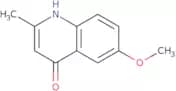
CAS:2-Methylaminoethanol is a colorless, water-soluble liquid. It is an alkanolamine that has a dipole moment of 1.8 debye. 2-Methylaminoethanol can be synthesized by reacting potassium dichromate with ethanolamine in the presence of borohydride and ammonia. The reaction yield for this process is about 50%. 2-Methylaminoethanol reacts with maleic acid to form maleate salt. Maleate salt molecules have two amine groups attached to a carbonyl group, which are used as raw materials for the production of various other chemicals like nylon 11, nylon 12, and polyethylene terephthalate (PET). Maleates also serve as intermediates in the manufacture of esters and nitrites from alcohols and phenols. 2-Methylaminoethanol has been shown to cause blood pressure reduction in mammals due to its ability to inhibit vasoconstriction caused byFórmula:C3H9NOPureza:Min. 95%Cor e Forma:Clear LiquidPeso molecular:75.11 g/mol6-Methoxy-2-methylquinolin-4(1H)-one
CAS:6-Methoxy-2-methylquinolin-4(1H)-one is a heterocyclic molecule that has the ability to undergo oxidation reactions. It is an intermediate in the synthesis of other molecules, such as 4-hydroxyquinoline and 4-hydroxybenzaldehyde. The acidity of 6-methoxy-2-methylquinolin-4(1H)-one can be increased by adding alkali, which will cause it to react with hydroxyl and form a phenylhydrazine. When heated with hydrazine, 6-methoxy-2-methylquinolin-4(1H)-one undergoes tautomerism and forms 2-(phenylhydrazinyl) quinoline. The chemical structure of 6-methoxy-2 methylquinolin 4(1H)-one can be detected by analyzing its spectrum (i.e., absorption or emission spectra). This chemical shows bandsFórmula:C11H11NO2Pureza:Min. 95%Peso molecular:189.21 g/mol2-Methoxy-4-methylbenzenethiol
CAS:Please enquire for more information about 2-Methoxy-4-methylbenzenethiol including the price, delivery time and more detailed product information at the technical inquiry form on this page
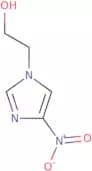
Fórmula:C8H10OSPureza:Min. 95%Peso molecular:154.23 g/mol4-Nitro-1H-imidazole-1-ethanol
CAS:Please enquire for more information about 4-Nitro-1H-imidazole-1-ethanol including the price, delivery time and more detailed product information at the technical inquiry form on this page
Fórmula:C5H7N3O3Pureza:Min. 95%Cor e Forma:Beige PowderPeso molecular:157.13 g/mol2-Chlorothiophenol
CAS:2-Chlorothiophenol is a chemical compound that belongs to the group of fatty acids. It is synthesized by reacting phosphorus pentachloride with 2-chloroethanol in the presence of magnesium salt. The corresponding molecule has a diameter of 4.8 Å and a thermal expansion coefficient of 1.5×10 K−1, which is similar to the thermal expansion coefficients of fatty acids. 2-Chlorothiophenol reacts with carbonyl groups in the presence of oxygen to form 2-chlorophenol and hydrogen chloride gas, which are products that can be detected using spectroscopic techniques such as infrared or nuclear magnetic resonance spectroscopy. The reaction mechanism for this reaction is not well understood, but it is thought that the intramolecular hydrogen acts as an electron donor to form a pi bond between carbon atoms on adjacent molecules, leading to formation of an oxygenated molecule. 2-Chlorothiophenol also has proteinFórmula:C6H5ClSPureza:Min. 95%Cor e Forma:Clear Colourless LiquidPeso molecular:144.62 g/mol2-(2-Aminoethoxy)ethanol
CAS:2-(2-Aminoethoxy)ethanol (2-AE) is a natural compound that has been synthesized from ethanol and 2-aminoethanol. It has been shown to react with sodium carbonate to form stable complexes that are resistant to hydrolysis by amines. The stability of the complex is attributed to the formation of an intermolecular hydrogen bond between the hydroxyl group on the 2-AE molecule and the carboxylate group on the sodium carbonate molecule. 2-AE reacts with benzalkonium chloride, a quaternary ammonium salt, in water vapor to produce an alcohol and a fatty acid, which is then hydrolyzed by glycol ethers into glycolates. This mechanism is similar to that of other reactions involving quaternary ammonium salts, such as those in fatty acids or glycol ethers.
Fórmula:C4H11NO2Pureza:Min. 95%Peso molecular:105.14 g/mol1-Dodecanol
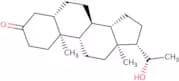
CAS:Dodecanol is a saturated fatty alcohol that has the molecular formula CH(CH)CHOH. It has two hydroxyl groups and exists as a colourless liquid at room temperature. Dodecanol is used in the preparation of sodium citrate, which is sometimes used in the treatment of kidney stones. Dodecanol reacts with sodium citrate to form dodecanedioic acid and hydrogen bonding interactions between dodecanedioic acid and linoleyl alcohol occur. This reaction mechanism can be explained by kinetic data. Dodecanol also has high values for chemical stability, sample preparation, hydroxyl group, and alcohol residue. The phase transition temperature of dodecanol ranges from -98°C to -42°C. Dodecanol can be oxidized by catalysts such as potassium permanganate or potassium dichromate.Fórmula:C12H26OPureza:Min. 98 Area-%Cor e Forma:White PowderPeso molecular:186.33 g/mol5alpha-Pregnan-20beta-Ol-3-one
CAS:Produto ControladoPlease enquire for more information about 5alpha-Pregnan-20beta-Ol-3-one including the price, delivery time and more detailed product information at the technical inquiry form on this page
Pureza:Min. 95%