Álcoois
Os álcoois são uma ampla gama de moléculas orgânicas derivadas de hidrocarbonetos que contêm um ou mais grupos hidroxila (grupo OH). Estes compostos são essenciais em várias reações químicas e são amplamente utilizados em laboratórios para síntese, como solventes e em química analítica. Na CymitQuimica, oferecemos álcoois de alta qualidade preparados para uso laboratorial, apoiando suas pesquisas e aplicações industriais com produtos confiáveis e eficazes. Nossa seleção garante que você tenha os álcoois adequados para suas necessidades específicas, seja para trabalhos de laboratório de rotina ou para projetos de pesquisa especializados.
Subcategorias de "Álcoois"
Foram encontrados 5814 produtos de "Álcoois"
Ordenar por
Pureza (%)
0
100
|
0
|
50
|
90
|
95
|
100
Phenol red
CAS:<p>Phenol red is a pH indicator that finds broad applications from chemistry to microbiology. Colour varies from yellow at pH<6.8 (lmax 443nm) through to light red/pink at 6.8<pH<8.2 (lmax 570 nm) to vivid purple/red at pH>8.2. It is widely used in cell culture to monitor pH and for colorimetric titration. For example, phenol red can be used to quantify Br- content in sea or fresh water. It is added to VTM as pH indicator, at the concentration of 10mg/ml, maintaining a pink colour at neutral pH.</p>Fórmula:C19H14O5SCor e Forma:PowderPeso molecular:354.38 g/molRanolazine
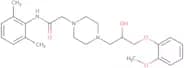
CAS:<p>Anti-anginal; anti-arrhythmic; anti-ischemic; pFOX inhibitor</p>Fórmula:C24H33N3O4Pureza:Min. 95%Cor e Forma:White SolidPeso molecular:427.54 g/mol4-Oxo-1,4-dihydroquinoline-3-carboxylic acid
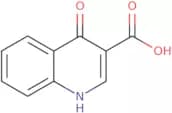
CAS:<p>4-Oxo-1,4-dihydroquinoline-3-carboxylic acid is a synthetic compound that belongs to the class of quinoline derivatives. It has been shown to inhibit HIV infection in vitro by binding to the receptor CD4 on the surface of T cells. 4-Oxo-1,4-dihydroquinoline-3-carboxylic acid has also been shown to be cytotoxic against cancer cells and other human cell lines. Powders of 4-oxo-1,4-dihydroquinoline 3 carboxylic acid have been synthesized by reacting ethyl esters with diphenyl ether in the presence of radiation or ndimethylformamide. This compound was also used as a molecular model for designing new drugs.</p>Fórmula:C10H7NO3Pureza:Min. 98 Area-%Cor e Forma:Off-White PowderPeso molecular:189.17 g/molPhosphoenolpyruvate monosodium salt hydrate
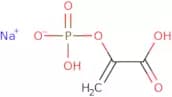
CAS:<p>PEP is a "high-energy phosphate" compound playing a vital role in enzymatic phosphate-transfer reactions involved in ATP synthesis. It is used in conjunction with pyruvate kinase as a phosphorylating agent for ATP generation. Substrate for phosphoenolpyruvate carboxylase. Reagent for determination of glycerol.</p>Fórmula:C3H4NaO6P·xH2OPureza:Min. 95%Cor e Forma:PowderPeso molecular:190.02 g/molRef: 3D-FP29995
Produto descontinuado2-Chloro-6-nitrobenzyl alcohol
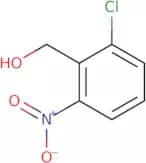
CAS:<p>2-Chloro-6-nitrobenzyl alcohol is a versatile building block that is used as a reactant in chemical synthesis. It is used to synthesize other compounds, such as pharmaceuticals and pesticides. This compound can also be used as an intermediate or scaffold in the synthesis of more complex compounds. 2-Chloro-6-nitrobenzyl alcohol has been shown to have a high quality and is useful for research purposes. It can be used in the production of fine chemicals, useful building blocks, and reagents.</p>Fórmula:C7H6ClNO3Pureza:Min. 95%Cor e Forma:PowderPeso molecular:187.58 g/molArotinolol hydrochloride
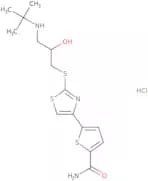
CAS:<p>Arotinolol hydrochloride is a beta-blocker that, in contrast to propranolol, has a higher selectivity for the β1 receptor. It is used to treat hypertension and angina pectoris. Arotinolol hydrochloride lowers blood pressure by inhibiting the activity of α-adrenergic receptors, which are found in the heart and vascular smooth muscle. This inhibition reduces the release of norepinephrine and causes vasodilation. Arotinolol hydrochloride also has a positive effect on cardiac function as it decreases myocardial oxygen demand and increases coronary flow. Arotinolol hydrochloride has been shown to lower systolic pressure in anesthetized dogs with an intravenous dose of sodium citrate. The drug also lowers diastolic pressure in conscious dogs at doses of 0.5 mg/kg (0.2 mg/lb) or greater when given intravenously or subcutaneously.</p>Fórmula:C15H22ClN3O2S3Pureza:Min. 98%Cor e Forma:PowderPeso molecular:408 g/molRef: 3D-FA146940
Produto descontinuado2-Mercaptoethanol
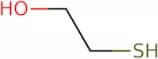
CAS:<p>2-Mercaptoethanol, also known as β-mercaptoethanol or β-ME, is a disulfide reducing agent used in the reduction of disulfide bridges in proteins. β-ME is conveniently inexpensive, water-soluble and must be used in excess in order to drive the reduction to completion.</p>Fórmula:C2H6SOPureza:Min. 98 Area-%Cor e Forma:Clear LiquidPeso molecular:78.13 g/molRef: 3D-FM46173
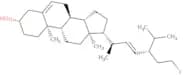
Produto descontinuado(3β,22E)-29-Fluorostigmasta-5,22-dien-3-ol
CAS:Produto Controlado<p>3β,22E)-29-Fluorostigmasta-5,22-dien-3-ol is a plant growth regulator that belongs to the group of fatty alcohols. It is found in the horticultural and tissue culture industries and is used as an additive in bioassays. 3β,22E)-29-Fluorostigmasta-5,22-dien-3-ol enhances the growth rate of nematodes and has been shown to be a potent inhibitor of benzoate degradation. This compound also has hormone effects that are similar to those of furostanols or steroids.</p>Fórmula:C29H47FOPureza:Min. 95%Peso molecular:430.68 g/molSodium O-ethyl isopropylphosphonothiolate
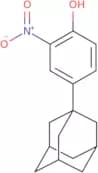
CAS:Produto Controlado<p>Please enquire for more information about Sodium O-ethyl isopropylphosphonothiolate including the price, delivery time and more detailed product information at the technical inquiry form on this page</p>Fórmula:C5H12O2PS·NaPureza:Min. 95%4-(1-Adamantyl)-2-nitrophenol
CAS:<p>4-(1-Adamantyl)-2-nitrophenol is a versatile building block that can be used to construct complex compounds. It is a research chemical that can be used as a reagent, as well as in the synthesis of pharmaceuticals and other chemicals. 4-(1-Adamantyl)-2-nitrophenol is soluble in water and ethanol, and has an odorless and colorless appearance. This chemical can be found under the CAS number 32599-84-1.</p>Fórmula:C16H19NO3Pureza:Min. 95%Peso molecular:273.33 g/molRef: 3D-FA67024
Produto descontinuado2-Phenyl-4-quinolinecarboxylic acid
CAS:<p>2-Phenyl-4-quinolinecarboxylic acid is a nonsteroidal anti-inflammatory drug that is commonly used to treat bronchoconstrictor response and inflammatory bowel disease. It is also an antimicrobial agent, which can be used to treat infectious diseases. The compound was found to have structural similarity to other nonsteroidal anti-inflammatory drugs, such as ibuprofen and naproxen. 2-Phenyl-4-quinolinecarboxylic acid has shown the ability to inhibit leukemia inhibitory factor (LIF) production by lymphocytes, which may have a role in the development of leukemia. This drug also possesses antioxidative properties and has been shown to have high values in group P2 polymerase chain reactions.</p>Fórmula:C16H11NO2Pureza:Min. 98.5%Cor e Forma:PowderPeso molecular:249.26 g/molRef: 3D-FP44219
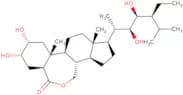
Produto descontinuado(22S,23S)-28-Homo brassinolide
CAS:<p>(22S,23S)-28-Homo brassinolide is a synthetic brassinosteroid that has been shown to have growth-promoting activity in the plant. It is synthesized by the reaction of tetroxide and 28-homobrassinolide. The structure of (22S,23S)-28-Homo brassinolide is stereoselective, with an R configuration at C2 and a S configuration at C3. The hydrogen atoms at C2 and C3 are involved in hydrogen bonds with other molecules. (22S,23S)-28-Homo brassinolide exhibits a conformation that differs from 24-epibrassinolide because it does not contain an intramolecular hydrogen bond between the two rings. This synthetic brassinosteroid also has anti-inflammatory effects due to its ability to inhibit prostaglandins.</p>Fórmula:C29H50O6Cor e Forma:PowderPeso molecular:494.7 g/mol2-Mesitylethanol
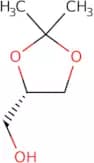
CAS:Fórmula:C11H16OPureza:>98.0%(GC)Cor e Forma:White to Almost white powder to crystalPeso molecular:164.251,2-O-Isopropylidene-sn-glycerol
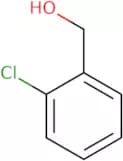
CAS:<p>1,2-O-Isopropylidene-sn-glycerol (1,2-OIPG) is a synthetic molecule. It is synthesized from potassium thioacetate and chloride in an organic solvent with hexadecyl methanesulfonate as the catalyst. The product is obtained by intramolecular hydrogenation of the glyceride to produce 1,2-OIPG. This compound has been used as a strategy to generate hydrogen bonds in asymmetric synthesis, for example in the formation of d-mannitol with activated hydrogen bonds. The compound also has potential applications in the production of fatty acids.</p>Fórmula:C6H12O3Pureza:Min. 98 Area-%Cor e Forma:Colorless Clear LiquidPeso molecular:132.15 g/mol2-Chlorobenzyl alcohol
CAS:<p>2-Chlorobenzyl alcohol is a chemical compound that is used to synthesize other compounds. It is produced by the reaction of ethyl formate and hydrogen chloride in a reaction vessel. It reacts with benzoates to produce 2-chlorobenzoates, which are used as intermediates in the synthesis of pharmaceuticals. Hydroxyl groups can react with hydrogen fluoride to produce hydrofluoric acid, which is used as an industrial solvent. 2-Chlorobenzyl alcohol also reacts with hydroxide ions to produce ethylene glycol, which is used in making polyester fibers and plastics. This chemical compound has structural studies that show it has a proton and two hydroxyl groups that can react with hydrogen bond. Hydrogen bonds are important for the stability of DNA structures. The molecular structures of velvetleaf plants contain 2-chlorobenzyl alcohol, which may be due to its role in transferring oxygen from leaves to roots for respiration during</p>Fórmula:C7H7ClOPureza:Min. 95%Cor e Forma:PowderPeso molecular:142.58 g/molRef: 3D-FC46928
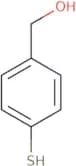
Produto descontinuado4-Mercaptobenzyl alcohol, 90%
CAS:<p>4-Mercaptobenzyl alcohol (MBBA) is a bifunctional molecule that can act as an electron donor and electron acceptor. It has been shown to have proapoptotic activity, which may be due to its ability to interact with cellular components and induce DNA damage. MBBA has also been shown to inhibit the growth of bacteria by attacking their cell walls and inhibiting their ability to synthesize proteins. The antibacterial activity of MBBA was found to be enhanced on metal surfaces, such as aluminum and copper, which are commonly used in cancer therapy equipment or for antimicrobial resistance. MBBA also has diagnostic properties, which can be used for the detection of cancer cells or bacterial infections.<br>MBBA is absorbed into cells through the carboxylate groups on the surface of the cell membrane. Electrons are then transferred from the molecule to the cell's electron transport chain, thereby increasing ATP production and inducing apoptosis in cancer cells.</p>Fórmula:C7H8OSPureza:Min. 90%Cor e Forma:Off-White PowderPeso molecular:140.2 g/mol8-Methoxycarbonyloctanol
CAS:<p>8-Methoxycarbonyloctanol (8MCO) is a fatty acid molecule that has been shown to have significant inhibitory activities against Streptococcus pneumoniae in human serum. 8MCO is a synthetic molecule that can be synthesized from galactose and chloride. It has been found to have a molecular weight of 190.08 g/mol, melting point of -2°C, and boiling point of 217°C at 1 mmHg. 8MCO is soluble in water, methanol, and ethanol. This molecule can be used as an analytical tool for the detection of fatty acids by gas chromatography-mass spectrometry (GC-MS). It also exhibits enzymatic activity when incorporated into enzyme preparations such as esterases and lipases. 8MCO contains functional groups such as carbonyl (-CO), hydroxyl (-OH), carboxylic acid (-COOH), ether (-O-) and alcohol (-</p>Fórmula:C10H20O3Pureza:Min. 95%Cor e Forma:Clear LiquidPeso molecular:188.26 g/molRef: 3D-FM25290
Produto descontinuado