Álcoois
Subcategorias de "Álcoois"
Foram encontrados 5817 produtos de "Álcoois"
Ref: IN-DA00BY8O
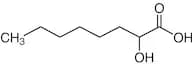
Produto descontinuado2-Hydroxy-n-octanoic Acid
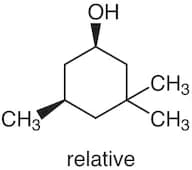
CAS:Fórmula:C8H16O3Pureza:>98.0%(T)Cor e Forma:White to Almost white powder to crystalPeso molecular:160.21cis-3,3,5-Trimethylcyclohexanol
CAS:Fórmula:C9H18OPureza:>96.0%(GC)Cor e Forma:White or Colorless to Almost white or Almost colorless powder to lump to clear liquidPeso molecular:142.242-Methoxy-1-naphthalenemethanol
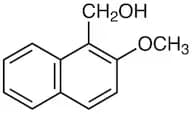
CAS:Fórmula:C12H12O2Pureza:>98.0%(GC)Cor e Forma:White to Light yellow to Dark green powder to crystalPeso molecular:188.23cis-2-Nonen-1-ol
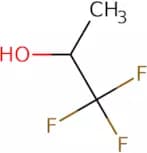
CAS:Fórmula:C9H18OPureza:>95.0%(GC)Cor e Forma:Colorless to Light yellow clear liquidPeso molecular:142.241,1,1-Trifluoro-2-propanol
CAS:1,1,1-Trifluoro-2-propanol (TFHP) is a molecule that contains three hydrogen atoms and two fluorine atoms. It has a frequency shift of 0.00116 cm−1 in the infrared spectrum due to the conformational properties of its hydroxyl group, which causes the OH stretching vibration to be shifted. TFHP is a weak acid that reacts with sodium trifluoroacetate to form trifluoroacetic acid and hydroxyl ions. TFHP has been shown to have biological properties in bacteria, such as inhibiting bacterial growth and suppressing protein synthesis. The molecular structure of TFHP is made up of a hydrogen atom on each nitrogen atom, which is then bonded to an intramolecular hydrogen bond and an intermolecular hydrogen bond with other TFHP molecules. The deuterium isotope can also be found in this compound, which will cause a shift in IR frequency from 0.00116 cm
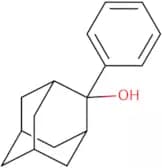
Fórmula:C3H5F3OPureza:Min. 95%Cor e Forma:Clear LiquidPeso molecular:114.07 g/mol2-Phenyl-2-adamantanol
CAS:2-Phenyl-2-adamantanol is a deuterated analog of 2-phenyl-2-adamantane (C 10 H 16 ) with an isotopic weight of 128. The FTIR spectra show the presence of a new peak at 1728 cm−1, which is attributed to C=O stretching vibrations in the hydroxyl group. The IR spectrum of 2-phenyl-2-adamantanol shows that it has an azide group and two hydrogen bonds. It also interacts competitively with carbachol, but does not interact with atropine. Preparative oriented crystallization was used to isolate this compound from benzene.
Fórmula:C16H20OPureza:Min. 95%Cor e Forma:PowderPeso molecular:228.33 g/molRef: 3D-FP67465
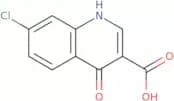
Produto descontinuado7-Chloro-4-hydroxyquinoline-3-carboxylic acid
CAS:7-Chloro-4-hydroxyquinoline-3-carboxylic acid is a chemical compound that has antioxidative activity and is used in the production of various organic substances. It is synthesized by reacting ammonium nitrate with a hydroxy group, an organic solvent, and phenoxy. The resulting product can be heated to form 7-chloro-4-hydroxyquinoline, which undergoes a series of reactions to produce 7-chloro-4-(2,2,2,-trichloroethoxy)quinoline. This reaction system produces a quinoline derivative that has been shown to be expressed at high levels in phosphatidylcholine (PC) and alpha-tocopherol (a vitamin E derivative). The final product is then purified by triethyl orthoformate (TEO), which removes the sulfoxide group.
Fórmula:C10H6ClNO3Pureza:Min. 95%Cor e Forma:PowderPeso molecular:223.61 g/molRef: 3D-FC44132
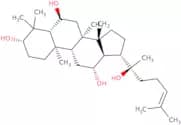
Produto descontinuado20S-Protopanaxatriol
CAS:Produto Controlado20S-Protopanaxatriol is a drug that has been shown to have anticancer effects in human HL60 cells. It inhibits the expression of cytokines and inflammatory mediators, such as tumor necrosis factor-α (TNF-α), interleukin-6 (IL-6), and IL-8. 20S-protopanaxatriol also has anti-inflammatory properties due to its ability to inhibit toll-like receptor 4 (TLR4) activity. The drug may also be used for the treatment of chronic inflammation, arthritis, and other diseases related to TLR4 activation. This compound is an active ingredient found in ginseng and ginsenosides. These natural compounds are thought to work by binding to a response element on DNA and regulating the transcription of genes involved in immune responses or cell growth.
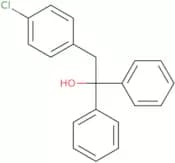
Fórmula:C30H52O4Pureza:Min. 95%Cor e Forma:White PowderPeso molecular:476.73 g/mol4-Chlorobenzyl diphenyl carbinol
CAS:4-Chlorobenzyl diphenyl carbinol is an organic compound that is used as a reagent, intermediate, and building block in the synthesis of other compounds. The product is a white, crystalline solid and has a molecular weight of 243.3 g/mol. It can be used as a scaffold for the synthesis of new chemical compounds or as a building block to create speciality chemicals. 4-Chlorobenzyl diphenyl carbinol has been shown to react with a variety of functional groups and can be used in both research and industrial contexts.
Fórmula:C20H17ClOPureza:Min. 95%Cor e Forma:PowderPeso molecular:308.8 g/molRef: 3D-FC67940
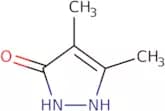
Produto descontinuado3,4-Dimethyl-1H-pyrazol-5-ol
CAS:3,4-Dimethyl-1H-pyrazol-5-ol is a fine chemical that belongs to the category of research chemicals. It has many uses as a reagent and as a speciality chemical. 3,4-Dimethyl-1H-pyrazol-5-ol is also a versatile building block and can be used as an intermediate or scaffold in complex reactions. The CAS number for this compound is 4344-72-3.
Fórmula:C5H8N2OPureza:Min. 95%Cor e Forma:PowderPeso molecular:112.13 g/mol1,7-Heptanediol
CAS:1,7-Heptanediol is a fatty acid that is used as a solvent and coating agent. It has been shown to inhibit leukemia cells in vitro. 1,7-Heptanediol has been shown to bind to the dna binding domains of transcription factors in vitro and may act as an anticancer agent by inhibiting the synthesis of proteins involved in biochemical pathways. 1,7-Heptanediol also inhibits tumor xenografts in vivo and induces apoptosis through hydrogen bond formation with DNA. It has been demonstrated to have detergent properties and can be used for biochemical reactions, such as the synthesis of chemical substances.
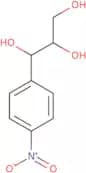
Fórmula:C7H16O2Pureza:min 98%Cor e Forma:Colorless Clear LiquidPeso molecular:132.2 g/mol1-(4-Nitrophenyl)glycerol
CAS:1-(4-Nitrophenyl)glycerol has been shown to inhibit the growth of Gram-positive bacteria, including Streptococcus faecalis, and Gram-negative bacteria, including Pseudomonas aeruginosa. It is also used as a sample preparation for antimicrobial resistance testing.
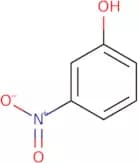
Fórmula:C9H11NO5Pureza:Min. 97 Area-%Cor e Forma:Off-White PowderPeso molecular:213.19 g/mol3-Nitrophenol
CAS:3-Nitrophenol is an organic compound that is used in wastewater treatment, specifically to remove nitrogenous compounds from the water. It reacts with a hydroxyl group and a nitro group to form a molecule with three nitro groups. The presence of this molecule in wastewater can lead to population growth, which may be reduced by thermal expansion. 3-Nitrophenol is also used as an electrode for gravimetric analysis of metals and as a reagent for the detection of sodium ions. This compound has been shown to have a ph optimum of 7.5, but will react with hydrogen bonds at any ph value.
Fórmula:C6H5NO3Pureza:Min. 95%Cor e Forma:PowderPeso molecular:139.11 g/molRef: 3D-FN52327
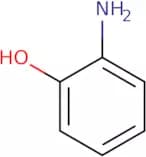
Produto descontinuado2-Aminophenol
CAS:2-Aminophenol is a water soluble redox catalyst that is used in wastewater treatment. It has been shown to be a potent antimicrobial agent against bacteria, fungi, and viruses. 2-Aminophenol is active against the Gram-positive bacteria Staphylococcus aureus and Enterococcus faecalis. The mechanism of the reaction of 2-aminophenol with picolinic acid is believed to be due to intramolecular hydrogen bonding between nitrogen atoms (N) and amines (NH). The binding site for this reaction is not well understood, but it may involve an electrochemical mechanism such as constant pressure or electrochemical impedance spectroscopy. 2-Aminophenol also participates in electron transfer reactions involving NAD+/NADH or cytochrome c/cytochrome c oxidase.
Fórmula:C6H7NOPureza:Min. 98 Area-%Cor e Forma:Brown White PowderPeso molecular:109.13 g/molRef: 3D-FA71182
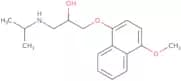
Produto descontinuado4-Methoxy propranolol
CAS:4-Methoxy propranolol is an intermediate in the synthesis of propranolol, a beta blocker.
Fórmula:C17H23NO3Pureza:Min. 95%Peso molecular:289.37 g/molRef: 3D-FM25187
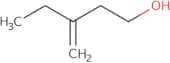
Produto descontinuado3-Buten-3-ethyl-1-ol
CAS:3-Buten-3-ethyl-1-ol is a versatile building block that can be used as a reagent for chemical synthesis. It is a complex compound that can be used as a reaction component or intermediate in organic synthesis. 3-Buten-3-ethyl-1-ol has been shown to have antiinflammatory properties, which may be due to the inhibition of prostaglandin synthesis.
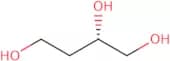
Fórmula:C6H12OPureza:Min. 95%Cor e Forma:Clear LiquidPeso molecular:100.16 g/mol(S)-(-)-1,2,4-Butanetriol
CAS:Produto ControladoTriphenylphosphonium is a reactive phosphonium salt that is used as an intermediate in the synthesis of 1,2,4-butanetriol. The synthesis of the triphenylphosphonium salt from the sodium salt of butyric acid and ferrocene is shown in this scheme. This synthetic route provides for planar chirality and an asymmetric synthesis. The byproduct, butyric acid, can be converted to its conjugate base with ammonium hydroxide or sodium hydroxide to provide cholic acid. Cholic acid is a hepatoprotective agent that has been used in the treatment of liver disease.
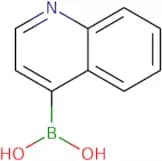
Fórmula:C4H10O3Pureza:Min. 95%Cor e Forma:Clear LiquidPeso molecular:106.12 g/molQuinolin-4-ylboronic acid
CAS:Quinolin-4-ylboronic acid is a heterocyclic compound with two nitrogen atoms that are attached to the ring by means of carbonyl groups. This compound is a precursor in the synthesis of the drug dorsomorphin, which is used for pain relief. It also has an important role in pharmacokinetics because it can be used as a marker for estimating blood levels of other drugs. Quinolin-4-ylboronic acid yields an active form, quinolin-4-yl boronic acid, when reacted with piperazine in basic conditions. The drug ldn-193189 is a derivative of this active form and has been evaluated as a potential drug for treating osteoporosis and cancer.
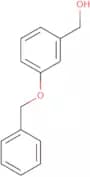
Fórmula:C9H8BNO2Pureza:Min. 95 Area-%Cor e Forma:PowderPeso molecular:172.98 g/mol3-Benzyloxybenzyl alcohol
CAS:3-Benzyloxybenzyl alcohol is a condensation product of benzaldehyde and acetone. Hydration leads to the formation of an intramolecular hydrogen bond between the carbonyl group and the hydroxyl group. The ammonium salt is formed by reaction with ammonium chloride in water, which then undergoes a cyclization to form bicyclic ring system. 3-Benzyloxybenzyl alcohol has been shown to have antihistamine properties, as it inhibits histamine release from mast cells.
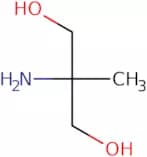
Fórmula:C14H14O2Pureza:Min. 98 Area-%Cor e Forma:PowderPeso molecular:214.26 g/molAMPD
CAS:AMPD, also known as 2-Amino-2-methyl-1,3-propanediol, is a buffer solution with a pH range of 7.8-9.7 and a pKa of 8.8. This chemical buffer is used in molecular biology, protein studies, enzyme assays, and separation techniques such as isatachophoresis (ITP) and SDS-gradient gel electrophoresis.
Fórmula:C4H11NO2Pureza:Min. 95%Cor e Forma:PowderPeso molecular:105.14 g/molRef: 3D-FA46974
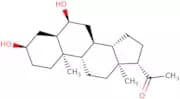
Produto descontinuado5β-Pregnan-3α,6α-diol-20-one
CAS:Produto Controlado5β-Pregnan-3α,6α-diol-20-one is an anticoagulant that inhibits the action of thrombin. It has been shown to inhibit the inflammatory response in a number of autoimmune diseases and inflammatory disorders. This drug also has a nitro group, which can be reduced to an hydroxyl group by reaction with sodium nitrite or other reducing agents. The antimicrobial properties of 5β-pregnan-3α,6α-diol-20-one are thought to be due to its ability to form particle aggregates with magnetic particles. These aggregates have an inhibitory effect on bacterial growth.Fórmula:C21H34O3Pureza:Min. 95%Cor e Forma:PowderPeso molecular:334.49 g/molRef: 3D-FP67238
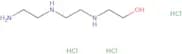
Produto descontinuado2-(2-(2-Aminoethylamino)ethylamino)ethanol trihydrochloride
CAS:2-(2-(2-Aminoethylamino)ethylamino)ethanol trihydrochloride is a chemical compound that is used as a reaction component and as a reagent in the synthesis of other chemicals. 2-(2-(2-Aminoethylamino)ethylamino)ethanol trihydrochloride is an intermediate for many organic compounds, including pharmaceuticals and pesticides. It has also been used to synthesize drugs for treating bacterial infections. 2-(2-(2-Aminoethylamino)ethylamino)ethanol trihydrochloride can be used in research or as a specialty chemical.Fórmula:C6H17N3O·3HClPureza:Min. 95%Cor e Forma:PowderPeso molecular:256.6 g/molRef: 3D-FA162500
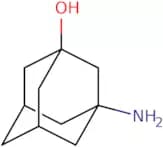
Produto descontinuado3-Amino-1-adamantanol
CAS:Intermediate in the synthesis of vildagliptin
Pureza:Min. 95%Cor e Forma:PowderPeso molecular:167.25 g/molRef: 3D-FA03862
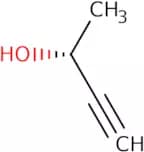
Produto descontinuado(R)-(+)-3-Butyn-2-ol
CAS:(R)-(+)-3-Butyn-2-ol is a chiral alcohol that can be used as a substrate for the synthesis of antibiotics. It has been shown to inhibit phosphatases in vivo and can be used as an inhibitor for phosphatases. (R)-(+)-3-Butyn-2-ol can also be used to synthesize glyoxylate, which is an intermediate for the production of antibiotics. This compound has been shown to have optical activity and stereoselectivity. The synthesis of (R)-(+)-3-butyn-2-ol starts with the alkylation reaction between acetylene and formaldehyde, followed by a cross-coupling reaction with bromoethane and lithium aluminum hydride. The final step is the hydrolysis of furfural using water or lipase, yielding (R)-(+)-3-butyn-2-ol.
Fórmula:C4H6OPureza:Min. 98 Area-%Cor e Forma:Clear LiquidPeso molecular:70.09 g/molRef: 3D-FB05622
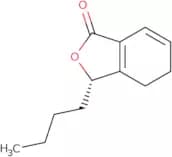
Produto descontinuadoSenkyunolide A
CAS:Senkyunolide A is a bioactive compound, which is a type of phthalide derived from the roots of Ligusticum chuanxiong, a plant commonly used in traditional Chinese medicine. This compound is notable for its antioxidant and anti-inflammatory properties, which are believed to arise from its ability to scavenge free radicals and modulate inflammatory pathways.
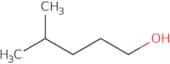
Fórmula:C12H16O2Pureza:Min. 95%Cor e Forma:PowderPeso molecular:192.25 g/molIsohexanol
CAS:Isohexanol is a chemical cross-linking agent that reacts with amines to form amide bonds. It is used in the synthesis of polyvinylpyrrolidone, which is an important component of pharmaceutical preparations. Isohexanol has been shown to react with glycol ethers to form ether adducts and has been used as a kinetic study reagent. The chemical reactions of isohexanol depend on its pH level, which can range from acidic (pH 2) to neutral (pH 7). At lower pH ranges, isohexanol will undergo side-chain cleavage to form methyl myristate, which is a fatty acid. Higher pH levels result in the formation of methyl ethyl and other volatile products.
Fórmula:C6H14OPureza:Min. 97%Cor e Forma:Colorless Clear LiquidPeso molecular:102.17 g/molRef: 3D-FI24678
Produto descontinuado2,4,6-Tribromo-3-methoxyphenol
CAS:2,4,6-Tribromo-3-methoxyphenol is a high quality reagent that is used as an intermediate in the production of many fine chemicals. It is also a useful building block for the synthesis of speciality chemicals and research chemicals. This chemical can be used as a versatile building block for reactions with other compounds. 2,4,6-Tribromo-3-methoxyphenol has CAS number 24967-79-1 and can be found at Chemical & Laboratory Equipment.
Fórmula:C7H5Br3O2Pureza:Min. 95%Peso molecular:360.83 g/molTriglycerol
CAS:Triglycerides are a type of lipid that is composed of glycerol and three fatty acids. They are the main component of animal fats, vegetable oils, and butter. Triglycerids can be made by the reaction of glycerol with three molecules of fatty acid in the presence or absence of a catalyst. Triglycerols are also found naturally in many foods such as milk, meat, and eggs. The toxicity studies on triglycerides have shown that they are not toxic when ingested orally or intravenously at doses up to 500 mg/kg body weight. The reaction mechanism for the production of monolaurate from triglycerides is not well understood but it may involve the addition of hydroxyl groups to the fatty acid chains. This reaction is catalyzed by enzymes such as lipase, esterase, and alcohol oxidase. Triglycerides serve as an important source of energy for humans because they contain more than twice as much energy per gram than carbohydrates or proteins
Fórmula:C9H20O7Pureza:Min. 60 Area-%Cor e Forma:Clear LiquidPeso molecular:240.25 g/molRef: 3D-FT163825
Produto descontinuado5-Nitroisoquinoline
CAS:5-Nitroisoquinoline is a nitro compound that has been shown to be a potential biomarker for liver disease. 5-Nitroisoquinoline is synthesized from the reaction of hydroxylamine, sodium carbonate, and nitric acid. This chemical can also be found in human liver tissue. The titration calorimetry experiments performed on 5-nitroisoquinoline showed that the compound has a high heat of formation (194.1 kJ/mol) and low enthalpy of formation (-19.6 kJ/mol). Vibrational analysis revealed that there are four nitrogens in the molecule and two nitrogen atoms per molecule. X-ray crystal structures were obtained for 5-nitroisoquinoline with different solvents and hydrogen bonding was observed in all cases. Molecular modeling showed that there are five nitro groups, which would explain the name "5-nitro." The five nitrogen atoms coordinate to form a trigonal bip
Fórmula:C9H6N2O2Pureza:Min. 95%Cor e Forma:PowderPeso molecular:174.16 g/molRef: 3D-FN26314
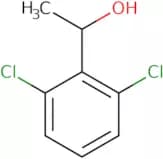
Produto descontinuado2,6-Dichlorophenylmethyl carbinol
CAS:2,6-Dichlorophenylmethyl carbinol is a synthetic oxidant that can be used in the oxidation of alcohols. It is used to convert alcohols into aldehydes and ketones with magnesium as a catalyst. 2,6-Dichlorophenylmethyl carbinol has been shown to be effective in the oxidation of cyclohexanone and styrene. It also has been shown to undergo homologation reactions, which are useful for the synthesis of natural products.
!--Fórmula:C8H8Cl2OPureza:Min. 95%Cor e Forma:PowderPeso molecular:191.05 g/molRef: 3D-FD70403
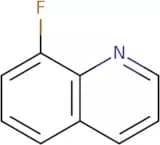
Produto descontinuado8-Fluoroquinoline
CAS:8-Fluoroquinoline is a quinoline derivative that has been shown to have in vitro anticancer activity against colon adenocarcinoma cells. It is a chiral molecule that can exist as two stereoisomers, (R)-8-fluoroquinoline and (S)-8-fluoroquinoline. These isomers may have different interactions with the tumorigenic cells, but both of them have anticancer activity. 8-Fluoroquinoline also interacts with cytochrome P450 enzymes, enhancing their ability to metabolize carcinogens.
Fórmula:C9H6FNPureza:Min. 95%Peso molecular:147.15 g/molRef: 3D-FF54377
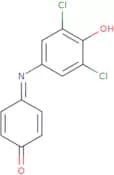
Produto descontinuado2,6-Dichlorophenolindophenol
CAS:2,6-Dichlorophenolindophenol is a redox indicator that can be used as an optical sensor for the measurement of hydrogen peroxide and other reactive oxygen species. It has been shown to inhibit caspase-independent cell death in carcinoma cells and is active against the opportunistic fungus Candida glabrata. The optimum concentration for this compound has been determined to be 1 mM.
Fórmula:C12H7Cl2NO2Pureza:Min. 95%Cor e Forma:Black Green PowderPeso molecular:268.09 g/mol