


Álcoois
Os álcoois são uma ampla gama de moléculas orgânicas derivadas de hidrocarbonetos que contêm um ou mais grupos hidroxila (grupo OH). Estes compostos são essenciais em várias reações químicas e são amplamente utilizados em laboratórios para síntese, como solventes e em química analítica. Na CymitQuimica, oferecemos álcoois de alta qualidade preparados para uso laboratorial, apoiando suas pesquisas e aplicações industriais com produtos confiáveis e eficazes. Nossa seleção garante que você tenha os álcoois adequados para suas necessidades específicas, seja para trabalhos de laboratório de rotina ou para projetos de pesquisa especializados.
Subcategorias de "Álcoois"
Foram encontrados 5814 produtos de "Álcoois"
Ordenar por
Pureza (%)
0
100
|
0
|
50
|
90
|
95
|
100
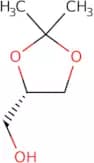
1,2-O-Isopropylidene-sn-glycerol
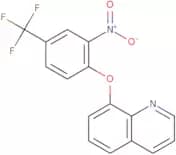
CAS:<p>1,2-O-Isopropylidene-sn-glycerol (1,2-OIPG) is a synthetic molecule. It is synthesized from potassium thioacetate and chloride in an organic solvent with hexadecyl methanesulfonate as the catalyst. The product is obtained by intramolecular hydrogenation of the glyceride to produce 1,2-OIPG. This compound has been used as a strategy to generate hydrogen bonds in asymmetric synthesis, for example in the formation of d-mannitol with activated hydrogen bonds. The compound also has potential applications in the production of fatty acids.</p>Fórmula:C6H12O3Pureza:Min. 98 Area-%Cor e Forma:Colorless Clear LiquidPeso molecular:132.15 g/mol2-Nitro-1-(8-quinolyloxy)-4-(trifluoromethyl)benzene
CAS:<p>Please enquire for more information about 2-Nitro-1-(8-quinolyloxy)-4-(trifluoromethyl)benzene including the price, delivery time and more detailed product information at the technical inquiry form on this page</p>Fórmula:C16H9F3N2O3Pureza:Min. 95%Cor e Forma:PowderPeso molecular:334.25 g/molRef: 3D-FN169698
Produto descontinuado4-Aminoquinoline-2-one
CAS:<p>4-Aminoquinoline-2-one is a nonsteroidal anti-inflammatory drug that has tuberculostatic activity. It binds to the nitrogen atoms of the enzyme dihydropteroate synthase, which is involved in the synthesis of folic acid and DNA. This leads to an increase in reactive oxygen species and inflammation, which causes disease activity. 4-Aminoquinoline-2-one has been shown to be synergistic with monoclonal antibodies when used as a treatment for inflammatory diseases. In order for 4-aminoquinoline-2-one to be taken up by cells, it must bind to cellular uptake proteins through hydrogen bonds or disulfide bonds.</p>Fórmula:C9H8N2OPureza:Min. 95%Peso molecular:160.17 g/molRef: 3D-FA43448
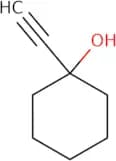
Produto descontinuado1-Ethynyl-cyclohexan-1-ol
CAS:<p>1-ethynyl-cyclohexan-1-ol is a silicon sealant that can be used in a variety of industries. 1-ethynyl-cyclohexan-1-ol has high resistance to water, oil and other chemical substances. 1-ethynyl-cyclohexan-1-ol is a molecule with the formula CH2CH(OH)CH2 and it is not soluble in water. It is also chemically stable and does not react with hydrochloric acid. The FTIR spectra show that the carbonyl group in 1-ethynyl cyclohexanone is present as an ester. The nmr spectra indicate that the substrate film contains methyl ethyl silicone and that there are no other components present.</p>Fórmula:C8H12OPureza:Min. 95%Cor e Forma:PowderPeso molecular:124.18 g/molRef: 3D-FE34314
Produto descontinuado2-Diethylamino)ethanol hydrochloride
CAS:Produto Controlado<p>2-Diethylamino)ethanol hydrochloride is a chemical compound that is used in analytical chemistry as a stationary phase for thin layer chromatography. Sephadex G-100 was developed by Pharmacia & Upjohn Company and marketed in the 1970s. It has been shown to be useful in plasma mass spectrometry experiments, which measure the molecular weight of proteins and other compounds. The solubility of 2-diethylamino)ethanol hydrochloride has been studied using experimental solubility data, electrochemical impedance spectroscopy, and amines. The reaction mechanism of 2-diethylamino)ethanol hydrochloride is not well understood but it appears to involve potassium dichromate, hydrochloric acid, fluoroacetic acid, benzalkonium chloride and other chemicals.</p>Fórmula:C6H16ClNOPureza:Min. 95%Peso molecular:153.65 g/molRef: 3D-FD21828
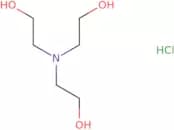
Produto descontinuadoTriethanolamine hydrochloride
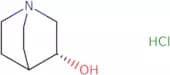
CAS:Produto Controlado<p>Triethanolamine hydrochloride, widely known as TEA-HCl, is a buffer used in biochemistry to maintain a stable pH in the range of 7.3 to 8.3 during processes like protein extraction and purification. They are also used in enzyme assays.</p>Fórmula:C6H15NO3·HClPureza:Min. 95%Cor e Forma:PowderPeso molecular:185.65 g/molR-(-)-3-Quinuclininol HCl
CAS:Produto Controlado<p>Please enquire for more information about R-(-)-3-Quinuclininol HCl including the price, delivery time and more detailed product information at the technical inquiry form on this page</p>Pureza:Min. 95%Ref: 3D-FQ03212
Produto descontinuado3-Caffeoyl-1,5-quinolactone(3-Caffeoyl-gamma-quinide)
CAS:<p>3-Caffeoyl-1,5-quinolactone (3-Caffeoyl-gamma-quinide) is a coffee-derived compound, identified as a phytochemical present in roasted coffee beans. It is primarily formed during the roasting process through the complex transformation of caffeoylquinic acids, which are abundant in green coffee beans. This compound is gaining attention for its notable biological properties, particularly its antioxidant and enzyme inhibitory activities.</p>Fórmula:C16H16O8Pureza:Min. 95%Cor e Forma:PowderPeso molecular:336.29 g/mol(2-Iodophenyl)(2,3,6,7-tetrahydro-1H,5H-benzo[ij]quinolizin-9-yl)methanone
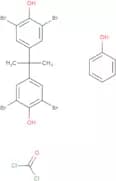
<p>2-Iodophenyl)(2,3,6,7-tetrahydro-1H,5H-benzo[ij]quinolizin-9-yl)methanone is a high quality reagent that can be used as a useful intermediate and building block in the synthesis of complex compounds.</p>Fórmula:C19H18INOPureza:Min. 95 Area-%Peso molecular:403.26 g/molPHenoxy terminated carbonate oligomer of tetrabispHenol A
CAS:Produto Controlado<p>Phenoxy-terminated carbonate oligomer of tetrabispHenol A (PCO-TBA) is a chemical that has been used as an additive in the food industry. It is a colorless, odorless solid. PCO-TBA has been shown to be toxic to humans by causing organ damage and cancer. The toxicity of PCO-TBA may be due to its ability to form polyhalogenated dibenzodioxins or biphenyls when heated at high temperatures. PCO-TBA also reacts with human serum, forming diphenyl ethers. This chemical is a potential carcinogen and, although used as a food additive, should not be consumed on a regular basis.</p>Pureza:Min. 95%Cor e Forma:PowderPeso molecular:736.90 g/molRef: 3D-FP39597
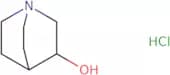
Produto descontinuado3-Quinuclidinol HCl
CAS:Produto Controlado<p>3-Quinuclidinol HCl is a cholinergic drug that inhibits the enzyme acetylcholinesterase. This action prevents the breakdown of the neurotransmitter acetylcholine, which causes an increase in its concentration in the synaptic cleft. 3-Quinuclidinol HCl has been shown to have a dose-dependent effect on increasing acetylcholine levels, which is believed to be due to its ability to inhibit butyrylcholinesterase. In addition, this drug has been shown to have pharmacokinetic properties that are consistent with those of other cholinergic drugs. 3-Quinuclidinol HCl also interacts with other substances and can block nicotinic receptors at high doses.</p>Fórmula:C7H13NO·HClPureza:Min. 95%Peso molecular:163.64 g/mol2-Dimethylaminoethanol (+)-bitartrate salt
CAS:Produto Controlado<p>2-Dimethylaminoethanol (+)-bitartrate salt is a potent, reversible inhibitor of protein synthesis that binds reversibly to the 50S ribosomal subunit. It is used in regulatory toxicology and clinical pathology as a positive control for the study of chronic toxicity and long-term effects. 2-Dimethylaminoethanol (+)-bitartrate salt has shown no treatment effect on ovary weight or estrous cycle length in female Sprague-Dawley rats after chronic exposure and long-term exposure at doses up to 1,000 mg/kg/day. This drug has also shown no effect on rat fertility or reproductive performance, indicating it does not cause reproductive toxicity.</p>Fórmula:C4H11NO·C4H6O6Cor e Forma:White Off-White PowderPeso molecular:239.22 g/mol1,2-Distearoyl-sn-glycero-3-phosphoethanolamine-N-[amino(polyethylene glycol) 2000] (ammonium salt)
CAS:<p>1,2-Distearoyl-sn-glycero-3-phosphoethanolamine-N-[amino(polyethylene glycol) 2000] (ammonium salt) is a PEG compound with two different functional groups (also known as heterobifunctional). Unlike homobifunctional PEG compounds (same functional group on both ends), this type of compounds are more versatile as have two different anchor points. 1,2-Distearoyl-sn-glycero-3-phosphoethanolamine-N-[amino(polyethylene glycol) 2000] (ammonium salt) is used as a linker and spacer to add a PEG moiety, via pegylation (a bioconjugation technique) to proteins, peptides, oligonucleotides, small molecules and nanoparticles.</p>Fórmula:(C2H4O)nC44H87N2O10P•H3NPureza:Min. 95%Cor e Forma:White Powder




![(2-Iodophenyl)(2,3,6,7-tetrahydro-1H,5H-benzo[ij]quinolizin-9-yl)methanone](/_next/image/?url=https%3A%2Fstatic.cymitquimica.com%2Fproducts%2F3D%2Fthumb-webp%2FI-7660.webp&w=3840&q=75)

![1,2-Distearoyl-sn-glycero-3-phosphoethanolamine-N-[amino(polyethylene glycol) 2000] (ammonium salt)](/_next/image/?url=https%3A%2Fstatic.cymitquimica.com%2Fproducts%2F3D%2Fthumb-webp%2FFD157101.webp&w=3840&q=75)