Aminas
As aminas são um conjunto de moléculas que contêm um grupo funcional amino (derivado da amônia). Esta categoria inclui aminas em qualquer nível de substituição: primárias, secundárias, terciárias e sais de amônio. As aminas são fundamentais na síntese orgânica e são amplamente utilizadas em produtos farmacêuticos, agroquímicos e ciência dos materiais. Na CymitQuimica, oferecemos uma seleção abrangente de aminas para atender às suas necessidades de pesquisa e industriais. Nossa gama garante acesso a várias aminas para diversos processos químicos e pesquisas inovadoras.
Subcategorias de "Aminas"
- Nitrosaminas(2.605 produtos)
- Aminas primárias(30.947 produtos)
- Catiões Quaternários de Amónio(1.100 produtos)
- Aminas secundárias(20.886 produtos)
- Aminas terciárias(17.193 produtos)
Foram encontrados 8780 produtos de "Aminas"
Ordenar por
Pureza (%)
0
100
|
0
|
50
|
90
|
95
|
100
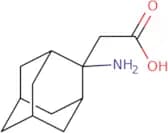
(2-Amino-2-adamantyl)acetic acid
CAS:<p>2-Amino-2-adamantylacetic acid is a fine chemical that is used as a building block in the synthesis of many other compounds. It is also used as a research reagent and speciality chemical, and has been shown to be a versatile building block for complex molecules. This compound can be reacted with other chemicals to form useful intermediates that are used in the synthesis of pharmaceuticals and agrochemicals. 2-Amino-2-adamantylacetic acid is listed on the Chemical Abstracts Service (CAS) registry as 1573548-14-7.</p>Fórmula:C12H19NO2Pureza:Min. 95%Cor e Forma:White PowderPeso molecular:209.28 g/mol4-[[4-(4-Chlorophenyl)-2-thiazolyl]amino]phenol
CAS:4-[[4-(4-Chlorophenyl)-2-thiazolyl]amino]phenol is a chemical that has been used in analytical and in vitro methods to study the cellular physiology of cells. It was found to inhibit sphingosine kinase, which is an enzyme that is involved in the synthesis of sphingosine. The inhibition of this enzyme leads to decreased levels of sphingosine and the effect on the cell. 4-[[4-(4-Chlorophenyl)-2-thiazolyl]amino]phenol can also affect mitochondrial membrane potential and cyclase activity, which may be useful for treating hyperproliferative diseases such as breast cancer.Fórmula:C15H11ClN2OSPureza:Min. 95%Peso molecular:302.78 g/molTyramine hydrochloride
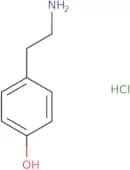
CAS:Produto Controlado<p>Tyramine hydrochloride is a model system for the enzyme dopamine β-hydroxylase. Tyramine hydrochloride has shown anti-inflammatory activity, which may be due to its ability to inhibit the synthesis of prostaglandins in human serum. Tyramine hydrochloride also has been used as a cell specific reactive reagent in experiments with human cells. This compound has been shown to have optical sensor and kinetic energy properties that make it suitable for use as a model system in studies of tyrosine metabolism.</p>Fórmula:C8H12ClNOPureza:Min. 95%Cor e Forma:White PowderPeso molecular:173.64 g/mol2-Amino-3-fluorobenzonitrile
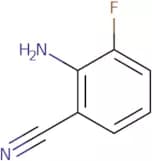
CAS:<p>A 2-aminopyridine substituent is added to the 3-position of benzonitrile to form 2-amino-3-fluorobenzonitrile. The hydrogenolysis of this compound at low temperatures yields indoles. Cyanogen bromide can be used as a catalyst for the reaction, but it must be removed before the product is purified. This reaction also produces a cyano group, which can be used in other reactions such as nitration or reduction. The glycinate molecule can also be formed by this process, and it is a neutral functional group that is capable of forming esters with carboxylic acids.</p>Fórmula:C7H5FN2Pureza:Min. 95%Peso molecular:136.13 g/mol2-Amino-4-chlorobenzonitrile
CAS:<p>2-Amino-4-chlorobenzonitrile is a synthetic molecule that can be synthesized in a metal chelator. It has potent inhibitory activities against amines, choline, and other molecules. 2-Amino-4-chlorobenzonitrile also has fluorescence properties. The reaction mechanism of 2-Amino-4-chlorobenzonitrile is not well understood, but it is believed to inhibit the synthesis of proteins by binding to their functional groups. This chemical can also enhance the rate of reactions by removing a hydrogen ion from the reactant.</p>Fórmula:C7H5ClN2Pureza:Min. 95%Cor e Forma:PowderPeso molecular:152.58 g/mol2-Amino-4-methylthiophene-3-carboxamide
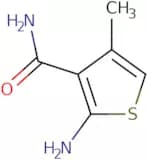
CAS:<p>2-Amino-4-methylthiophene-3-carboxamide is a small molecule that is a potent inhibitor of the JAK2 kinase. This enzyme is associated with human fibrosis and has been shown to be involved in the development of liver fibrosis in rats. 2-Amino-4-methylthiophene-3-carboxamide inhibits the production of cytokines such as IL1α, IL6, and TNFα. It also blocks the activation of transcription factors such as NFκB, which are involved in inflammation. The compound has been shown to be orally active and has demonstrated efficacy in animal studies. Analogues have also been synthesized for this compound that show similar activity.</p>Fórmula:C6H8N2OSPureza:(%) Min. 85%Cor e Forma:PowderPeso molecular:156.21 g/mol2-Amino-5-methylbenzonitrile
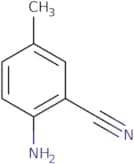
CAS:<p>2-Amino-5-methylbenzonitrile (2AMB) is a molecule that has two nitrile groups. It has been shown to be effective in the treatment of cancer cells, and it also inhibits thymidylate synthase (TS), an enzyme involved in DNA synthesis. The crystallographic structure of this compound has been determined by x-ray diffraction studies, and 2AMB was synthesized and assayed for its anticancer activity on human lung cancer cells in culture. 2AMB is an intercalator that binds to DNA by inserting itself between base pairs, which then blocks the progression of DNA synthesis during replication. This type of inhibition causes cell death because the cell cannot divide or make new proteins. Naphthalene and pyrrole are two chemicals found in 2AMB that have been shown to have antibacterial properties.</p>Fórmula:C8H8N2Pureza:Min. 95%Cor e Forma:PowderPeso molecular:132.16 g/molTetrabutylammonium Borohydride
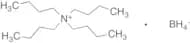
CAS:Produto Controlado<p>Applications Tetrabutylammonium Borohydride is a strong reducing agent used in the synthesis of hyperbranched polyglycerol grafting on the surface of silica-coated nanoparticles.<br>References Panja, P. et al.: ACS Sust. Chem. Eng., 5, 4879 (2017);<br></p>Fórmula:C16H36NBH4Cor e Forma:NeatPeso molecular:242.46 + 14.84N-ethyl-3-phenyl-1-propanamine hydrochloride
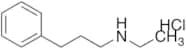
CAS:Produto Controlado<p>Applications N-ethyl-3-phenyl-1-propanamine hydrochloride (cas# 13125-63-8) is a useful research chemical.<br></p>Fórmula:C11H17N·ClHCor e Forma:NeatPeso molecular:199.725-Amino-2-chloro-4-fluorobenzoic Acid
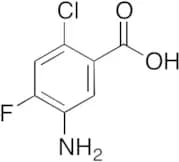
CAS:Produto Controlado<p>Applications 5-Amino-2-chloro-4-fluorobenzoic Acid is an intermediate in the synthesis of Saflufenacil-d7 (S081802). Saflufenacil-d7 is the labeled version of Saflufenacil (S081800), which is a herbicide of the pyrimidinedione chemical class used for the preplant burndown and selective preemergence dicot weed control in different field crops. It was found to inhibit protoporphyrinogen IX oxidase (PPO) enzyme.<br>References Knezevic, S., et al.: Crop Prot., 29, 148 (2010); Grossmann, K., et al.: Weed Sci., 58, 1 (2010)<br></p>Fórmula:C7H5ClFNO2Cor e Forma:NeatPeso molecular:189.57Sulfur Trioxide Trimethylamine Complex
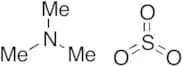
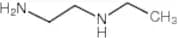
CAS:Produto Controlado<p>Applications Sulfur Trioxide Trimethylamine Complex is a reagent that is used for the design and synthesis of Rho kinase inhibitors.<br> Not a dangerous good if item is equal to or less than 1g/ml and there is less than 100g/ml in the package<br>References Takami, A., et al.: Bioorg. Med. Chem., 12, 6317 (2004);<br></p>Fórmula:C3H9NO3SCor e Forma:NeatPeso molecular:139.17N-Ethylethylenediamine
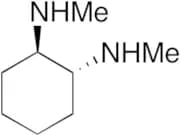
CAS:Produto Controlado<p>Applications N-Ethylethylenediamine<br> Not a dangerous good if item is equal to or less than 1g/ml and there is less than 100g/ml in the package<br></p>Fórmula:C4H12N2Cor e Forma:NeatPeso molecular:88.15trans-(1R,2R)-N,N’-Bismethyl-1,2-cyclohexanediamine
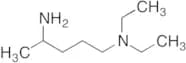
CAS:Produto Controlado<p>Applications trans-(1R,2R)-N,N’-Bismethyl-1,2-cyclohexanediamine is a useful research chemical for organic synthesis and other chemical processes.<br>References Bollenbach, M., et al.: Chem. Eur. J., 23, 13676 (2017); Thaisrivongs, D. A., et al.: Org. Lett., 18, 5780 (2016)<br></p>Fórmula:C8H18N2Cor e Forma:NeatPeso molecular:142.244-Amino-1-(diethylamino)pentane
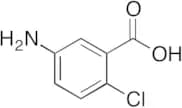
CAS:Produto Controlado<p>Applications 4-Amino-1-(diethylamino)pentane was used as a reagent in the synthesis of chromone-2-carboxamide derivatives which displayed cytotoxic activity against specific cancer cell lines.<br> Not a dangerous good if item is equal to or less than 1g/ml and there is less than 100g/ml in the package<br>References Bousejra-ElGarah, F., et al.: Med. Chem. Res., 1054, pages ahead of print (2016);<br></p>Fórmula:C9H22N2Cor e Forma:NeatPeso molecular:158.285-Amino-2-chlorobenzoic Acid
CAS:Produto Controlado<p>Applications 5-Amino-2-chlorobenzoic Acid is a reagent in the preparation of potent and selective benzothiazole hydrazone inhibitors of Bcl-XL.<br>References Sleebs, B.E., et al.: J. Med. Chem., 56, 5514, (2013)<br></p>Fórmula:C7H6ClNO2Cor e Forma:NeatPeso molecular:171.584-(Diethylamino)butylamine
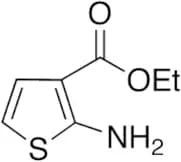
CAS:Produto Controlado<p>Applications 4-(Diethylamino)butylamine has been used on prostatic cancer cells and has been found to reduce the putrescine uptake inhibitory activity.<br>References Heston, W.D.W., et. al.: Biochem. Pharmacol., 36, 1849 (1987)<br></p>Fórmula:C8H20N2Cor e Forma:NeatPeso molecular:144.26Ethyl 2-Aminothiophene-3-carboxylate
CAS:Produto Controlado<p>Applications Ethyl 2-Aminothiophene-3-carboxylate (cas# 31891-06-2) is a compound useful in organic synthesis.<br></p>Fórmula:C7H9NO2SCor e Forma:NeatPeso molecular:171.22Ammonium Molybdate
CAS:Produto Controlado<p>Applications Ammonium Molybdate can be used to improve efficiency of pig purine as a fertilizer<br>References Atares Real, S., et.al.: PCT Int. Appl. WO 2020225459 A1, 30, (2020);<br></p>Fórmula:(NH4)2MoO4Cor e Forma:NeatPeso molecular:196.014-Aminomorpholine
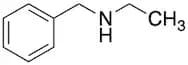
CAS:Produto Controlado<p>Applications 4-Aminomorpholine (cas# 4319-49-7) is a useful research chemical.<br></p>Fórmula:C4H10N2OCor e Forma:NeatPeso molecular:102.14N-Ethylbenzylamine
CAS:Produto Controlado<p>Applications N-Ethylbenzylamine is a reactant or reagent used in various organic syntheses. It is used in the preparation of CXCR4 injhibitors which are used to treat cancer metastasis and inflammation.<br> Not a dangerous good if item is equal to or less than 1g/ml and there is less than 100g/ml in the package<br>References Bai, R. et al.: Eur. J. Med. Chem., 118, 340 (2016);<br></p>Fórmula:C9H13NCor e Forma:NeatPeso molecular:135.213-(Methylthio)propylamine
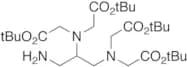
CAS:Produto Controlado<p>Applications 3-(Methylthio)propylamine (cas# 4104-45-4) is a useful research chemical.<br></p>Fórmula:C4H11NSCor e Forma:NeatPeso molecular:105.2rac (Aminomethyl)ethylenediaminetetraacetic Acid tetra-(t-Butyl Ester)
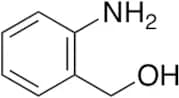
CAS:Produto Controlado<p>Applications rac (Aminomethyl)ethylenediaminetetraacetic Acid tetra-(t-Butyl Ester) (cas# 1391052-55-3) is a compound useful in organic synthesis.<br></p>Fórmula:C27H51N3O8Cor e Forma:NeatPeso molecular:545.712-Aminobenzyl Alcohol
CAS:Produto Controlado<p>Applications 2-Aminobenzyl alcohol (cas# 5344-90-1) is a useful research chemical.<br></p>Fórmula:C7H9NOCor e Forma:NeatPeso molecular:123.153-Phenylpropylamine
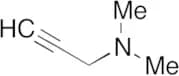
CAS:Produto Controlado<p>Stability Hygroscopic<br>Applications 3-Phenylpropylamine is an compound used for the synthesis of various pharmaceuticals.<br> Not a dangerous good if item is equal to or less than 1g/ml and there is less than 100g/ml in the package<br>References Kamochi, Y., et al.: Tetrahedron. Lett., 32, 3511 (1991);<br></p>Fórmula:C9H13NCor e Forma:NeatPeso molecular:135.213-Dimethylamino-1-propyne
CAS:Produto Controlado<p>Applications 3-Dimethylamino-1-propyne is used as a reactant in the synthesis of quinazoline derivatives such as (2Z)-Afatinib (A355305) which may be used in the treatment of some cancers.<br> Not a dangerous good if item is equal to or less than 1g/ml and there is less than 100g/ml in the package<br>References Tsou, H., et. al.: J. Med. Chem., 44, 2719 (2001)<br></p>Fórmula:C5H9NCor e Forma:NeatPeso molecular:83.13N-(Methoxymethyl)-N-[(trimethylsilyl)methyl]benzenemethanamine (>90%)
CAS:Produto Controlado<p>Applications N-(Methoxymethyl)-N-[(trimethylsilyl)methyl]benzenemethanamine is used in the synthesis of pyrrolidine derivatives as novel sodium channel blockers used to treat ischemic related ailments.<br>References Seki, M. et al.: Bioorg. Med. Chem. Lett., 23, 4230 (2013);<br></p>Fórmula:C13H23NOSiPureza:>90%Cor e Forma:NeatPeso molecular:237.41Tetrahydro-2-furanmethanamine
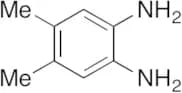
CAS:Produto Controlado<p>Applications Tetrahydro-2-furanmethanamine is used in the synthesis of novel topoisomerase I targeting anti-cancer agents with mild to potent cytotoxic activity. Also used in the discovery and synthesis of orally bioavailable stearoyl-CoA desaturase 1 inhibitors<br>References Lopez-Rodriguez, M. et al.: 44, 4504 (2001); Liu, G. et al.: J. Med. Chem., 50, 3086 (2007);<br></p>Fórmula:C5H11NOCor e Forma:NeatPeso molecular:101.154,5-Dimethyl-o-phenylenediamine
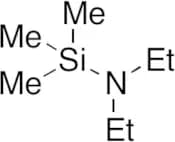
CAS:Produto Controlado<p>Applications 4,5-Dimethyl-o-phenylenediamine is used in biological processes as a substrate for CobT nicotinate-mononucleotide:5,6-dimethylbenzimidazole phosphoribosyltransferase from Salmonella typhimurium LT2.<br>References Trzebiatowski, J.R., et al.: J. Biol. Chem., 272, 17662 (1997); Johnson, M.G., et al., J. Biol. Chem., 267, 13302 (1992); Cheong, C., et al.: J. Biol. Chem., 277, 41120 (2002)<br></p>Fórmula:C8H12N2Cor e Forma:NeatPeso molecular:136.19N,N-Diethyl(trimethylsilyl)amine
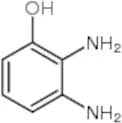
CAS:Produto Controlado<p>Applications N,N-Diethyl(trimethylsilyl)amine is a chemical reagent with wide application in organic chemistry. Used in stereospecific addition reactions as well as in SN2 nucleophilic substitutions.<br> Not a dangerous good if item is equal to or less than 1g/ml and there is less than 100g/ml in the package<br>References Bassindale, A. et al.: J. Organometal. Chem., 667, 66 (2003); Hagiwara, H. et al.: J. Chem. Soc., Perk Trans., 3, 316 (2002);<br></p>Fórmula:C7H19NSiCor e Forma:NeatPeso molecular:145.322,3-Diaminophenol
CAS:Produto Controlado<p>Applications 2,3-Diaminophenol<br></p>Fórmula:C6H8N2OCor e Forma:NeatPeso molecular:124.142-((3-Hydroxy(phenyl)methyl)benzyl)(methyl)amino)ethanol
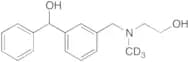
Produto Controlado<p>Applications (3-(((2-Hydroxyethyl)(methyl)amino)methyl)phenyl)(phenyl)methanone-d3 is an intermediate in the synthesis of Nefopam-d3 (N389402), a cyclized labelled analog of orphenadrine and diphenhydramine; representative of a new class of centrally acting skeletal muscle relaxants.<br>References Bassett, et al.: Br. J. Pharmacol., 37, 69 (1969), Klohs, et al.: Arzneim.-Forsch., 22, 132 (1972), Hell, et al.: Drugs, 19, 249 (1980),<br></p>Fórmula:C17D3H18NO2Cor e Forma:NeatPeso molecular:274.373Triethylamine
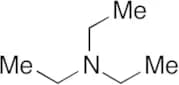
CAS:Produto Controlado<p>Applications Triethylamine is used as a competing base for the separation of acidic basic and neutral drugs by reverse-phased high-performance liquid chromatography (HPLC). Triethylamine induces visual disturbances (such as foggy vision) in humans (1), and is also used in industry as a quenching agent in the ozonolysis of alkenes (e.g. (E)-2-Pentene [P227315]). Triethylamine is used in the purification of drugs which are pharmacologically or chemically similar through separation in reverse-phase HPLC (2).Drinking water contaminant candidate list 3 (CCL 3) compound as per United States Environmental Protection Agency (EPA). Environmental contaminants; Food contaminants.<br> Not a dangerous good if item is equal to or less than 1g/ml and there is less than 100g/ml in the package<br>References 1. Akesson B. et al.: Int Arch Occup Environ Health. 1986;57(4):297-302. 2. Roos RW. et al.: J Chromatogr. 1986 Dec 24;370(3):403-18.<br></p>Fórmula:C6H15NCor e Forma:ColourlessPeso molecular:101.19N-Aminohexamethylenimine
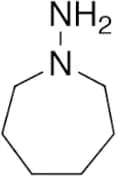
CAS:Produto Controlado<p>Applications N-Aminohexamethylenimine is a sesquiterpene lactones with anti-hepatitis C virus activity.<br> Not a dangerous good if item is equal to or less than 1g/ml and there is less than 100g/ml in the package<br>References Rossini, M., et al.: Lett. Drug. Des. Discov., 9, 881 (2012); Hines, R.N., et al.: J. Pharmacol. Exp. Therap., 214, 88 (1980);<br></p>Fórmula:C6H14N2Cor e Forma:NeatPeso molecular:114.192-Amino-2-hydroxymethylpropionitrile
CAS:Produto Controlado<p>Applications 2-Amino-2-hydroxymethylpropionitrile is an intermediate in synthesizing rac-Monepantel Sulfone (M515810), which is a recently discovered anthelmitic used in the treatment of parasitic nematodes via stun or kill without damaging the host entity.<br>References Baur, R. et al.: Mol. Pharm., 87, 96 (2015); Stuchlikova, L. et al.: Chemico. Biol. Interact., 227, 63 (2015);<br></p>Fórmula:C4H8N2OCor e Forma:NeatPeso molecular:100.122-Amino-4,5,7,8-tetrahydro-6-(N-carbethoxy)thiazolo[5,4-d]azepine
CAS:Produto Controlado<p>Applications 2-Amino-4,5,7,8-tetrahydro-6-(N-carbethoxy)thiazolo[5,4-d]azepine (cas# 887352-57-0) is a compound useful in organic synthesis.<br></p>Fórmula:C10H15N3O2SCor e Forma:NeatPeso molecular:241.312-(Dimethylaminomethylene)cyclohexanone
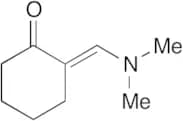
CAS:Produto Controlado<p>Applications 2-(Dimethylaminomethylene)cyclohexanone is an intermediate in the synthesis of 2-Pentylidenecyclohexanone (P280255), a fragrance chemical. It can also be used in the synthesis of dialkylphenols in the presence of zirconium catalyst.<br>References Tetsuo, B. et al.: Kenkyu Hokoku - Asahi Garasu Zaidan, 58, 201 (1991); Hostynek, J. J., et al.: Toxicology in Vitro, 11, 377 (1997);<br></p>Fórmula:C9H15NOCor e Forma:NeatPeso molecular:153.223-Morpholinopropylamine
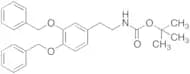
CAS:Produto Controlado<p>Applications 3-Morpholinopropylamine is a reactant used in the preparation of pyridinyl-quinazolinone derivatives as potential anti-influenza A virus compounds.<br> Not a dangerous good if item is equal to or less than 1g/ml and there is less than 100g/ml in the package<br>References Liu, S., et. al.: Chem. Biol. Drug Design., (Ahead of Print) (2015)<br></p>Fórmula:C7H16N2OCor e Forma:NeatPeso molecular:144.21N-tert-Butoxycarbonyl-3,4-dibenzyloxyphenylethylamine
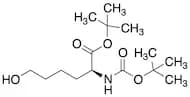
CAS:Produto Controlado<p>Applications N-tert-Butoxycarbonyl-3,4-dibenzyloxyphenylethylamine is an intermediate used in the synthesis of S-(-)-Tretoquinol Hydrochloride (T798100), which belongs to the class of adrenergic inhalants, selective β-2-adrenoreceptor agonists. S-(-)-Tretoquinol is used in the treatment of obstructive airway diseases. S-(-)-Tretoquinol is a bronchodilator.<br>References Meshi, et al.: Biochem. Pharmacol., 19, 2937 (1970), Satoh, et al.: Chem. Pharm. Bull., 19, 667 (1971),<br></p>Fórmula:C27H31NO4Cor e Forma:NeatPeso molecular:433.54(S)-tert-Butyl 2-((tert-butoxycarbonyl)amino)-6-hydroxyhexanoate
CAS:Produto Controlado<p>Applications (S)-Tert-butyl 2-((tert-butoxycarbonyl)amino)-6-hydroxyhexanoate which is a biochemical marker of bone turnover for management of metabolic bone diseases.<br>References Turner, W., et al.: Biol. Psychiatry, 14, 177 (1979), Miyata, T., et al.: Kidney Int., 60, 2351 (2001), Politi, P., et al.: Neurosci. Lett., 396, 163 (2006),<br></p>Fórmula:C15H29NO5Cor e Forma:NeatPeso molecular:303.39N,N’-Di-Boc (R)-1-Azido-3-[[3-fluoro-4-(morpholin-4-yl)phenyl]amino]propan-2-yl Acetate
Produto Controlado<p>Applications N,N’-Di-Boc (R)-1-Azido-3-[[3-fluoro-4-(morpholin-4-yl)phenyl]amino]propan-2-yl Acetate is an intermediate used in the synthesis of N-Desacetyl-N,O-descarbonyl O-Acetyl Linezolid (D288280), which is an impurity of Linezolid (L466500); an oxazolidinone antimicrobial that inhibits bacterial mRNA translation.<br>References Brickner, S.J., et al.: J. Med. Chem., 39, 673 (1996); Ford, C.W., et al.: Antimicrob. Agents Chemother., 40, 1508 (1996); Rybak, M.J., et al.: Pharmacotherapy, 18, 456 (1998); Stevens, D.L., et al.: Clin. Infect. Dis., 34, 1481 (2002)<br></p>Fórmula:C25H38FN3O7Cor e Forma:NeatPeso molecular:511.589-Amino-3,4-dihydroacridin-1(2H)-one
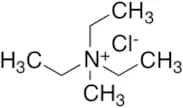
CAS:Produto Controlado<p>Applications Intermediate in the preparation of Mentane.<br>References Shutske, G., et al.: Bioorg. Med. Chem. Lett., 2, 865 (1992),<br></p>Fórmula:C13H12N2OCor e Forma:NeatPeso molecular:212.25Triethylmethylammonium Chloride
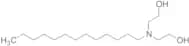
CAS:Produto Controlado<p>Applications Triethylmethylammonium Chloride (cas# 10052-47-8) is a useful research chemical.<br></p>Fórmula:C7H18ClNCor e Forma:NeatPeso molecular:151.68N,N-Bis(2-hydroxyethyl) Tridecylamine
CAS:Produto ControladoFórmula:C17H37NO2Cor e Forma:Off-WhitePeso molecular:287.489-(2-Carboxyphenyl)-2,7-dimethyl-3,6-bis(ethylamino)xanthylium
CAS:Produto Controlado<p>Applications 9-(2-Carboxyphenyl)-2,7-dimethyl-3,6-bis(ethylamino)xanthylium is an intermediate in the synthesis of SkQR1 (S555050), a mitochondria-targeted plastoquinone antioxidant that exhibits neuroprotective effect. Potent Mitochondrial Targeted antioxidant protecting against the anti-cancer treatment related to oxidative stress (1). Depicted positive effects on rat memory. (2)SkQRl is the substrate of multidrug resistance pump P-glycoproten (Pgp 170) and selectively protects Pgp 170-negative cells against oxidative stress (3)<br>References Fetisova EK, et al. 2010. FEBS Lett. Feb 5;584(3):562-6Stelmashook EV, 2015. Biochemistry (Mosc). May;80(5):592-5 Fetisova EK, et al. 2015. Radiat Res. Jan;183(1):64-71<br></p>Fórmula:C26H26N2O3Cor e Forma:NeatPeso molecular:414.5Cumylamine
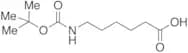
CAS:Produto Controlado<p>Applications Cumylamine is a reactant in the preparation of anti-malarial drugs. Also used in the preparation of HCV inhibitors.<br>References Ciana, C. et al.: Bioorg. Med. Chem. Lett., 23, 658 (2013); Girijavallabhan, V. et al.: Bioorg. Med. Chem. Lett., 22, 5652 (2012);<br></p>Fórmula:C9H13NCor e Forma:NeatPeso molecular:135.21tert-Butoxycarbonyl-ε-aminocaproic Acid
CAS:Produto Controlado<p>Applications Protected ε-Aminocaproic Acid (A603015). Used in the preparatiom of esters of 6-aminohexanoic acid as antibacterial agents. EACA is reported to inhibit chymotrypsin, Factor VIIa, lysine carboxy peptidase, plasmin, and plasminogen activator.<br>References Dolezal, P., et al.: Pharm. Res., 10, 1015 (1993), Vavrova, K., et al.: Curr. Med. Chem., 12, 2273 (2005), Holas, T., et al.: Bioorg. Med. Chem., 14, 7671 (2006),<br></p>Fórmula:C11H21NO4Cor e Forma:NeatPeso molecular:231.2910-Amino-1-decanol
CAS:Produto Controlado<p>Applications 10-Amino-1-decanol (cas# 23160-46-5) is a compound useful in organic synthesis.<br>References Lee, T., et al.: J. Biol. Chem., 270, 5375 (1995),<br></p>Fórmula:C10H23NOCor e Forma:NeatPeso molecular:173.30(2S)-2-[[(phenylmethoxy)carbonyl]amino]-4-Pentenoic acid
CAS:Produto Controlado<p>Applications (2S)-2-[[(phenylmethoxy)carbonyl]amino]-4-Pentenoic acid is a useful building block, and has been used in the regioselective preparation of nonracemic silylated amino acids.<br>References Marchand, D.; et al.: Eur. J. Org. Chem., 18, 3107 (2008).<br></p>Fórmula:C13H15NO4Cor e Forma:NeatPeso molecular:249.26(Z)-5-(2,3-Bis(tert-butoxycarbonyl)guanidino)-2-((tert-butoxycarbonyl)amino)pentanoic Acid
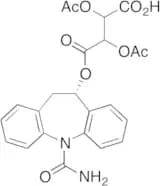
Produto Controlado<p>Applications (Z)-5-(2,3-Bis(tert-butoxycarbonyl)guanidino)-2-((tert-butoxycarbonyl)amino)pentanoic Acid is an intermediate used in the synthesis of N-(4-Amino-5-oxoheptyl)guanidine Trifluoroacetate Salt (A633006), which is a biosynthetic intermediate in the study of saxitoxin gene cluster in cyanobacteria.<br>References Kellmann, R., et al.: Appl. Environ. Microbiol., 74, 4044 (2008)<br></p>Fórmula:C21H38N4O8Cor e Forma:NeatPeso molecular:474.548(2R,3R)-2,3-Bis(acetyloxy)butanedioic Acid Mono[(10S)-5-(aminocarbonyl)-10,11-dihydro-5H-dibenz[b,f]azepin-10-yl] Ester
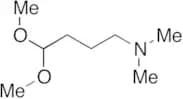
CAS:Produto Controlado<p>Applications (2R,3R)-2,3-Bis(acetyloxy)butanedioic Acid Mono[(10S)-5-(aminocarbonyl)-10,11-dihydro-5H-dibenz[b,f]azepin-10-yl] Ester is an intermediate in the synthesis of Eslicarbazepine (M546510), a novel central nervous system drug.<br>References Duncan, J., et al.: Br. J. Clin. Pharmacol., 53, 123 (2002), Almeida, L., et al.: J. Clin. Pharmacol., 45, 1062 (2005), Coppola, G., et al.: CNS Drugs, 18, 133 (2004),<br></p>Fórmula:C23H22N2O9Cor e Forma:NeatPeso molecular:470.434-(N,N-Dimethylamino)butanal Dimethyl Acetal
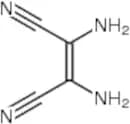
CAS:Produto Controlado<p>Stability Moisture Sensitive<br>Applications 4-(N,N-Dimethylamino)butanal Dimethyl Acetal is a reactant used in the synthesis of hallucinogenic tryptamines.<br>References Blair, J..B., et. al.: J. Med. Chem., 43, 4701 (2000)<br></p>Fórmula:C8H19NO2Cor e Forma:NeatPeso molecular:161.24Diaminomaleonitrile
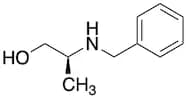
CAS:Produto Controlado<p>Applications Diaminomaleonitrile is a reagent used for the synthesis of 1,4-diazepine-2,3-dicarbonitrile dervatives. Also, it is used for the synthesis of Diaminomaleonitrile-based Schiff bases with a donor-acceptor structure and an aggregation-enhanced emission feature.<br> Not a dangerous good if item is equal to or less than 1g/ml and there is less than 100g/ml in the package<br>References Wieczorek, E., et al.: Tetrahedron Lett., 58, 758-761 (2017); Han, T., et al.: J. Mater. Chem. C Mater. Opt. Electron Devices, 4, 10430-10434 (2016);<br></p>Fórmula:C4H4N4Cor e Forma:NeatPeso molecular:108.1(S)-2-(Benzylamino)propan-1-ol
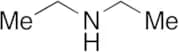
CAS:Produto Controlado<p>Applications (S)-2-(Benzylamino)propan-1-ol is a useful research chemical for the preparation of cross-benzoin products of heteroaromatic aldehydes and amino aldehydes.<br>References Haghshenas, P., et al.: J. Org. Chem., 81, 12075-83 (2016);<br></p>Fórmula:C10H15NOCor e Forma:NeatPeso molecular:165.23Diethylamine
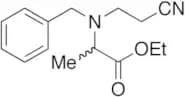
CAS:Produto Controlado<p>Applications Diethylamine, can be used for the preparation of alkali metal diethylamides, generated with n-BuLi or NaH, have been used for the cleavage of ethers. Also, in combination with Lithium aluminum hydride, generates lithium tris(diethylamino)aluminum hydride, which is a useful selective reducing agent.<br> Not a dangerous good if item is equal to or less than 1g/ml and there is less than 100g/ml in the package<br>References Cha, J.S., et al.: J. Org. Chem., 52, 5030 (1987); Tetrahedron Lett., 32, 6903 (1991);<br></p>Fórmula:C4H11NCor e Forma:ColourlessPeso molecular:73.14N-(β-Cyanoethyl)-N-(ethoxycarbonylethyl)benzylamine
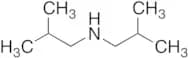
CAS:Produto Controlado<p>Applications N-(β-Cyanoethyl)-N-(ethoxycarbonylethyl)benzylamine is a compound useful in organic synthesis.<br> Not a dangerous good if item is equal to or less than 1g/ml and there is less than 100g/ml in the package<br></p>Fórmula:C15H20N2O2Cor e Forma:NeatPeso molecular:260.33Diisobutylamine
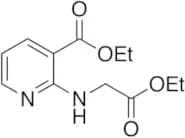
CAS:Produto Controlado<p>Applications Diisobutylamine is a reagent used in organic synthesis including the preparation of bx7 inhibitors which may be useful in the treatment of certain cancers.<br> Not a dangerous good if item is equal to or less than 1g/ml and there is less than 100g/ml in the package<br>References Simhadri, C. et al.:ACS Omega, 1, 541 (2016);<br></p>Fórmula:C8H19NCor e Forma:NeatPeso molecular:129.242-(Carboxymethylamino) Nicotinic Acid Diethyl Ester
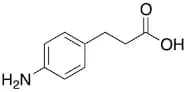
CAS:Produto Controlado<p>Applications 2-(Carboxymethylamino) Nicotinic Acid Diethyl Ester (cas# 1178176-00-5) is a compound useful in organic synthesis.<br></p>Fórmula:C12H16N2O4Cor e Forma:NeatPeso molecular:252.273-(4-Aminophenyl)propionic Acid
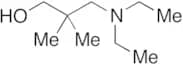
CAS:Produto Controlado<p>Applications 3-(4-Aminophenyl)propionic acid (cas# 2393-17-1) is a useful research chemical.<br></p>Fórmula:C9H11NO2Cor e Forma:NeatPeso molecular:165.193-(Diethylamino)-2,2-dimethylpropanol
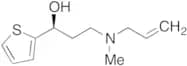
CAS:Produto Controlado<p>Applications 3-(Diethylamino)-2,2-dimethylpropanol is a reactant used in the preparation of herbicides, several local anesthetics and histamine H3 receptor antagonists.<br></p>Fórmula:C9H21NOCor e Forma:NeatPeso molecular:159.27(S)-3-(Allyl(methyl)amino)-1-(thiophen-2-yl)propan-1-ol
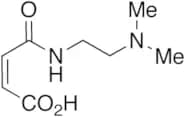
Produto Controlado<p>Applications (S)-3-(Allyl(methyl)amino)-1-(thiophen-2-yl)propan-1-ol is an intermediate in the syntehsis of 4-Hydroxy Duloxetine β-D-Glucuronide Sodium Salt (H941805), which is a metabolite of Duloxetine.<br>References Lantz, R.J., et al.: Drug Dispos. Metab., 31, 1142 (2003); Detke, M., et al.: J. Clin Psy., 63, 308 (2002); Bymaster, F.P., et al.: Bioorg. Med., Chem. Lett., 13, 4477 (2003);<br></p>Fórmula:C11H17NOSCor e Forma:NeatPeso molecular:211.324N-(2-N’,N’-Dimethylaminoethyl)maleamic Acid
CAS:Produto Controlado<p>Applications N-(2-N’,N’-Dimethylaminoethyl)maleamic Acid (cas# 116503-79-8) is a compound useful in organic synthesis.<br></p>Fórmula:C8H14N2O3Cor e Forma:NeatPeso molecular:186.213-(Dimethylamino)-1,2-propanediol
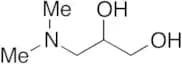
CAS:Produto Controlado<p>Applications 3-(Dimethylamino)-1,2-propanediol is a reagent in the synthesis of 1,2-Dioleoyl-3-trimethylammonium-propane, Chloride (D484450).<br> Not a dangerous good if item is equal to or less than 1g/ml and there is less than 100g/ml in the package<br></p>Fórmula:C5H13NO2Cor e Forma:NeatPeso molecular:119.166-Amino-5-(1,1-dimethylethyl)-3,3-dimethyl-2(3H)-benzofuranone
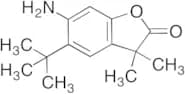
CAS:Produto Controlado<p>Applications 6-Amino-5-(1,1-dimethylethyl)-3,3-dimethyl-2(3H)-benzofuranone is an intermediate in synthesizing Ivacaftor Carboxylic Acid (I940605). It is an impurity of Ivacaftor (I940600); a drug used in the treatment of cystic fibrosis.<br>References Clancy, J. et al.: Am. J. Resp. Crit. Care. Med., 186, 593 (2012)<br></p>Fórmula:C14H19NO2Cor e Forma:NeatPeso molecular:233.312-Ethyl-1-hexanamine
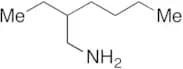
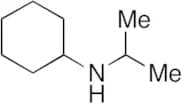
CAS:Produto Controlado<p>Applications Used as a reactant or reagent in preparation of N-alkyl carbamates.<br> Not a dangerous good if item is equal to or less than 1g/ml and there is less than 100g/ml in the package<br>References Lazewska, D. et al.: BioMed. Chem. Let., 19, 6682 (2009);<br></p>Fórmula:C8H19NCor e Forma:NeatPeso molecular:129.24N-Isopropylcyclohexylamine
CAS:Produto Controlado<p>Applications N-Isopropylcyclohexylamine is a reagent that is used in the synthesis of N3-substituted coformycin aglycon analogs that inhibit AMP deaminase or adenosine deaminase.<br> Not a dangerous good if item is equal to or less than 1g/ml and there is less than 100g/ml in the package<br>References Bookser, B.C., et al.: J. Med. Chem., 43, 1495 (2000);<br></p>Fórmula:C9H19NCor e Forma:NeatPeso molecular:141.25N-Benzylethanolamine
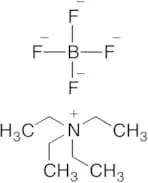
CAS:Produto Controlado<p>Applications N-Benzylethanolamine is used in the synthesis of imidazoles as potent calcitonin (CGRP) antagonists. Also it aids in the preparation of benzofused hydroxamix acids, as useful fragments for the synthesis of histone deacetylase inhibitors.<br>References Tora, G. et al.: Bioorg. Med. Chem. Lett., 23, 5684 (2013); Marastoni, E. et al.: Bioorg. Med. Chem. Lett., 23, 4091 (2013);<br></p>Fórmula:C9H13NOCor e Forma:NeatPeso molecular:151.21Tetraethylammonium Tetrafluoroborate
CAS:Produto Controlado<p>Applications Tetraethylammonium Tetrafluoroborate is used in the preparation of some organic salts of fluoboric acids.<br>References Wilke-D., et al.: Ber. Dtsch Chem. Ges.; 60B, 115 (1927)<br></p>Fórmula:C8H20BF4N3Cor e Forma:NeatPeso molecular:217.06Ammonium sulfide solution 40-48% wt. in H2O
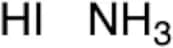
CAS:Produto Controlado<p>Applications Ammonium sulfide is a very useful reagent in various aspects ranging from large scale production of textile manufacture, trace metal analysis, patina to bronze, and as well as cell culture and organic reactions/synthesis. Recently it has been used as a cleaning solution in the study of semiconductor growth on indium phosphide with various metals.<br> Not a dangerous good if item is equal to or less than 1g/ml and there is less than 100g/ml in the package<br>References Ferrandis, P., et al.: J. Appl. Phys., 123, 161534/1-161534/10 (2018)<br></p>Fórmula:H8N2SCor e Forma:Single SolutionPeso molecular:68.14Ammonium Iodide
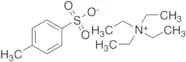
CAS:Produto Controlado<p>Applications AMMONIUM IODIDE (cas# 12027-06-4) is a useful research chemical.<br></p>Fórmula:HI·H3NCor e Forma:NeatPeso molecular:144.94Tetraethylammonium P-Toluenesulfonate
CAS:Produto Controlado<p>Applications Tetraethylammonium P-Toluenesulfonate (cas# 733-44-8) is a useful research chemical.<br></p>Fórmula:C15H27NO3SCor e Forma:Off-WhitePeso molecular:301.45(AlphaS)-α-Amino-4-nitrobenzenepropanamide
CAS:Produto Controlado<p>Applications (αS)-α-Amino-4-nitrobenzenepropanamide (cas# 81677-61-4) is a compound useful in organic synthesis.<br></p>Fórmula:C9H11N3O3Cor e Forma:NeatPeso molecular:209.21,3-Diethyl-5-nitroso-6-aminouracil
CAS:Produto Controlado<p>Applications 1,3-Diethyl-5-nitroso-6-aminouracil (cas# 89073-60-9) is a compound useful in organic synthesis.<br></p>Fórmula:C8H12N4O3Cor e Forma:NeatPeso molecular:212.219-[2-[[[10-(4,5-Dimethyl-3,6-dioxo-1,4-cyclohexadien-1-yl)decyl]oxy]carbonyl]phenyl]-3,6-bis(ethylamino)-2,7-dimethyl-Xanthylium
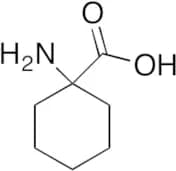
CAS:Produto Controlado<p>Applications 9-[2-[[[10-(4,5-Dimethyl-3,6-dioxo-1,4-cyclohexadien-1-yl)decyl]oxy]carbonyl]phenyl]-3,6-bis(ethylamino)-2,7-dimethyl-Xanthylium is an intermediate in the synthesis of SkQR1 (S555050), a mitochondria-targeted plastoquinone antioxidant that exhibits neuroprotective effect.<br>References Isaev, N.K.: Biochem. 77, 996 (2012)<br></p>Fórmula:C44H53N2O5Cor e Forma:NeatPeso molecular:689.9α-Aminocyclohexanecarboxylic Acid
CAS:Produto ControladoFórmula:C7H13NO2Cor e Forma:NeatPeso molecular:143.1842-(4-Phenoxyphenoxy)ethanamine
CAS:Produto Controlado<p>Applications 2-(4-Phenoxyphenoxy)ethanamine is an intermediate in the synthesis of Fenoxycarb-d3 (F248871), a labelled form of Fenoxycarb (F248870). Fenoxycarb is a carbamate insect growth regulator by preventing immature insects from reaching maturity by mimicking juvenile hormone. Used as a standard for Pesticide detection. Fenoxycarb is also used in cannabis testing kits as a component of pesticide mixes (P698235).<br>References El-Saeid, M.H., et al.: J. Chem., 10, (2013); Coors, A., et al.: Environ. Toxicol. Chem., 31, 1239 (2012);<br></p>Fórmula:C14H15NO2Cor e Forma:NeatPeso molecular:229.27Isopropylamine
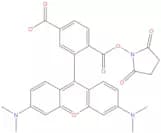
CAS:<p>Stability Volatile<br>Applications Isopropylamine is an organic compound is a widely used for the synthesis of pharmaceutical and agricultural goods such as glyphosphate herbicides and as an additive for petroleum industry.<br> E0<br>References Dam, J.H. et al.: Chem. A. Eur. J., 16, 6820 (2010); Latli, B. et al.: J Labelled. Compd. Radiopharm., 48, 447 (2005); Guadry, D., et al.: Biomed. Mass. Spectro., 12, 269 (1985);<br></p>Fórmula:C3H9NCor e Forma:NeatPeso molecular:59.116-TAMRA-SE
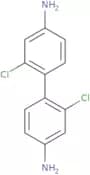
CAS:6-TAMRA-SE (6-TAMRA-NHS ester) is an amine-reactive form of tetramethylrhodamine and one of the traditional fluorophores used for automated DNA sequencing.Fórmula:C29H25N3O7Pureza:98%Cor e Forma:SolidPeso molecular:527.522,2'-Dichloro-1,1'-biphenyl-4,4'-diamine
CAS:<p>2,2'-Dichloro-1,1'-biphenyl-4,4'-diamine is a chemical that belongs to the class of organic compounds known as amines. It is insoluble in water and has a molecular weight of 190.8 g/mol. 2,2'-Dichloro-1,1'-biphenyl-4,4'-diamine has been shown to be carcinogenic in animals and can cause coagulation problems in humans. The compound also shows anti-inflammatory properties by inhibiting the production of prostaglandins.</p>Fórmula:C12H10Cl2N2Pureza:Min. 95%Cor e Forma:White/Off-White SolidPeso molecular:253.13 g/mol[(1,2-Dimethyl-1H-benzimidazol-5-yl)methyl]amine dihydrochloride
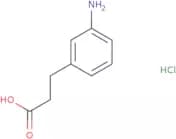
CAS:<p>[(1,2-Dimethyl-1H-benzimidazol-5-yl)methyl]amine dihydrochloride is a reagent that is used as a reaction component in the synthesis of organic and inorganic compounds. It is used as a high quality research chemical for use in the production of fine chemicals and pharmaceuticals. This compound has many uses as a versatile building block, useful intermediate, or useful building block in the synthesis of complex compounds. It can also be used to make various speciality chemicals. [(1,2-Dimethyl-1H-benzimidazol-5-yl)methyl]amine dihydrochloride is stable at room temperature and can be stored under ambient conditions indefinitely.</p>Fórmula:C10H13N3·2HClPureza:Min. 95%Cor e Forma:White PowderPeso molecular:248.15 g/molβ-(3-Aminophenyl)propionic acid hydrochloride
CAS:Beta- (3-aminophenyl)propionic acid hydrochloride is a drug that belongs to the class of pharmaceuticals and is used as a gastric antacid. It has been shown to be effective in treating acute and chronic gastritis, as well as ulcers in humans. Beta-(3-aminophenyl)propionic acid hydrochloride has been shown to have strong effects on tissues, membranes, and chlorides. The drug binds to hydrogen chloride and chlorine ions in the stomach, thereby preventing the formation of hydrochloric acid (HCL). This prevents the damage caused by HCL on tissues and membranes of the stomach. Beta-(3-aminophenyl)propionic acid hydrochloride also has health effects with high concentrations, such as chloroform or chlorine gas.Fórmula:C9H12ClNO2Pureza:Min. 95%Peso molecular:201.65 g/mol2-Amino-6-methoxybenzoic acid
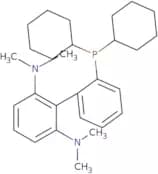
CAS:2-Amino-6-methoxybenzoic acid is a monosubstituted amide, which is synthesized by the hydrolysis of 2-amino-5-methylbenzoic acid with hydrochloric acid in the presence of diacetate. This compound is formed as part of the biosynthesis of aminophenols and heterocycles. It can be used to adsorb metal ions and organic compounds, such as chloride and butyllithium. 2-Amino-6-methoxybenzoic acid is also found in aeruginosa infections due to its ability to inhibit bacterial growth by inhibiting protein synthesis. The synthesis of this compound requires shikimate pathway enzymes.Fórmula:C8H9NO3Pureza:Min. 95%Cor e Forma:PowderPeso molecular:167.16 g/mol2-Dicyclohexylphosphino-2',6'-bis(N,N-dimethylamino)biphenyl
CAS:2-Dicyclohexylphosphino-2',6'-bis(N,N-dimethylamino)biphenyl (PCP-DMAP) is a phosphorus compound that is used for the synthesis of aryl chlorides. It has been validated as an effective reagent for the conversion of aryl chlorides to aryl halides. PCP-DMAP can be used in peptidomimetic synthesis and profiling. It is also useful in the synthesis of natural products where activation with N,N-dimethylchloramine (DMC) is required. PCP-DMAP can be used as an efficient alternative to other methods for activation with DMC, using less time and producing less waste. This compound has been shown to be stable against hydrolysis and oxidation in both acidic and basic media, making it a good reagent for use under these conditions. PCP-DMAP can also be used in the synthesisFórmula:C28H41N2PPureza:Min. 95%Cor e Forma:PowderPeso molecular:436.61 g/mol(1-Benzothien-5-ylmethyl)amine hydrochloride
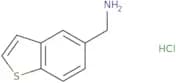
CAS:(1-Benzothien-5-ylmethyl)amine hydrochloride is a white crystalline solid that is soluble in organic solvents. It has been used as a research chemical, reagent, and speciality chemical. It is also an intermediate for the synthesis of other compounds.Fórmula:C9H9NS·HClPureza:Min. 95%Cor e Forma:SolidPeso molecular:199.7 g/mol4-Amino-3,5-dichlorophenol
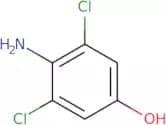
CAS:<p>4-Amino-3,5-dichlorophenol is a decoupling agent that has been shown to have acute toxicities in cultures. It is also used as a regulatory control for the analysis of hydroxyl groups and for broad-spectrum antimicrobial agents. 4-Amino-3,5-dichlorophenol reacts with hydrochloric acid to form chlorohydrin, which can be detected by an electrochemical detector. This reaction mechanism has been proposed as the basis for the use of this chemical as a decoupling agent in analytical chemistry. Its use as an antimicrobial agent is based on its ability to inhibit bacterial growth by reacting with thiol groups in enzymes or proteins and blocking their activity.</p>Fórmula:C6H5Cl2NOPureza:Min. 95%Cor e Forma:PowderPeso molecular:178.02 g/molAuramine O hydrochloride
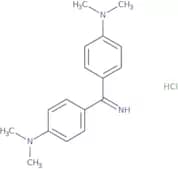
CAS:Produto ControladoAuramine O hydrochloride is a fluorescent dye that is used in the diagnosis of wastewater. Auramine O hydrochloride is a reactive dye that binds to malonic acid and forms stable complexes. It has been used as a fluorescence probe for polymerase chain reaction (PCR) detection of human serum samples, and it has been shown to be thermodynamically stable under conditions of pH 8-12, at temperatures up to 80°C, and in the presence of organic solvents. In addition, this dye can be activated with UV light or sodium hypochlorite solution. This dye also reacts with amino groups on proteins and lipids on cell membranes, which makes it useful for microscopy studies.Fórmula:C17H21N3•HClCor e Forma:Yellow PowderPeso molecular:303.83 g/molThiamine monophosphate chloride dihydrate
CAS:<p>Thiamine monophosphate chloride dihydrate is a form of the vitamin thiamine. It has been used in control analysis to measure the activity of enzymes that require thiamine as a cofactor, such as transketolase and pyruvate kinase. Thiamine monophosphate chloride dihydrate has also been studied in biochemical properties, where it was found that this compound can be cleaved by picolinic acid to form thiazole phosphate. The matrix effect is an important factor in polymerase chain reactions and has been shown to be dependent on the presence of dinucleotide phosphate. This compound is an essential component of energy metabolism and plays a role in protein synthesis. Thiamine monophosphate chloride dihydrate also has toxicological studies, including a model system using wild-type strains of yeast. These studies have shown that this compound leads to physiological effects such as inhibition of glycolysis and lactic acid production.</p>Fórmula:C12H18N4O4PS•Cl•(H2O)2Pureza:Min. 99 Area-%Cor e Forma:PowderPeso molecular:416.82 g/mol3-Amino-4-hydroxybenzoic acid hydrate
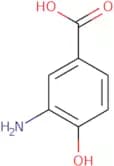
CAS:3-Amino-4-hydroxybenzoic acid hydrate is a fine chemical that is used as a versatile building block in the synthesis of pharmaceuticals, agrochemicals, and other organic chemicals. It is an intermediate for the preparation of various research chemicals. 3-Amino-4-hydroxybenzoic acid hydrate has been shown to be an effective reagent for the synthesis of certain complex compounds. It also has high quality and can be used as a reaction component in many reactions.Fórmula:C7H7NO3·H2OPureza:Min. 95%Cor e Forma:PowderPeso molecular:171.15 g/mol1-Phenyl-3-aminopyrazol-5-one
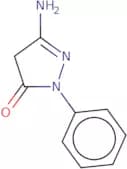
CAS:1-Phenyl-3-aminopyrazol-5-one is a solvent that can be used in elemental analysis. It has a molecular weight of 137.12 and is soluble in water, methanol, ethanol, acetone, ether, benzene and chloroform. 1-Phenyl-3-aminopyrazol-5-one has been shown to react with amines and form tautomers with different chemical properties. The spectral data for this compound are presented as the absorption spectra of substituted 1-phenyl-3-aminopyrazol-5-ones with acetyl groups at C2 and C4 (1), the nuclear magnetic resonance spectrum of 1-(dimethylamino)ethyl 3-[2-(N,N'-dimethylamino)ethyl]pyrazole (2), the NMR spectrum of 2-(dimethylamino)ethyl 3-[2-(N,N'-dimethylamino)ethyl]Fórmula:C9H9N3OPureza:Min. 95%Peso molecular:175.19 g/molFmoc-4-amino-tetrahydropyran-4-carboxylic acid
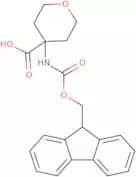
CAS:Fmoc-4-amino-tetrahydropyran-4-carboxylic acid is a versatile building block that can be used for the synthesis of many complex compounds and research chemicals. It is a speciality chemical which has been shown to be a useful intermediate in reactions, as well as being a reagent. Fmoc-4-amino-tetrahydropyran-4-carboxylic acid has also been shown to be an effective scaffold for drug design and development.Fórmula:C21H21NO5Pureza:Min. 95%Cor e Forma:White/Off-White SolidPeso molecular:367.4 g/mol7-Amino-5-fluoro-1,3-dihydroindol-2-one
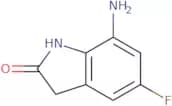
CAS:<p>7-Amino-5-fluoro-1,3-dihydroindol-2-one is a compound that can be used as a research chemical. It has been shown to react with various other compounds in the laboratory and may have potential uses as a versatile building block or useful intermediate. 7-Amino-5-fluoro-1,3-dihydroindol-2-one is also known for its high quality and speciality chemical status.</p>Fórmula:C8H7FN2OPureza:Min. 95%Cor e Forma:PowderPeso molecular:166.15 g/mol(11bS)-N,N-Dimethyl-8,9,10,11,12,13,14,15-octahydrodinaphtho[2,1-d:1',2'-f][1,3,2]dioxaphosphepin-4-amine
CAS:(11bS)-N,N-Dimethyl-8,9,10,11,12,13,14,15-octahydrodinaphtho[2,1-d:1',2'-f][1,3,2]dioxaphosphepin-4-amine is a chiral compound that can be used as an immobilizer in catalytic asymmetric reactions. This molecule has shown to be effective in hydrogenation reactions and insulating electrodes. It also has bifunctional properties and can be recycled with the use of a gelation process. (11bS)-N,N-Dimethyl-8,9,10,11,12,13,14,15-octahydrodinaphtho[2.1d:1',2'-f][1.3.2]dioxaphosphepin-4-amine has been synthesized from a recyclable material and its interactions haveFórmula:C22H26NO2PPureza:Min. 95%Cor e Forma:White PowderPeso molecular:367.42 g/mol1-{{[5-(4-Nitrophenyl)-2-furanyl]methylene}amino}-2,4-imidazolidinedione
CAS:<p>Dantrolene is an experimental model for malignant hyperthermia, a rare genetic condition that can cause muscle rigidity and death. Dantrolene has been shown to inhibit the activity of the dinucleotide phosphate (NADH) dehydrogenase enzyme in muscle cells. In addition, it inhibits calcium release from the sarcoplasmic reticulum and activates ryanodine receptors. Dantrolene also inhibits muscle contractions and prevents neuronal death by inhibiting the release of glutamate.</p>Fórmula:C14H10N4O5Pureza:Min. 95%Cor e Forma:SolidPeso molecular:314.25 g/molN,N'-Diphenylethylenediamine
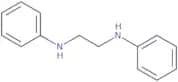
CAS:N,N'-Diphenylethylenediamine (DPEN) is a quaternary ammonium compound that possesses anti-inflammatory activity. DPEN inhibits the production of prostaglandin E2, which has been shown to be involved in prostate cancer cell growth and proliferation. This drug binds to receptors on the cell surface and blocks the binding of dopamine, leading to an increase in intracellular levels of cAMP, which is a second messenger for hormones. The drug also has genotoxic effects, such as DNA strand breaks and chromosomal aberrations. DPEN can bind to nitrogen atoms and form hydrogen bonds with other molecules such as hydrochloric acid. The drug also emits nitric oxide (NO), sulfur dioxide (SO2), nitrous oxide (N2O), and ammonia (NH3). The emission rates are dependent on pH levels.Fórmula:C14H16N2Pureza:Min. 97.5 Area-%Cor e Forma:PowderPeso molecular:212.29 g/mol(s)-2,6-Diamino-4,5,6,7-tetrahydrobenzothiazole
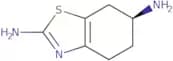
CAS:(S)-2,6-Diamino-4,5,6,7-tetrahydrobenzothiazole is an inhibitor molecule that belongs to the heterocyclic class of molecules. It is synthesized by a chemical reaction between hydrochloric acid and a molecule. The reaction product is then treated with acylation reagents to produce a heterobicyclic compound. The heterobicyclic compound binds to the surface of metal and prevents corrosion reactions from occurring. (S)-2,6-Diamino-4,5,6,7-tetrahydrobenzothiazole has been shown to inhibit leukemia cells and cancer cells in vitro through an unknown mechanism. It also binds to histone H3 proteins and has shown high cytotoxicity against various types of cancer cell lines.Fórmula:C7H11N3SPureza:Min. 95%Cor e Forma:White PowderPeso molecular:169.25 g/mol1,1-Dimethyl-2-morpholin-4-ylethylamine
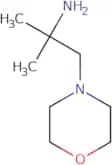
CAS:<p>1,1-Dimethyl-2-morpholin-4-ylethylamine (DMMEA) is a quaternary ammonium compound that has antimicrobial properties. DMMEA is an analog of 1,1-dimethylpiperidinium chloride and is used as an intermediate for the synthesis of other compounds. It can be synthesized from 1,1,2-trimethoxyethane and morpholine in the presence of ammonium chloride. DMMEA has been shown to have antimicrobial activities against Gram negative bacteria such as Escherichia coli and Enterobacter aerogenes. It also has some activity against Gram positive bacteria such as Staphylococcus aureus.</p>Fórmula:C8H18N2OPureza:Min. 95%Cor e Forma:Clear LiquidPeso molecular:158.24 g/molBoc-(3S)-3-amino-4-phenyl-2-butanone
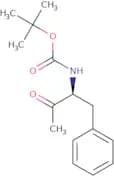
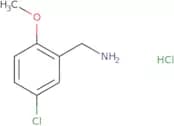
CAS:<p>Boc-(3S)-3-amino-4-phenyl-2-butanone is a chemical intermediate that is useful as a building block in organic synthesis. It has been used as a reaction component, reagent and high quality research chemical. Boc-(3S)-3-amino-4-phenyl-2-butanone is also a versatile building block and useful intermediate for the preparation of complex compounds. This chemical has shown to have speciality applications in fine chemicals such as pharmaceuticals and agrochemicals.</p>Fórmula:C15H21NO3Pureza:Min. 95%Cor e Forma:White to off-white solid.Peso molecular:263.33 g/mol5-Chloro-2-methoxybenzylamine hydrochloride
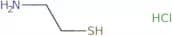
CAS:<p>5-Chloro-2-methoxybenzylamine hydrochloride is a chemical substance that is used as an intermediate in the synthesis of pharmaceuticals and other chemicals. It can be used as a building block to create complex compounds, or it can be used in reactions to produce speciality chemicals. 5-Chloro-2-methoxybenzylamine hydrochloride is a high quality reagent that can be used as a reaction component in research and development.<br>A fine chemical, 5-Chloro-2-methoxybenzylamine hydrochloride has many uses as a versatile building block for organic synthesis. It is also useful for generating research chemicals and complex compounds for use in medicines and other products.</p>Fórmula:C8H10ClNO·(HCl)Pureza:Min. 95%Cor e Forma:PowderPeso molecular:208.08 g/mol2-Aminoethanethiol HCl
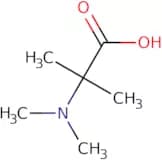
CAS:<p>2-Aminoethanethiol HCl is an organosulfur compound used in the treatment of cystinosis. Cystinosis is a rare autosomal recessive metabolic disorder that leads to the accumulation of cysteine and other amino acids in the lysosomes of cells. 2-Aminoethanethiol HCl is also used for the treatment of enteritidis, a disease caused by infection with bacteria such as Salmonella typhi, Shigella dysenteriae, or Escherichia coli. It has been shown to inhibit protein synthesis in vitro and in experimental models. The mechanism of 2-aminoethanethiol HCl's inhibition may be due to its ability to reduce mitochondrial membrane potential, thereby inhibiting ATP production and inhibiting cellular respiration.<br>2-Aminoethanethiol HCl has been found to be effective against many strains of bacteria that are resistant to standard antibiotics (e</p>Fórmula:C2H7NS·HClPureza:Min. 95%Cor e Forma:White PowderPeso molecular:113.61 g/mol2-(Dimethylamino)-2-methylpropanoic acid
CAS:2-(Dimethylamino)-2-methylpropanoic acid is a solvent that has been investigated for use in vapor phase systems. It has been shown to have the ability to adsorb onto surfaces and to be able to desorb from these surfaces at a later time. This process allows 2-(dimethylamino)-2-methylpropanoic acid to be used as an additive for waterproofing and other applications. A thermogravimetric analysis of 2-(dimethylamino)-2-methylpropanoic acid showed that it decomposes at temperatures between 220°C and 260°C, which is lower than the temperature required for many other solvents. This property makes it suitable for use in vapor phase systems.Fórmula:C6H13NO2Pureza:Min. 95%Cor e Forma:PowderPeso molecular:131.17 g/molBES
CAS:BES, also known as 2-[N,N-Bis-(2-hydroxyethyl)amino]ethanesulfonic acid, is a buffering agent that forms complexes with DNA and certain metal ions, It has an optimal pH range of 6.4-7.8 and a pKa of 7.09.Fórmula:C6H15NO5SPureza:(%) Min. 99.0%Cor e Forma:PowderPeso molecular:213.2 g/mol

![4-[[4-(4-Chlorophenyl)-2-thiazolyl]amino]phenol](/_next/image/?url=https%3A%2Fstatic.cymitquimica.com%2Fproducts%2F3D%2Fthumb-webp%2FFC137468.webp&w=3840&q=75)







![N-(Methoxymethyl)-N-[(trimethylsilyl)methyl]benzenemethanamine (>90%)](/_next/image/?url=https%3A%2Fstatic.cymitquimica.com%2Fproducts%2FTR%2Fthumb-webp%2FM264620.webp&w=3840&q=75)


![2-Amino-4,5,7,8-tetrahydro-6-(N-carbethoxy)thiazolo[5,4-d]azepine](/_next/image/?url=https%3A%2Fstatic.cymitquimica.com%2Fproducts%2FTR%2Fthumb-webp%2FA629920.webp&w=3840&q=75)

![N,N’-Di-Boc (R)-1-Azido-3-[[3-fluoro-4-(morpholin-4-yl)phenyl]amino]propan-2-yl Acetate](/_next/image/?url=https%3A%2Fstatic.cymitquimica.com%2Fproducts%2FTR%2Fthumb-webp%2FD422605.webp&w=3840&q=75)




![(2S)-2-[[(phenylmethoxy)carbonyl]amino]-4-Pentenoic acid](/_next/image/?url=https%3A%2Fstatic.cymitquimica.com%2Fproducts%2FTR%2Fthumb-webp%2FP228100.webp&w=3840&q=75)





![9-[2-[[[10-(4,5-Dimethyl-3,6-dioxo-1,4-cyclohexadien-1-yl)decyl]oxy]carbonyl]phenyl]-3,6-bis(ethyl…](/_next/image/?url=https%3A%2Fstatic.cymitquimica.com%2Fproducts%2FTR%2Fthumb-webp%2FD469485.webp&w=3840&q=75)



![[(1,2-Dimethyl-1H-benzimidazol-5-yl)methyl]amine dihydrochloride](/_next/image/?url=https%3A%2Fstatic.cymitquimica.com%2Fproducts%2F3D%2Fthumb-webp%2FFD135142.webp&w=3840&q=75)


![(11bS)-N,N-Dimethyl-8,9,10,11,12,13,14,15-octahydrodinaphtho[2,1-d:1',2'-f][1,3,2]dioxaphosphepin-…](/_next/image/?url=https%3A%2Fstatic.cymitquimica.com%2Fproducts%2F3D%2Fthumb-webp%2FFD163891.webp&w=3840&q=75)
![1-{{[5-(4-Nitrophenyl)-2-furanyl]methylene}amino}-2,4-imidazolidinedione](/_next/image/?url=https%3A%2Fstatic.cymitquimica.com%2Fproducts%2F3D%2Fthumb-webp%2FFN138588.webp&w=3840&q=75)