Aminas
Subcategorias de "Aminas"
- Nitrosaminas(2.618 produtos)
- Aminas primárias(30.947 produtos)
- Catiões Quaternários de Amónio(1.101 produtos)
- Aminas secundárias(20.886 produtos)
- Aminas terciárias(17.196 produtos)
Foram encontrados 8793 produtos de "Aminas"
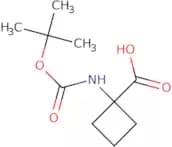
Boc-1-amino-1-cyclobutane carboxylic acid
CAS:Boc-1-amino-1-cyclobutane carboxylic acid is a synthetic and potent agonist of the androgen receptor. It is an analog of apalutamide, which is a selective antagonist of the androgen receptor. Boc-1-amino-1-cyclobutane carboxylic acid has been shown to have high oral bioavailability, which makes it suitable for oral administration. Boc-1-amino-1-cyclobutane carboxylic acid has been shown to have increased functional activity in cancer cells, which may be due to its ability to inhibit the growth of tumor cells by binding to their androgen receptors. Boc-1-amino-1-cyclobutane carboxylic acid has also been found to have good affinity for the androgen receptor when tested on cultured cells.Fórmula:C10H17NO4Pureza:Min. 95%Cor e Forma:White/Off-White SolidPeso molecular:215.25 g/mol1-Amino-2,4-imidazolidinedione-13C3
CAS:1-Amino-2,4-imidazolidinedione-13C3 is an antibiotic that belongs to the group of nitrofurans. It is used for the treatment of infections caused by bacteria that are resistant to other antibiotics. The LC-MS/MS analysis showed that 1-aminohydantoin was formed as a degradation product of chloramphenicol and that this metabolite had been detected in urine samples from patients treated with chloramphenicol. Nitrofuran is also a possible degradation product. A reaction monitoring experiment using ionization monitoring and monitoring on the precursor ion at m/z 287 confirmed the presence of 1-aminohydantoin in a sample containing both chloramphenicol and nitrofuran. Quantification was performed using calibration curves obtained from pure standards.Fórmula:C3H5N3O2Pureza:Min. 95%Peso molecular:118.12 g/mol4-Aminodiphenylamine
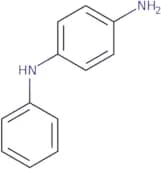
CAS:4-Aminodiphenylamine is a chemical compound that is used as an intermediate in the production of other chemicals. It has been reported to be carcinogenic, so it should be handled with care. The reaction mechanism for this chemical compound is not well-known, but it has been shown that it reacts with hydrogen bonding interactions and can form a complex with nitrogen atoms. 4-Aminodiphenylamine has been shown to have low toxicity in animal studies, and can be synthesized using a variety of methods. This chemical compound also has biological properties that make it useful in the study of body formation and metabolism.Fórmula:C12H12N2Pureza:Min. 95%Cor e Forma:PowderPeso molecular:184.24 g/mol2-Amino-3,7,8-trimethyl-3H-imidazo[4,5-f]quinoxaline
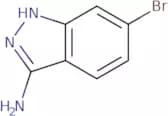
CAS:2-Amino-3,7,8-trimethyl-3H-imidazo[4,5-f]quinoxaline is a synthetic compound that is used as an analytical reagent. It has been shown to inhibit the growth of cancer cells by reacting with amines in the cell nucleus and forming the corresponding quinone. This reaction products then react with alkoxy radical to form reactive oxygen species that induce apoptosis. The use of 2-amino-3,7,8-trimethyl-3H-imidazo[4,5-f]quinoxaline as an analytical reagent has been shown to be effective in the determination of creatine and creatinine levels.Fórmula:C12H13N5Pureza:Min. 95%Peso molecular:227.27 g/mol6-Bromo-1H-indazol-3-yl-amine
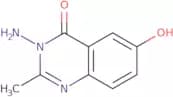
CAS:6-Bromo-1H-indazol-3-yl-amine is an indazole derivative that has shown anti-cancer effects in vitro and in vivo. 6-Bromo-1H-indazol-3-yl-amine inhibits the proliferation of cancer cells, which may be due to its inhibition of cell cycle progression at the G2/M phase. It also inhibits the growth of tumor cells by inducing apoptosis. The drug's mechanism of action is not yet fully understood, but it has been shown to inhibit the activity of axitinib, a tyrosine kinase inhibitor. This drug has also shown anti-proliferative activities with acid catalysts and supramolecular systems. In addition, 6-bromo 1H indazol 3 yl amine contains functional groups such as nitro and pyrrole groups.Fórmula:C7H6BrN3Pureza:Min. 95%Peso molecular:212.05 g/mol3-Amino-6-hydroxy-2-methylquinazolin-4(3H)-one
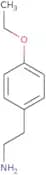
CAS:Produto ControladoPlease enquire for more information about 3-Amino-6-hydroxy-2-methylquinazolin-4(3H)-one including the price, delivery time and more detailed product information at the technical inquiry form on this pageFórmula:C9H9N3O2Pureza:Min. 95%Peso molecular:191.19 g/mol(4-Ethoxyphenyl)ethylamine
CAS:Produto ControladoPlease enquire for more information about (4-Ethoxyphenyl)ethylamine including the price, delivery time and more detailed product information at the technical inquiry form on this page
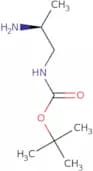
Fórmula:C10H15NOPureza:Min. 95%Peso molecular:165.23 g/mol(S)-1-N-Boc-Propane-1,2-diamine hydrochloride
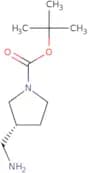
CAS:Please enquire for more information about (S)-1-N-Boc-Propane-1,2-diamine hydrochloride including the price, delivery time and more detailed product information at the technical inquiry form on this pageFórmula:C8H19ClN2O2Pureza:Min. 95%Peso molecular:210.7 g/mol(R)-1-Boc-3-(aminomethyl)pyrrolidine
CAS:Please enquire for more information about (R)-1-Boc-3-(aminomethyl)pyrrolidine including the price, delivery time and more detailed product information at the technical inquiry form on this page
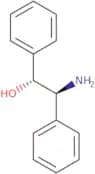
Fórmula:C10H20N2O2Pureza:Min. 95%Peso molecular:200.28 g/mol(1R,2S)-(-)-2-Amino-1,2-diphenylethanol
CAS:Produto ControladoThe compound is a stereoselective amine. The molecule has two diastereomers, one of which is the (1R,2S) configuration and the other of which is the (1S,2R) configuration. The compound is an efficient method for preparing fatty acid esters with aromatic hydrocarbons. The chemical structure of the molecule provides a cavity that can be used to bind with ethyl bromoacetate. This cavity has been shown in x-ray crystal structures to be able to bind with ethyl bromoacetate and provide an efficient method for preparing fatty acid esters with aromatic hydrocarbons.Fórmula:C14H15NOPureza:Min. 95%Peso molecular:213.28 g/molAmmonium carbonate
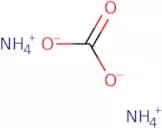
CAS:Ammonium carbonate is an inorganic salt that consists of ammonium ion and carbonate ion. It is a white crystalline solid with a molecular weight of about 166.4 g/mol. Ammonium carbonate is soluble in water, alcohol, acetone, and other organic solvents. It has been used as a buffer solution for pH adjustment and as a source of ammonium ions in analytical chemistry. Ammonium carbonate can be formed by the reaction of sodium carbonate with ammonia gas or liquid ammonia, or the reaction of sodium bicarbonate with ammonia gas or liquid ammonia. The thermal expansion coefficient of ammonium carbonate is higher than those of sodium salts such as sodium chloride and potassium chloride. Electrochemical impedance spectroscopy (EIS) measurements have shown that the reactivity between ammonium carbonate and plasma mass spectrometry is high due to its high values on the electric spectrum graph at low frequencies (1 kHz).Fórmula:CH8N2O3Pureza:Min. 95%Cor e Forma:White SolidPeso molecular:96.09 g/mol2-(2-Methoxyphenoxy)ethylamine base
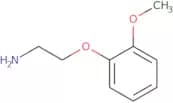
CAS:2-(2-Methoxyphenoxy)ethylamine base is an inorganic base with a hydroxyl group. It is soluble in organic solvents and has been used as a coumarin derivative. 2-(2-Methoxyphenoxy)ethylamine base has shown potential use as an antifungal agent, which may be due to its ability to cause lysis in fungi cells. This compound has also shown in vitro activity against bacteria and viruses, including herpes simplex virus type 1 and HIV-1. The 2-(2-methoxyphenoxy)ethylamine base can be sulfonated or acid catalyzed to produce other derivatives that have potential use as anti-inflammatory or analgesic agents.
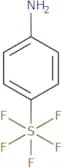
Fórmula:C9H13NO2Pureza:Min. 95%Peso molecular:167.21 g/mol(Oc-6-21)-(4-Aminophenyl)Pentafluoro-Sulfur
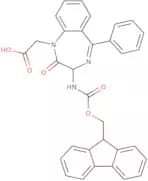
CAS:(Oc-6-21)-(4-Aminophenyl)Pentafluoro-Sulfur is a synthetic chemical that has the molecular formula of CF5SO2NH. It is a five membered heterocycle with an affinity for chloride ions. The compound was synthesized using phenacyl chloride and chlorosulfonyl fluoride in a one step synthesis. This chemical has shown to be an analog of serotonin with hydrogen bonding capabilities. (Oc-6-21)-(4-Aminophenyl)Pentafluoro-Sulfur can act as both a sensor and an electroneutral chlorine ionophore.Fórmula:C6H6F5NSPureza:Min. 95%Peso molecular:219.18 g/molFmoc-(R,S)-3-amino-N-1-carboxymethyl-2-oxo-5-phenyl-1,4-benzodiazepine
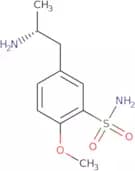
CAS:Produto ControladoPlease enquire for more information about Fmoc-(R,S)-3-amino-N-1-carboxymethyl-2-oxo-5-phenyl-1,4-benzodiazepine including the price, delivery time and more detailed product information at the technical inquiry form on this pageFórmula:C32H25N3O5Pureza:Min. 95%Peso molecular:531.56 g/mol(R)-5-(2-Aminopropyl)-2-methoxybenzenesulfonamide
CAS:Produto Controlado(R)-5-(2-Aminopropyl)-2-methoxybenzenesulfonamide is an amide. It is a hydrochloric acid salt that can regulate the reaction system and introduce filtration, which can be used to separate the components of the reaction system. The kinetic and chiral properties of this compound are derived from Friedel-Crafts reactions with phosphites and Friedel-Crafts reactions with d-alanine. (R)-5-(2-Aminopropyl)-2-methoxybenzenesulfonamide can also catalyze ammonolysis and catalysis with phenoxy.Fórmula:C10H16N2O3SPureza:Min. 95%Cor e Forma:PowderPeso molecular:244.31 g/mol2-Amino-4-bromopyrimidine
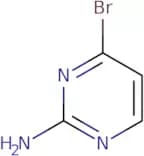
CAS:Please enquire for more information about 2-Amino-4-bromopyrimidine including the price, delivery time and more detailed product information at the technical inquiry form on this page
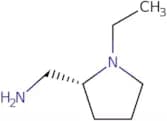
Fórmula:C4H4BrN3Pureza:Min. 95%Cor e Forma:White PowderPeso molecular:174 g/mol(R)-(+)-2-Aminomethyl-1-ethylpyrrolidine
CAS:Please enquire for more information about (R)-(+)-2-Aminomethyl-1-ethylpyrrolidine including the price, delivery time and more detailed product information at the technical inquiry form on this page
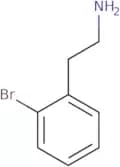
Fórmula:C7H16N2Pureza:Min. 95%Cor e Forma:Clear LiquidPeso molecular:128.22 g/mol2-(2-Bromophenyl)ethanamine
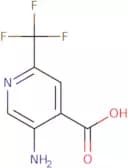
CAS:Produto Controlado2-(2-Bromophenyl)ethanamine is a new and efficient method for the amination of imines with methyl groups. This process involves the use of catalytic amounts of N-bromosuccinimide (NBS) in the presence of 2,6-lutidine to form a cyclic imine intermediate. The reaction is carried out at room temperature and the yield can be as high as 99%. The reaction shown here is an example of an asymmetric amination reaction.Fórmula:C8H10BrNPureza:Min. 95%Cor e Forma:Colorless Clear LiquidPeso molecular:200.08 g/mol5-Amino-2-(trifluoromethyl)isonicotinic acid
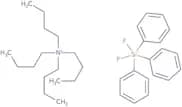
CAS:Please enquire for more information about 5-Amino-2-(trifluoromethyl)isonicotinic acid including the price, delivery time and more detailed product information at the technical inquiry form on this pageFórmula:C7H5F3N2O2Pureza:Min. 95%Peso molecular:206.12 g/molTetrabutylammonium difluorotriphenylsilicate
CAS:Tetrabutylammonium difluorotriphenylsilicate is a model system for studying the mechanism of nucleophilic substitution at an unsymmetrical carbon center. It is used in analytical chemistry to prepare samples for analysis. Tetrabutylammonium difluorotriphenylsilicate has been shown to be an effective and selective reagent for the synthesis of picolinic acid, which can be used as a precursor for the synthesis of nicotinamide riboside, a vitamin B3 derivative. The reaction proceeds via an SN2 mechanism, where hydrogen fluoride (HF) acts as a nucleophile that attacks the electrophilic carbon center of allyl chloride (CH2=CH-CH2Cl) to form an intermediate with two alkyl groups on opposite sides. The reaction product is then hydrolyzed to release tetrabutylammonium chloride (tBuNH4Cl).
Fórmula:C34H51F2NSiPureza:Min. 95%Cor e Forma:White PowderPeso molecular:539.86 g/mol


![2-Amino-3,7,8-trimethyl-3H-imidazo[4,5-f]quinoxaline](/_next/image/?url=https%3A%2Fstatic.cymitquimica.com%2Fproducts%2F3D%2Fthumb-webp%2FFA17506.webp&w=3840&q=75)