Aminas
Subcategorias de "Aminas"
- Nitrosaminas(2.663 produtos)
- Aminas primárias(30.947 produtos)
- Catiões Quaternários de Amónio(1.099 produtos)
- Aminas secundárias(20.887 produtos)
- Aminas terciárias(17.195 produtos)
Foram encontrados 8788 produtos de "Aminas"
Tetramethylrhodamine isothiocyanate - mixed isomers
CAS:Tetramethylrhodamine isothiocyanate - mixed isomers (TMR-MI) is a fluorescent probe that can be used to study the interactions between cells and particles. TMR-MI binds to DNA and RNA molecules and has been used as a model system for studying enzyme inhibition. TMR-MI has also been shown to inhibit bowel disease in animal models, but it is not specific to any one cell type. This compound has been used extensively in biomedical research, including studies of autoimmune diseases, cancer, and tissue culture. It has also been used as a marker for detecting reactive oxygen species in laser ablation experiments in mitochondria. TMR-MI can be used to enhance the detection sensitivity of analytical chemistry measurements.Fórmula:C25H21N3O3SPureza:Min. 95%Cor e Forma:PowderPeso molecular:443.52 g/molN-Methyl-N-[(1-methyl-1H-benzimidazol-2-yl)methyl]amine hydrochloride
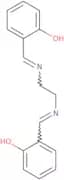
CAS:Produto ControladoPlease enquire for more information about N-Methyl-N-[(1-methyl-1H-benzimidazol-2-yl)methyl]amine hydrochloride including the price, delivery time and more detailed product information at the technical inquiry form on this pageFórmula:C10H13N3Pureza:Min. 95%Peso molecular:175.23 g/molN,N'-Bis(salicylidene)ethylenediamine
CAS:N,N'-Bis(salicylidene)ethylenediamine is a catalyst that belongs to the group of transition metal complexes. It is used in hydrogenation reactions in the presence of a palladium-based catalyst. The coordination geometry is octahedral with two bridging ethylene diamine ligands and one terminal ethylene diamine ligand. The complex has been shown to catalyze the reaction between aryl chlorides and alkynes as well as between alkenes and sulfur dioxide to produce corresponding nitriles. N,N'-Bis(salicylidene)ethylenediamine has also been shown to be active in polymerization reactions and can be used as an effective chiral catalyst for polymer compositions.Fórmula:C16H16N2O2Pureza:Min. 95%Peso molecular:268.31 g/mol2-Methylaminoethanol
CAS:2-Methylaminoethanol is a colorless, water-soluble liquid. It is an alkanolamine that has a dipole moment of 1.8 debye. 2-Methylaminoethanol can be synthesized by reacting potassium dichromate with ethanolamine in the presence of borohydride and ammonia. The reaction yield for this process is about 50%. 2-Methylaminoethanol reacts with maleic acid to form maleate salt. Maleate salt molecules have two amine groups attached to a carbonyl group, which are used as raw materials for the production of various other chemicals like nylon 11, nylon 12, and polyethylene terephthalate (PET). Maleates also serve as intermediates in the manufacture of esters and nitrites from alcohols and phenols. 2-Methylaminoethanol has been shown to cause blood pressure reduction in mammals due to its ability to inhibit vasoconstriction caused byFórmula:C3H9NOPureza:Min. 95%Cor e Forma:Clear LiquidPeso molecular:75.11 g/molAmmonium molybdate
CAS:Ammonium molybdate is a form of the mineral molybdenum that is used as a nutrient in the solution for hepg2 cells. Ammonium molybdate has been shown to inhibit the growth of multi-walled carbon nanotubes, which may be due to its ability to catalyze hydrogen fluoride and zirconium oxide. It also has an inhibitory effect on serine protease (a protein found in many tissues and secretions). The chemical stability of ammonium molybdate has been studied by exposing it to hydrogen fluoride and it was found that this compound is stable at pH levels of around 7.5.Fórmula:H8N2MoO4Pureza:Min. 95%Cor e Forma:White PowderPeso molecular:196.03 g/mol4-Hydroxy-N,N-diethyltryptamine
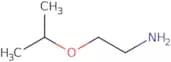
CAS:Produto Controlado4-Hydroxy-N,N-diethyltryptamine (4HT) is a synthetic psychedelic drug that has been shown to cause infected and uninfected cells to produce elastin and chloride. 4HT causes iontophoresis in the dermis, which may be due to its ability to inhibit surfactant production. It has also been shown to have an anti-inflammatory effect. The skin concentration of 4HT is dependent on the area of the body where it is applied and can range from 0.1% in the face to 1% in the back. In addition, 4HT has been shown to be toxic to echinacea and other plants grown in soil containing benzyl alcohol.Fórmula:C14H20N2OPureza:Min. 95%Peso molecular:232.32 g/mol2-Aminoethyl isopropylether
CAS:2-Aminoethyl isopropylether (2-AP) has been shown to have inhibitory effects on the growth of Staphylococcus aureus, Bacillus subtilis and Escherichia coli. It also showed in vitro antifungal activity against Trichophyton mentagrophytes and Candida albicans. 2-AP inhibits the synthesis of unsaturated fatty acids by inhibiting the enzyme enoyl coenzyme A reductase, which is involved in the degradation of fatty acids. 2-AP is metabolized by two pathways: one is through hydrolysis by esterases or glucuronidases, oxidation by cytochrome P450 enzymes, reduction by glutathione reductase, or conjugation with glucuronic acid; the other pathway involves cyclobutanol formation. The cytotoxic effect of 2-AP has been shown to be due to inhibition of protein synthesis and cell divisionFórmula:C5H13NOPureza:Min. 95%Cor e Forma:Clear LiquidPeso molecular:103.16 g/mol5-Amino-8-hydroxyquinoline dihydrochloride
CAS:5-Amino-8-hydroxyquinoline dihydrochloride (5-AQDH) is an anticancer drug that inhibits the activity of survivin, a protein that is overexpressed in cancer cells. It has been shown to be effective in vivo against melanoma tumor growth. 5-AQDH binds to the unpaired cysteine residues of the survivin molecule and inhibits its function by binding to the active site, blocking access to ATP and preventing DNA synthesis. The efficacy of 5-AQDH has been confirmed in vitro by studying the effect on cell viability and DNA synthesis, as well as by measuring plasma mass spectrometry data from melanoma patients. This drug is currently being investigated for its potential use as an anticancer agent.Fórmula:C9H8N2O•(HCl)2Pureza:Min. 95%Peso molecular:212.63 g/mol4-Benzyloxy-3-methoxy-N-methylphenethylamine hydrochloride
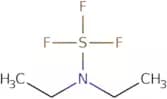
CAS:Produto ControladoPlease enquire for more information about 4-Benzyloxy-3-methoxy-N-methylphenethylamine hydrochloride including the price, delivery time and more detailed product information at the technical inquiry form on this pageFórmula:C17H22ClNO2Pureza:Min. 95%Peso molecular:307.81 g/molDiethylaminosulfur trifluoride
CAS:Diethylaminosulfur trifluoride (DAST) is a reactive chemical that can be used as a methylating agent. It reacts with the hydroxyl group of carotenoids, including β-carotene, to produce x-ray crystal structures with the alcohol methanol solvent. DAST also reacts with 6alkyl and methyl glycosides, such as sucrose, producing a hydroxy derivative. DAST has been shown to have carcinogenic properties in tumor cell lines and is able to induce apoptosis in these cells by damaging their DNA. The use of DAST for cancer treatment can be done through laser ablation or injection into tumors.
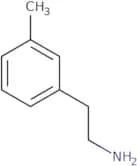
Fórmula:C4H10F3NSPureza:(1H-Nmr) Min. 95%Cor e Forma:Clear LiquidPeso molecular:161.19 g/mol3-Methylphenethylamine
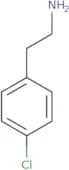
CAS:Produto Controlado3-Methylphenethylamine is a synthetic amine that is used in the production of 3-methylphenethylamine hydrochloride. It has been shown to have a wide range of pharmacological effects, including increasing blood pressure, heart rate, and respiration. This drug also has an antitussive effect and can be used to treat asthma symptoms. 3-Methylphenethylamine can be synthesized by reacting phenylethylamine with formaldehyde and hydrogen chloride gas in the presence of alcohol or sodium hydroxide solution.Fórmula:C9H13NPureza:Min. 95%Peso molecular:135.21 g/mol2-(4-Chlorophenyl)ethylamine
CAS:Produto Controlado2-(4-Chlorophenyl)ethylamine (CPA) is a synthetic serotonergic amine that has inhibitory activities. It is able to bind with the 5-HT receptor, which is also known as the serotonin receptor. CPA has been shown to be an anticancer compound and can be used in experimental solubility studies. This drug binds to brain cells, but does not affect their viability. CPA hydrolyzes in the presence of hydrochloric acid or hydrogen chloride to produce 2-(4-chlorophenyl)ethanol (CPE). The reaction of CPA with serotonin produces 4-chloroamphetamine (PCA), which is a stimulant drug.
Fórmula:C8H10ClNPureza:Min. 95%Peso molecular:155.62 g/mol2-Amino-7-(2,3,4-trimethoxyphenyl)-7,8-dihydroquinazolin-5(6H)-one
CAS:Produto ControladoPlease enquire for more information about 2-Amino-7-(2,3,4-trimethoxyphenyl)-7,8-dihydroquinazolin-5(6H)-one including the price, delivery time and more detailed product information at the technical inquiry form on this pageFórmula:C17H19N3O4Pureza:Min. 95%Peso molecular:329.35 g/mol3,3-Dimethyl-5-oxo-5-(1,2,3,4-tetrahydronaphthalen-2-ylamino)pentanoic acid
CAS:Produto ControladoPlease enquire for more information about 3,3-Dimethyl-5-oxo-5-(1,2,3,4-tetrahydronaphthalen-2-ylamino)pentanoic acid including the price, delivery time and more detailed product information at the technical inquiry form on this pageFórmula:C17H23NO3Pureza:Min. 95%Peso molecular:289.37 g/mol(2-{2-[2-(2-Aminoethyl)-4,5-dimethoxybenzyl]-4,5-dimethoxyphenyl}ethyl)amine dihydrochloride
CAS:Produto ControladoPlease enquire for more information about (2-{2-[2-(2-Aminoethyl)-4,5-dimethoxybenzyl]-4,5-dimethoxyphenyl}ethyl)amine dihydrochloride including the price, delivery time and more detailed product information at the technical inquiry form on this pageFórmula:C21H30N2O4Pureza:Min. 95%Peso molecular:374.47 g/molN-Phenylhydroxylamine
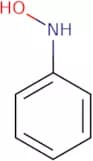
CAS:N-Phenylhydroxylamine is a chemical compound that is used in wastewater treatment. It is a hydrophobic compound that has been shown to irreversibly inhibit the nitrite reductase enzyme, which is responsible for converting nitrite ions into nitrate ions. This reaction mechanism was studied using in vitro assays with picolinic acid and nitrobenzene. N-Phenylhydroxylamine binds to the active site of the enzyme and blocks access by the substrate, preventing it from being converted into its product. The reaction can be reversed by adding hydrogen fluoride, which displaces the N-phenylhydroxylamine molecule from its binding site. N-Phenylhydroxylamine also binds to nitrogen atoms and participates in transfer reactions with other molecules, making it reactive and capable of reacting with other compounds. The sample preparation process should include separating N-phenylhydroxylamine from water samples after extraction because it will react withFórmula:C6H7NOPureza:Min. 95%Cor e Forma:PowderPeso molecular:109.13 g/mol2-(Diethylamino)ethyl acrylate
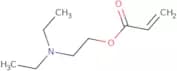
CAS:Produto Controlado2-(Diethylamino)ethyl acrylate is a reactive, film-forming polymer that can be used as a cross-linking agent or additive to coat surfaces and films. It is used in the production of cellulose films and as a protective coating for paper and textile fabrics. 2-(Diethylamino)ethyl acrylate is also used in the manufacture of reactive functional groups by reacting with hydrochloric acid to form diethyl chloroacetate. This chemical is used to make particle films for cell culture. The optimum concentration for 2-(diethylamino)ethyl acrylate is between 0.1% and 1%.Fórmula:C9H17NO2Pureza:Min. 95%Cor e Forma:Colourless To Brown LiquidPeso molecular:171.24 g/molEthyl 7-aminoheptanoate hydrochloride
CAS:Ethyl 7-aminoheptanoate hydrochloride is an antibiotic that belongs to the class of esters. It has been shown to inhibit the growth of bacteria in vitro, which is attributed to its ability to inhibit protein synthesis. This drug has been used as a chemical manipulator in animal experiments. Ethyl 7-aminoheptanoate hydrochloride binds to the ribosomal RNA of bacteria and prevents amino acid incorporation into proteins, which leads to cell death. The endpoint of this experiment was determined by counting the number of rotations on a rotator after treatment with ethyl 7-aminoheptanoate hydrochloride or saline solution. Treatment with ethyl 7-aminoheptanoate hydrochloride resulted in an increase in the number of rotations, which is indicative of bacterial death.Fórmula:C9H20ClNO2Pureza:Min. 95%Peso molecular:209.71 g/mol3-Amino-5-methylisoxazole
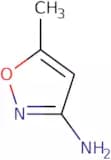
CAS:3-Amino-5-methylisoxazole is a chemical compound that is used in the treatment of wastewater. It belongs to the group of p2, which includes sulfamethoxazole and sulfa drugs. 3-Amino-5-methylisoxazole is activated by multi-walled carbon or fatty acid and has a neutral pH. It has been shown to have significant cytotoxicity against cancer cells and also has antibiotic combinations with other drugs. 3-Amino-5-methylisoxazole is a drug that can be used in chemotherapy, but it may cause drug reactions.
Fórmula:C4H6N2OPureza:Min. 95%Peso molecular:98.1 g/mol6-Methyl-2-pyridinemethanamine
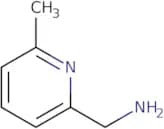
CAS:6-Methyl-2-pyridinemethanamine is an imine that is used in cancer therapy. It has been shown to have antitumor activity at nanomolar concentrations, which is a very low dose. 6-Methyl-2-pyridinemethanamine is not sensitive to the body's enzymes and does not show any signs of toxicity. This drug also has a pharmacokinetic profile that enhances the uptake of other drugs and can be used for the treatment of cancers that are resistant to chemotherapy. The mechanism of action of 6-methyl-2-pyridinemethanamine is constitutive activation, which means it binds to the constitutively active site on the protein target and inhibits its function.Fórmula:C7H10N2Pureza:Min. 95%Peso molecular:122.17 g/mol


![N-Methyl-N-[(1-methyl-1H-benzimidazol-2-yl)methyl]amine hydrochloride](/_next/image/?url=https%3A%2Fstatic.cymitquimica.com%2Fproducts%2F3D%2Fthumb-webp%2FFM117084.webp&w=3840&q=75)






![(2-{2-[2-(2-Aminoethyl)-4,5-dimethoxybenzyl]-4,5-dimethoxyphenyl}ethyl)amine dihydrochloride](/_next/image/?url=https%3A%2Fstatic.cymitquimica.com%2Fproducts%2F3D%2Fthumb-webp%2FFA135464.webp&w=3840&q=75)