


Aminas
Subcategorias de "Aminas"
- Nitrosaminas(2.677 produtos)
- Aminas primárias(30.948 produtos)
- Catiões Quaternários de Amónio(1.098 produtos)
- Aminas secundárias(20.886 produtos)
- Aminas terciárias(17.195 produtos)
Foram encontrados 8786 produtos de "Aminas"
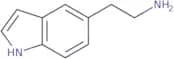
2-(1H-Indol-5-yl)ethanamine
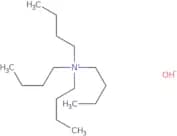
CAS:Produto ControladoPlease enquire for more information about 2-(1H-Indol-5-yl)ethanamine including the price, delivery time and more detailed product information at the technical inquiry form on this pageFórmula:C10H12N2Pureza:Min. 95%Peso molecular:160.22 g/molTetrabutylammonium hydroxide - 40 wt. % aqueous solution
CAS:Picolinic acid is a product of the reaction between sodium salts and tetrabutylammonium hydroxide. It has been shown to have anti-inflammatory properties in chronic arthritis patients and may be due to its ability to inhibit the production of prostaglandins. Picolinic acid also has been shown to inhibit the growth of bacteria, including Mycobacterium tuberculosis, by preventing protein synthesis. The analytical method for picolinic acid is electrochemical impedance spectroscopy with a 5% picolinic acid solution in human serum or other biological sample.
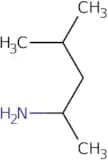
Fórmula:C16H37NOPureza:Min. 95%Cor e Forma:Clear LiquidPeso molecular:259.47 g/mol(1,3-Dimethylbutyl)amine
CAS:Produto Controlado(1,3-Dimethylbutyl)amine is a chemical substance that can be found in dietary supplements. It is structurally similar to amines and has been shown to have an effect on blood pressure. (1,3-Dimethylbutyl)amine has also been reported as being used in the manufacture of medicines for the treatment of heart disease. This chemical substance is produced by the reaction of hydrochloric acid with isovaleric acid. The product is then purified by chromatography and converted into its salt form for use as a dietary supplement. In addition to this, (1,3-Dimethylbutyl)amine is also used in some herbal remedies.Fórmula:C6H15NPureza:Min. 95%Cor e Forma:Clear LiquidPeso molecular:101.19 g/mol2-Aminomethyl-18-crown-6
CAS:2-Aminomethyl-18-crown-6 is a crown ether that can be used to transport molecules across membranes. It has been shown to form ionic or nonionic complexes with single-stranded DNA, as well as having bifunctional properties. It can also be used to immobilize organic molecules on surfaces and can be synthesized in the laboratory by reacting an imine with sodium salts. The crown ethers have the ability to solvate hydrophobic molecules and are able to form hydrogen bonds with water. 2-Aminomethyl-18-crown-6 has been shown to have synergistic effects with other drugs, including antibiotics, due to its ability to bind divalent cations such as magnesium and calcium. This molecule has functional groups that are reactive towards nucleophilic attack, which makes it a good candidate for molecular modeling studies of proteins and peptides.br>br> 2-Aminomethyl-18Fórmula:C13H27NO6Pureza:Min. 94.0 Area-%Cor e Forma:Clear LiquidPeso molecular:293.36 g/mol2-(Trifluoroacetamido)Ethylamine Hydrochloride
CAS:Please enquire for more information about 2-(Trifluoroacetamido)Ethylamine Hydrochloride including the price, delivery time and more detailed product information at the technical inquiry form on this page
Fórmula:C4H7F3N2OPureza:Min. 95%Peso molecular:156.11 g/mol[(6-Chloro-1-isopropyl-1H-benzimidazol-2-yl)methyl]amine dihydrochloride
CAS:Produto ControladoPlease enquire for more information about [(6-Chloro-1-isopropyl-1H-benzimidazol-2-yl)methyl]amine dihydrochloride including the price, delivery time and more detailed product information at the technical inquiry form on this pageFórmula:C11H14ClN3Pureza:Min. 95%Peso molecular:223.7 g/mol1,2-diaminocyclohexane
CAS:1,2-Diaminocyclohexane is a chiral compound with a cyclohexane ring. It is reactive and has been shown to be carcinogenic. It is used in the preparation of other compounds, such as amino acid derivatives and dyes. 1,2-Diaminocyclohexane can also be used as an intermediate for the synthesis of various drugs. This compound has been shown to inhibit transcriptional regulation and to have biochemical properties that are related to cancer. 1,2-Diaminocyclohexane reacts with copper to form a coordination geometry complex with six nitrogen atoms. The reaction mechanism involves the formation of a copper complex that bears an electron-deficient carbon atom in its structure.Fórmula:C6H14N2Pureza:Min. 95%Peso molecular:114.19 g/mol2-(2-Aminothiazol-4-yl)acetic acid HCl
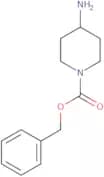
CAS:2-(2-Aminothiazol-4-yl)acetic acid HCl is a white to off-white crystalline solid that is soluble in organic solvents. It is an intermediate used in the synthesis of thiourea derivatives, which are used as pharmaceuticals and agrochemicals. 2-(2-Aminothiazol-4-yl)acetic acid HCl is synthesized by the reaction of 2-aminothiazole with acetic anhydride. The purity can be determined using GC or NMR spectroscopy. Impurities may be removed by recrystallization with a solvent such as chloroform or dichloromethane. The melting point of 2-(2-aminothiazol-4-yl)acetic acid HCl is 147°C (298K). 2-(2-Aminothiazol-4-yl)acetic acid HCl can be purified by distillation atFórmula:C5H7ClN2O2SPureza:Min. 95%Peso molecular:194.64 g/molBenzyl 4-aminopiperidine-1-carboxylate
CAS:Please enquire for more information about Benzyl 4-aminopiperidine-1-carboxylate including the price, delivery time and more detailed product information at the technical inquiry form on this pageFórmula:C13H18N2O2Pureza:Min. 95%Cor e Forma:PowderPeso molecular:234.29 g/mol8-[(2-Hydroxyethyl)(methyl)amino]-1,3,9-trimethyl-3,9-dihydro-1H-purine-2,6-dione
CAS:Produto ControladoPlease enquire for more information about 8-[(2-Hydroxyethyl)(methyl)amino]-1,3,9-trimethyl-3,9-dihydro-1H-purine-2,6-dione including the price, delivery time and more detailed product information at the technical inquiry form on this page
Fórmula:C11H17N5O3Pureza:Min. 95%Peso molecular:267.28 g/molMethylamine thiocyanate
CAS:Produto ControladoMethylamine thiocyanate is a chemical compound that is used in the production of silicone rubber. It can be synthesized by the reaction of methylamine and nitrous acid with a base such as sodium hydroxide or potassium hydroxide. Methylamine thiocyanate has been shown to have synergistic effects with a number of other chemicals, including hydrocarbons, silicates, and perovskites. This compound has also been shown to have a morphology that is dependent on the type of solvent it is mixed in, which can alter its commercialization potential. Methylamine thiocyanate has also been shown to interact with organic solvents and hydrogen bonds.BR>BR>Methylamine thiocyanate undergoes hydrolysis when exposed to water or acids such as hydrochloric acid or sodium hydroxide solution.Fórmula:C2H6N2SPureza:Min. 95%Peso molecular:90.15 g/mol3,5-Dibromopyrazin-2-amine
CAS:3,5-Dibromopyrazin-2-amine is a triethyl orthoformate derivative that reacts with formamide to form 3,5-dibromopyrazine. The reaction time is typically less than 10 minutes and the yield is high. The product can be stored in a dry, inert atmosphere for up to 3 months without degradation. The compound has been shown to inhibit cyclic nucleotide phosphodiesterase (PDE) enzymes and cancer cells in vitro.
Fórmula:C4H3Br2N3Pureza:Min. 95%Cor e Forma:White To Yellow To Orange SolidPeso molecular:252.89 g/molTetramethylrhodamine isothiocyanate - mixed isomers
CAS:Tetramethylrhodamine isothiocyanate - mixed isomers (TMR-MI) is a fluorescent probe that can be used to study the interactions between cells and particles. TMR-MI binds to DNA and RNA molecules and has been used as a model system for studying enzyme inhibition. TMR-MI has also been shown to inhibit bowel disease in animal models, but it is not specific to any one cell type. This compound has been used extensively in biomedical research, including studies of autoimmune diseases, cancer, and tissue culture. It has also been used as a marker for detecting reactive oxygen species in laser ablation experiments in mitochondria. TMR-MI can be used to enhance the detection sensitivity of analytical chemistry measurements.Fórmula:C25H21N3O3SPureza:Min. 95%Cor e Forma:PowderPeso molecular:443.52 g/molDiethylaminosulfur trifluoride
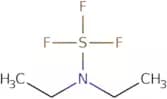
CAS:Diethylaminosulfur trifluoride (DAST) is a reactive chemical that can be used as a methylating agent. It reacts with the hydroxyl group of carotenoids, including β-carotene, to produce x-ray crystal structures with the alcohol methanol solvent. DAST also reacts with 6alkyl and methyl glycosides, such as sucrose, producing a hydroxy derivative. DAST has been shown to have carcinogenic properties in tumor cell lines and is able to induce apoptosis in these cells by damaging their DNA. The use of DAST for cancer treatment can be done through laser ablation or injection into tumors.
Fórmula:C4H10F3NSPureza:(1H-Nmr) Min. 95%Cor e Forma:Clear LiquidPeso molecular:161.19 g/mol(2-{2-[2-(2-Aminoethyl)-4,5-dimethoxybenzyl]-4,5-dimethoxyphenyl}ethyl)amine dihydrochloride
CAS:Produto ControladoPlease enquire for more information about (2-{2-[2-(2-Aminoethyl)-4,5-dimethoxybenzyl]-4,5-dimethoxyphenyl}ethyl)amine dihydrochloride including the price, delivery time and more detailed product information at the technical inquiry form on this pageFórmula:C21H30N2O4Pureza:Min. 95%Peso molecular:374.47 g/molN-Phenylhydroxylamine
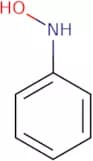
CAS:N-Phenylhydroxylamine is a chemical compound that is used in wastewater treatment. It is a hydrophobic compound that has been shown to irreversibly inhibit the nitrite reductase enzyme, which is responsible for converting nitrite ions into nitrate ions. This reaction mechanism was studied using in vitro assays with picolinic acid and nitrobenzene. N-Phenylhydroxylamine binds to the active site of the enzyme and blocks access by the substrate, preventing it from being converted into its product. The reaction can be reversed by adding hydrogen fluoride, which displaces the N-phenylhydroxylamine molecule from its binding site. N-Phenylhydroxylamine also binds to nitrogen atoms and participates in transfer reactions with other molecules, making it reactive and capable of reacting with other compounds. The sample preparation process should include separating N-phenylhydroxylamine from water samples after extraction because it will react withFórmula:C6H7NOPureza:Min. 95%Cor e Forma:PowderPeso molecular:109.13 g/molMethyl 4-(2-(2-amino-4-oxo-4,7-dihydro-3H-pyrrolo[2,3-d]pyrimidin-5-yl)ethyl)benzoate
CAS:Methyl 4-(2-(2-amino-4-oxo-4,7-dihydro-3H-pyrrolo[2,3-d]pyrimidin-5-yl)ethyl)benzoate is a prodrug that is hydrolyzed to form the active drug pemetrexed disodium. The drug has been shown to be effective for the treatment of cancer and has been used in clinical trials for patients with lung cancer. The conversion of this prodrug to its active form occurs through a hydrolysis reaction at high temperature and by saponification with sodium hydroxide. Methyl 4-(2-(2-amino-4-oxo-4,7-dihydro-3H-pyrrolo[2,3 - d]pyrimidin -5 -yl)ethyl)benzoate can also be converted into its active form by enzymatic action using ester
Pureza:Min. 95%Didecyl dimethyl ammonium chloride - 80% aqueous solution
CAS:Didecyl dimethyl ammonium chloride is a quaternary ammonium compound that has been shown to have a broad-spectrum antimicrobial activity. It has been used in disinfectants and as an active ingredient in pharmaceuticals, cosmetics, and foods. The compound is not toxic to humans or animals at concentrations up to 50%. Didecyl dimethyl ammonium chloride has been shown to be effective against infectious diseases caused by bacteria, viruses, fungi, and protozoa. This compound also has an effect on the epithelial-mesenchymal transition (EMT) process. Didecyl dimethyl ammonium chloride can be prepared by titration calorimetry or analytical method. The preparation of didecyl dimethyl ammonium chloride can be done using chloroform and benzalkonium chloride or glycol ether.
Fórmula:C22H48ClNCor e Forma:Clear LiquidPeso molecular:362.08 g/mol2-Chloro-3,4-dimethoxyphenethylamine HCl
CAS:Produto Controlado2-Chloro-3,4-dimethoxyphenethylamine is an intermediate in the synthesis of zepines. It can be synthesized by reduction of borohydride with 2-chloro-1,2,3,4-tetrahydrobenzaldehyde.Pureza:Min. 95%4-Aminomethylphenylacetic acid
CAS:4-Aminomethylphenylacetic acid is a nonsteroidal anti-inflammatory drug that is used to treat inflammation and pain. It belongs to the class of peptidomimetics, which are compounds that mimic the structure of a natural biological molecule. 4-Aminomethylphenylacetic acid has an analog with a lactam ring at position 3, which is not present in other NSAIDs. This structural difference may contribute to its high stability and low reactivity. 4-Aminomethylphenylacetic acid has been shown to exhibit antiviral activity against viruses such as HIV or Hepatitis C virus by inhibiting viral replication.
Fórmula:C9H11NO2·HClPureza:Min. 95%Peso molecular:201.65 g/mol



![[(6-Chloro-1-isopropyl-1H-benzimidazol-2-yl)methyl]amine dihydrochloride](/_next/image/?url=https%3A%2Fstatic.cymitquimica.com%2Fproducts%2F3D%2Fthumb-webp%2FFC135800.webp&w=3840&q=75)


![8-[(2-Hydroxyethyl)(methyl)amino]-1,3,9-trimethyl-3,9-dihydro-1H-purine-2,6-dione](/_next/image/?url=https%3A%2Fstatic.cymitquimica.com%2Fproducts%2F3D%2Fthumb-webp%2FFH132897.webp&w=3840&q=75)


![(2-{2-[2-(2-Aminoethyl)-4,5-dimethoxybenzyl]-4,5-dimethoxyphenyl}ethyl)amine dihydrochloride](/_next/image/?url=https%3A%2Fstatic.cymitquimica.com%2Fproducts%2F3D%2Fthumb-webp%2FFA135464.webp&w=3840&q=75)
![Methyl 4-(2-(2-amino-4-oxo-4,7-dihydro-3H-pyrrolo[2,3-d]pyrimidin-5-yl)ethyl)benzoate](/_next/image/?url=https%3A%2Fstatic.cymitquimica.com%2Fproducts%2F3D%2Fthumb-webp%2FFM41972.webp&w=3840&q=75)


