Aminas
As aminas são um conjunto de moléculas que contêm um grupo funcional amino (derivado da amônia). Esta categoria inclui aminas em qualquer nível de substituição: primárias, secundárias, terciárias e sais de amônio. As aminas são fundamentais na síntese orgânica e são amplamente utilizadas em produtos farmacêuticos, agroquímicos e ciência dos materiais. Na CymitQuimica, oferecemos uma seleção abrangente de aminas para atender às suas necessidades de pesquisa e industriais. Nossa gama garante acesso a várias aminas para diversos processos químicos e pesquisas inovadoras.
Subcategorias de "Aminas"
- Nitrosaminas(2.605 produtos)
- Aminas primárias(30.947 produtos)
- Catiões Quaternários de Amónio(1.099 produtos)
- Aminas secundárias(20.886 produtos)
- Aminas terciárias(17.193 produtos)
Foram encontrados 8780 produtos de "Aminas"
Ordenar por
Pureza (%)
0
100
|
0
|
50
|
90
|
95
|
100
3-Maleimidopropionylaminomethyl resin (200-400 mesh)
<p>Please enquire for more information about 3-Maleimidopropionylaminomethyl resin (200-400 mesh) including the price, delivery time and more detailed product information at the technical inquiry form on this page</p>Pureza:Min. 95%3-[(Dimethylamino)methyl]-1,2,4-oxadiazol-5-amine hydrochloride
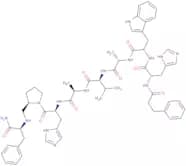
CAS:<p>3-[(Dimethylamino)methyl]-1,2,4-oxadiazol-5-amine hydrochloride is a versatile building block that is used as an intermediate in the synthesis of fine chemicals. It is also a useful scaffold for the synthesis of biologically active compounds and research chemicals. 3-[(Dimethylamino)methyl]-1,2,4-oxadiazol-5-amine hydrochloride can be prepared by reacting methylamine with 2-aminothiophenol in the presence of a base. This reagent is also useful for the preparation of other compounds such as carbamates and cyclic ureas.</p>Fórmula:C5H10N4O•HClPureza:Min. 95%Cor e Forma:PowderPeso molecular:178.62 g/mol(Deamino-Phe19,D-Ala24,D-Pro26-psi(CH2NH)Phe27)-GRP (19-27) (human, porcine, canine) trifluoroacetate salt
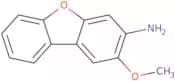
CAS:<p>Please enquire for more information about (Deamino-Phe19,D-Ala24,D-Pro26-psi(CH2NH)Phe27)-GRP (19-27) (human, porcine, canine) trifluoroacetate salt including the price, delivery time and more detailed product information at the technical inquiry form on this page</p>Fórmula:C57H72N14O8Pureza:Min. 95%Peso molecular:1,081.27 g/mol3-Amino-2-methoxy-dibenzofuran
CAS:<p>3-Amino-2-methoxy-dibenzofuran (3AMD) is a cytotoxic agent that is used in the treatment of bladder carcinoma. 3AMD inhibits DNA synthesis, leading to cell death by inhibiting the production of proteins vital for cell division. 3AMD has been shown to be a potent inhibitor of cyclen-dependent kinases and to induce DNA damage in human cells. 3AMD also has significant cytotoxicity against malignant cells and has been shown to inhibit the growth of tumours in mice. 3AMD may have carcinogenic potential due to its structural similarity with other carcinogens such as aniline and aminobiphenyl.</p>Pureza:Min. 95%Peso molecular:213.23 g/molZ-L-alpha-aminobutyric acid
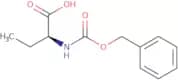
CAS:<p>Z-L-alpha-aminobutyric acid is a homogeneous, optically active, linear phosphinic analogue of alpha-aminobutyric acid. It has been used in the synthesis of phosphinic analogues of cyclosporin and undecapeptides with high yields. The coupling reaction between Z-L-alpha-aminobutyric acid and benzaldehyde was carried out in two steps to produce the desired product. A stepwise condensation between Z-L-alpha-aminobutyric acid and 3,4,5,6 tetrahydropyrimidine was also successful.</p>Fórmula:C12H15NO4Pureza:Min. 98 Area-%Cor e Forma:White PowderPeso molecular:237.25 g/mol(Deamino-Cys11,D-2-Nal 14,Cys18)-b-MSH (11-22) amide trifluoroacetate salt
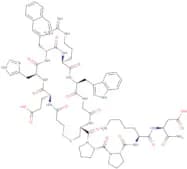
CAS:<p>Please enquire for more information about (Deamino-Cys11,D-2-Nal 14,Cys18)-b-MSH (11-22) amide trifluoroacetate salt including the price, delivery time and more detailed product information at the technical inquiry form on this page</p>Fórmula:C69H91N19O16S2Pureza:Min. 95%Peso molecular:1,506.71 g/mol(2-Amino-2-oxoethoxy)acetic acid
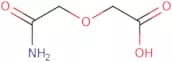
CAS:2-Amino-2-oxoethoxy)acetic acid is a product that can be used as a transport agent in the process of extracting glycosides. It has been shown to have strong adsorption properties and is able to extract glycosides from plant material. 2-Amino-2-oxoethoxy)acetic acid has a high affinity for calcium, which is an important component in the adsorption mechanism.Fórmula:C4H7NO4Pureza:Min. 95%Peso molecular:133.1 g/molN-(Fmoc-5-amino-3-oxa-pentyl)succinamic acid
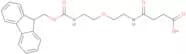
CAS:<p>N-(Fmoc-5-amino-3-oxa-pentyl)succinamic acid is a high quality chemical that is used as an intermediate in the production of pharmaceuticals and other fine chemicals. It is also a reagent for use in peptide synthesis. N-(Fmoc-5-amino-3-oxa-pentyl)succinamic acid has a CAS No. 669073-62-5 and can be used as a useful scaffold for the production of complex compounds. This compound is also useful for research purposes, due to its versatility as a building block with speciality chemical applications.</p>Fórmula:C23H26N2O6Pureza:Min. 95%Peso molecular:426.46 g/mol2-[(5-Chloropyridin-2-yl)amino]-2-oxoacetic acid ethyl ester monohydrochloride
CAS:Intermediate in the synthesis of edoxabanFórmula:C9H9ClN2O3·HClPureza:Min. 95%Peso molecular:265.09 g/molL-2,3-Diaminopropionicacid
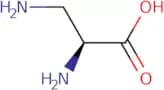
CAS:<p>L-2,3-Diaminopropionic acid is a diamine with an asymmetric carbon atom. It has been used to synthesize antimicrobial peptides and has also shown hemolytic activity in vitro. L-2,3-Diaminopropionic acid is stable when exposed to water vapor, which may make it useful for the treatment of cancer tissues. This molecule has been shown to have significant cytotoxicity against human leukemia cells and is able to inhibit the growth of various bacteria by inhibiting protein synthesis in the ribosome. L-2,3-Diaminopropionic acid also inhibits the enzyme enolase and reduces the production of ATP in cells.</p>Fórmula:C3H8N2O2Pureza:Min. 95%Peso molecular:104.11 g/molN-(3-Dimethylaminopropyl)acrylamide, stabilized with MEHQ
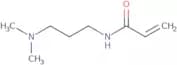
CAS:<p>N-(3-Dimethylaminopropyl)acrylamide is a polymerization initiator that is used in the synthesis of polymers. It is also a model protein, which can be used to study bacterial growth rates and tissue metabolism. N-(3-Dimethylaminopropyl)acrylamide has been shown to have biological properties similar to human serum, as well as to serve as a model for primary cells. The FT-IR spectroscopy of N-(3-Dimethylaminopropyl)acrylamide reveals the presence of chloride ions in its molecular structure. The reaction mechanism for this compound has been determined by deionized water and ionic reactions with chloride ions.</p>Fórmula:C8H16N2OPureza:Min. 95%Peso molecular:156.23 g/molPiroctone olamine
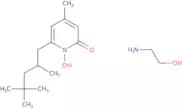
CAS:<p>Piroctone olamine is a detergent composition that has been used to treat skin conditions and in the laboratory as an experimental infection model. It is a fatty acid that belongs to the family of ester compounds, which are antimicrobial agents. Piroctone olamine has been shown to decrease dry weight by inhibiting lipid synthesis. It is also an environmental pollutant that can be found in water, soil, and air. There are no known adverse effects in humans or animals when piroctone olamine is used at low concentrations.</p>Fórmula:C14H23NO2·C2H7NOPureza:Min. 96 Area-%Cor e Forma:PowderPeso molecular:298.42 g/mol4-Hydroxybenzylamine
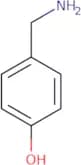
CAS:<p>4-Hydroxybenzylamine is a reactive compound that belongs to the class of amides. It is found in dietary sources and has been shown to have antihypertensive effects. 4-Hydroxybenzylamine is also used as a chemical intermediate in the synthesis of other compounds, such as 4-hydroxybenzoic acid. The mechanism of this reaction involves hydroxylation of the amide nitrogen by an oxidizing agent, such as trifluoroacetic acid, followed by replacement of hydrogen atoms on the carbonyl carbon with a hydroxyl group. The bioavailability of 4-hydroxybenzylamine is low because it is rapidly metabolized in erythrocytes, liver cells, and lung tissue. This metabolite may be responsible for some side effects seen with 4-hydroxybenzylamine therapy, including cardiac arrhythmias and lysinuria.</p>Fórmula:C7H9NOPureza:Min. 95%Cor e Forma:PowderPeso molecular:123.16 g/mol2-Aminoacetophenone hydrochloride
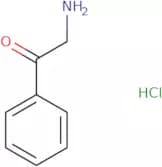
CAS:Produto Controlado<p>2-Aminoacetophenone hydrochloride is a chemical compound that is used in analytical chemistry as a reagent for the determination of protein and amino acid concentrations. This reagent can be prepared in various forms, depending on the type of analysis being performed. 2-Aminoacetophenone hydrochloride is used to determine the concentration of free amino acids in a sample by binding to it. It can also be used for determining the concentration of bound amino acids by reacting with them with hydrochloric acid. 2-Aminoacetophenone hydrochloride is an excellent substrate for matrix effect, which may cause errors in measurement due to interference from other substances present in the sample. The use of light exposure reduces this problem by removing interfering substances from the sample.</p>Fórmula:C8H9NO·HClPureza:Min. 95%Cor e Forma:PowderPeso molecular:171.62 g/mol6-Aminoquinoline
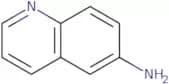
CAS:<p>6-Aminoquinoline is a chemical compound that is used as an intermediate in the synthesis of other compounds. It has been found to be effective in inhibiting the growth of human cancer cells and cell lines by binding to amines, which are important for cell proliferation. 6-Aminoquinoline also inhibits epidermal growth factor (EGF) and its receptor, which may be due to its ability to inhibit the transfer of phosphate groups from ATP to EGF. 6-Nitroquinoline, which is derived from 6-aminoquinoline, has been shown to have antiinflammatory activity.</p>Fórmula:C9H8N2Pureza:Min. 95%Cor e Forma:Yellow PowderPeso molecular:144.17 g/mol(Deamino-Cys1,b-(3-pyridyl)-D-Ala2,Arg8)-Vasopressin trifluoroacetate salt
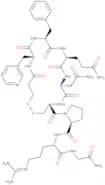
CAS:<p>DDAVP is an analogue of vasopressin, which belongs to the class of inositol phosphates. It is a potent agonist for the V1 receptor and has a higher affinity for this receptor than vasopressin. DDAVP also has antagonist properties at the V2 receptor. The biological activity of DDAVP is mediated by its ability to increase phospholipase A2 activity and cause the release of arachidonic acid from membrane phospholipids. This activation causes an increase in prostaglandin synthesis, leading to increased vascular permeability and hypotension. DDAVP may also have antidiuretic effects due to its antagonism of oxytocin receptors.</p>Fórmula:C45H63N15O11S2Pureza:Min. 95%Peso molecular:1,054.21 g/mol4-Amino-3-hydroxypyridine
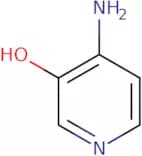
CAS:<p>4-Amino-3-hydroxypyridine is a cholinergic drug that has a dose-proportional profile. This drug has been shown to be clinically relevant in humans, and the clinical studies have demonstrated a clear pharmacokinetic profile. 4-Amino-3-hydroxypyridine is metabolized by carbamic acid to form an active metabolite, which binds acetylcholine receptors on cells. This binding results in increased levels of acetylcholine, which can lead to muscle contraction. The drug also inhibits plasma concentrations of other drugs such as warfarin and phenytoin, which may lead to adverse effects or reduced therapeutic efficacy. 4-Amino-3-hydroxypyridine also has functional groups that make it soluble in water and able to cross the blood–brain barrier. In cell culture experiments, 4-amino-3-hydroxypyridine inhibited the growth of rat striatal neurons.</p>Fórmula:C5H6N2OPureza:Min. 95%Cor e Forma:Off-White PowderPeso molecular:110.11 g/molDABCYL-(Asn670,Leu671)-Amyloid b/A4 Protein Precursor770 (661-675)-EDANS ammonium salt
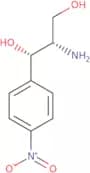
CAS:<p>Please enquire for more information about DABCYL-(Asn670,Leu671)-Amyloid b/A4 Protein Precursor770 (661-675)-EDANS ammonium salt including the price, delivery time and more detailed product information at the technical inquiry form on this page</p>Fórmula:C103H146N22O32SPureza:Min. 95%Peso molecular:2,236.46 g/molL-threo-(+)-2-Amino-1-(4-nitrophenyl)-1,3-propanediol
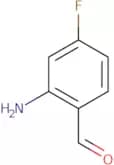
CAS:L-threo-(+)-2-amino-1-(4-nitrophenyl)-1,3-propanediol is a functional group that is composed of a fatty acid and an amino acid. It has been shown to inhibit the growth of corynebacterium glutamicum bacteria by hydrolyzing their cell wall. This compound also inhibits the activity of bacterial enzymes that are involved in the synthesis of proteins. This functional group may be useful for the treatment of chronic lymphocytic leukemia and HIV infection.Fórmula:C9H12N2O4Pureza:Min. 95%Cor e Forma:PowderPeso molecular:212.2 g/mol2-Amino-4-fluorobenzaldehyde
CAS:<p>2-Amino-4-fluorobenzaldehyde is a plant growth regulator that has been shown to be effective at increasing the yield of flowers and fruit crops. It is used as an intermediate in the synthesis of agrochemicals, such as 2-aminobenzaldehyde and anthranilic acid. The biosynthesis of 2-amino-4-fluorobenzaldehyde starts from methanol and intermediates such as anthranilic acid, aminoaldehydes, or alcohols. It can also be produced by oxidative coupling of 2-aminobenzaldehyde with phenylacetone in the presence of sodium hydroxide. 2-Amino-4-fluorobenzaldehyde has been shown to be more efficient than other plant growth regulators such as robinia or aminocyclopentane carboxylic acid (ACC).</p>Fórmula:C7H6FNOPureza:Min. 95%Cor e Forma:SolidPeso molecular:139.13 g/mol


![3-[(Dimethylamino)methyl]-1,2,4-oxadiazol-5-amine hydrochloride](/_next/image/?url=https%3A%2Fstatic.cymitquimica.com%2Fproducts%2F3D%2Fthumb-webp%2FFD135937.webp&w=3840&q=75)
![2-[(5-Chloropyridin-2-yl)amino]-2-oxoacetic acid ethyl ester monohydrochloride](/_next/image/?url=https%3A%2Fstatic.cymitquimica.com%2Fproducts%2F3D%2Fthumb-webp%2FFC63138.webp&w=3840&q=75)