Aminas
Subcategorias de "Aminas"
- Nitrosaminas(2.668 produtos)
- Aminas primárias(30.948 produtos)
- Catiões Quaternários de Amónio(1.099 produtos)
- Aminas secundárias(20.886 produtos)
- Aminas terciárias(17.195 produtos)
Foram encontrados 8788 produtos de "Aminas"
N,N-Diethyl-p-phenylenediamine oxalate
CAS:N,N-Diethyl-p-phenylenediamine oxalate is an oxidant that is used in the production of sintering materials. It is a salt of diethyloxalate and p-phenylenediamine. The reaction products are mainly chlorine and potassium carbonate. This material can be used to produce ozone, which can be used as an oxidizing agent for other materials. Quantification of N,N-diethyl-p-phenylenediamine oxalate can be done using gas chromatography with electron capture detection or mass spectrometry. Kinetic studies have been conducted to determine the time required for the complete conversion of this material to its oxidation products. This process is responsive to changes in pH and ionic strength, as well as temperature, pressure, and concentration of reactants.Fórmula:C10H16N2·C2H2O4Pureza:Min. 95%Peso molecular:418.53 g/mol(3-IMidazol-1-yl-propyl)-[4-(4,4,5,5-tetraMethyl-[1,3,2]dioxaborolan-2-yl)-benzyl]aMine
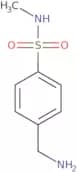
CAS:Please enquire for more information about (3-IMidazol-1-yl-propyl)-[4-(4,4,5,5-tetraMethyl-[1,3,2]dioxaborolan-2-yl)-benzyl]aMine including the price, delivery time and more detailed product information at the technical inquiry form on this pagePureza:Min. 95%4-(Aminomethyl)-N-Methylbenzenesulfonamide
CAS:Please enquire for more information about 4-(Aminomethyl)-N-Methylbenzenesulfonamide including the price, delivery time and more detailed product information at the technical inquiry form on this pageFórmula:C8H12N2O2SPureza:Min. 95%Peso molecular:200.26 g/mol(S)-(-)-1-(4-Merthylphenylethylamine
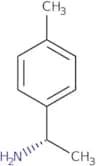
CAS:(S)-(-)-1-(4-Merthylphenylethylamine is a crystalline solid that is soluble in organic solvents. It has a melting point of 159 degrees Celsius and a solubility of 0.3g/mL in water. The compound is used as an intermediate for synthesizing other chemical compounds, such as pharmaceuticals. This chemical has been shown to exhibit photochemical reactions with uv irradiation and high pressure parameters, which are the basis for its use in diffraction studies. The crystals can be monitored using x-ray diffraction studies or x-ray crystallography, which provides information about their structure and molecular parameters.Fórmula:C9H13NPureza:Min. 95%Peso molecular:135.21 g/mol1,6-Bis(tert-butoxycarbonylamino)hexane
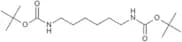
CAS:Please enquire for more information about 1,6-Bis(tert-butoxycarbonylamino)hexane including the price, delivery time and more detailed product information at the technical inquiry form on this pageFórmula:C16H32N2O4Pureza:Min. 95%Peso molecular:316.44 g/mol4-Aminotetrahydropyran
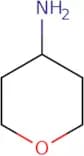
CAS:4-Aminotetrahydropyran is a synthetic chemical that is used as a biochemical reagent. It has been shown to inhibit the ATP-driven efflux pump in Gram-negative bacteria, which causes an increase in intracellular concentration of hydroxide and hydrogen ions. This inhibition leads to an acidic pH, which disrupts the cell membrane and causes cell death. 4-Aminotetrahydropyran has been shown to be a potent inhibitor of the functional groups found on enzymes with transfer mechanisms such as kinases.Fórmula:C5H11NOPureza:Min. 95%Cor e Forma:Clear LiquidPeso molecular:101.15 g/mol(5-Amino-1H-1,2,4-triazol-3-yl)methanol
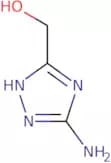
CAS:Please enquire for more information about (5-Amino-1H-1,2,4-triazol-3-yl)methanol including the price, delivery time and more detailed product information at the technical inquiry form on this pageFórmula:C3H6N4OPureza:Min. 95%Peso molecular:114.11 g/mol4-(N-Methyl-N-nitrosamino)-4-(3-pyridyl)butane-1-ol
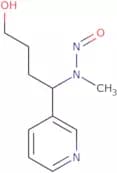
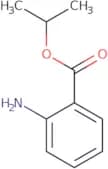
CAS:4-(N-Methyl-N-nitrosamino)-4-(3-pyridyl)butane-1-ol is a chemical that can be found in tobacco smoke. It has been shown that chronic exposure to 4-(N-methyl-N-nitrosamino)-4-(3-pyridyl)butane-1-ol causes cancer in rodents, as evidenced by increased rates of tumorigenesis. This chemical also has the ability to inhibit butyric acid formation, which may reduce the risk of colon cancer. The carcinogenic effect of this chemical is due to its ability to react with DNA and form adducts that cause methylation at C8 position on guanine nucleotide (G). These adducts lead to mutations, which can lead to cancer.Fórmula:C10H15N3O2Pureza:Min. 95%Peso molecular:209.25 g/molIsopropyl 2-aminobenzoate
CAS:Produto ControladoIsopropyl 2-aminobenzoate is a reactive chemical that can be found in tissues. It is used as an intermediate in the synthesis of many compounds, including isopropylamine and cycloaliphatic compounds. Isopropyl 2-aminobenzoate can be metabolized by methylation and oxidation to produce methyl anthranilate, which has been shown to have analgesic properties. This chemical reacts with alkanoic acid to form antinociceptive profiles, which are used for fingerprint identification.Fórmula:C10H13NO2Pureza:Min. 95%Peso molecular:179.22 g/mol2-Aminomethyl-18-crown-6
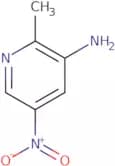
CAS:2-Aminomethyl-18-crown-6 is a crown ether that can be used to transport molecules across membranes. It has been shown to form ionic or nonionic complexes with single-stranded DNA, as well as having bifunctional properties. It can also be used to immobilize organic molecules on surfaces and can be synthesized in the laboratory by reacting an imine with sodium salts. The crown ethers have the ability to solvate hydrophobic molecules and are able to form hydrogen bonds with water. 2-Aminomethyl-18-crown-6 has been shown to have synergistic effects with other drugs, including antibiotics, due to its ability to bind divalent cations such as magnesium and calcium. This molecule has functional groups that are reactive towards nucleophilic attack, which makes it a good candidate for molecular modeling studies of proteins and peptides.br>br> 2-Aminomethyl-18Fórmula:C13H27NO6Pureza:Min. 94.0 Area-%Cor e Forma:Clear LiquidPeso molecular:293.36 g/mol2-Methyl-5-nitropyridin-3-amine
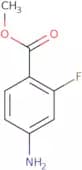
CAS:2-Methyl-5-nitropyridin-3-amine is a heterocyclic compound that is synthesized by the cyclization of 2-methylpyridine with sodium nitrite. The reaction product is hydrolyzed to yield the desired compound, 5-nitropyridine. The synthesis of this compound can be used as a target for organic synthesis.Fórmula:C6H7N3O2Pureza:Min. 95%Peso molecular:153.14 g/molMethyl 4-amino-2-fluorobenzoate
CAS:Please enquire for more information about Methyl 4-amino-2-fluorobenzoate including the price, delivery time and more detailed product information at the technical inquiry form on this page
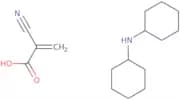
Fórmula:C8H8FNO2Pureza:Min. 95%Peso molecular:169.15 g/molDicyclohexylamine 2-cyanoacrylate
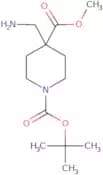
CAS:Produto ControladoPlease enquire for more information about Dicyclohexylamine 2-cyanoacrylate including the price, delivery time and more detailed product information at the technical inquiry form on this pageFórmula:C16H26N2O2Pureza:Min. 95%Peso molecular:278.39 g/molMethyl4-aminomethyl-1-boc-piperidine-4-carboxylate
CAS:Please enquire for more information about Methyl4-aminomethyl-1-boc-piperidine-4-carboxylate including the price, delivery time and more detailed product information at the technical inquiry form on this page
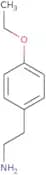
Fórmula:C13H24N2O4Pureza:Min. 95%Peso molecular:272.34 g/mol(4-Ethoxyphenyl)ethylamine
CAS:Produto ControladoPlease enquire for more information about (4-Ethoxyphenyl)ethylamine including the price, delivery time and more detailed product information at the technical inquiry form on this page
Fórmula:C10H15NOPureza:Min. 95%Peso molecular:165.23 g/mol2-Hydroxybenzylamine
CAS:2-Hydroxybenzylamine is a dietary supplement that is used to prevent atherosclerosis and cardiovascular disease. It inhibits the oxidation of fatty acids and decreases the production of reactive oxygen species. This drug has been shown to have an effect on cardiac hypertrophy and blood pressure. 2-Hydroxybenzylamine has been shown to reduce the levels of 4-hydroxybutyric acid, malondialdehyde, and reactive oxygen species in cultured cells. These effects may be due to its ability to inhibit the enzyme fatty acid synthase. 2HBA also has a protective effect against oxidative injury by reducing the release of reactive oxygen species from mitochondria in cultured cells.
Fórmula:C7H9NOPureza:Min. 95%Peso molecular:123.15 g/mol1,3-Thiazol-5-ylmethylamineHydrochloride
CAS:Please enquire for more information about 1,3-Thiazol-5-ylmethylamineHydrochloride including the price, delivery time and more detailed product information at the technical inquiry form on this pageFórmula:C4H7ClN2SPureza:Min. 95%Peso molecular:150.63 g/molBis[(S)-1-phenylethyl]amine
CAS:Bis[(S)-1-phenylethyl]amine (BPEA) is an amide that is used as a synthetic intermediate in the process of alkylating and halogenating amines. BPEA is prepared by reacting phenethylamine with chloroacetic acid and phosphorous trichloride. It has been shown to have high efficiency in this reaction, with little impurities and a high yield. The product of this reaction can be purified using recrystallization or preparative thin-layer chromatography. BPEA is a ligand that contains a stereogenic center, which allows for the preparation of chiral compounds with great stereoselectivity. This synthetic intermediate can be used to prepare organometallic compounds in the presence of a phosphite ligand.
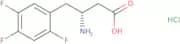
Fórmula:C16H19NPureza:Min. 95%Peso molecular:225.33 g/mol(R)-3-Amino-4-(2,4,5-trifluorophenyl)butanoic acid hydrochloride
CAS:Please enquire for more information about (R)-3-Amino-4-(2,4,5-trifluorophenyl)butanoic acid hydrochloride including the price, delivery time and more detailed product information at the technical inquiry form on this page
Fórmula:C10H10F3NO2·HClPureza:Min. 95%Peso molecular:269.65 g/molDinonylamine
CAS:Dinonylamine is an industrial chemical that is used as a solvent for waxes and resins. It has been used as a substrate film for the production of polycarbonate plastics and in the manufacture of amines, nitroaromatic compounds, and fluoropolymers. Dinonylamine has been shown to have an inhibitory effect on the growth of microorganisms by reacting with their aromatic hydrocarbons. This chemical reacts with carbonyl groups to form hydroxyl groups, which are toxic to bacteria. It also reacts with radiation to form a patterned surface that can be used to immobilize enzymes or other proteins.br>br> br>br> Dinonylamine is used in industrial processes as a precursor for amines and hydroxy groups, which are important components in many organic molecules including pharmaceuticals. These reactions take place in solvent vapor phase reaction vessels at high temperatures.br>br> br>br> Din
Fórmula:C18H39NPureza:Min. 95%Cor e Forma:PowderPeso molecular:269.51 g/mol

![(3-IMidazol-1-yl-propyl)-[4-(4,4,5,5-tetraMethyl-[1,3,2]dioxaborolan-2-yl)-benzyl]aMine](/_next/image/?url=https%3A%2Fstatic.cymitquimica.com%2Fproducts%2F3D%2Fthumb-webp%2FFI39774.webp&w=3840&q=75)



![Bis[(S)-1-phenylethyl]amine](/_next/image/?url=https%3A%2Fstatic.cymitquimica.com%2Fproducts%2F3D%2Fthumb-webp%2FFB168367.webp&w=3840&q=75)