Ciano-, Nitrilo-
Os compostos ciano e nitrilo são moléculas orgânicas que contêm grupos ciano (C≡N) ou nitrilo em sua estrutura, caracterizadas pela presença de nitrogênio. Esses grupos desempenham papéis importantes em várias reações químicas e aplicações industriais. Nesta categoria, você encontrará uma ampla gama de compostos ciano e nitrilo, variando de estruturas simples a complexas. Na CymitQuimica, oferecemos compostos ciano e nitrilo de alta qualidade adaptados para atender às necessidades de pesquisa e industriais. Nossos compostos são adequados para uma variedade de aplicações de síntese e análise.
Foram encontrados 9618 produtos de "Ciano-, Nitrilo-"
Ordenar por
Pureza (%)
0
100
|
0
|
50
|
90
|
95
|
100
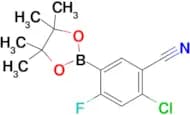
2-Chloro-4-fluoro-5-(4,4,5,5-tetramethyl-1,3,2-dioxaborolan-2-yl)benzonitrile
CAS:Fórmula:C13H14BClFNO2Pureza:95.0%Cor e Forma:SolidPeso molecular:281.529-Ethyl-8-iodo-6,6-dimethyl-11-oxo-6,11-dihydro-5H-benzo[b]carbazole-3-carbonitrile
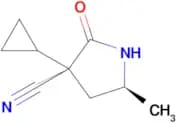
CAS:Pureza:98%Peso molecular:440.28399658203125(3r,5s)-3-Cyclopropyl-5-methyl-2-oxo-pyrrolidine-3-carbonitrile
CAS:Pureza:98%Peso molecular:164.20799255371094[4-(1-benzofuran-2-yl)-1,3-thiazol-2-yl]acetonitrile
CAS:Pureza:95.0%Peso molecular:240.279998779296882-Amino-4-phenyl-5,6,7,8-tetrahydro-quinoline-3-carbonitrile
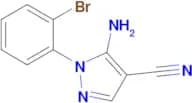
CAS:Pureza:95.0%Cor e Forma:SolidPeso molecular:249.317001342773445-Amino-1-(2-bromophenyl)-1H-pyrazole-4-carbonitrile
CAS:Pureza:95.0%Peso molecular:263.09799194335942,2-Diphenylcyclopropanecarbonitrile
CAS:Pureza:95.0%Cor e Forma:Liquid, No data available.Peso molecular:219.287002563476562-[(3Z)-1-(ethanesulfonyl)piperidin-3-ylidene]acetonitrile
CAS:Pureza:97.0%Peso molecular:214.27999877929688Ref: 10-F519455
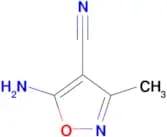
1gA consultar5gA consultar10gA consultar100mgA consultar250mgA consultar500mgA consultar5-Amino-3-methylisoxazole-4-carbonitrile
CAS:Fórmula:C5H5N3OPureza:97%Cor e Forma:SolidPeso molecular:123.1152-[Cyano(4-fluorophenyl)methyl]benzonitrile
CAS:Fórmula:C15H9FN2Pureza:95.0%Cor e Forma:SolidPeso molecular:236.2499-(Diethylamino)-5-oxo-5H-benzo[a]phenoxazine-6-carbonitrile
CAS:Pureza:95+%Peso molecular:343.3859863281252-Bromo-4-nitrobenzonitrile
CAS:<p>2-Bromo-4-nitrobenzonitrile is a chemical compound that can be used to study the relationship between genetic polymorphism and chromosome structure. This compound has been found to induce polyploidy in Brassica plants, which may have implications for the evolution of these species. 2-Bromo-4-nitrobenzonitrile also has been shown to be a useful marker for phylogenetic and ecological studies of Lepidium species. The compound is diploid in nature, but can be used as a matrix in tetraploid plants.</p>Fórmula:C7H3BrN2O2Pureza:Min. 95%Cor e Forma:PowderPeso molecular:227.02 g/molPyridine-3-acetonitrile
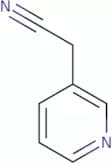
CAS:<p>Pyridine-3-acetonitrile is a coordination complex that can be used for the treatment of diabetes. It has been shown to have a high affinity for plasma glucose and to be selective for biological samples containing amino acids, such as proteins. The molecule is able to bind with carbon disulphide in order to form the active methylene, which has been shown to be an effective bifunctional ligand. The compound has also been shown to have a ph optimum of 9.8 - 10.2 and exhibits an atomic orbital with a molecular electrostatic potential of 0.5 eV. Pyridine-3-acetonitrile binds strongly to nucleophilic groups, such as amines and hydroxyls, making it suitable for use as a ligand in metal complexes. This compound may also have some interesting properties related to its morphology, which can be further investigated using functional theory and molecular electrostatic potential.br>br> br>br></p>Fórmula:C7H6N2Pureza:Min. 95%Cor e Forma:Clear LiquidPeso molecular:118.14 g/mol4-Amino-3-nitrobenzylamine hydrochloride
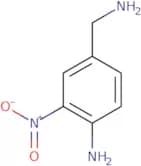
CAS:<p>4-Amino-3-nitrobenzylamine hydrochloride is a potential vanilloid receptor antagonist with potent antagonistic activities. It has been shown to inhibit the activation of neuronal TRPV1 receptors, as well as the uptake of 4-aminobenzoic acid (4-BA) in rat brain synaptosomes. In addition, this compound can be used to optimize drug structure, acting as an amide and alkyl groups. 4-Amino-3-nitrobenzylamine hydrochloride binds to the vanilloid receptor TRPV1 and blocks its activation. This prevents the release of proinflammatory substances that are responsible for pain, inflammation, and tissue injury.</p>Fórmula:C7H9N3O2·HClPureza:Min. 95%Cor e Forma:PowderPeso molecular:203.63 g/mol2-Methoxyphenylacetonitrile
CAS:<p>2-Methoxyphenylacetonitrile is a chemical that is used in the manufacture of pharmaceuticals. It has antibacterial activity and can be used to treat typhoid fever, staphylococcal infections, and mental disorders such as schizophrenia. 2-Methoxyphenylacetonitrile is an alkylating agent that reacts with nucleophiles in proteins, DNA, and RNA. These reactions lead to the destruction of the bacterial cell wall and inhibition of protein synthesis. The mechanism by which 2-methoxyphenylacetonitrile exerts its antibacterial effect may involve formation of a reactive intermediate that inhibits bacterial ribonucleotide reductase. The addition of an electron to this intermediate leads to the formation of a covalent bond with one or more amino acids in the protein acceptor, thereby preventing further growth and division of bacteria.</p>Fórmula:C9H9NOPureza:Min. 90%Cor e Forma:White PowderPeso molecular:147.17 g/mol5-Cyano-DL-tryptophan
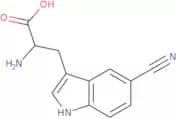
CAS:<p>5-Cyano-DL-tryptophan is an antimicrobial peptide that exhibits potent antimicrobial activity against Gram-positive and Gram-negative bacteria. It also has a high affinity for the bacterial ribosome, which leads to inhibition of protein synthesis. 5-Cyano-DL-tryptophan can be synthesized by dehydration of tryptophan in a model system. The molecule is an analog of the natural amino acid tryptophan and has fluorescence properties that are sensitive to hydration levels. 5-Cyano-DL-tryptophan binds to the peptide binding site on the ribosome and induces a frequency shift in its fluorescence emission spectrum when bound. This property makes it a useful tool for studying peptide binding sites on the ribosome.</p>Fórmula:C12H11N3O2Pureza:Min. 95%Cor e Forma:Yellow PowderPeso molecular:229.23 g/mol3-Cyano-5-bromopyridine
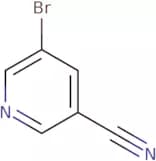
CAS:<p>3-Cyano-5-bromopyridine is an enantiopure organic compound that belongs to the group of halides. It is a functional group that is a reagent in organic synthesis, and it can be used as a precursor to dyestuffs. 3-Cyano-5-bromopyridine has been shown to have antimicrobial activity against bacteria and fungi. It also has a metabotropic glutamate receptor subtype selective affinity, which may be due to its ability to bind with glutamate in complex molecules.</p>Fórmula:C6H3BrN2Pureza:Min. 95%Cor e Forma:White To Beige To Light (Or Pale) Yellow SolidPeso molecular:183.01 g/mol1-Isocyanoadamantane
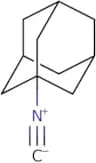
CAS:<p>1-Isocyanoadamantane is a compound that exhibits anti-influenza drug activity. It has been shown to inhibit virus replication by interacting with the active site of the influenza virus ribonucleoprotein (RNP) and inhibiting the synthesis of viral proteins. 1-Isocyanoadamantane binds to the RNP through coordination chemistry, which is mediated by nitrogen atoms on the amides and amines in its structure. The reaction mechanism for 1-isocyanoadamantane consists of two steps: reductive elimination followed by functional group activation. In this process, an amide or an amine is eliminated as a hydrogen atom, while a functional group reacts with it to form a new bond.</p>Fórmula:C11H15NPureza:Min. 95%Cor e Forma:White PowderPeso molecular:161.24 g/mol2,4,6-Trimethoxybenzonitrile
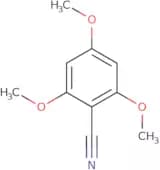
CAS:<p>2,4,6-Trimethoxybenzonitrile is a ligand that forms coordination complexes with metal ions. It can be used to make N-oxide compounds and reaction products with aryl chlorides. The 2,4,6-trimethoxybenzonitrile ligand has been shown to form cross-coupling complexes with benzotriazolyl. This compound is soluble in organic solvents and has a vapor pressure of 0.0025 mm Hg at 25°C. The molecular weight of this compound is 196.2 g/mol and its melting point is 190°C. 2,4,6-Trimethoxybenzonitrile has a symmetric molecule in the gas phase and an asymmetric molecule in solution due to the interactions of hydrogen bonding and van der Waals forces.</p>Fórmula:C10H11NO3Pureza:Min. 95%Cor e Forma:PowderPeso molecular:193.2 g/mol3-Cyano-4-methoxybenzoicacid
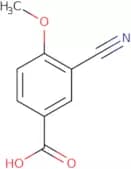
CAS:<p>3-Cyano-4-methoxybenzoic acid is a white crystalline solid that is soluble in water. This compound is a useful intermediate for the synthesis of other organic compounds, as well as a useful scaffold for the synthesis of complex compounds. 3-Cyano-4-methoxybenzoic acid also has potential use as a research chemical, and can be used as an effective building block for the preparation of fine chemicals.<br>3-Cyano-4-methoxybenzoic acid may be used to produce speciality chemicals such as pharmaceuticals, dyes, pesticides, and perfumes. It can also be used to synthesize compounds with diverse functionalities.</p>Fórmula:C9H7NO3Pureza:Min. 95%Cor e Forma:SolidPeso molecular:177.16 g/mol2-Cyano-5-fluorobenzoic acid ethyl ester
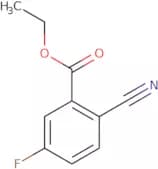
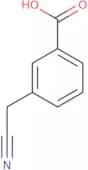
CAS:<p>2-Cyano-5-fluorobenzoic acid ethyl ester is a chemical compound with the formula C6H4(COOCH2)2FO. The compound is an intermediate in the synthesis of other chemicals, such as pharmaceuticals. It is also used as a building block in other syntheses. 2-Cyano-5-fluorobenzoic acid ethyl ester has been assigned CAS No. 1260751-65-2 and is useful in organic synthesis because it is a versatile building block, complex compound, and fine chemical.</p>Fórmula:C10H8FNO2Pureza:Min. 95%Peso molecular:193.17 g/mol3-(Cyanomethyl)benzoic acid
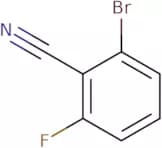
CAS:<p>3-(Cyanomethyl)benzoic acid is a useful building block that is used as a reagent in the production of pharmaceuticals and research chemicals. It is also used as a speciality chemical and as a high-quality fine chemical. This compound has versatile uses, including reactions with other chemicals to form complex compounds, and can be used as a reaction component or an intermediate in the synthesis of other chemicals. 3-(Cyanomethyl)benzoic acid has no known toxicity and its CAS number is 5689-33-8.</p>Fórmula:C9H7NO2Pureza:Min. 95%Cor e Forma:PowderPeso molecular:161.16 g/mol2-Bromo-6-fluorobenzonitrile
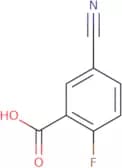
CAS:<p>2-Bromo-6-fluorobenzonitrile is an organic compound with a molecular formula of C6H3BrF. It is a colorless liquid that is used as a precursor in the synthesis of other compounds. 2-Bromo-6-fluorobenzonitrile has been shown to be an efficient fluorophore and can be activated by electron transfer, thermally, or chemically. 2-Bromo-6-fluorobenzonitrile also has a quantum efficiency of 0.5% and transport properties that make it ideal for fluorescence microscopy. The fluorescence intensity of 2-bromo-6-fluorobenzonitrile is proportional to the amount of energy absorbed, which makes it useful for quantifying the concentration of fluorescent molecules in solution. 2-Bromo-6-fluorobenzonitrile has also been shown to have high quantum yields and high efficiency levels when</p>Fórmula:C7H3BrFNPureza:Min. 95%Cor e Forma:PowderPeso molecular:200.01 g/mol5-Cyano-2-fluorobenzoic acid
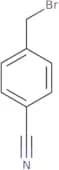
CAS:<p>5-Cyano-2-fluorobenzoic acid is a macrocyclization agent that is used in the synthesis of 16-membered macrocycles. It is a nucleophilic reagent that reacts with an electrophile to form a 5,5'-bifluoro-2,2'-dioxodibenzofuranone. This reaction can be performed under mild conditions and proceeds via a 1,4-addition mechanism. The product has two stereogenic centers and four stereoisomers that are formed by the relative configuration of these centers. 5-Cyano-2-fluorobenzoic acid also has application in the clinic as an analogue for fluoroquinolones.</p>Fórmula:C8H4FNO2Pureza:Min. 95%Cor e Forma:PowderPeso molecular:165.12 g/mol4-Cyanobenzyl bromide
CAS:<p>4-Cyanobenzyl bromide is a chemical compound that is stable in the presence of hydrogen bonds and with a palladium-catalyzed coupling reaction. It has been shown to react with amines to form an azobenzene, which is a fluorescent compound. 4-Cyanobenzyl bromide reacts with x-ray diffraction data and molecular modeling to form halides and hydroxy groups. The mechanism of this reaction is not yet known, but it appears that the initial step involves the formation of a hydrogen bond between the 4-cyanobenzyl group and the amine. Magnetic resonance spectroscopy has confirmed that hippuric acid can be formed from this reaction as well.</p>Fórmula:C8H6BrNPureza:Min. 95%Cor e Forma:PowderPeso molecular:196.04 g/mol3-Cyanophenylboronic acid
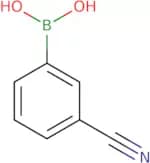
CAS:<p>3-Cyanophenylboronic acid is an organic compound that has been shown to have antimicrobial activity against Pseudomonas aeruginosa. The synthetic pathway of this compound begins with the benzamidine, which reacts with dibutyltin oxide to form 3-cyanophenylboronic acid. This molecule can then be reacted with a cationic polymerization agent such as polyethyleneimine or polyallylamine, producing a polymerized product. When tested in humans, 3-cyanophenylboronic acid showed a high oral bioavailability and low plasma protein binding. It also has a short serum half-life and is metabolized by serine proteases in the liver.</p>Fórmula:C7H6BNO2Pureza:Min. 95%Cor e Forma:PowderPeso molecular:146.94 g/mol1,2-Diphenyl-1-cyanoethylene
CAS:<p>1,2-Diphenyl-1-cyanoethylene is a molecule that is involved in the cancer process. It has been shown to inhibit the growth of skin cancer cells and other types of cancer cells by binding to mitochondria and inhibiting the formation of proton gradients across mitochondrial membranes. This inhibition leads to a decrease in cellular ATP production and an increase in reactive oxygen species (ROS), resulting in cell death. 1,2-Diphenyl-1-cyanoethylene also has anticancer activity due to its ability to induce light emission from the skin and interfere with the optical properties of holothuria, which are sea cucumbers.</p>Fórmula:C15H11NPureza:Min. 95%Cor e Forma:PowderPeso molecular:205.25 g/mol4-Amino-2-cyanotoluene
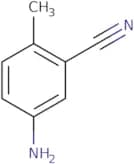
CAS:<p>4-Amino-2-cyanotoluene is a quinazoline compound that inhibits the synthesis of thymine, which is necessary for DNA replication. This compound binds to the enzyme thymidylate synthetase, thereby inhibiting the synthesis of thymine. The inhibitory effect has been shown in a study using calf thymus DNA. 4-Amino-2-cyanotoluene also inhibits the synthesis of other nucleic acids such as adenine and guanine.</p>Fórmula:C8H8N2Pureza:Min. 95%Cor e Forma:PowderPeso molecular:132.16 g/molBenzylamine
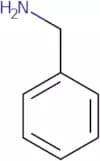
CAS:<p>Substrate of benzylamine oxidase and monoamine oxidase B</p>Fórmula:C7H9NPureza:Min. 98.0 Area-%Cor e Forma:Colorless Slightly Yellow Clear LiquidPeso molecular:107.15 g/molN-Cyanopiperidine
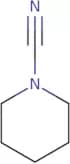
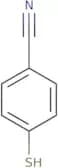
CAS:<p>N-Cyanopiperidine is a cyclohexane ring with a trifluoroacetic acid group. It is used in the synthesis of pharmaceutical preparations and has been shown to be stable in low-energy environments, such as when mixed with glycol ethers or chlorides. N-Cyanopiperidine is also used as an intermediate for the preparation of other compounds, such as metal carbonyl complexes and derivatives. N-Cyanopiperidine can be synthesized by reacting anhydrous hydrogen cyanide with piperidinium chloride in the presence of metal hydroxides. This reaction mechanism is known to produce two products: 1) a stable complex with a metal ion, and 2) a reaction product that contains the desired product and hydrogen cyanide.</p>Fórmula:C6H10N2Pureza:Min. 95%Cor e Forma:PowderPeso molecular:110.16 g/mol4-Mercaptobenzonitrile
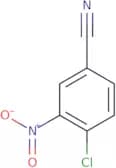
CAS:<p>4-mercaptobenzonitrile (4MBN) is a typical compound used in many spectroscopic experiments. The addition of 4-mercaptobenzonitrile to metal surfaces is used to create self-assembled monolayers with metals. For numerous reasons, it can difficult to immbolize certain chemical groups on surfaces. The addition of 4-mercaptobenzonitrile forms a modified metal surface that enhances technique sensitivity and serves as tool for a better understanding of the interfaces. In recent years, the use of 4-mercaptobenzonitrile together with other molecules on metal nanoparticles has been explored for biomedicinal purposes, serving as a tool for creating surface-enhanced Raman scattering tags (SER tags), useful as cancer biomarker imaging (Li, 2018).</p>Fórmula:C7H5NSPureza:Min. 95%Cor e Forma:PowderPeso molecular:135.19 g/mol4-Chloro-3-nitrobenzonitrile
CAS:<p>4-Chloro-3-nitrobenzonitrile is a molecule with potent antibacterial activity. It is synthesized by the reaction of sodium carbonate, hydrogen chloride, and 4-chlorobenzonitrile. 4-Chloro-3-nitrobenzonitrile has shown antimicrobial properties against a wide range of bacteria, including methicillin resistant Staphylococcus aureus (MRSA) and Enterococcus faecium. This compound has been used in the treatment of infections caused by these bacteria. 4-Chloro-3-nitrobenzonitrile also has the ability to inhibit the synthesis of fatty acids and lipids in bacterial cells, which may be responsible for its antimicrobial effects.</p>Fórmula:C7H3ClN2O2Pureza:Min. 95%Cor e Forma:PowderPeso molecular:182.56 g/mol2'-Cyano-4-(dibromomethyl)biphenyl
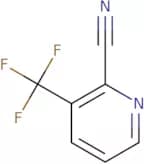
CAS:<p>2'-Cyano-4-(dibromomethyl)biphenyl is a reactive component that belongs to the group of speciality chemicals. It can be used as a building block in organic synthesis and as an intermediate in the production of fine chemicals. 2'-Cyano-4-(dibromomethyl)biphenyl has been used for the synthesis of various complex compounds, such as an anti-inflammatory drug, an anti-diabetic drug, and a chemotherapeutic agent.</p>Fórmula:C14H9Br2NPureza:Min. 97 Area-%Cor e Forma:Off-White PowderPeso molecular:351.04 g/mol2-Cyano-3-trifluoromethylpyridine
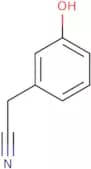
CAS:<p>2-Cyano-3-trifluoromethylpyridine is a fine chemical that is used as a versatile building block in the synthesis of complex compounds. It can be used as an intermediate in research chemicals, reaction components, and speciality chemicals. 2-Cyano-3-trifluoromethylpyridine is a high quality reagent that can be used for the synthesis of various derivatives. It is also a useful scaffold for the development of new drugs and other chemical compounds.</p>Fórmula:C7H3F3N2Pureza:Min. 95%Cor e Forma:liquid.Peso molecular:172.11 g/mol3-Hydroxyphenylacetonitrile
CAS:<p>3-Hydroxyphenylacetonitrile is a molecule that is the precursor for a number of isothiocyanates, which are phytochemicals with antibacterial properties. It has been shown to have inhibitory effects on dopamine hydroxylase, an enzyme that catalyzes the conversion of dopamine to norepinephrine and epinephrine. 3-Hydroxyphenylacetonitrile also inhibits the activity of other active enzymes such as cytochrome P450. The inhibition of these enzymes by 3-hydroxyphenylacetonitrile may be responsible for its antibacterial properties. This molecule is inactivated by cyanides, which leads to its inability to produce any isothiocyanates. Kinetic studies show that 3-hydroxyphenylacetonitrile saturates at high concentrations, leading to decreased production of cyanide.</p>Fórmula:C8H7NOPureza:Min. 95%Cor e Forma:PowderPeso molecular:133.15 g/mol3-Hydroxybenzylamine hydrochloride
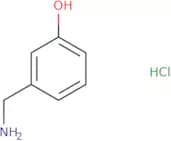
CAS:<p>3-Hydroxybenzylamine hydrochloride (3HBH) is a chemical compound that has been used as a reagent and in the synthesis of other compounds. It is also known to be a useful scaffold for complex compounds, and can be used as a building block for the synthesis of fine chemicals. 3HBH has been found to have many applications in research, such as being an intermediate for pharmaceuticals, pesticides, dyes, and agrochemicals. 3HBH is also useful in organic syntheses where it has been found to react with nitriles and amides to form esters and amides respectively.</p>Fórmula:C7H9NO·HClPureza:Min. 95%Cor e Forma:PowderPeso molecular:159.61 g/mol3-Cyanocinnamic acid
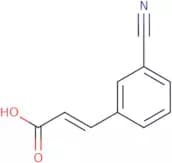
CAS:<p>3-Cyanocinnamic acid is a reactive, unreactive, and stepwise cycloaddition compound. It can participate in photochemical reactions with other compounds to form photodimers. 3-Cyanocinnamic acid has an optimal reaction temperature of 100°C and a reaction time of 5 minutes. The diradical nature of 3-cyanocinnamic acid makes it sensitive to UV light, and the photochemical reactions are simulated by quantum mechanics calculations. Photodimerisation simulations show that 3-cyanocinnamic acid is capable of forming photodimers with 2-cyanocinnamic acid or 4-cyanocinnamic acid at room temperature.</p>Fórmula:C10H7NO2Pureza:Min. 95%Cor e Forma:PowderPeso molecular:173.17 g/mol


![9-Ethyl-8-iodo-6,6-dimethyl-11-oxo-6,11-dihydro-5H-benzo[b]carbazole-3-carbonitrile](/_next/image/?url=https%3A%2Fstatic.cymitquimica.com%2Fproducts%2F10%2Fthumb-webp%2FF789130.webp&w=3840&q=75)
![4-(6-fluoroimidazo[1,2-a]pyridin-2-yl)benzonitrile](/_next/image/?url=https%3A%2Fstatic.cymitquimica.com%2Fproducts%2F10%2Fthumb-webp%2FF517937.webp&w=3840&q=75)
![[4-(1-benzofuran-2-yl)-1,3-thiazol-2-yl]acetonitrile](/_next/image/?url=https%3A%2Fstatic.cymitquimica.com%2Fproducts%2F10%2Fthumb-webp%2FF495412.webp&w=3840&q=75)

![[4-(1-adamantyl)-1,3-thiazol-2-yl]acetonitrile](/_next/image/?url=https%3A%2Fstatic.cymitquimica.com%2Fproducts%2F10%2Fthumb-webp%2FF348415.webp&w=3840&q=75)


![4''-Propyl-[1,1':4',1''-terphenyl]-4-carbonitrile](/_next/image/?url=https%3A%2Fstatic.cymitquimica.com%2Fproducts%2F10%2Fthumb-webp%2FF624453.webp&w=3840&q=75)

![2-[(3Z)-1-(ethanesulfonyl)piperidin-3-ylidene]acetonitrile](/_next/image/?url=https%3A%2Fstatic.cymitquimica.com%2Fproducts%2F10%2Fthumb-webp%2FF519455.webp&w=3840&q=75)
![4H-Benzo[4,5]imidazo[1,2-b]pyrazole-3-carbonitrile](/_next/image/?url=https%3A%2Fstatic.cymitquimica.com%2Fproducts%2F10%2Fthumb-webp%2FF232758.webp&w=3840&q=75)
![2-[Cyano(4-fluorophenyl)methyl]benzonitrile](/_next/image/?url=https%3A%2Fstatic.cymitquimica.com%2Fproducts%2F10%2Fthumb-webp%2FF010070.webp&w=3840&q=75)
![9-(Diethylamino)-5-oxo-5H-benzo[a]phenoxazine-6-carbonitrile](/_next/image/?url=https%3A%2Fstatic.cymitquimica.com%2Fproducts%2F10%2Fthumb-webp%2FF760018.webp&w=3840&q=75)

![1-(BENZO[D]THIAZOL-2-YL)CYCLOPROPANECARBONITRILE](/_next/image/?url=https%3A%2Fstatic.cymitquimica.com%2Fproducts%2F10%2Fthumb-webp%2FF305602.webp&w=3840&q=75)