Ciano-, Nitrilo-
Foram encontrados 9677 produtos de "Ciano-, Nitrilo-"
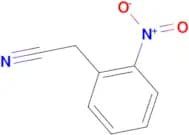
2-(2-Nitrophenyl)acetonitrile
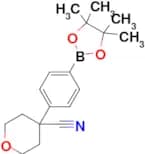
CAS:Fórmula:C8H6N2O2Pureza:95%Cor e Forma:Solid, Yellow powderPeso molecular:162.1484-(4-(4,4,5,5-Tetramethyl-1,3,2-dioxaborolan-2-yl)phenyl)tetrahydro-2H-pyran-4-carbonitrile
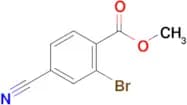
CAS:Pureza:98%Cor e Forma:SolidPeso molecular:313.2000122Methyl 2-bromo-4-cyanobenzoate
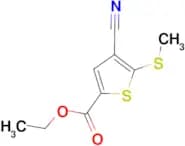
CAS:Fórmula:C9H6BrNO2Pureza:95%Cor e Forma:SolidPeso molecular:240.056Ethyl 4-cyano-5-(methylthio)thiophene-2-carboxylate
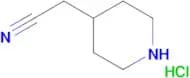
CAS:Fórmula:C9H9NO2S2Pureza:95%Peso molecular:227.34-piperidinylacetonitrile hydrochloride
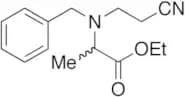
CAS:Fórmula:C7H13ClN2Pureza:97%Cor e Forma:SolidPeso molecular:160.65N-(beta-Cyanoethyl)-N-(ethoxycarbonylethyl)benzylamine
CAS:Produto ControladoApplications N-(β-Cyanoethyl)-N-(ethoxycarbonylethyl)benzylamine is a compound useful in organic synthesis.
Not a dangerous good if item is equal to or less than 1g/ml and there is less than 100g/ml in the packageFórmula:C15H20N2O2Cor e Forma:NeatPeso molecular:260.33Methyl Cyanoacetate
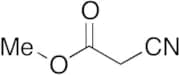
CAS:Produto ControladoApplications Methyl Cyanoacetate is often used as a nucleophile in the electrochemical oxidation of catechols. Methyl Cyanoacetate is also a reagent in the synthesis of Methyl 2-Amino-4-trifluoromethylthiophene-3-carboxylate (M287290); a compound used in the synthesis of DPP-IV inhibitors for treating type 2 diabetes.
References Rafiee, M., et al.: J. Electroanal. Chem., 626, 36 (2009); Deng, J., et al.: Eur. J. Med. Chem., 46, 71 (2010)Fórmula:C4H5NO2Cor e Forma:NeatPeso molecular:99.092-Cyano-N-((furan-2-ylmethyl)carbamoyl)acetamide
CAS:Produto ControladoApplications 2-Cyano-N-((furan-2-ylmethyl)carbamoyl)acetamide is an intermediate in the synthesis of novel 1- and 8-substituted-3-furfuryl xanthines as adenosine receptor antagonists.
References Balo, M. C., et al.: Bioorg. Med. Chem., 17, 6755 (2009);Fórmula:C7H14O6·C3H8OCor e Forma:NeatPeso molecular:254.278Ethyl 2-Cyanopropanoate
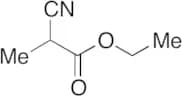
CAS:Produto ControladoApplications Ethyl 2-Cyanopropanoate is a building block used in many organic reactions such as the preparation of highly substituted benzenes.
References Zhang, X., et. al.: Organic Lett., 13, 5024 (2011)Fórmula:C21H26N2OCor e Forma:NeatPeso molecular:322.444Methyl Cyanoformate
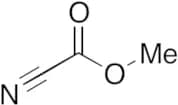
CAS:Produto ControladoApplications Methyl cyanoformate is a reagent that is used in the preparation of XEN907, which is a spiro-oxindole blocker of Nav1.7 for the treatment of pain.
Not a dangerous good if item is equal to or less than 1g/ml and there is less than 100g/ml in the package
References Chowdhury, S., et al.: Bioorg. Med. Chem. Lett., 21, 3676 (2011);Fórmula:C3H3NO2Cor e Forma:NeatPeso molecular:85.06Diethyl (2-cyanoethyl)phosphonate
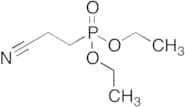
CAS:Produto ControladoApplications Diethyl (2-cyanoethyl)phosphonate, is a useful reactant used in various chemical synthesis such as in synthesis of lipophilic oxoamides with activity against phospholipase A2, Triose phosphate isomerase of muscle inhibitors, and also in base-catalyzed stereospecific anti-Markovnikov addition.
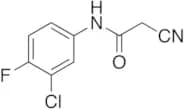
Fórmula:C7H14NO3PCor e Forma:NeatPeso molecular:191.16N-(3-Chloro-4-fluorophenyl)-2-cyanoacetamide
CAS:Produto ControladoApplications N-(3-Chloro-4-fluorophenyl)-2-cyanoacetamide (cas# 219529-31-4) is a compound useful in organic synthesis.
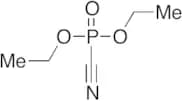
Fórmula:C9H6ClFN2OCor e Forma:NeatPeso molecular:212.61Diethyl Cyanophosphonate
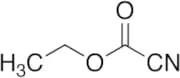
CAS:Produto ControladoFórmula:C5H10NO3PCor e Forma:NeatPeso molecular:163.11Ethyl Cyanoformate
CAS:Produto ControladoApplications Ethyl Cyanoformate (cas# 623-49-4) is a compound useful in organic synthesis.
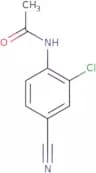
Fórmula:C4H5NO2Cor e Forma:NeatPeso molecular:99.09N-(4-Cyano-2-chlorophenyl)acetamide
CAS:N-(4-Cyano-2-chlorophenyl)acetamide is a versatile building block that is used in the synthesis of complex compounds. N-(4-Cyano-2-chlorophenyl)acetamide has been shown to be a useful intermediate in the synthesis of important compounds such as 4-aminoantipyrine, 4,5-dichloroanthranilic acid and 2,6-dichloropurine. This chemical has also been found to be an effective reagent for the preparation of other chemicals.Fórmula:C9H7ClN2OPureza:Min. 95%Peso molecular:194.62 g/mol4,4'-Dicyanodiphenylsulphone
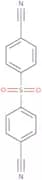
CAS:Dicyanodiphenylsulphone is an inhibitory agent that prevents the HIV-2 virus from entering cells. It binds to the viral envelope, forming a sealant that blocks the virus from entering the cell and infecting it. Dicyanodiphenylsulfone also has immunosuppressive properties, but can be used in conjunction with sulfa drugs and polysulfides to prevent the development of bacterial resistance. The efficacy of dicyanodiphenylsulfone has been demonstrated in cellular assays and in human immunodeficiency virus (HIV) infected patients. This drug is not active against other types of viruses, such as herpes simplex, influenza A, or cytomegalovirus.Fórmula:C14H8N2O2SPureza:Min. 95%Peso molecular:268.29 g/molN-Cyano-N',N''-dimethylguanidine
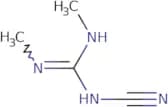
CAS:N-Cyano-N',N''-dimethylguanidine is a clinical drug that has been shown to have a detectable concentration in the serum of humans. The drug is metabolized by nitrite ion, maleate, and potassium phosphate to form reaction products. N-Cyano-N',N''-dimethylguanidine binds to h2 receptors and inhibits the activity of cytochrome p450 enzymes. This inhibition can lead to carcinogenic activity. N-Cyano-N',N''-dimethylguanidine is an analog of methylene blue, which inhibits the synthesis of rna in bacteria and is used as a therapeutic agent for malaria.Fórmula:C4H8N4Pureza:Min. 95%Cor e Forma:White PowderPeso molecular:112.14 g/mol(1,3-Dioxo-1,3-dihydro-2H-isoindol-2-yl)acetonitrile
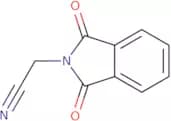
CAS:Acetonitrile is a colorless liquid that is miscible with water and most organic solvents. It is mainly used as a solvent for chemical reactions, including the synthesis of pharmaceuticals. Acetonitrile has been shown to be mutagenic in vitro and in vivo. Acetonitrile was found to induce micronuclei formation, which may be due to its ability to form reactive oxygen species or cause DNA damage by forming adducts with DNA bases. Acetonitrile also induced chromosomal aberrations and micronucleated polychromatic erythrocytes in mice, as well as increased reticulocytes (immature red blood cells) in humans. The dihedral angle between the nitrate group and the benzyl group has been found to be 163°, while the average frequency of acetonitrile is 164 Hz.Fórmula:C10H6N2O2Pureza:Min. 95%Cor e Forma:PowderPeso molecular:186.17 g/mol