Ciano-, Nitrilo-
Os compostos ciano e nitrilo são moléculas orgânicas que contêm grupos ciano (C≡N) ou nitrilo em sua estrutura, caracterizadas pela presença de nitrogênio. Esses grupos desempenham papéis importantes em várias reações químicas e aplicações industriais. Nesta categoria, você encontrará uma ampla gama de compostos ciano e nitrilo, variando de estruturas simples a complexas. Na CymitQuimica, oferecemos compostos ciano e nitrilo de alta qualidade adaptados para atender às necessidades de pesquisa e industriais. Nossos compostos são adequados para uma variedade de aplicações de síntese e análise.
Foram encontrados 9618 produtos de "Ciano-, Nitrilo-"
Ordenar por
Pureza (%)
0
100
|
0
|
50
|
90
|
95
|
100
2-Benzyloxyphenylacetonitrile
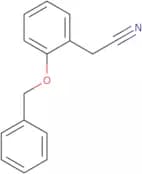
CAS:<p>2-Benzyloxyphenylacetonitrile is a compound that is used in the manufacture of polyester, fibre and crystallized products. It is also used as a solvent for dyes and oils, as well as an industrial chemical intermediate. 2-Benzyloxyphenylacetonitrile can be thermolysed to produce benzoic acid, which can then be oxidized to produce phenol. The residue obtained from this process has been found to have a calorific value of around 2500kcal/kg. This substance has been found to react with oxygen at high temperatures and form an oxygenated product.<br>2-Benzyloxyphenylacetonitrile can be synthesised by reacting benzene with styrene in the presence of water and a catalyst such as sodium hydroxide or calcium oxide. The reaction produces hydrogen gas, benzoic acid and 2-benzyloxyphenylacetonitrile.</p>Fórmula:C15H13NOPureza:Min. 95%Cor e Forma:PowderPeso molecular:223.27 g/mol4-Cyanobiphenyl
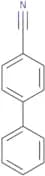
CAS:<p>4-Cyanobiphenyl is a contaminant of the environment. It is a reactive substance that can be found in the air, soil, and water. 4-Cyanobiphenyl is an active substance that can be used as an intermediate for the production of other chemicals. The chemical structure of 4-cyanobiphenyl has been elucidated by using a number of spectroscopic techniques including Raman spectroscopy. 4-Cyanobiphenyl is unstable in acidic conditions and reacts with chloride ions to form crotonic acid and benzoate. This reaction also occurs under basic conditions with biphenyl to form benzoate and low energy products such as benzene or phenol.</p>Fórmula:C13H9NPureza:Min. 95%Cor e Forma:Off-White PowderPeso molecular:179.22 g/mol4-Chloro-3-nitrobenzonitrile
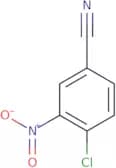
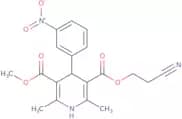
CAS:<p>4-Chloro-3-nitrobenzonitrile is a molecule with potent antibacterial activity. It is synthesized by the reaction of sodium carbonate, hydrogen chloride, and 4-chlorobenzonitrile. 4-Chloro-3-nitrobenzonitrile has shown antimicrobial properties against a wide range of bacteria, including methicillin resistant Staphylococcus aureus (MRSA) and Enterococcus faecium. This compound has been used in the treatment of infections caused by these bacteria. 4-Chloro-3-nitrobenzonitrile also has the ability to inhibit the synthesis of fatty acids and lipids in bacterial cells, which may be responsible for its antimicrobial effects.</p>Fórmula:C7H3ClN2O2Pureza:Min. 95%Cor e Forma:PowderPeso molecular:182.56 g/mol1,4-Dihydro-2,6-dimethyl-4-(3-nitrophenyl)-3,5-pyridinedicarboxylic acid 3-(2-cyanoethyl) 5-methyl ester
CAS:<p>1,4-Dihydro-2,6-dimethyl-4-(3-nitrophenyl)-3,5-pyridinedicarboxylic acid 3-(2-cyanoethyl) 5-methyl ester is a chemical compound that has the CAS number 75130-24-4. It is a white powder with a melting point of 144°C. This chemical is soluble in acetone, ether and chloroform. It can be used as a building block for organic synthesis due to its versatility and useful scaffold.</p>Fórmula:C19H19N3O6Pureza:Min. 95%Cor e Forma:White to yellow solid.Peso molecular:385.37 g/mol2,5-Dimethoxybenzonitrile
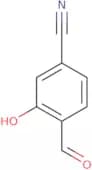
CAS:<p>2,5-Dimethoxybenzonitrile is a polymerized organic compound that belongs to the class of benzene compounds. It is a monomer with two methyl groups on either side of the benzene ring. 2,5-Dimethoxybenzonitrile has been studied in terms of its transition and optimization properties using techniques such as IR and NMR spectroscopy. The frequencies of the chemical bonds have been analyzed, and it has been found that the molecule is centrosymmetric. 2,5-Dimethoxybenzonitrile can also be used to form polymers with other molecules by linking them together through covalent bonds.</p>Fórmula:C9H9NO2Pureza:Min. 95%Cor e Forma:PowderPeso molecular:163.17 g/mol4-Cyano-2-hydroxybenzaldehyde
CAS:<p>4-Cyano-2-hydroxybenzaldehyde is a high quality chemical that can be used as a reagent and intermediate in the synthesis of complex compounds. It is also an important building block in the synthesis of fine chemicals. 4-Cyano-2-hydroxybenzaldehyde has been used as a versatile building block in the synthesis of organic compounds, useful scaffolds in medicinal chemistry, and reactive intermediates. It has also been shown to have anti-inflammatory properties and may be a potential treatment for inflammatory bowel disease.</p>Fórmula:C8H5NO2Pureza:Min. 95%Peso molecular:147.13 g/mol2-Cyano-N-[2-(3,4-dimethoxyphenyl)ethyl]acetamide
CAS:<p>Please enquire for more information about 2-Cyano-N-[2-(3,4-dimethoxyphenyl)ethyl]acetamide including the price, delivery time and more detailed product information at the technical inquiry form on this page</p>Fórmula:C13H16N2O3Pureza:Min. 95%Peso molecular:248.28 g/molBenzylamine
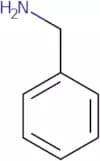
CAS:<p>Substrate of benzylamine oxidase and monoamine oxidase B</p>Fórmula:C7H9NPureza:Min. 98.0 Area-%Cor e Forma:Colorless Slightly Yellow Clear LiquidPeso molecular:107.15 g/mol3,4-Diethoxyphenylacetonitrile
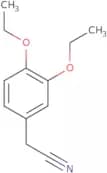
CAS:<p>3,4-Diethoxyphenylacetonitrile is an intermediate that is used in the synthesis of drotaverine. It can also be used to synthesize catechol, which is a medicine used to treat depression and anxiety. 3,4-Diethoxyphenylacetonitrile can be chloromethylated with phosphorus pentachloride to produce 3,4-diethoxyphenylacetic acid. This product has been used in the synthesis of sodium cyanide and catechol hydrochloride.</p>Fórmula:C12H15NO2Pureza:Min. 95%Cor e Forma:PowderPeso molecular:205.25 g/molEthyl 3-cyanopropanoate
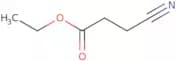
CAS:<p>Ethyl 3-cyanopropanoate is an organic compound with the formula CH3C(O)CH2CN. It is a colorless liquid that boils at 100 °C. It is used in the synthesis of other organic compounds, such as oxazolidinones, cyclopropenes, and quinolizines. The yield can be increased to 98% by using a catalyst such as potassium tert-butoxide or zinc chloride in the reaction. The reaction proceeds through an elimination followed by an acid-catalyzed alkylation to afford the desired product. This process also results in a high yield of ethyl bromoacetate as a side product.</p>Fórmula:C6H9NO2Pureza:Min. 95%Cor e Forma:PowderPeso molecular:127.14 g/mol4-Cyanocinnamic acid
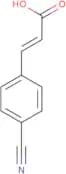
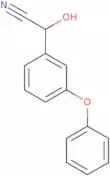
CAS:<p>4-Cyanocinnamic acid is a fatty acid that has been shown to be a substrate for the bacterial enzyme cinnamate 4-hydroxylase. The molecular weight of this compound is 136.16 g/mol, and it has a constant boiling point of 206°C. It can be synthesized from phenylacetic acid and p-coumaric acid using a transesterification reaction. This compound is reactive with carbonyl groups, which makes it useful in the detection of gram-positive bacteria by fluorescent probes or fluorescent dyes. 4-Cyanocinnamic acid is unreactive with esters of carboxylic acids, such as methyl esters, making it useful for the determination of fatty acids in isolates.</p>Fórmula:C10H7NO2Pureza:Min. 95%Cor e Forma:PowderPeso molecular:173.17 g/mol2-Hydroxy-2-(3-phenoxyphenyl)acetonitrile
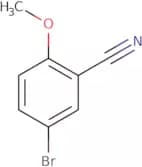
CAS:<p>2-Hydroxy-2-(3-phenoxyphenyl)acetonitrile is an organic compound that is synthesized by the reaction of 3-phenoxybenzaldehyde with nitrous acid in aqueous solution. This compound can be racemized by the enzyme lipase and esterified to form an ester linkage. 2-Hydroxy-2-(3-phenoxyphenyl)acetonitrile has been shown to exhibit insecticidal activity against various strains of bacteria, including Bacillus subtilis, Staphylococcus aureus, and Escherichia coli. 2HPA is a pyrethroid insecticide that has been shown to inhibit lipid synthesis by binding to phospholipids in the bacterial cell membrane. This inhibits the production of fatty acids and glycerol phosphate, inhibiting the growth of the bacteria.</p>Fórmula:C14H11NO2Pureza:Min. 95%Cor e Forma:Clear LiquidPeso molecular:225.24 g/mol4-Bromo-2-cyanoanisole
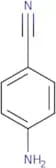
CAS:<p>4-Bromo-2-cyanoanisole is a synthetic compound that can be used as a ligand in the transition metal catalyzed cross-coupling reaction. This chemical has been shown to form complexes with nickel, palladium, and platinum. 4-Bromo-2-cyanoanisole is also a biomolecule that interacts with other molecules and can be used in the study of natural products.</p>Fórmula:C8H6BrNOPureza:Min. 95%Cor e Forma:PowderPeso molecular:212.04 g/mol4-Aminobenzonitrile
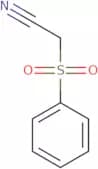
CAS:<p>4-Aminobenzonitrile is a chemical compound that has been shown to be an antimicrobial agent. It has been found to be active against bacteria and fungi, such as Candida albicans and Aspergillus niger. 4-Aminobenzonitrile binds with epidermal growth factor (EGF) by intramolecular hydrogen bonding, which leads to the disruption of the protein's tertiary structure. The nitrogen atoms in this compound have been shown to react with water vapor at high temperatures, which results in the release of hydrogen gas. This reaction can be used for phase transition temperature studies. 4-Aminobenzonitrile also shows intermolecular hydrogen bonding with fatty acids, which causes the molecule to change its shape and protonation state. These changes affect its frequency shift and molecular modeling study results.</p>Fórmula:C7H6N2Pureza:Min. 95%Cor e Forma:Off-White PowderPeso molecular:118.14 g/molBenzenesulphonylacetonitrile
CAS:<p>Benzenesulphonylacetonitrile is an alkanoic acid nucleophile with a benzimidazole derivative. It has shown potential for use as a cancer drug by inhibiting tumor-associated enzymes and inducing apoptosis in cancer cells. Benzenesulphonylacetonitrile is also active against inflammatory diseases such as rheumatoid arthritis, psoriatic arthritis, and Crohn's disease. This drug can be synthesized by the reaction of sodium salts with benzenesulphonylacetone followed by a nucleophilic substitution reaction with methylene chloride. The synthesis of benzenesulphonylacetonitrile requires anhydrous acetonitrile and palladium-catalyzed coupling reactions in the presence of sodium carbonate. Benzenesulphonylacetonitrile has chemical stability in the presence of acids, bases, and heat.br></p>Fórmula:C8H7NO2SPureza:Min. 95%Cor e Forma:PowderPeso molecular:181.21 g/mol1,4-Diamino-2,3-dicyanoanthraquinone
CAS:<p>1,4-Diamino-2,3-dicyanoanthraquinone is a chemical compound that belongs to the amines group. It has transcription-polymerase chain activity and inhibits the growth of cancer cells by regulating blood pressure and stimulating the production of growth factors. The effect on cancer cells is due to its ability to inhibit kinases. 1,4-Diamino-2,3-dicyanoanthraquinone has shown an inhibitory effect on glutamate decarboxylase and fatty acid synthase, which are enzymes that regulate cell metabolism. This chemical compound also exhibits quinoline derivatives with a redox potential that can be used as hydrogen chloride in organic synthesis reactions.</p>Fórmula:C16H8N4O2Pureza:Min. 95%Cor e Forma:Blue PowderPeso molecular:288.26 g/mol2,5-Diaminobenzonitrile
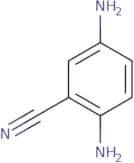
CAS:<p>2,5-Diaminobenzonitrile is a chemical compound with the molecular formula C6H5N3. It is a white crystalline solid that is insoluble in water and soluble in organic solvents such as acetone, chloroform, and ether. 2,5-Diaminobenzonitrile has been shown to be an effective monomer for polymer synthesis due to its stability and high densities. This chemical also has the ability to undergo hydrogen bonding and form hydrogen peroxide when heated to a temperature of 100 °C. The thermal isomerization of 2,5-diaminobenzonitrile can be slowed by adding other amines or nitrites.</p>Fórmula:C7H7N3Pureza:Min. 95%Cor e Forma:PowderPeso molecular:133.15 g/molBarium tetracyanoplatinate(II) hydrate
CAS:Produto Controlado<p>Please enquire for more information about Barium tetracyanoplatinate(II) hydrate including the price, delivery time and more detailed product information at the technical inquiry form on this page</p>Fórmula:C4H2BaN4OPtPureza:Min. 95%Peso molecular:454.5 g/mol2'-Cyano-4-(dibromomethyl)biphenyl
CAS:<p>2'-Cyano-4-(dibromomethyl)biphenyl is a reactive component that belongs to the group of speciality chemicals. It can be used as a building block in organic synthesis and as an intermediate in the production of fine chemicals. 2'-Cyano-4-(dibromomethyl)biphenyl has been used for the synthesis of various complex compounds, such as an anti-inflammatory drug, an anti-diabetic drug, and a chemotherapeutic agent.</p>Fórmula:C14H9Br2NPureza:Min. 97 Area-%Cor e Forma:Off-White PowderPeso molecular:351.04 g/mol4-Nitrobenzylamine hydrochloride
CAS:<p>4-Nitrobenzylamine hydrochloride is a bifunctional immobilizing agent that can be used for the immobilization of Zn2+. It reacts with nitrogen atoms, forming an amination reaction. The linker is covalently immobilized to the surface and the nature of this chemical is synthetic. 4-Nitrobenzylamine hydrochloride is synthesized by reacting nitric acid with benzaldehyde in ammonia solution at room temperature. This chemical has shown to be effective in reactions where a flow rate is needed or when diamidines are present in the reaction mixture.</p>Fórmula:C7H8N2O2·HClPureza:Min. 95%Cor e Forma:PowderPeso molecular:188.61 g/mol


![2-Cyano-N-[2-(3,4-dimethoxyphenyl)ethyl]acetamide](/_next/image/?url=https%3A%2Fstatic.cymitquimica.com%2Fproducts%2F3D%2Fthumb-webp%2FFC131318.webp&w=3840&q=75)