Ciano-, Nitrilo-
Os compostos ciano e nitrilo são moléculas orgânicas que contêm grupos ciano (C≡N) ou nitrilo em sua estrutura, caracterizadas pela presença de nitrogênio. Esses grupos desempenham papéis importantes em várias reações químicas e aplicações industriais. Nesta categoria, você encontrará uma ampla gama de compostos ciano e nitrilo, variando de estruturas simples a complexas. Na CymitQuimica, oferecemos compostos ciano e nitrilo de alta qualidade adaptados para atender às necessidades de pesquisa e industriais. Nossos compostos são adequados para uma variedade de aplicações de síntese e análise.
Foram encontrados 9618 produtos de "Ciano-, Nitrilo-"
Ordenar por
Pureza (%)
0
100
|
0
|
50
|
90
|
95
|
100
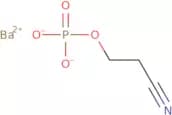
2-Cyanoethyl phosphate barium salt hydrate
CAS:<p>2-Cyanoethyl phosphate barium salt hydrate is an alkaline compound that is soluble in water. It has been used to synthesize phosphodiesters, benzene, dioxan and alcohols. The chemical was originally developed as a reagent for the quantitative conversion of ethyl acetate esters to their corresponding acid chlorides. This reaction can be carried out quantitatively in tetrahydrofuran at room temperature with yields of about 95%. 2-Cyanoethyl phosphate barium salt hydrate also converts alcohols to their corresponding monophosphates quantitatively in alkaline conditions. Crystalline forms are obtained by reacting the compound with triethylamine and benzene.</p>Fórmula:C3H6BaNO4P•xH2OPureza:Min. 95%Cor e Forma:PowderPeso molecular:324.42 g/mol3-Ethoxy-4-hydroxyphenylacetonitrile
CAS:<p>3-Ethoxy-4-hydroxyphenylacetonitrile is a versatile building block and reagent that is used in the manufacturing of pharmaceuticals, agricultural chemicals, and other chemical products. It has been shown to be an excellent starting material for the synthesis of complex compounds. 3-Ethoxy-4-hydroxyphenylacetonitrile can be used as a high quality research chemical or useful scaffold for organic synthesis. CAS No. 205748-01-2</p>Fórmula:C10H11NO2Pureza:Min. 95%Cor e Forma:PowderPeso molecular:177.2 g/molN-Nitrosodibenzylamine
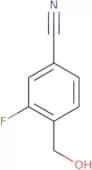
CAS:<p>N-Nitrosodibenzylamine is a chemical compound that has genotoxic effects. It is used as an analytical method to identify the presence of amines and to measure their concentration, as well as in the preparation of sodium salts. N-Nitrosodibenzylamine was found to cause damage to DNA in animals and cells in culture. The matrix effect, which is the difference in response between a sample contained in an organic solvent and one contained in water, was investigated using multi-walled carbon nanotubes (MWCNTs). The results showed that MWCNTs produce a significant matrix effect when compared with other solvents. This study also showed that MWNTs have a higher capacity for nitrosamine adsorption than do other solvents.</p>Fórmula:C14H14N2OPureza:Min. 96 Area-%Cor e Forma:Off-White PowderPeso molecular:226.27 g/mol4-Cyano-2-fluorobenzyl alcohol
CAS:<p>4-Cyano-2-fluorobenzyl alcohol is a reagent that is used to produce chlorine and hydrochloric acid. It is also used industrially in the production of potassium chloride, a compound that is used in fertilizers, animal feed supplements, and water treatment. 4-Cyano-2-fluorobenzyl alcohol reacts with chloride ions to form hypochlorous acid (HOCl), which then reacts with water to form hydrogen chloride gas. The reaction with fluoride ions leads to the formation of hydrofluoric acid (HF).</p>Fórmula:C8H6FNOPureza:Min. 95%Cor e Forma:White To Beige SolidPeso molecular:151.14 g/mol3-Methoxy-4-methylbenzonitrile
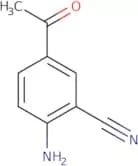
CAS:<p>3-Methoxy-4-methylbenzonitrile is a reagent that is used in the synthesis of complex compounds, such as pharmaceuticals and fine chemicals. It has been shown to be useful as an intermediate for the synthesis of various drugs, including antibiotics. 3-Methoxy-4-methylbenzonitrile has also been shown to be a useful scaffold for the synthesis of new drugs and other chemical compounds. This compound is listed on the Chemical Abstracts Service registry number 3556-60-3.</p>Fórmula:C9H9NOPureza:Min. 95%Cor e Forma:PowderPeso molecular:147.17 g/mol5-Acetyl-2-aminobenzonitrile
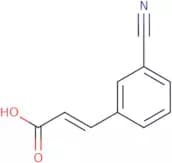
CAS:<p>5-Acetyl-2-aminobenzonitrile is a versatile building block that can be used as an intermediate in the synthesis of a wide range of chemicals. It has been used to produce pharmaceuticals and other useful compounds, including research chemicals and speciality chemicals. 5-Acetyl-2-aminobenzonitrile is also a useful reagent for the production of organic products. The compound is available at high purity levels.</p>Fórmula:C9H8N2OPureza:Min. 95%Cor e Forma:White PowderPeso molecular:160.17 g/mol3-Cyanocinnamic acid
CAS:<p>3-Cyanocinnamic acid is a reactive, unreactive, and stepwise cycloaddition compound. It can participate in photochemical reactions with other compounds to form photodimers. 3-Cyanocinnamic acid has an optimal reaction temperature of 100°C and a reaction time of 5 minutes. The diradical nature of 3-cyanocinnamic acid makes it sensitive to UV light, and the photochemical reactions are simulated by quantum mechanics calculations. Photodimerisation simulations show that 3-cyanocinnamic acid is capable of forming photodimers with 2-cyanocinnamic acid or 4-cyanocinnamic acid at room temperature.</p>Fórmula:C10H7NO2Pureza:Min. 95%Cor e Forma:PowderPeso molecular:173.17 g/molN-(5-Cyano-2-chlorophenyl)acetamide
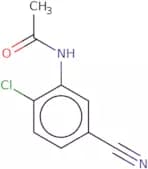
CAS:<p>N-(5-Cyano-2-chlorophenyl)acetamide is a high quality, reagent, and versatile building block. It is a fine chemical that can be used as a building block for the synthesis of other compounds. N-(5-Cyano-2-chlorophenyl)acetamide is also a speciality chemical that can be used in research or as a reaction component. It has been found to be useful as an intermediate in the synthesis of complex compounds.<br>END></p>Fórmula:C9H7ClN2OPureza:Min. 95%Peso molecular:194.62 g/mol3-Cyanophenylacetic acid
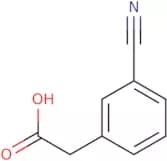
CAS:<p>3-Cyanophenylacetic acid is a versatile building block and useful intermediate that can be used in the synthesis of a wide range of organic compounds. 3-Cyanophenylacetic acid is a fine chemical with CAS No. 1878-71-3 that can be used as a research chemical, reaction component, or speciality chemical. It is an important reagent for making complex organic compounds. 3-Cyanophenylacetic acid is a high quality product with the following characteristics: <br>1) Colorless crystals; <br>2) Soluble in water; <br>3) Soluble in acetone; <br>4) Slightly soluble in ether; <br>5) Reactivity: stable to heat, light, and air; <br>6) pH (1% solution): 2.0 - 4.0; <br>7) Melting point: 129 °C; <br>8) Boiling point: 188 °C at 760 mmH</p>Fórmula:C9H7NO2Pureza:Min. 95%Peso molecular:161.16 g/molN-Cyanopiperidine
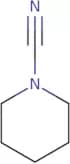
CAS:<p>N-Cyanopiperidine is a cyclohexane ring with a trifluoroacetic acid group. It is used in the synthesis of pharmaceutical preparations and has been shown to be stable in low-energy environments, such as when mixed with glycol ethers or chlorides. N-Cyanopiperidine is also used as an intermediate for the preparation of other compounds, such as metal carbonyl complexes and derivatives. N-Cyanopiperidine can be synthesized by reacting anhydrous hydrogen cyanide with piperidinium chloride in the presence of metal hydroxides. This reaction mechanism is known to produce two products: 1) a stable complex with a metal ion, and 2) a reaction product that contains the desired product and hydrogen cyanide.</p>Fórmula:C6H10N2Pureza:Min. 95%Cor e Forma:PowderPeso molecular:110.16 g/mol3-Cyano-5-bromopyridine
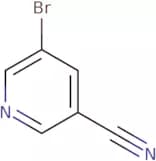
CAS:<p>3-Cyano-5-bromopyridine is an enantiopure organic compound that belongs to the group of halides. It is a functional group that is a reagent in organic synthesis, and it can be used as a precursor to dyestuffs. 3-Cyano-5-bromopyridine has been shown to have antimicrobial activity against bacteria and fungi. It also has a metabotropic glutamate receptor subtype selective affinity, which may be due to its ability to bind with glutamate in complex molecules.</p>Fórmula:C6H3BrN2Pureza:Min. 95%Cor e Forma:White To Beige To Light (Or Pale) Yellow SolidPeso molecular:183.01 g/mol4-Amino-3-nitrobenzonitrile
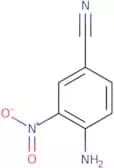
CAS:<p>4-Amino-3-nitrobenzonitrile is an organic compound that is used as a precursor in the synthesis of drugs to treat infectious diseases. 4-Amino-3-nitrobenzonitrile has been shown to have potent activity against Leishmania species, including L. major and L. braziliensis. It binds to sulfoxides by a nitro group and forms a covalent bond with the sulfoxide. This results in the formation of an intramolecular hydrogen bond between the nitro group and the sulfoxide, which prevents it from forming hydrogen bonds with other molecules. Gel permeation chromatography can be used for analytical determination of this drug. 4-Amino-3-nitrobenzonitrile has also been studied using chemosensors and in vivo studies, showing that it can be used to inhibit protozoa such as Giardia lamblia, Entamoeba histolyt</p>Fórmula:C7H5N3O2Pureza:Min. 98%Cor e Forma:PowderPeso molecular:163.13 g/molMethyl-4-cyanobenzoate
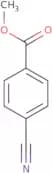
CAS:<p>Methyl-4-cyanobenzoate is a nucleophilic compound that reacts with electrophilic functional groups. It is used in organic chemistry as an immobilized reagent for the conversion of alcohols, amines, and thiols to their corresponding halides. Methyl-4-cyanobenzoate has been shown to have anti-inflammatory properties by inhibiting neutrophil migration into cutaneous tissue and reducing the production of proinflammatory compounds such as isobutene and naphthalene. It also inhibits the release of histamine from mast cells.</p>Fórmula:C9H7NO2Pureza:Min. 95%Cor e Forma:PowderPeso molecular:161.16 g/molCyano-3-phenoxybenzyl 3-(2,2-dichloroethenyl)-2,2-dimethylcyclopropanecarboxylate
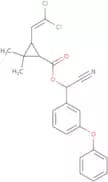
CAS:<p>Cypermethrin is an insecticide that belongs to the family of chemical pesticides. It is used in agriculture and in public health to control malaria-transmitting mosquitoes, head lice, and scabies mites. Cypermethrin disrupts the insect nervous system by inhibiting the function of synapses between nerves, resulting in paralysis and death. The compound also affects signal pathways that regulate locomotor activity and enzyme activities. Cypermethrin has been shown to have a high resistance to degradation by glycol ethers such as ethylene glycol monomethyl ether acetate (EGMEA). It has an optimum concentration of 0.01 ppm for mosquito control and 0.1 ppm for lice control. The analytical method involves liquid chromatography with sodium citrate as an ion-pairing agent and a linear calibration curve using a standard curve generated from known concentrations of cypermethrin.</p>Fórmula:C22H19Cl2NO3Pureza:Min. 95%Cor e Forma:Colorless Clear LiquidPeso molecular:416.3 g/moltert-Butyl 4-cyanobenzylcarbamate
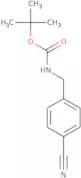
CAS:<p>tert-Butyl 4-cyanobenzylcarbamate (tB4Cbz) is a high quality chemical that can be used as a reagent, complex compound, or useful intermediate in the production of fine chemicals. Tert-Butyl 4-cyanobenzylcarbamate is also a useful scaffold for the synthesis of speciality chemicals and research chemicals. It can be used as a versatile building block for reactions involving amides, nitriles, esters, and amines.</p>Fórmula:C13H16N2O2Pureza:Min. 95%Cor e Forma:PowderPeso molecular:232.28 g/mol2,5-Diaminobenzonitrile
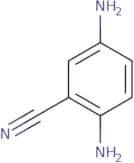
CAS:<p>2,5-Diaminobenzonitrile is a chemical compound with the molecular formula C6H5N3. It is a white crystalline solid that is insoluble in water and soluble in organic solvents such as acetone, chloroform, and ether. 2,5-Diaminobenzonitrile has been shown to be an effective monomer for polymer synthesis due to its stability and high densities. This chemical also has the ability to undergo hydrogen bonding and form hydrogen peroxide when heated to a temperature of 100 °C. The thermal isomerization of 2,5-diaminobenzonitrile can be slowed by adding other amines or nitrites.</p>Fórmula:C7H7N3Pureza:Min. 95%Cor e Forma:PowderPeso molecular:133.15 g/mol2,4-Dimethoxybenzylamine hydrochloride
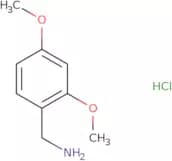
CAS:<p>2,4-Dimethoxybenzylamine hydrochloride is a substrate for glutathione reductase and a competitive inhibitor of dithioerythritol. The reaction mechanism is the same as that of triflic acid, which is generated by the reaction between triflic acid and glutathione. The inhibitory effect of 2,4-dimethoxybenzylamine hydrochloride on glutathione reductase has been studied computationally using molecular docking simulations. It was found that 2,4-dimethoxybenzylamine hydrochloride binds to the active site of glutathione reductase with an affinity comparable to that of triflic acid. This computational study also revealed that 2,4-dimethoxybenzylamine hydrochloride can be converted into triflic acid in vivo.</p>Fórmula:C9H13NO2HClPureza:Min. 95%Cor e Forma:PowderPeso molecular:203.67 g/mol4,5-Bis(2-cyanoethylthio)-1,3-dithiole-2-thione
CAS:<p>4,5-Bis(2-cyanoethylthio)-1,3-dithiole-2-thione is a fluorescent compound that exists in two orientations, cis and trans. It has been used as a linker for the construction of new compounds with interesting properties. 4,5-Bis(2-cyanoethylthio)-1,3-dithiole-2-thione has been shown to be an effective ligand for palladium cross coupling reactions. This compound can also be used in supramolecular chemistry due to its ability to fluoresce brightly.</p>Fórmula:C9H8N2S5Pureza:Min. 95%Peso molecular:304.5 g/mol2-Bromo-4-cyanotoluene
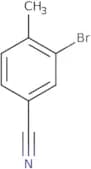
CAS:<p>2-Bromo-4-cyanotoluene is a ligand that is used in cross-coupling reactions. It is used to form complexes with metals, such as palladium and nickel, for the preparation of organometallic reagents. 2-Bromo-4-cyanotoluene has been shown to inhibit secretory phospholipase A2 (sPLA2) and PLA2 activity in a fluorimetric assay. This compound also inhibits the catalytic activity of spla2, which is an enzyme involved in the biosynthesis of arachidonic acid. 2-Bromo-4-cyanotoluene also inhibits piperazine synthesis by reacting with the nitrogen atom on the piperazine ring.</p>Fórmula:C8H6BrNPureza:Min. 95%Peso molecular:196.04 g/mol2-Cyano-5-fluorobenzoic acid ethyl ester
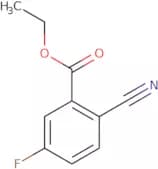
CAS:<p>2-Cyano-5-fluorobenzoic acid ethyl ester is a chemical compound with the formula C6H4(COOCH2)2FO. The compound is an intermediate in the synthesis of other chemicals, such as pharmaceuticals. It is also used as a building block in other syntheses. 2-Cyano-5-fluorobenzoic acid ethyl ester has been assigned CAS No. 1260751-65-2 and is useful in organic synthesis because it is a versatile building block, complex compound, and fine chemical.</p>Fórmula:C10H8FNO2Pureza:Min. 95%Peso molecular:193.17 g/mol