Ciano-, Nitrilo-
Os compostos ciano e nitrilo são moléculas orgânicas que contêm grupos ciano (C≡N) ou nitrilo em sua estrutura, caracterizadas pela presença de nitrogênio. Esses grupos desempenham papéis importantes em várias reações químicas e aplicações industriais. Nesta categoria, você encontrará uma ampla gama de compostos ciano e nitrilo, variando de estruturas simples a complexas. Na CymitQuimica, oferecemos compostos ciano e nitrilo de alta qualidade adaptados para atender às necessidades de pesquisa e industriais. Nossos compostos são adequados para uma variedade de aplicações de síntese e análise.
Foram encontrados 9618 produtos de "Ciano-, Nitrilo-"
Ordenar por
Pureza (%)
0
100
|
0
|
50
|
90
|
95
|
100
(3,5-Dimethoxyphenyl)acetonitrile
CAS:Produto Controlado<p>Applications (3,5-Dimethoxyphenyl)acetonitrile (cas# 13388-75-5) is a compound useful in organic synthesis.<br></p>Fórmula:C10H11NO2Cor e Forma:NeatPeso molecular:177.2Ethyl (2-chlorophenyl)cyanoacetate
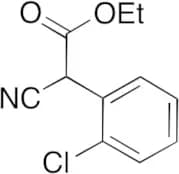
CAS:Produto ControladoFórmula:C11H10ClNO2Cor e Forma:NeatPeso molecular:223.6562-Phenyl-2-[(trimethylsilyl)oxy]acetonitrile (90%)
CAS:Produto Controlado<p>Stability Moisture Sensitive<br>Applications 2-phenyl-2-[(trimethylsilyl)oxy]acetonitrile (cas# 25438-37-3) is a useful research chemical.<br></p>Fórmula:C11H15NOSiPureza:90%Cor e Forma:NeatPeso molecular:205.33Cyanomethyl Methyl(phenyl)carbamodithioate
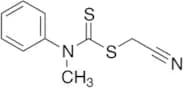
CAS:Produto Controlado<p>Applications Cyanomethyl Methyl(phenyl)carbamodithioate (cas# 76926-16-4) is a useful research chemical.<br></p>Fórmula:C10H10N2S2Cor e Forma:NeatPeso molecular:222.32p-Biphenylacetonitrile
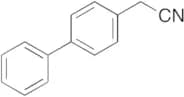
CAS:Produto Controlado<p>Applications 4-Biphenylacetonitrile is a useful synthetic intermediate. It was used to study the adsorption orientation of the biphenyl derivatives on the Au colloidal surfaces with α-cyclodextrins. 4-Biphenylacetonitrile on condensation reaction with ethyl phenyl propiolate yields biphenyl derivatives of acetylenic β-ketocyanide.<br>References Lee, J., et al.: Bull. Korean. Chem. Soc., 30, 1637 (2009); Al-Jallo, H., et al.: J. Chem. Eng. Data, 17, 513, (1972)<br></p>Fórmula:C14H11NCor e Forma:NeatPeso molecular:193.246-Cyano-2-oxaspiro[3.3]heptane-6-carboxylic acid
CAS:Produto Controlado<p>Applications 6-cyano-2-oxaspiro[3.3]heptane-6-carboxylic acid (cas# 1934971-05-7) is a useful research chemical.<br></p>Fórmula:C8H9NO3Cor e Forma:NeatPeso molecular:167.162Triphenylacetonitrile
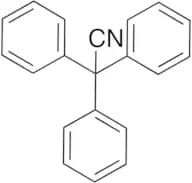
CAS:Produto Controlado<p>Applications Triphenylacetonitrile is used as a reactant in the rhodium-catalyzed reductive cleavage of carbon-cyano bonds with hydrosilane.<br>References Tobisu, M., et al.: JACS., 131, 3174 (2009)<br></p>Fórmula:C20H15NCor e Forma:NeatPeso molecular:269.34(2-Isocyanoethyl)-benzene
CAS:<p>Applications (2-Isocyanoethyl)-benzene is a useful synthetic intermediate. It is a reagent used in Ugi reactions to synthesize various compounds such as tetrazole and bisamide.<br>References Zhao, T., et al.: Org. Lett., 15, 639 (2013); Brockmeyer, F., et al.: Helv. Chim. Acta., 95, 1857 (2012)<br></p>Fórmula:C9H9NCor e Forma:NeatPeso molecular:131.17455-Cyanopyridine-2-carboxylic acid
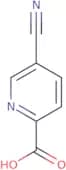
CAS:<p>5-Cyanopyridine-2-carboxylic acid is a small molecule that has been found to have significant biological activity in a number of different areas, including neurotherapeutics. It is the result of a scalable synthesis and is soluble in water. The molecule has two chiral centers and can exist as four different stereoisomers (enantiomers). In vitro studies show that 5-cyanopyridine-2-carboxylic acid inhibits fatty acid uptake by blocking the proton pump, which transports lipids into cells. This compound also binds to the cytosolic protein pyrazine 2-carboxylic acid receptor 1 (PYZR1), which may provide an explanation for its effects on fatty acid uptake.</p>Fórmula:C7H4N2O2Pureza:Min. 95%Peso molecular:148.12 g/molEthyl cyanoformate
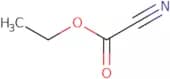
CAS:<p>Ethyl cyanoformate is a reactive compound that is used in organic synthesis. It has been shown to cause muscle cell proliferation and inhibit the production of gamma-aminobutyric acid, which is responsible for regulating neurotransmitter release. Ethyl cyanoformate also has antimicrobial properties due to its ability to form an oxygenated n-oxide tautomer. The reaction mechanism of ethyl cyanoformate involves the formation of a covalent bond with the sulfhydryl group on the enzyme gamma-aminobutyric acid receptor. This prevents the binding of GABA, inhibiting nerve impulses and reducing inflammation in the bowel.</p>Fórmula:C4H5NO2Pureza:Min. 95%Cor e Forma:Clear LiquidPeso molecular:99.09 g/molCyanomethylenetributylphosphorane
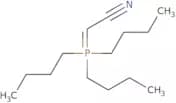
CAS:<p>Cyanomethylenetributylphosphorane (CMTP) is an agent used for the diagnosis of body formation. It is a chemical compound that can be used to produce images of tissue and organs by detecting apoptosis, or programmed cell death. CMTP binds to the glucose-dependent insulinotropic polypeptide receptor (GIPR), stimulating the release of insulin in the pancreas. CMTP also has therapeutic potential for metabolic disorders, as it has been shown to reduce triglycerides and increase HDL cholesterol levels in human serum. CMTP is synthesized from trifluoroacetic acid, which is then reacted with a cyclic peptide containing an amino acid derivative and 1-methyl-2-pyrrolidinone. This reaction produces a molecule with one free amino group at one end and two free carboxylic acid groups at the other end. The molecule can be reacted with epidermal growth factor (EGF) or insulin to</p>Fórmula:C14H28NPPureza:Min. 95%Cor e Forma:Yellow To Dark Brown Clear LiquidPeso molecular:241.35 g/molBromodichloroacetonitrile
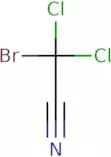
CAS:<p>Bromodichloroacetonitrile (BCN) is a chemical with disinfectant properties. It is used in wastewater treatment, as it is able to destroy bacteria and viruses. BCN also has been shown to be effective against the Covid-19 pandemic. BCN can be used as an analytical reagent for the analysis of chloride ions in deionized water. The carcinogenic potential of BCN in humans is unknown, but it has been shown to cause bladder cancer in rats.</p>Fórmula:C2BrCl2NPureza:Min. 95%Cor e Forma:Colorless PowderPeso molecular:188.84 g/mol1-Methylindole-3-acetonitrile
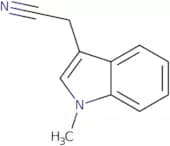
CAS:Produto Controlado<p>Please enquire for more information about 1-Methylindole-3-acetonitrile including the price, delivery time and more detailed product information at the technical inquiry form on this page</p>Fórmula:C11H10N2Pureza:Min. 95%Peso molecular:170.21 g/molPotassium tetracyanoplatinate(II)trihydrate
CAS:Produto Controlado<p>Potassium tetracyanoplatinate(II)trihydrate (KTP) is a nanomaterial that is made of metal ions, such as ruthenium and copper, and organic molecules. It has the ability to absorb electrons from water, which are then transferred to carbon sources. This process can be used to remove proton in the water, thereby creating an acidic solution. The KTP particles have been shown to produce cavitation when exposed to ultrasound waves or other high-frequency sound waves. Cavitation occurs when bubbles form and rapidly collapse within a liquid. The resulting shockwaves can break down the cell membrane of microorganisms.</p>Fórmula:C4H6K2N4O3PtPureza:Min. 95%Peso molecular:431.4 g/mol2-Cyano-N-cyclohexyl-N-methylacetamide
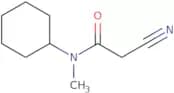
CAS:<p>Please enquire for more information about 2-Cyano-N-cyclohexyl-N-methylacetamide including the price, delivery time and more detailed product information at the technical inquiry form on this page</p>Fórmula:C10H16N2OPureza:Min. 95%Peso molecular:180.25 g/mol3-Cyano-1-azetidinesulfonyl chloride
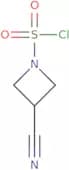
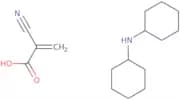
CAS:<p>Please enquire for more information about 3-Cyano-1-azetidinesulfonyl chloride including the price, delivery time and more detailed product information at the technical inquiry form on this page</p>Fórmula:C4H5ClN2O2SPureza:Min. 95%Peso molecular:180.61 g/molDicyclohexylamine 2-cyanoacrylate
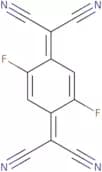
CAS:Produto Controlado<p>Please enquire for more information about Dicyclohexylamine 2-cyanoacrylate including the price, delivery time and more detailed product information at the technical inquiry form on this page</p>Fórmula:C16H26N2O2Pureza:Min. 95%Peso molecular:278.39 g/mol2,5-Difluoro-7,7,8,8-tetracyanoquinodimethane
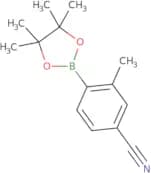
CAS:<p>2,5-Difluoro-7,7,8,8-tetracyanoquinodimethane is a donor molecule that has an acceptor property. It can be used in the fabrication of organic light emitting devices. 2,5-Difluoro-7,7,8,8-tetracyanoquinodimethane is a molecule with a molecular structure that consists of two benzene rings and two quinonediimide groups. The molecule has a fluorine atom at position 5 and another fluorine atom at position 8. This molecule has been shown to have good transport properties and to emit light when irradiated with UV radiation.</p>Fórmula:C12H2F2N4Pureza:Min. 95%Cor e Forma:PowderPeso molecular:240.17 g/mol4-Cyano-2-methylphenylboronic acid, pinacol ester
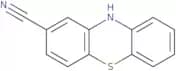
CAS:<p>Please enquire for more information about 4-Cyano-2-methylphenylboronic acid, pinacol ester including the price, delivery time and more detailed product information at the technical inquiry form on this page</p>Fórmula:C14H18BNO2Pureza:Min. 95%Peso molecular:243.11 g/mol2-Cyanophenothiazine
CAS:<p>2-Cyanophenothiazine is an aliphatic hydrocarbon that belongs to the class of industrial chemicals. It is used as a reactant in organic synthesis, such as for the production of 2-cyanophenols and 2-phenylbenzimidazole. This compound can be produced by reacting n-hexane with amide or n-dimethylformamide. 2-Cyanophenothiazine has been shown to have mitochondrial biogenesis effects and increase mitochondrial membrane potential in thp-1 cells. It also has biological properties, such as being anti-inflammatory and having antitumor activity.</p>Fórmula:C13H8N2SPureza:Min. 95%Peso molecular:224.28 g/mol


![2-Phenyl-2-[(trimethylsilyl)oxy]acetonitrile (90%)](/_next/image/?url=https%3A%2Fstatic.cymitquimica.com%2Fproducts%2FTR%2Fthumb-webp%2FP321065.webp&w=3840&q=75)
![6-Cyano-2-oxaspiro[3.3]heptane-6-carboxylic acid](/_next/image/?url=https%3A%2Fstatic.cymitquimica.com%2Fproducts%2FTR%2Fthumb-webp%2FC277626.webp&w=3840&q=75)