


Ciano-, Nitrilo-
Os compostos ciano e nitrilo são moléculas orgânicas que contêm grupos ciano (C≡N) ou nitrilo em sua estrutura, caracterizadas pela presença de nitrogênio. Esses grupos desempenham papéis importantes em várias reações químicas e aplicações industriais. Nesta categoria, você encontrará uma ampla gama de compostos ciano e nitrilo, variando de estruturas simples a complexas. Na CymitQuimica, oferecemos compostos ciano e nitrilo de alta qualidade adaptados para atender às necessidades de pesquisa e industriais. Nossos compostos são adequados para uma variedade de aplicações de síntese e análise.
Foram encontrados 9618 produtos de "Ciano-, Nitrilo-"
Ordenar por
Pureza (%)
0
100
|
0
|
50
|
90
|
95
|
100
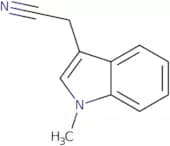
1-Methylindole-3-acetonitrile
CAS:Produto Controlado<p>Please enquire for more information about 1-Methylindole-3-acetonitrile including the price, delivery time and more detailed product information at the technical inquiry form on this page</p>Fórmula:C11H10N2Pureza:Min. 95%Peso molecular:170.21 g/mol4-(Dicyanomethylene)-2-tert-butyl-6-(1,1,7,7-tetramethyljulol
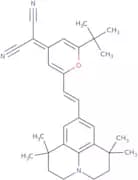
CAS:<p>4-(Dicyanomethylene)-2-tert-butyl-6-(1,1,7,7-tetramethyljulolidinium) (DCJTB) is a red fluorescent dye that emits light when activated by heat. DCJTB is cationic and can be polymerized thermally or chemically. The molecule has been shown to be activated by the addition of an electron donor such as a metal chelate. This reaction takes place in the solution phase. DCJTB has been used for the diagnosis of nonpolar solvents such as gasoline and oil leaks in machine parts. DCJTB has also been used to detect groundwater contamination with trichloroethylene (TCE).</p>Fórmula:C30H35N3OPureza:Min. 95%Peso molecular:453.62 g/mol2-Cyanophenothiazine
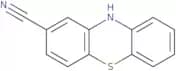
CAS:<p>2-Cyanophenothiazine is an aliphatic hydrocarbon that belongs to the class of industrial chemicals. It is used as a reactant in organic synthesis, such as for the production of 2-cyanophenols and 2-phenylbenzimidazole. This compound can be produced by reacting n-hexane with amide or n-dimethylformamide. 2-Cyanophenothiazine has been shown to have mitochondrial biogenesis effects and increase mitochondrial membrane potential in thp-1 cells. It also has biological properties, such as being anti-inflammatory and having antitumor activity.</p>Fórmula:C13H8N2SPureza:Min. 95%Peso molecular:224.28 g/molN-Cyano-N',S-dimethylisothiourea
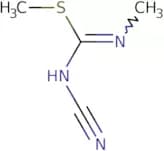
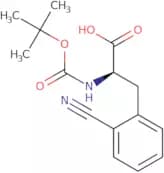
CAS:<p>Please enquire for more information about N-Cyano-N',S-dimethylisothiourea including the price, delivery time and more detailed product information at the technical inquiry form on this page</p>Fórmula:C4H7N3SPureza:Min. 95%Peso molecular:129.18 g/molBoc-2-cyano-D-phenylalanine
CAS:<p>Please enquire for more information about Boc-2-cyano-D-phenylalanine including the price, delivery time and more detailed product information at the technical inquiry form on this page</p>Fórmula:C15H18N2O4Pureza:Min. 95%Peso molecular:290.31 g/molPotassium tetracyanoplatinate(II)trihydrate
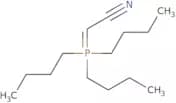
CAS:Produto Controlado<p>Potassium tetracyanoplatinate(II)trihydrate (KTP) is a nanomaterial that is made of metal ions, such as ruthenium and copper, and organic molecules. It has the ability to absorb electrons from water, which are then transferred to carbon sources. This process can be used to remove proton in the water, thereby creating an acidic solution. The KTP particles have been shown to produce cavitation when exposed to ultrasound waves or other high-frequency sound waves. Cavitation occurs when bubbles form and rapidly collapse within a liquid. The resulting shockwaves can break down the cell membrane of microorganisms.</p>Fórmula:C4H6K2N4O3PtPureza:Min. 95%Peso molecular:431.4 g/molCyanomethylenetributylphosphorane
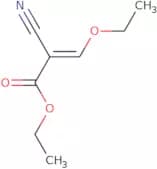
CAS:<p>Cyanomethylenetributylphosphorane (CMTP) is an agent used for the diagnosis of body formation. It is a chemical compound that can be used to produce images of tissue and organs by detecting apoptosis, or programmed cell death. CMTP binds to the glucose-dependent insulinotropic polypeptide receptor (GIPR), stimulating the release of insulin in the pancreas. CMTP also has therapeutic potential for metabolic disorders, as it has been shown to reduce triglycerides and increase HDL cholesterol levels in human serum. CMTP is synthesized from trifluoroacetic acid, which is then reacted with a cyclic peptide containing an amino acid derivative and 1-methyl-2-pyrrolidinone. This reaction produces a molecule with one free amino group at one end and two free carboxylic acid groups at the other end. The molecule can be reacted with epidermal growth factor (EGF) or insulin to</p>Fórmula:C14H28NPPureza:Min. 95%Cor e Forma:Yellow To Dark Brown Clear LiquidPeso molecular:241.35 g/molEthyl (ethoxymethylene) cyanoacetate
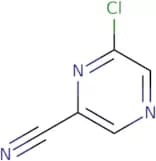
CAS:<p>Ethyl (Ethoxymethylene) cyanoacetate is a chemical compound that belongs to the family of aldehyde compounds. It is a colorless liquid at room temperature, with an odor similar to that of acetic acid. The compound has been used in the synthesis of epidermal growth factor and diazonium salts. It has also been used in the production of anti-cancer drugs such as malonic acid, which inhibits tumor growth by inhibiting protein synthesis. Ethyl (Ethoxymethylene) cyanoacetate reacts with quinoline derivatives to form carbon disulphide, which can be used as an antimicrobial agent and insecticide.</p>Fórmula:C8H11NO3Pureza:Min. 95%Cor e Forma:PowderPeso molecular:169.18 g/mol2-Chloro-6-cyanopyrazine
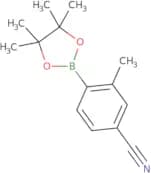
CAS:<p>2-Chloro-6-cyanopyrazine is a compound that has been shown to have antimycobacterial activity against Mycobacterium avium. It may also have tuberculostatic activity and be useful for the treatment of tuberculosis. 2-Chloro-6-cyanopyrazine inhibits bacterial growth by binding to DNA, RNA, and protein synthesis in mycobacteria. The antibacterial effect is due to its ability to inhibit amidation and alkylation reactions, as well as its nucleophilic properties. 2-Chloro-6-cyanopyrazine is an acidic compound with a pKa of 3.2, which makes it more soluble in water than hydrophobic compounds such as alkanoic acids.</p>Fórmula:C5H2ClN3Pureza:Min. 95%Peso molecular:139.54 g/mol4-Cyano-2-methylphenylboronic acid, pinacol ester
CAS:<p>Please enquire for more information about 4-Cyano-2-methylphenylboronic acid, pinacol ester including the price, delivery time and more detailed product information at the technical inquiry form on this page</p>Fórmula:C14H18BNO2Pureza:Min. 95%Peso molecular:243.11 g/molCyanoacetohydrazide
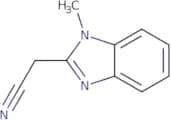
CAS:<p>Cyanoacetohydrazide is a nucleophilic compound that can react with a variety of molecules, including fatty acids and hydroxy methyl groups. The mechanism of this reaction involves the nucleophilic attack of the cyanide ion on the carbonyl group. This type of reaction has been shown to be reversible and involve the formation of an intermediate hemiacetal, which then attacks another molecule. Cyanoacetohydrazide is used as an antimicrobial agent in some products, such as mouthwashes and toothpaste. It also has anticancer activity.</p>Fórmula:C3H5N3OPureza:Min. 95%Cor e Forma:PowderPeso molecular:99.09 g/mol(1-Methyl-1H-benzoimidazol-2-yl)-acetonitrile
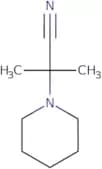
CAS:Produto Controlado<p>(1-Methyl-1H-benzoimidazol-2-yl)-acetonitrile is a nucleophilic compound that reacts with carbanions to form alkyl benzoates. It can also act as an electrophile in the formation of nitroalkenes and amides, as well as an intermediate in the synthesis of phenazines. The potassium salt of this compound is used as a reagent in organic synthesis. (1-Methyl-1H-benzoimidazol-2-yl)-acetonitrile has been shown to react with methylene and aromatize to produce ethyl cyanoacetate, which can be used for the production of malononitrile. This reaction is catalyzed by potassium carbonate and esters.</p>Fórmula:C10H9N3Pureza:Min. 95%Peso molecular:171.2 g/mola,a-Dimethyl-1-piperidineacetonitrile
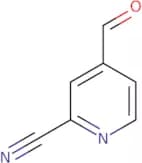
CAS:Produto Controlado<p>Dimethylcyanamide is an organic compound that can be synthesized from cyanide or cyanic acid. Dimethylcyanamide is a colorless liquid with a strong odor. It has been used in the past as a precursor to other compounds, but it has since been replaced by cheaper and more convenient methods. Dimethylcyanamide reacts with primary amines to form nitriles, which are useful intermediates in organic synthesis. In addition, the reaction of dimethylcyanamide with secondary amines leads to the formation of primary amines. The transamination of dimethylamine-N-oxide yields a-dimethylaminopropionitrile as an intermediate product. The elimination reaction mechanism for this process involves the conversion of ammonia into hydroxide ions and hydrogen gas. This reaction produces high yields for both products and does not require high temperatures or pressures.</p>Fórmula:C9H16N2Pureza:Min. 95%Peso molecular:152.24 g/mol2-Cyanopyridine-4-carboxaldehyde
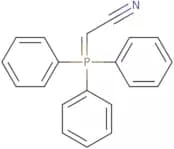
CAS:<p>Please enquire for more information about 2-Cyanopyridine-4-carboxaldehyde including the price, delivery time and more detailed product information at the technical inquiry form on this page</p>Fórmula:C7H4N2OPureza:Min. 95%Peso molecular:132.12 g/mol(Triphenylphosphoranylidene)acetonitrile
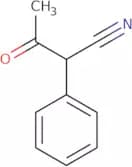
CAS:<p>(Triphenylphosphoranylidene)acetonitrile is a phosphorane that has been shown to have an inhibitory effect on the inflammatory response in animal models of bowel disease. It also has been shown to be effective in treating inflammatory diseases such as arthritis and multiple sclerosis. This drug binds to leukotriene D4, an inflammatory mediator, and inhibits its production by blocking the enzyme 5-lipoxygenase. The compound also has been shown to possess anti-inflammatory properties due to its inhibition of prostaglandin synthesis. (Triphenylphosphoranylidene)acetonitrile is used as a pharmaceutical preparation for the treatment of bowel disease, inflammatory diseases, and other conditions.</p>Fórmula:C20H16NPPureza:Min. 95%Peso molecular:301.32 g/molα-Acetylphenylacetonitrile
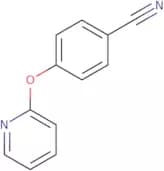
CAS:Produto Controlado<p>Alpha-acetylphenylacetonitrile is a synthetic chemical compound that is used as a reagent in the analytical methods of wastewater. It has been shown to be an effective bifunctional agent for the treatment of wastewater, with fluorescence properties that can be used for detection and quantification of cyanide. Alpha-acetylphenylacetonitrile can also be used as a reagent in analytical chemistry techniques, such as gas chromatography and high performance liquid chromatography. This chemical compound has been shown to react with naphthalene to form alpha-naphthol by heating at 190 °C, which can then be used to synthesize phenacyl acetate. The acid catalyst may be either sulfuric acid or hydrochloric acid.</p>Fórmula:C10H9NOPureza:Min. 95%Peso molecular:159.18 g/mol4-(Pyridin-2-yloxy)benzonitrile
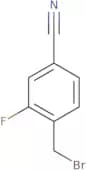
CAS:<p>4-(Pyridin-2-yloxy)benzonitrile is a reagent that is used in the synthesis of heterocycles. It is also a useful intermediate for the preparation of highly substituted pyridine derivatives. 4-(Pyridin-2-yloxy)benzonitrile can be used to synthesize complex compounds, such as pharmaceuticals and agricultural chemicals.</p>Fórmula:C12H8N2OPureza:Min. 95%Peso molecular:196.2 g/mol4-Cyano-2-fluorobenzyl bromide
CAS:<p>4-Cyano-2-fluorobenzyl bromide is a methyl ester that can be used as a reagent for the synthesis of chiral α-amino acids. It can also be used as an enantioselective methylating agent for the synthesis of γ-secretase inhibitors. The methodology for the convergent synthesis of this compound includes alkylation with glycine followed by an enantioselective hydrolysis, which results in optically pure 4-cyano-2-fluorobenzyl bromide.</p>Fórmula:C8H5BrFNPureza:Min. 95%Cor e Forma:PowderPeso molecular:214.03 g/mol3-Cyanoethylbenzoic acid
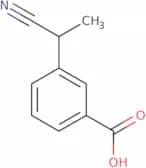
CAS:<p>3-Cyanoethylbenzoic acid is an anthropogenic compound that is produced by the Friedel-Crafts reaction between benzoyl chloride and acrylonitrile in the presence of a base. 3-Cyanoethylbenzoic acid is used as a solvent for chromatographic methods, such as gradient elution, ion exchange, and reversed phase. 3-Cyanoethylbenzoic acid has been used to determine the optical purity of benzoate salts and amides. This compound can be taken orally in solid oral dosage form or enterically in liquid oral dosage form. 3-Cyanoethylbenzoic acid interacts with other drugs that are metabolized by CYP3A4, such as erythromycin, to produce an active metabolite (N-desmethyldesipramide).</p>Fórmula:C10H9NO2Pureza:Min. 95%Cor e Forma:PowderPeso molecular:175.18 g/mol2-[4-(2-Cyanoethylthio)methyl]thiazolyl guanidine
CAS:<p>2-[4-(2-Cyanoethylthio)methyl]thiazolyl guanidine (HCTZ) is a histamine H2 receptor antagonist that belongs to the class of synthetic compounds. It is an effective anti-histamine and has been shown to inhibit acid secretion in the stomach in response to histamine. HCTZ also inhibits the release of gastric acid by blocking the action of histamine on the H2 receptor of parietal cells, which are located in the lining of the stomach. This drug is also used for treating reflux esophagitis and gastroesophageal reflux disease. Other uses include as a proton pump inhibitor for treatment of peptic ulcers, and as an adjunct therapy for ulcerative colitis. The following product details are about a company that sells organic food products:</p>Fórmula:C8H11N5S2Pureza:Min. 98 Area-%Cor e Forma:White PowderPeso molecular:241.34 g/mol



![2-[4-(2-Cyanoethylthio)methyl]thiazolyl guanidine](/_next/image/?url=https%3A%2Fstatic.cymitquimica.com%2Fproducts%2F3D%2Fthumb-webp%2FFC21486.webp&w=3840&q=75)