Éteres
Os éteres são compostos orgânicos que contêm um grupo funcional éter, caracterizado por um átomo de oxigênio ligado a dois radicais hidrocarbonetos. Esses compostos são valiosos na síntese e servem como solventes em várias reações químicas. Na CymitQuimica, oferecemos uma seleção de éteres de alta qualidade para apoiar suas aplicações de pesquisa e industriais, garantindo resultados confiáveis e eficazes. Nossa gama de éteres atende a diversos requisitos laboratoriais, desde experimentos de rotina até pesquisas avançadas.
Foram encontrados 40902 produtos de "Éteres"
Ordenar por
Pureza (%)
0
100
|
0
|
50
|
90
|
95
|
100
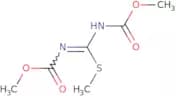
1,3-Bis(methoxycarbonyl)-2-methyl-2-thiopseudourea
CAS:<p>1,3-Bis(methoxycarbonyl)-2-methyl-2-thiopseudourea (BMTC) is a novel anticancer agent that has been synthesized to be water soluble and also has significant cytotoxicity. BMTC is believed to exert its anticancer activity by binding to the colchicine binding site on tubulin which is involved in microtubule dynamics. The antitubulin effect of BMTC results in inhibition of cell division and growth. BMTC also inhibits cancer cell proliferation and migration. It has shown significant cytotoxicity against human prostate cancer cells and ovarian cancer cells, as well as inhibiting tumor xenografts in mice.</p>Fórmula:C6H10N2O4SPureza:Min. 95%Cor e Forma:White PowderPeso molecular:206.22 g/molMidodrine
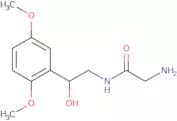
CAS:Produto Controlado<p>2-Amino-N-[2-(2,5-dimethoxyphenyl)-2-hydroxyethyl]-acetamide is a drug that has been used to treat a variety of diseases and conditions. It is an alpha adrenergic agonist that works by stimulating the alpha receptors in the body, which increase blood pressure and improve blood flow. This drug also has significant effects on energy metabolism, including the production of ATP. 2-Amino-N-[2-(2,5-dimethoxyphenyl)-2-hydroxyethyl]-acetamide is used to treat patients with congestive heart failure who are taking low doses of midodrine hydrochloride or nonsteroidal antiinflammatory drugs.</p>Fórmula:C12H18N2O4Pureza:Min. 95%Cor e Forma:PowderPeso molecular:254.28 g/mol(3-Bromopropyl)trimethoxysilane
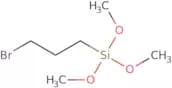
CAS:<p>3-Bromopropyltrimethoxysilane is a divalent hydrocarbon that has been used as a model compound for the study of detection methods. It has been shown to have biocompatible properties and can be used as an immobilization template molecule. 3-Bromopropyltrimethoxysilane also reacts with pyridinium ions to form complexes that are highly stable. The stability of these complexes can be attributed to the functional groups on the pyridine ring, which are more susceptible to hydrolysis than those on the silica surface. 3-Bromopropyltrimethoxysilane is a substrate for nitrate reductase enzymes, resulting in inhibition of growth at concentrations low enough not to cause cytotoxicity.</p>Fórmula:C6H15BrO3SiPureza:Min. 95%Peso molecular:243.17 g/mol5-Chloro-2,4-dimethoxyaniline
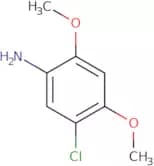
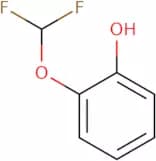
CAS:5-Chloro-2,4-dimethoxyaniline (5-CDA) is a crystalline solid that belongs to the amine class of chemical compounds. It is used in the production of polyhalogenated anilines and nitrosamines, which are known carcinogens. 5-CDA has been shown to be toxic to animals at high doses and can cause health effects such as irritation of the eyes, skin, and respiratory tract; central nervous system depression; and gastrointestinal disturbances. The toxicity of this compound is related to its ability to form nitrosamines when it comes into contact with nitrite or other N-nitroso compounds. 5-CDA is also present in wastewater effluents from paper mills and agricultural runoff from triticum aestivum fields.Fórmula:C8H10ClNO2Pureza:Min. 95%Peso molecular:187.62 g/mol2-(Difluoromethoxy)Phenol
CAS:<p>2-(Difluoromethoxy)Phenol is a purine derivative and pyrimidine derivative. It has been shown to inhibit the growth of cancer cells in vitro and in vivo. 2-(Difluoromethoxy)phenol inhibits multidrug resistance by inhibiting the transport of drugs into cells and thereby preventing their accumulation. As a result, it suppresses inflammatory diseases and autoimmune diseases. The hydroxyl group in this compound can be replaced with fluorine or nitro groups to generate new derivatives with different properties. Piperidine can also be added to this molecule to create an analogue that is more potent than 2-(difluoromethoxy)phenol and has a longer duration of action.</p>Fórmula:C7H6F2O2Pureza:Min. 95%Peso molecular:160.12 g/mol4-Fluoro-2-methoxyphenol
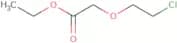
CAS:<p>4-Fluoro-2-methoxyphenol is a fluorinating agent that is used in the manufacture of pharmaceuticals, plastics and pesticides. It has been shown to induce apoptosis in cultured cells by upregulating reactive oxygen species (ROS) and increasing mitochondrial membrane permeability, as well as inhibiting cellular physiology. 4-Fluoro-2-methoxyphenol also inhibits the production of ATP and may be toxic to cells by interfering with dinucleotide phosphate.</p>Fórmula:C7H7FO2Pureza:Min. 95%Cor e Forma:Clear LiquidPeso molecular:142.13 g/molEthyl 2-(2-chloroethoxy)acetate
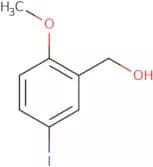
CAS:<p>Please enquire for more information about Ethyl 2-(2-chloroethoxy)acetate including the price, delivery time and more detailed product information at the technical inquiry form on this page</p>Fórmula:C6H11ClO3Pureza:Min. 95%Peso molecular:166.6 g/mol5-Iodo-2-methoxybenzyl alcohol
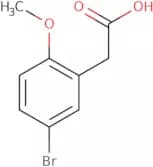
CAS:<p>5-Iodo-2-methoxybenzyl alcohol (5IMB) is a conjugate that inhibits tubulin polymerization and mitochondrial membrane integrity. It has significant inhibitory effects on colchicine-induced apoptosis in colon cancer cells, inducing apoptotic cell death by the activation of caspase 3 and annexin. 5IMB also has an inhibitory effect on mitochondria, leading to mitochondrial membrane depolarization and apoptotic cell death. This conjugate also induces the death of human cancer cells, specifically mcf-7, which are involved in tumour growth and metastasis. The mechanism of action for 5IMB is through its ability to induce mitochondrial membrane depolarization, leading to apoptotic cell death.</p>Fórmula:C8H9O2IPureza:Min. 95%Peso molecular:264.06 g/mol(5-Bromo-2-methoxyphenyl)acetic acid
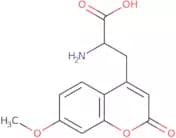
CAS:5-Bromo-2-methoxyphenyl)acetic acid (BMPEA) is a hydroxylated derivative of aspartic acid. It has been shown to induce apoptotic cell death in various cell lines, including human lung cells and rat hippocampal cells. BMPEA is synthesized by the solid-phase method and is characterized by a constant structure. It can be used to treat degenerative diseases and other conditions where apoptosis is desirable, such as Alzheimer's disease, Parkinson's disease, amyotrophic lateral sclerosis, retinitis pigmentosa, and Duchenne muscular dystrophy.Fórmula:C9H9BrO3Pureza:Min. 95%Cor e Forma:PowderPeso molecular:245.07 g/molH-beta-(7-Methoxycoumarin-4-yl)-Ala-OH
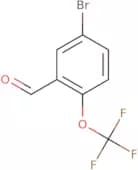
CAS:<p>Please enquire for more information about H-beta-(7-Methoxycoumarin-4-yl)-Ala-OH including the price, delivery time and more detailed product information at the technical inquiry form on this page</p>Fórmula:C13H13NO5Pureza:Min. 95%Peso molecular:263.25 g/mol5-Bromo-2-(trifluoromethoxy)benzaldehyde
CAS:5-Bromo-2-(trifluoromethoxy)benzaldehyde is a chemical that is used as a reactant in organic chemistry. It can be used as a building block for the synthesis of complex compounds, or as an intermediate in the preparation of fine chemicals. 5-Bromo-2-(trifluoromethoxy)benzaldehyde is also useful in research and development. It has been used to synthesize pharmaceuticals, pesticides, and other organic compounds.Fórmula:C8H4BrF3O2Pureza:Min. 95%Cor e Forma:PowderPeso molecular:269.02 g/mol7-Methoxy-4-(trifluoromethyl)coumarin
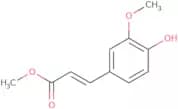
CAS:<p>7-Methoxy-4-(trifluoromethyl)coumarin is a potent and selective aromatase inhibitor. It inhibits the activity of the enzyme, which converts testosterone to estradiol. The inhibition of this enzyme may be beneficial in the treatment of breast cancer. This compound has also been shown to inhibit the activity of P450 enzymes and coumarin derivatives, which are involved in drug metabolism and detoxification.</p>Fórmula:C11H7F3O3Pureza:Min. 95%Peso molecular:244.17 g/molMethyl (2E)-3-(4-hydroxy-3-methoxyphenyl)acrylate
CAS:<p>Methyl (2E)-3-(4-hydroxy-3-methoxyphenyl)acrylate is a natural compound, which belongs to the group of ferulate esters. It has been shown that methyl (2E)-3-(4-hydroxy-3-methoxyphenyl)acrylate inhibits the activity of esterases, which are enzymes that hydrolyze esters. This inhibition leads to an accumulation of ferulic acid in the blood, which is associated with bowel disease. Methyl (2E)-3-(4-hydroxy-3-methoxyphenyl)acrylate has been shown to be effective against murine hepatoma cells and polymorphonuclear leucocytes, which are white blood cells that can be found in the blood and other tissues. The inhibitory effect on these cells may be due to its ability to bind to ferulic acid and caffeic acids.</p>Fórmula:C11H12O4Pureza:Min. 95%Cor e Forma:White PowderPeso molecular:208.21 g/molDolastatin 15 (5S)-1-[(2S)-O-(N,N-Dimethyl-Val-Val-N-Me-Val-Pro-Pro)-2-hydroxyisovaleryl]-2-oxo-4-methoxy-5-benzyl-3-pyrroline
CAS:Dolastatin 15 (5S)-1-[(2S)-O-(N,N-Dimethyl-Val-Val-N-Me-Val-Pro-Pro)-2-hydroxyisovaleryl]-2-oxo-4-methoxy-5-benzylpyrrolidinium is a natural compound that has been isolated from the Indian Ocean sea hare Dolabella auricularia. It has shown significant cytotoxicity against cancer cells as well as significant immunosuppressive activities in animals. Dolastatin 15 is an analog of dolastatin 10 and has been shown to be active against hepatitis B and C virus. It also has antiinflammatory properties and may be effective in combating autoimmune diseases. The synthesis of this compound is an asymmetric synthesis with a hydroxyl group on one side of the molecule and an amide on the other side.Fórmula:C45H68N6O9Pureza:Min. 95%Peso molecular:837.06 g/mol(2-Methoxypropyl)amine hydrochloride
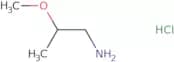
CAS:<p>2-Methoxypropyl)amine hydrochloride (2MPPA) is a versatile building block that can be used in the synthesis of complex compounds. It is a research chemical that is used as a reagent and as a speciality chemical for the production of pharmaceuticals, agrochemicals, and other organic chemicals. 2MPPA can be used as an intermediate in the manufacture of useful scaffolds or useful reaction components. This product has CAS number 70807-90-8 and is of high quality.</p>Fórmula:C4H11NO·HClPureza:Min. 95%Cor e Forma:SolidPeso molecular:125.6 g/mol2-Amino-5-(trifluoromethoxy)benzoic acid
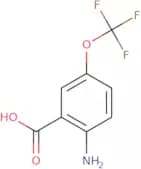
CAS:<p>Please enquire for more information about 2-Amino-5-(trifluoromethoxy)benzoic acid including the price, delivery time and more detailed product information at the technical inquiry form on this page</p>Fórmula:C8H6F3NO3Pureza:Min. 95%Peso molecular:221.13 g/molN-(4-Methoxybenzylidene)-4-butylaniline
CAS:<p>N-(4-Methoxybenzylidene)-4-butylaniline is an organic compound that belongs to the group of liquid crystals. It has been used in the study of phase transitions and thermal properties. The melting point of N-(4-methoxybenzylidene)-4-butylaniline is between -80 and -90 °C, depending on the solvent. This compound has a low proton affinity, but it can be oxidized to form a radical cation.</p>Fórmula:C18H21NOPureza:Min. 95%Peso molecular:267.37 g/moltrans-4-Benzyloxy-3-methoxy-beta-nitrostyrene
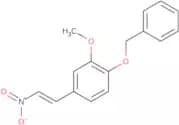
CAS:<p>Trans-4-Benzyloxy-3-methoxy-beta-nitrostyrene is an oxime that can be used as a catalyst for the catalytic hydrogenation of nitroalkanes. It is also a precursor to pallimamine, which is used as a pharmaceutical agent and an experimental virucide. Trans-4-Benzyloxy-3-methoxy-beta-nitrostyrene is synthesized by coupling two indole carboxylic acid analogues in the presence of sodium hydroxide and potassium carbonate. The reaction yields trans-(4'-benzyloxy)-3'-methoxystyrene, which is then converted to the title compound with ammonium chloride and hydrochloric acid. This compound undergoes acidic hydrolysis to yield the title compound.</p>Fórmula:C16H15NO4Pureza:Min. 95%Cor e Forma:PowderPeso molecular:285.29 g/mol(S)-(-)-6,7-Dimethoxy-1,2,3,4-tetrahydroisoquinoline-3-carboxylic acid hydrochloride
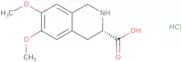
CAS:<p>(S)-(-)-6,7-Dimethoxy-1,2,3,4-tetrahydroisoquinoline-3-carboxylic acid hydrochloride is a synthetic chiral compound that is used to study the role of glyoxylate in biochemical reactions. This drug is an enolate and alkylating agent that can react with nucleophiles such as amines and thiols. It has been shown to be effective against perchlorates by hydrolyzing them into chlorine and oxygen gas. This drug has also been shown to inhibit the growth of Rhodobacter sphaeroides by inhibiting glyoxylate metabolism.</p>Fórmula:C12H15NO4·HClPureza:Min. 95%Cor e Forma:White PowderPeso molecular:273.71 g/mol4-(2-Oxiranylmethoxy)benzeneethanol
CAS:<p>Please enquire for more information about 4-(2-Oxiranylmethoxy)benzeneethanol including the price, delivery time and more detailed product information at the technical inquiry form on this page</p>Fórmula:C11H14O3Pureza:Min. 95%Peso molecular:194.23 g/mol



![Dolastatin 15 (5S)-1-[(2S)-O-(N,N-Dimethyl-Val-Val-N-Me-Val-Pro-Pro)-2-hydroxyisovaleryl]-2-oxo-4-…](/_next/image/?url=https%3A%2Fstatic.cymitquimica.com%2Fproducts%2F3D%2Fthumb-webp%2FFD110329.webp&w=3840&q=75)