Éteres
Foram encontrados 40904 produtos de "Éteres"
4-Methoxyresorcinol
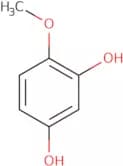
CAS:4-Methoxyresorcinol is a chemical compound that has the molecular formula CHNO. It has a hydroxyl group in the 4-position and a methyl group on the 8-position. The intramolecular hydrogen of this molecule is denatured by heating to about 220°C. This process converts it into resorcinol, which is structurally similar but has different properties. 4-Methoxyresorcinol can be used as a polymerization initiator for polycarboxylic acid or quinoline derivatives, and its analytical methods are used in determining its structure.Fórmula:C7H8O3Pureza:Min. 95%Cor e Forma:PowderPeso molecular:140.14 g/mol6-Methoxycoumarin
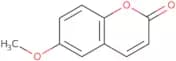
CAS:6-Methoxycoumarin is a potent inhibitor drug that inhibits the activity of monoamine oxidase (MAO). It has been shown to have anti-feedant properties in laboratory experiments and is used as an antifeedant. 6-Methoxycoumarin also fluoresces under ultraviolet light, which can be used to identify its presence in a solution. 6-Methoxycoumarin is a derivative of coumarin and has the same skeleton with two methoxy groups attached. The compound can be identified by its chemical structure and predictable fluorescence properties. 6-Methoxycoumarin has been shown to bind to amines, which are organic compounds containing nitrogen, on the chromatographic column, allowing for easy detection.Fórmula:C10H8O3Pureza:Min. 95%Cor e Forma:PowderPeso molecular:176.17 g/mol4-Chloro-3-methoxybenzoic acid methyl ester
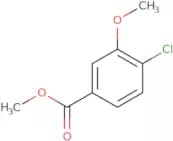
CAS:4-Chloro-3-methoxybenzoic acid methyl ester is a chemical compound that is used as a reagent in organic synthesis. It can be used to produce high quality research chemicals, speciality chemicals, and fine chemicals. This compound has a wide variety of uses because it is versatile and can be used as a reaction component or building block. Its CAS number is 116022-18-5.Fórmula:C9H9ClO3Pureza:Min. 95%Cor e Forma:SolidPeso molecular:200.62 g/molBis[3-(triethoxysilyl)propyl]tetrasulfide
CAS:Bis[3-(triethoxysilyl)propyl]tetrasulfide is a cross-linking agent that can be used to create polymer films. It has been shown to form hydrated films in deionized water, which have been studied with atomic force microscopy. Kinetic data for the polymerization of bis[3-(triethoxysilyl)propyl]tetrasulfide has also been obtained by following the increase in viscosity of a solution containing a small amount of bis[3-(triethoxysilyl)propyl]tetrasulfide and an organic modifier. Bis[3-(triethoxysilyl)propyl]tetrasulfide is typically synthesized using solid-phase synthesis on carbon nanotubes or particles.Fórmula:C18H42Si2S4O6Pureza:Min. 80%Cor e Forma:Yellow Clear LiquidPeso molecular:538.96 g/mol6-Methoxypyrimidine-2,4(1H,3H)-dione
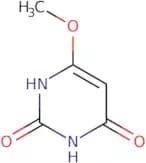
CAS:Produto Controlado6-Methoxypyrimidine-2,4(1H,3H)-dione is a nucleophilic compound that is formed by the reaction of an electron with a carbon atom in an organic molecule. It is used as a reagent in organic synthesis. 6-Methoxypyrimidine-2,4(1H,3H)-dione can be synthesized from 2-amino-5-methoxybenzaldehyde and chloroacetic acid in three steps. The chloride ion reacts with the 6-methoxypyridine to form the desired product. 6-Methoxypyrimidine-2,4(1H,3H)-dione can also be used as a reagent to catalyze chemical reactions such as alkylation and allylation reactions. 6-Methoxypyrimidine-2,4(1H,3H)-dione has been shown to have barbiturate activityFórmula:C5H6N2O3Pureza:Min. 95%Peso molecular:142.11 g/mol4-Methoxybenzoin
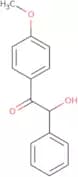
CAS:4-Methoxybenzoin is a phenolic compound that belongs to the carbinols. It is an aromatic hydrocarbon that can be synthesized by heating benzaldehyde with methanol and sodium carbonate in ethanol. 4-Methoxybenzoin is used as a chemical intermediate for the synthesis of other chemicals, such as quinidine, anisole, thiosemicarbazide and hydrochloric acid. 4-Methoxybenzoin has been shown to react with cellulose acetate to form an acidic photodegradation product. This reaction can be suppressed by adding sulfuric acid or sodium sulfite.Fórmula:C15H14O3Pureza:Min. 95%Cor e Forma:White PowderPeso molecular:242.27 g/mol3,4,5-Trimethoxybenzylamine
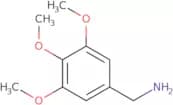
CAS:Produto Controlado3,4,5-Trimethoxybenzylamine (TMB) is a coumarin derivative that inhibits tumor growth in mice. It has been shown to inhibit the proliferation of cells by binding to amines, and also to have an antiradical activity. The in vivo studies on TMB showed that it is effective against a number of tumor types, including lung cancer and melanoma. Additionally, TMB has anti-inflammatory properties.
Fórmula:C10H15O3NPureza:Min. 98%Cor e Forma:Colorless Slightly Yellow Clear LiquidPeso molecular:197.23 g/mol2-Ethoxy-3-methoxybenzaldehyde
CAS:2-Ethoxy-3-methoxybenzaldehyde is a coordination compound that contains two thiolate ligands, one carbonyl group, and a chelate ring with sulfur. The compound has been shown to bind to the active site of thiosemicarbazide in the enzyme sulfite oxidase, which catalyzes the oxidation of sulfite to sulfate. 2-Ethoxy-3-methoxybenzaldehyde has also been shown to be an effective ligand for rhenium.
Fórmula:C10H12O3Pureza:Min. 95%Peso molecular:180.2 g/mol6-Methoxy-2,3,4,9-tetrahydro-1H-β-carbolin-1-one
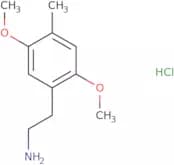
CAS:6-Methoxy-2,3,4,9-tetrahydro-1H-beta-carbolin-1-one is a β-carboline alkaloid that is structurally related to harmaline and tetrahydroharmine. It has been shown to have antidepressant activity in animals. 6-Methoxy-2,3,4,9-tetrahydro-1H-beta-carbolin-1-one was analyzed by GC/MS and found to be present in the leaves of plants from the genus Tetraclinis. 6MHBC was also identified as a metabolite of diazepam in rat urine after administration of a single oral dose of 10 mg/kg diazepam. The observed β carboline metabolite was determined to be 6MHBC.Fórmula:C12H12N2O2Pureza:Min. 95%Peso molecular:216.24 g/mol2,5-Dimethoxy-4-methylphenethylamine hydrochloride
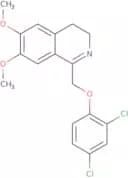
CAS:Produto ControladoPlease enquire for more information about 2,5-Dimethoxy-4-methylphenethylamine hydrochloride including the price, delivery time and more detailed product information at the technical inquiry form on this pageFórmula:C11H18ClNO2Pureza:Min. 98 Area-%Peso molecular:231.72 g/mol1-((6,7-dimethoxy(3,4-dihydroisoquinolyl))methoxy)-2,4-dichlorobenzene
CAS:Please enquire for more information about 1-((6,7-dimethoxy(3,4-dihydroisoquinolyl))methoxy)-2,4-dichlorobenzene including the price, delivery time and more detailed product information at the technical inquiry form on this pagePureza:Min. 95%5-Methoxy-4-oxo-4H-pyran-2-carboxylic acid
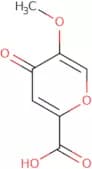
CAS:5-Methoxy-4-oxo-4H-pyran-2-carboxylic acid is a building block for organic synthesis. It is a versatile building block that can be used to synthesize complex compounds. 5-Methoxy-4-oxo-4H-pyran-2-carboxylic acid has been shown to be useful as a reagent in organic synthesis and as a reaction component. It is also used in pharmaceutical research and development. CAS No.: 1199-60-6Fórmula:C7H6O5Pureza:Min. 95%Cor e Forma:PowderPeso molecular:170.12 g/mol(2,4,5-Trimethoxyphenyl)acetone
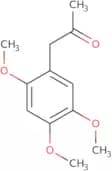
CAS:Produto Controlado(2,4,5-Trimethoxyphenyl)acetone is an organic compound that inhibits the replication of RNA. It was found to inhibit the activity of beta-asarone and inhibit the conversion of asarone to o-benzoquinones in cell cultures. This agent also has genotoxic effects on human liver cells. (2,4,5-Trimethoxyphenyl)acetone binds to 5-hydroxytryptamine receptors and inhibits their activities, which can lead to a decrease in serotonin concentrations. (2,4,5-Trimethoxyphenyl)acetone is a colorless liquid at room temperature with a molecular weight of 174.24 grams/mol.
Fórmula:C12H16O4Pureza:Min. 95%Peso molecular:224.25 g/mol4-(4,6-Dimethoxy-1,3,5-triazin-2-yl)-4-morpholinium tetrafluoroborate
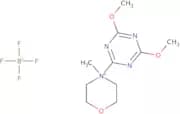
CAS:4-(4,6-Dimethoxy-1,3,5-triazin-2-yl)-4-morpholinium tetrafluoroborate is a modulating agent that is used in the treatment of infectious and metabolic disorders. The compound has been shown to increase the activity of fatty acid oxidation and decrease the production of inflammatory mediators. 4-(4,6-Dimethoxy-1,3,5-triazin-2-yl)-4-morpholinium tetrafluoroborate interacts with a variety of proteins by binding to their Nterminal domains. It can be conjugated to other molecules and then used as probes for kinetic studies or as antiinflammatory compounds.Fórmula:C10H17N4O3•BF4Pureza:Min. 97 Area-%Cor e Forma:PowderPeso molecular:328.07 g/mol1-Bromo-3,4,5-trimethoxybenzene
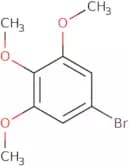
CAS:1-Bromo-3,4,5-trimethoxybenzene is a brominated molecule that is used in the synthesis of other organic compounds. It inhibits protein synthesis by inhibiting the production of ribosomes and is toxic to cancer cells. It has been shown to have inhibitory properties against the growth of k562 cells, which are leukemia cells. The mechanism by which 1-bromo-3,4,5-trimethoxybenzene inhibits protein synthesis is not fully understood. However, it has been found that this compound inhibits DNA polymerase activity and prevents RNA polymerase from transcribing genetic information from DNA to mRNA. This may be due to its ability to act as a diazonium salt or an n-dimethyl formamide substrate. In addition, 1-bromo-3,4,5-trimethoxybenzene can be hydrolyzed into trimethoxybenzene and bFórmula:C9H11BrO3Pureza:Min. 98 Area-%Cor e Forma:PowderPeso molecular:247.09 g/mol3-Cyano-4-methoxybenzoic acid
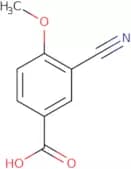
CAS:3-Cyano-4-methoxybenzoic acid is a white crystalline solid that is soluble in water. This compound is a useful intermediate for the synthesis of other organic compounds, as well as a useful scaffold for the synthesis of complex compounds. 3-Cyano-4-methoxybenzoic acid also has potential use as a research chemical, and can be used as an effective building block for the preparation of fine chemicals. 3-Cyano-4-methoxybenzoic acid may be used to produce speciality chemicals such as pharmaceuticals, dyes, pesticides, and perfumes. It can also be used to synthesize compounds with diverse functionalities.Fórmula:C9H7NO3Pureza:Min. 95%Cor e Forma:SolidPeso molecular:177.16 g/mol4-Ethoxyphenylethyl alcohol
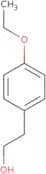
CAS:4-Ethoxyphenylethyl alcohol (4EPEA) is a non-invasive fluorescent probe that has been used in the study of nucleic acids. It is a small molecule that can be used to identify DNA and RNA sequences. 4EPEA terminates at a specific site on the DNA or RNA, where it forms a cavity with its hydroxyl group pointing outward. The cavity is then filled by the next base in the sequence, which reverses the orientation of 4EPEA and causes it to fluoresce. This process can be repeated to map the entire length of an RNA molecule or DNA strand. When 4EPEA is mixed with acetonitrile (ACN), it undergoes a transition from an amorphous state to a more crystalline state, which allows for better separation of 4EPEA from other compounds in ACN. The use of β-cyclodextrin as an additive further improves this separation as well as increasing the stability ofFórmula:C10H14O2Pureza:Min. 95%Cor e Forma:PowderPeso molecular:166.22 g/mol2-Bromo-3'-methoxyacetophenone
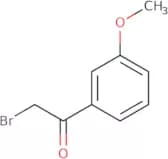
CAS:2-Bromo-3'-methoxyacetophenone is a reactive compound that has been used as an antiplatelet drug. It is a prodrug of vicagrel, which inhibits the platelet aggregation by blocking the conversion of ADP to ATP. It also has been shown to inhibit the growth of cryptococcus neoformans. This compound binds to matrix proteins and disrupts their structure, leading to a decrease in platelet adhesion. 2-Bromo-3'-methoxyacetophenone has been shown to be metabolized through a number of metabolic transformations, including hydrolysis by esterases or glucuronidases, oxidation by cytochrome P450 enzymes, reduction by glutathione reductase, or conjugation with glucuronic acid. The biological properties of this drug are complex and depend on its concentration and duration of exposure. Its effect on platelet aggregation is due to its ability to inhibit the activity of protein kinFórmula:C9H9BrO2Pureza:Min. 95%Peso molecular:229.07 g/molN-[2-(2,3-Dimethoxyphenyl)ethyl]-2-chlorobenzamide
CAS:Produto ControladoN-[2-(2,3-Dimethoxyphenyl)ethyl]-2-chlorobenzamide is a versatile building block that can be used as a reaction component and reagent. It is an intermediate in the synthesis of pharmaceuticals and fine chemicals and has been shown to be useful in the synthesis of complex compounds. This compound reacts with nucleophiles, such as amines and alcohols, by replacing the chloride group with a variety of functional groups. The product is then hydrolyzed to release the original reactant. N-[2-(2,3-Dimethoxyphenyl)ethyl]-2-chlorobenzamide has a CAS number of 320576-19-0 and can be found at ChemDiv.com.Fórmula:C17H18ClNO3Pureza:Min. 95%Peso molecular:319.78 g/mol3-Chloro-4-(trifluoromethoxy)aniline
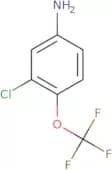
CAS:Please enquire for more information about 3-Chloro-4-(trifluoromethoxy)aniline including the price, delivery time and more detailed product information at the technical inquiry form on this pageFórmula:C7H5ClF3NOPureza:Min. 95%Cor e Forma:PowderPeso molecular:211.57 g/mol

![Bis[3-(triethoxysilyl)propyl]tetrasulfide](/_next/image/?url=https%3A%2Fstatic.cymitquimica.com%2Fproducts%2F3D%2Fthumb-webp%2FFB33713.webp&w=3840&q=75)


![N-[2-(2,3-Dimethoxyphenyl)ethyl]-2-chlorobenzamide](/_next/image/?url=https%3A%2Fstatic.cymitquimica.com%2Fproducts%2F3D%2Fthumb-webp%2FFD66108.webp&w=3840&q=75)