Éteres
Foram encontrados 40904 produtos de "Éteres"
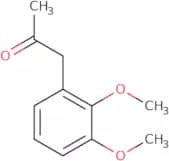
(2,3-Dimethoxyphenyl)acetone
CAS:2,3-Dimethoxyphenylacetone is a synthetic compound that has been used as a precursor to other compounds. The synthesis of 2,3-dimethoxyphenylacetone requires the reaction of lithium aluminum hydride with acrylonitrile and hydriodic acid. The molecule can be cyclized in two different ways to form either 2,3-dimethoxybenzaldehyde or 3-methoxybenzaldehyde. The structure of 2,3-dimethoxyphenylacetone is similar to that of hydrazoic acid which has been used as an intermediate in the synthesis of other compounds such as pyrazines.
Fórmula:C11H14O3Pureza:Min. 95%Cor e Forma:PowderPeso molecular:194.23 g/molTrimethylolpropane ethoxylate - average Mn ~450
CAS:Please enquire for more information about Trimethylolpropane ethoxylate - average Mn ~450 including the price, delivery time and more detailed product information at the technical inquiry form on this pageFórmula:(C2H4O)n•(C2H4O)n•(C2H4O)n•C6H14O3Pureza:Min. 95%2-(2-Aza-1-methyl-2-(3-(1,1,2,2-tetrafluoroethoxy)phenyl)vinyl)indane-1,3-dione
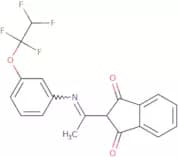
CAS:Please enquire for more information about 2-(2-Aza-1-methyl-2-(3-(1,1,2,2-tetrafluoroethoxy)phenyl)vinyl)indane-1,3-dione including the price, delivery time and more detailed product information at the technical inquiry form on this pageFórmula:C19H13F4NO3Pureza:Min. 95%Cor e Forma:PowderPeso molecular:379.3 g/molAvanafil
CAS:Avanafil is a drug that can be used as a treatment for male erectile dysfunction. It works by inhibiting the production of PDE5, which is an enzyme that regulates the levels of cGMP in the penis. Avanafil has been shown to be effective when taken at a dose of 100 mg; this is because it takes about 30 minutes for avanafil to reach its peak level. Avanafil has a chemical stability that is greater than 12 hours, with an average lifespan of 24 hours. The drug also has no major drug interactions and does not inhibit any other drugs from working.Fórmula:C23H26ClN7O3Pureza:Min. 98 Area-%Cor e Forma:White PowderPeso molecular:483.95 g/mol2-fluoro-5-methoxybenzaldehyde
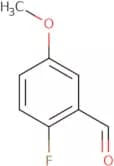
CAS:2-fluoro-5-methoxybenzaldehyde is an asymmetric synthesis that has been shown to inhibit the growth of cancer cells by inhibiting a protein called MT2. 2-Fluoro-5-methoxybenzaldehyde is a nucleophilic compound and reacts with the electrophilic carbon in the enolate to form a sulfoxide, which can be hydrolyzed by acid. This reaction inhibits cancer cell growth as it prevents cellular metabolism and amino acid biosynthesis.Fórmula:C8H7FO2Pureza:Min. 95%Peso molecular:154.14 g/mol3,4-Difluoro-2-methoxybenzoic acid
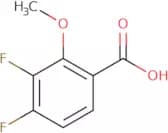
CAS:3,4-Difluoro-2-methoxybenzoic acid is a chemical compound that can be used as a reaction component or reagent. It is also a useful scaffold for organic synthesis of complex compounds and can be used as a building block to produce fine chemicals. 3,4-Difluoro-2-methoxybenzoic acid has the CAS number 875664-52-1 and is listed under the chemical name 3,4-difluoro-2-methoxybenzoic acid.
Fórmula:C8H6F2O3Pureza:Min. 95%Cor e Forma:PowderPeso molecular:188.13 g/mol2-Methoxycinnamic acid methyl ester
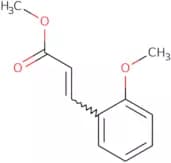
CAS:2-Methoxycinnamic acid methyl ester is a monomer that can be used in the synthesis of magnetic nanoparticles. It has been shown to have high activity and can be used at temperatures between 20°C and 40°C. This reagent is also soluble in organic solvents, making it easy to purify. The size of the particles can be controlled by changing the diameter of the monomer, which can be determined using various techniques such as magnetic separation, filtration, or centrifugation. 2-Methoxycinnamic acid methyl ester was found to have a mesoporous structure when synthesized using an organometallic technique. This reagent is suitable for use in analytical methods such as gas chromatography-mass spectrometry (GC-MS) or liquid chromatography-mass spectrometry (LC-MS).Fórmula:C11H12O3Pureza:Min. 95%Cor e Forma:PowderPeso molecular:192.21 g/mol3-(4-Fluorobenzoyl)-6-Methoxy-2-Methyl-1H-Indole-1-Acetic Acid
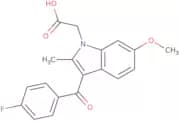
CAS:Produto Controlado3-(4-Fluorobenzoyl)-6-Methoxy-2-Methyl-1H-Indole-1-Acetic Acid is a prodrug that is metabolized to 6-fluoro-3,4 dioxo tamoxifen in the liver. It has been shown to have anticholinergic, cytosolic calcium and c1-4 alkyl properties. 3-(4-Fluorobenzoyl)-6-Methoxy-2-Methylindole Acetic Acid also has a basic group, cyclopentane ring, and pyridine ring.Fórmula:C19H16FNO4Pureza:Min. 95%Peso molecular:341.33 g/molEthyl 3,4-diethoxybenzoate
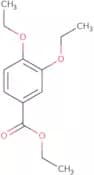
CAS:Ethyl 3,4-diethoxybenzoate is an analgesic that belongs to the class of narcotic analgesics. It is a narcotic that binds to opioid receptors in the brain and spinal cord. This drug has been shown to be effective against bacterial strains resistant to codeine, such as Rhodococcus equi, and dihydrocodeine. It also has high biodegradability due to its ability to be metabolized by bacteria into harmless compounds. The immobilization efficiency of this drug is also high because it does not accumulate in tissues and can cross the blood-brain barrier.Fórmula:C13H18O4Pureza:Min. 95%Cor e Forma:PowderPeso molecular:238.28 g/mol3-(4-Methoxyphenyl)propionamide
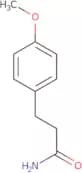
CAS:3-(4-Methoxyphenyl)propionamide is a compound that belongs to the group of benzene amides. It is synthesized by reacting an excess of 3-bromopropionaldehyde with an amine in the presence of sodium hydroxide. This reaction produces a mixture of products, which are separated by chromatography. The yields for this reaction are approximately 90%. 3-(4-Methoxyphenyl)propionamide has been used as a biomolecular building block, and its traceless nature makes it useful in organic synthesis.
3-(4-Methoxyphenyl)propionamide can be used to synthesize alkanesulfonamides and spirolactams, which are important intermediates in chemical synthesis. 3-(4-Methoxyphenyl)propionamide also reacts with phenanthridone to produce chloride derivatives and with arenes to produce linkers.Fórmula:C10H13NO2Pureza:Min. 95%Cor e Forma:PowderPeso molecular:179.22 g/mol2-Ethoxycinnamic acid
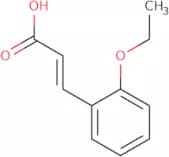
CAS:2-Ethoxycinnamic acid is a metastable molecule that has been obtained by an asymmetric synthesis. It is unreactive, and its reaction products are polyvalent. 2-Ethoxycinnamic acid can be analyzed using analytical methods such as flow system, functional theory, and gas chromatography. 2-Ethoxycinnamic acid has been used in the preparation of cinnamates, which are used in perfumes and flavors. Polymorphs of this molecule have also been observed in crystalline form. There are two different forms of the molecule: α-form and β-form. The α-form is more stable than the β-form because it has a hydrogen bond with the methyl group on the left side of the molecule.
Fórmula:C11H12O3Pureza:Min. 95%Cor e Forma:PowderPeso molecular:192.21 g/mol3-Bromo-2-methoxybenzyl alcohol
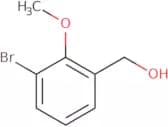
CAS:3-Bromo-2-methoxybenzyl alcohol is a reaction component that is used in the synthesis of a number of chemical compounds. It has been shown to be a useful scaffold, with versatile building blocks and intermediates. 3-Bromo-2-methoxybenzyl alcohol is an intermediate for the synthesis of complex compounds such as antihypertensive drugs, anti-inflammatory agents, and immunosuppressant drugs. This compound also has a variety of uses in research including as a reagent for the determination of enzyme activity and as an analytical reference standard.Fórmula:C8H9BrO2Pureza:Min. 95%Cor e Forma:PowderPeso molecular:217.06 g/mol6,7-Dimethoxyquinazoline-2,4-dione
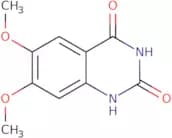
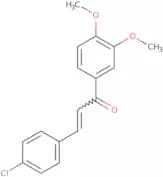
CAS:6,7-Dimethoxyquinazoline-2,4-dione is a chemical compound that can be synthesized by reacting amide and formaldehyde. It has been investigated as an efficient method for the synthesis of amides. 6,7-Dimethoxyquinazoline-2,4-dione is also a potential antibacterial agent which may prevent bacterial growth by inhibiting choline uptake or by binding to ribosomes and blocking protein synthesis. The reaction mechanism of this compound is not well understood, but it may involve hydrolysis of cyanate to produce hydrogen cyanide (HCN), which then reacts with the amide to form the quinazoline ring.Fórmula:C10H10N2O4Pureza:Min. 95%Cor e Forma:PowderPeso molecular:222.2 g/mol4-Chloro-3',4'-dimethoxychalcone
CAS:Please enquire for more information about 4-Chloro-3',4'-dimethoxychalcone including the price, delivery time and more detailed product information at the technical inquiry form on this page
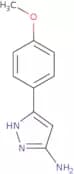
Pureza:Min. 95%5-Amino-3-(4-methoxyphenyl)pyrazole
CAS:5-Amino-3-(4-methoxyphenyl)pyrazole (5AMPAP) is an anti-cancer agent that is effective against a number of different cancers, including breast, lung, and prostate. It selectively inhibits the growth of cancer cells by targeting enzymes in the mitochondria that are required for ATP production. 5AMPAP binds to the enzyme pyruvate dehydrogenase kinase, which has been shown to be involved in regulating cell proliferation and apoptosis. In addition, it has been demonstrated that this compound has anti-inflammatory properties. The regioselectivity of 5AMPAP was determined by x-ray crystallography and was found to form a pyrazolopyrimidine ring with two nitrogens on opposite sides of the ring. This regioselectivity is necessary for its anti-cancer activity.
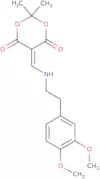
Fórmula:C10H11N3OPureza:Min. 95%Peso molecular:189.21 g/mol5-(((2-(3,4-dimethoxyphenyl)ethyl)amino)methylene)-2,2-dimethyl-1,3-dioxane-4,6-dione
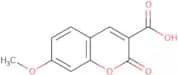
CAS:Please enquire for more information about 5-(((2-(3,4-dimethoxyphenyl)ethyl)amino)methylene)-2,2-dimethyl-1,3-dioxane-4,6-dione including the price, delivery time and more detailed product information at the technical inquiry form on this pagePureza:Min. 95%7-Methoxycoumarin-3-carboxylicacid
CAS:7-Methoxycoumarin-3-carboxylic acid (MC) is a potent inhibitor of metalloendopeptidases and cyclic peptide receptors. MC has been shown to inhibit protein synthesis, leading to apoptotic cell death. It has also been reported to have anti-inflammatory properties, which may be due to its inhibition of prostaglandin synthesis. The fluorophore 7-methoxycoumarin is derived from the natural product coumarin and can be used as a fluorescent probe for hydrogen bonding in molecular modeling studies.Fórmula:C11H8O5Pureza:Min. 95%Cor e Forma:PowderPeso molecular:220.18 g/mol5-Chloro-2-methoxy-4-methylnitrobenzene
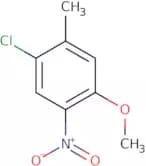
CAS:5-Chloro-2-methoxy-4-methylnitrobenzene is a high quality chemical that can be used as a research chemical, reagent, or a useful scaffold. It is also an intermediate in the synthesis of organic compounds. 5-Chloro-2-methoxy-4-methylnitrobenzene is a versatile building block for the synthesis of other chemicals and has many uses in the pharmaceutical industry. The CAS number for this chemical is 101080-03-9.Fórmula:C8H8ClNO3Pureza:Min. 95%Cor e Forma:PowderPeso molecular:201.61 g/mol4-Methoxystyrene
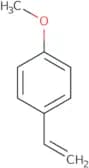
CAS:4-Methoxystyrene is a monomer that can be polymerized to form poly(4-methoxystyrene). It is an ionic monomer that has been used in cationic polymerization reactions. 4-Methoxystyrene can also be used as a fluorescence detector and as a base for the synthesis of polymers with desired properties. The kinetic, radical, and cationic polymerization reactions are all possible with 4-methoxystyrene. This compound has been shown to have intermolecular hydrogen bonding and oxygen nucleophiles, which are both required for the reaction mechanism of this compound. X-ray crystal structures have revealed the structure of this compound.Fórmula:C9H10OPureza:Min. 95%Cor e Forma:Colorless Clear LiquidPeso molecular:134.18 g/mol3-Acetoxy-2,4-dimethoxyacetophenone
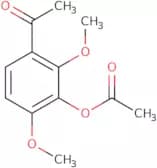
CAS:3-Acetoxy-2,4-dimethoxyacetophenone is a chemical building block that has been shown to be useful in the synthesis of complex compounds. This compound can be used as a reaction component and reagent in organic synthesis. 3-Acetoxy-2,4-dimethoxyacetophenone can be used as a versatile building block for the synthesis of high quality research chemicals and speciality chemicals. It is also a useful intermediate for the preparation of fine chemicals such as pharmaceuticals, agrochemicals, and dyestuffs. 3-Acetoxy-2,4-dimethoxyacetophenone has CAS number 63604-86-4.Fórmula:C12H14O5Pureza:Min. 95%Peso molecular:238.24 g/mol