Éteres
Os éteres são compostos orgânicos que contêm um grupo funcional éter, caracterizado por um átomo de oxigênio ligado a dois radicais hidrocarbonetos. Esses compostos são valiosos na síntese e servem como solventes em várias reações químicas. Na CymitQuimica, oferecemos uma seleção de éteres de alta qualidade para apoiar suas aplicações de pesquisa e industriais, garantindo resultados confiáveis e eficazes. Nossa gama de éteres atende a diversos requisitos laboratoriais, desde experimentos de rotina até pesquisas avançadas.
Foram encontrados 40902 produtos de "Éteres"
Ordenar por
Pureza (%)
0
100
|
0
|
50
|
90
|
95
|
100
3-Fluoro-4-methoxybenzonitrile
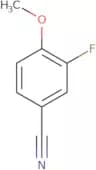
CAS:3-Fluoro-4-methoxybenzonitrile is a ferroelectric liquid crystal chiral molecule. It can be synthesized industrially by the reaction of 3-fluoro-4-methoxybenzoyl chloride with sodium methoxide. The synthesis is scalable and leads to high yields. 3-Fluoro-4-methoxybenzonitrile has been used in the synthesis of other ferroelectric liquid crystals, such as 4-(3′,5′-diiodophenyl)pentaerythritol triacrylate and 3,5′-(1H,1′H) -dibenzothiophene. This compound also displays nematic phase behavior at room temperature when in contact with a nematic director. Polarization data for this substance are available from experiments on thin films.Fórmula:C8H6FNOPureza:Min. 95%Cor e Forma:PowderPeso molecular:151.14 g/mol(2-(3,4-dimethoxyphenyl)ethyl)(phenylsulfonyl)amine
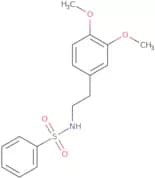
CAS:<p>Please enquire for more information about (2-(3,4-dimethoxyphenyl)ethyl)(phenylsulfonyl)amine including the price, delivery time and more detailed product information at the technical inquiry form on this page</p>Pureza:Min. 95%(-)-Bis(S)-1-(Ethoxycarbonyl)ethyl fumarate
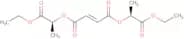
CAS:(-)-Bis(S)-1-(Ethoxycarbonyl)ethyl fumarate is a chemical compound that has been used for the synthesis of other compounds. This chemical has been shown to react with a wide range of nucleophiles and electrophiles, making it an important reagent in synthetic organic chemistry. (-)-Bis(S)-1-(Ethoxycarbonyl)ethyl fumarate is also useful as a scaffold for more complex molecules and as a building block for the synthesis of more complex structures.Fórmula:C14H20O8Pureza:Min. 95 Area-%Peso molecular:316.3 g/mol3-[4-(trifluoromethoxy)phenyl]propanoicacid
CAS:3-[4-(trifluoromethoxy)phenyl]propanoic acid (TFPA) is a versatile building block that can be used as a reagent and research chemical. TFPA has the potential to be used as a useful intermediate in the synthesis of complex compounds and useful scaffolds. It also has been shown to have high quality, which makes it an excellent choice for use in reactions. This compound is also useful for creating speciality chemicals.Fórmula:C10H9F3O3Cor e Forma:PowderPeso molecular:234.17 g/mol2-Hydroxy-6-methoxyacetophenone
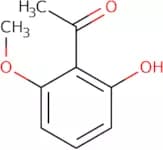
CAS:<p>2-Hydroxy-6-methoxyacetophenone is a chalcone that belongs to the group of flavonoids. It has been shown to have anticancer properties, inhibiting the growth of colorectal carcinoma cells in a dose-dependent manner. The mechanism of action for 2-hydroxy-6-methoxyacetophenone is not fully understood, but it may be due to its ability to inhibit the enzyme demethylase and induce apoptosis. This compound also has been shown to inhibit the growth of Escherichia coli and Salmonella typhimurium when used at high concentrations. 2-Hydroxy-6-methoxyacetophenone can be synthesized by reacting ethyl acetoacetate with two equivalents of methylamine in the presence of a base such as sodium methoxide or potassium hydroxide.<br>2-Hydroxy-6-methoxyacetophenone has also been shown to inhibit</p>Fórmula:C9H10O3Pureza:Min. 95%Cor e Forma:PowderPeso molecular:166.17 g/mol4-Methoxy-3-nitrobenzotrifluoride
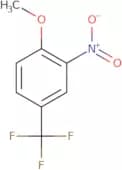
CAS:<p>4-Methoxy-3-nitrobenzotrifluoride is a chemical that belongs to the group of reactants. It is used as a reagent, building block, or intermediate in organic synthesis. 4-Methoxy-3-nitrobenzotrifluoride has been shown to be an effective scaffold for the preparation of complex compounds with versatile building blocks and useful intermediates. It can also be used as a fine chemical with speciality chemical properties.</p>Fórmula:C8H6F3NO3Pureza:Min. 95%Cor e Forma:PowderPeso molecular:221.13 g/mol2',4',4-Trimethoxychalcone
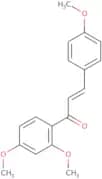
CAS:2',4',4-Trimethoxychalcone is a natural product that inhibits the enzyme activity of phospholipase A2, lipoxygenase, and cyclo-oxygenase. It also has high resistance to hydrochloric acid, chloride, and blood pressure. 2',4',4-Trimethoxychalcone has shown protein inhibition effects in vitro, as well as potent transport inhibitor activity against particles. This compound is synthesized using solid-phase chemistry on an immobilized resin.Fórmula:C18H18O4Pureza:Min. 95%Cor e Forma:PowderPeso molecular:298.33 g/mol8-Methoxy-2-methylquinolin-5-amine monohydrochloride
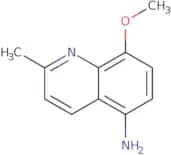
CAS:8-Methoxy-2-methylquinolin-5-amine monohydrochloride is a fine chemical that is used as a versatile building block in the synthesis of complex compounds. 8-Methoxy-2-methylquinolin-5-amine monohydrochloride is an intermediate for the production of research chemicals and pharmaceuticals. It can be used to synthesize speciality chemicals, useful scaffolds, and reagents. It also has a wide range of applications as a reaction component in synthetic organic chemistry. 8-Methoxy-2-methylquinolin-5-amine monohydrochloride has high purity and quality.Fórmula:C11H12N2O•HClPureza:Min. 95 Area-%Cor e Forma:PowderPeso molecular:224.73 g/mol2-Methoxyphenylacetonitrile
CAS:<p>2-Methoxyphenylacetonitrile is a chemical that is used in the manufacture of pharmaceuticals. It has antibacterial activity and can be used to treat typhoid fever, staphylococcal infections, and mental disorders such as schizophrenia. 2-Methoxyphenylacetonitrile is an alkylating agent that reacts with nucleophiles in proteins, DNA, and RNA. These reactions lead to the destruction of the bacterial cell wall and inhibition of protein synthesis. The mechanism by which 2-methoxyphenylacetonitrile exerts its antibacterial effect may involve formation of a reactive intermediate that inhibits bacterial ribonucleotide reductase. The addition of an electron to this intermediate leads to the formation of a covalent bond with one or more amino acids in the protein acceptor, thereby preventing further growth and division of bacteria.</p>Fórmula:C9H9NOPureza:Min. 90%Cor e Forma:White PowderPeso molecular:147.17 g/mol2-Amino-3,4,5-trimethoxybenzoic acid
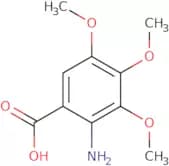
CAS:<p>2-Amino-3,4,5-trimethoxybenzoic acid (2AMTB) is a potential anticancer agent that inhibits the growth of cancer cells by interfering with the epidermal growth factor receptor. It also blocks the binding of this receptor to its ligands, preventing the activation of downstream signaling pathways. 2AMTB has been shown to inhibit epidermal growth factor (EGF)-induced proliferation in vitro and in vivo. 2AMTB has also been shown to inhibit the production of reactive oxygen species and DNA damage caused by amines such as quinazolone, which are commonly found in chemotherapy drugs. These properties make it a potential anticancer drug candidate for use with other chemotherapeutic agents such as epirubicin.</p>Fórmula:C10H13NO5Pureza:Min. 95%Cor e Forma:PowderPeso molecular:227.21 g/mol(2,4,6-Trimethoxyphenyl)acetic acid
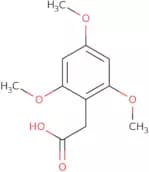
CAS:<p>(2,4,6-Trimethoxyphenyl)acetic acid is a fine chemical that can be used as a versatile building block in the synthesis of other compounds. It is also a useful intermediate for research chemicals and reaction components. (2,4,6-Trimethoxyphenyl)acetic acid is used to synthesize speciality chemicals such as polymers and pharmaceuticals. It is also an important reagent in organic synthesis. This compound has been shown to have high quality and can be used as an additive in paints and coatings.</p>Fórmula:C11H14O5Pureza:Min. 95%Cor e Forma:PowderPeso molecular:226.23 g/mol4-Acetoxy-3,5-dimethoxybenzoic acid
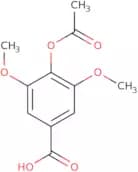
CAS:4-Acetoxy-3,5-dimethoxybenzoic acid (4ADOB) is a chemical substance that has been shown to have cancer chemotherapeutic properties. It is hydroxylated by the enzyme acetylase, which converts it into 4-acetoxy-3,5-dimethoxybenzoyl coenzyme A (4ADBCA). 4ADBCA inhibits the activity of amine oxidase, an enzyme that breaks down natural substances such as amino acids and neurotransmitters. Inhibition of amine oxidase leads to a decrease in the production of proinflammatory substances and cytokines that play a role in inflammatory diseases.Fórmula:C11H12O6Pureza:Min. 95%Cor e Forma:PowderPeso molecular:240.21 g/mol4-Amino-5-chloro-2,3-dihydro-N-[1-(3-methoxypropyl)-4-piperidinyl]-7-benzofurancarboxamide
CAS:The drug 4-Amino-5-chloro-2,3-dihydro-N-[1-(3-methoxypropyl)-4-piperidinyl]-7-benzofurancarboxamide (BZP) is a histamine H2 receptor antagonist. It binds to the histamine H2 receptor in the stomach and duodenum, thereby blocking stomach acid production. BZP has been shown to be effective for treating symptoms of constipation or diarrhoea caused by inflammatory bowel disease or abdominal surgery. BZP also reduces the risk of relapse after surgery but does not affect long term efficacy. This drug is not available in the United States and has significant interactions with other drugs and symptoms including constipation, bowel disease, long term efficacy, and analytical method.Fórmula:C18H26ClN3O3Pureza:Min. 95%Cor e Forma:White PowderPeso molecular:367.87 g/mol2-(2-Methoxyphenoxy)-2-methylpropanoic acid
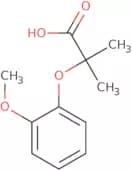
CAS:<p>2-(2-Methoxyphenoxy)-2-methylpropanoic acid is a versatile building block that can be used as a reagent in organic synthesis. It is also an intermediate for the synthesis of various pharmaceuticals, including 2-methoxyestradiol and methoxymacroin. This compound is commercially available from chemical suppliers and can be used to synthesize other compounds with a variety of functional groups.</p>Fórmula:C11H14O4Pureza:Area-% Min. 95 Area-%Cor e Forma:PowderPeso molecular:210.23 g/mol(5-Bromo-2-methoxyphenyl)acetone
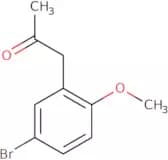
CAS:5-Bromo-2-methoxyphenyl)acetone (BMPA) is a versatile building block used in the synthesis of complex compounds and speciality chemicals. BMPA has been shown to be a useful intermediate for the synthesis of pharmaceuticals, agrochemicals, perfumes, and other products. It is also used as a reagent for research purposes. The compound was first synthesized by the condensation of aniline with acetaldehyde in 1885 by two French chemists, but has since been prepared in various ways. CAS number: 205826-73-9Fórmula:C10H11BrO2Pureza:Min. 95%Peso molecular:243.1 g/mol2-(4-Methoxyphenoxy)-2-methylpropanoic acid
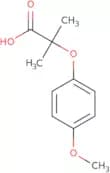
CAS:2-(4-Methoxyphenoxy)-2-methylpropanoic acid (methoxymethyl) is a versatile building block with a variety of applications in synthesis. It is used as an intermediate in the preparation of pharmaceuticals, agrochemicals, and dyes. Methoxymethyl has been shown to be useful as a reagent for research and as a speciality chemical. This compound can also serve as a reaction component or scaffold in the synthesis of more complex compounds.Fórmula:C11H14O4Pureza:Min. 95%Cor e Forma:PowderPeso molecular:210.23 g/mol5-Bromo-3-methoxybenzyl alcohol
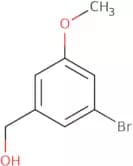
CAS:5-Bromo-3-methoxybenzyl alcohol is a synthetic hydroxyphenyl compound that can be used as a coupling agent. It is prepared by the reaction of bromoacetaldehyde with 3-hydroxybenzyl alcohol in the presence of an amine base, such as pyridine. 5-Bromo-3-methoxybenzyl alcohol can also be used to synthesize pyridines and bromides.Fórmula:C8H9BrO2Pureza:Min. 95%Cor e Forma:PowderPeso molecular:217.06 g/mol3,4-Diethoxybenzoic acid
CAS:<p>3,4-Diethoxybenzoic acid is a phenolic compound that has potent antitumor activity. It inhibits the growth of tumor cells by inhibiting DNA synthesis and protein synthesis in the cell. 3,4-Diethoxybenzoic acid also inhibits the production of enzymes such as pepsin, lipase, and amylase that are important for digestion. It has been shown to be an effective antifungal agent in vitro against Candida albicans and Saccharomyces cerevisiae. 3,4-Diethoxybenzoic acid may also have a role in the prevention of dental caries due to its inhibitory effects on bacterial plaque formation.</p>Fórmula:C11H14O4Pureza:Min. 95%Cor e Forma:Clear LiquidPeso molecular:210.23 g/molMethyl 3,5-dimethoxybenzoate
CAS:Methyl 3,5-dimethoxybenzoate is a chemical with the molecular formula CH3OCH2CH(OMe)CO2H. It is a colorless liquid that is soluble in ethanol and ether. Methyl 3,5-dimethoxybenzoate has been used as a chemical intermediate for the synthesis of other compounds. It can be extracted by solid phase microextraction (SPME). The total ion current (TIC) chromatogram shows the presence of methyl 3,5-dimethoxybenzoate in the sample at retention time 15.81 minutes. Methyl 3,5-dimethoxybenzoate is a secondary metabolite of various bacteria that produces fatty acids from acetyl-CoA via the houben-hoesch reaction. This compound has also been found to have antimicrobial activity against dermatophytes such as Trichophyton mentagrophytes and Microsporum canis.Fórmula:C10H12O4Pureza:Min. 95%Cor e Forma:White PowderPeso molecular:196.2 g/mol3-Cyano-4-methoxybenzoic acid
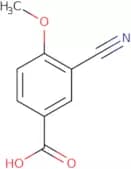
CAS:3-Cyano-4-methoxybenzoic acid is a white crystalline solid that is soluble in water. This compound is a useful intermediate for the synthesis of other organic compounds, as well as a useful scaffold for the synthesis of complex compounds. 3-Cyano-4-methoxybenzoic acid also has potential use as a research chemical, and can be used as an effective building block for the preparation of fine chemicals. 3-Cyano-4-methoxybenzoic acid may be used to produce speciality chemicals such as pharmaceuticals, dyes, pesticides, and perfumes. It can also be used to synthesize compounds with diverse functionalities.Fórmula:C9H7NO3Pureza:Min. 95%Cor e Forma:SolidPeso molecular:177.16 g/mol

![3-[4-(trifluoromethoxy)phenyl]propanoicacid](/_next/image/?url=https%3A%2Fstatic.cymitquimica.com%2Fproducts%2F3D%2Fthumb-webp%2FFT154405.webp&w=3840&q=75)

![4-Amino-5-chloro-2,3-dihydro-N-[1-(3-methoxypropyl)-4-piperidinyl]-7-benzofurancarboxamide](/_next/image/?url=https%3A%2Fstatic.cymitquimica.com%2Fproducts%2F3D%2Fthumb-webp%2FFA27248.webp&w=3840&q=75)