Éteres
Os éteres são compostos orgânicos que contêm um grupo funcional éter, caracterizado por um átomo de oxigênio ligado a dois radicais hidrocarbonetos. Esses compostos são valiosos na síntese e servem como solventes em várias reações químicas. Na CymitQuimica, oferecemos uma seleção de éteres de alta qualidade para apoiar suas aplicações de pesquisa e industriais, garantindo resultados confiáveis e eficazes. Nossa gama de éteres atende a diversos requisitos laboratoriais, desde experimentos de rotina até pesquisas avançadas.
Foram encontrados 40902 produtos de "Éteres"
Ordenar por
Pureza (%)
0
100
|
0
|
50
|
90
|
95
|
100
6-Methoxyindole-3-acetic acid
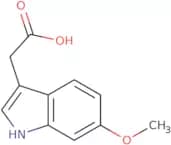
CAS:Please enquire for more information about 6-Methoxyindole-3-acetic acid including the price, delivery time and more detailed product information at the technical inquiry form on this pageFórmula:C11H11NO3Pureza:Min. 95%Cor e Forma:PowderPeso molecular:205.21 g/mol3-Bromo-2,6-dimethoxy-5-nitrobenzoic acid
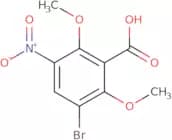
CAS:3-Bromo-2,6-dimethoxy-5-nitrobenzoic acid is a chemical component that can be used as a reagent or building block for the synthesis of other compounds. It is also an intermediate in the synthesis of pesticides and pharmaceuticals. 3-Bromo-2,6-dimethoxy-5-nitrobenzoic acid is a versatile compound with many applications in organic chemistry. This chemical has been shown to have high purity and can be used as a reaction component or reagent in research and development laboratories.Fórmula:C9H8BrNO6Pureza:Min. 95%Cor e Forma:PowderPeso molecular:306.07 g/mol1-Methoxy-4-(2-propenyl)benzene
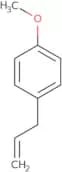
CAS:1-Methoxy-4-(2-propenyl)benzene is a natural compound that has been found to have insecticidal properties. It is used in the synthesis of eugenol and estragole, which are important components in the flavor industry. The optimum concentration of 1-methoxy-4-(2-propenyl)benzene for killing insects is around 0.1%. In toxicity studies, it has been shown to be carcinogenic in rats and mice. However, this chemical's effect on humans is not well understood at this time.Fórmula:C10H12OPureza:Min. 95%Cor e Forma:Clear LiquidPeso molecular:148.2 g/mol2,4,6-Trimethoxycinnamic acid
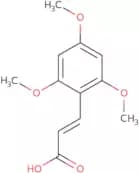
CAS:2,4,6-Trimethoxycinnamic acid is a cinnamoyl compound that can be isolated from the seeds of Garcinia gummi-guta. This compound has been synthesised and optimised for use as an antioxidant in food and cosmetic products. 2,4,6-Trimethoxycinnamic acid has a high product yield under isothermal conditions using β-cyclodextrin as a solvent. It also shows good stability in the presence of light. 2,4,6-Trimethoxycinnamic acid has been shown to be efficient in preventing oxidation reactions by acting as a scavenger of singlet oxygen and peroxyl radicals. The analytical data obtained from this study suggests that 2,4,6-Trimethoxycinnamic acid will not produce any moieties or photostability problems when used in these applications.Fórmula:C12H14O5Pureza:Min. 95%Cor e Forma:PowderPeso molecular:238.24 g/mol4-Methoxybenzhydrol
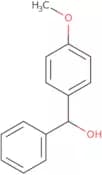
CAS:4-Methoxybenzhydrol is a chemical compound that has an activation energy of 69.3 kJ/mol. It has been shown to be acidic, with a pH of 2.5 in water, and can react with allyl alcohols to form 4-methoxybenzaldehyde. The addition of metal ions enhances the reaction rate. Kinetic studies have been carried out at room temperature, and the reaction mechanism is proposed to be via solvolysis of hypophosphorous acid followed by decarboxylation. Impurities may arise from side reactions such as the formation of peroxides or photocatalytic activity, which may lead to functional groups on the molecule.Fórmula:C14H14O2Pureza:Min. 95%Cor e Forma:PowderPeso molecular:214.26 g/mol3,4-Diethoxybenzoic acid
CAS:<p>3,4-Diethoxybenzoic acid is a phenolic compound that has potent antitumor activity. It inhibits the growth of tumor cells by inhibiting DNA synthesis and protein synthesis in the cell. 3,4-Diethoxybenzoic acid also inhibits the production of enzymes such as pepsin, lipase, and amylase that are important for digestion. It has been shown to be an effective antifungal agent in vitro against Candida albicans and Saccharomyces cerevisiae. 3,4-Diethoxybenzoic acid may also have a role in the prevention of dental caries due to its inhibitory effects on bacterial plaque formation.</p>Fórmula:C11H14O4Pureza:Min. 95%Cor e Forma:Clear LiquidPeso molecular:210.23 g/mol1-(2,5-Dimethoxyphenyl)-2-nitroethane
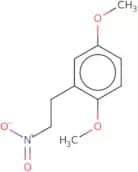
CAS:1-(2,5-Dimethoxyphenyl)-2-nitroethane is a versatile building block that can be used as a reagent in organic synthesis or as an intermediate in the manufacturing of other chemicals. It is soluble in most common solvents and has a greenish yellow color. This chemical is also useful for the manufacture of pharmaceuticals, insecticides, and pesticides.Fórmula:C10H13NO4Pureza:Min. 95%Peso molecular:211.21 g/molSodium 2-(4-Methoxyphenoxy)propionate
CAS:Sodium 2-(4-methoxyphenoxy)propionate is a chemical compound that inhibits the activity of protein kinase A (PKA). This inhibition is due to the binding of Sodium 2-(4-methoxyphenoxy)propionate to the catalytic site of PKA, which blocks access by ATP. Sodium 2-(4-methoxyphenoxy)propionate has been shown to inhibit the production of inflammatory cytokines in vitro. It also has been shown to be a potent inducer of sweet taste receptors in vivo and in vitro. The inhibition of PKA may be useful for treating bowel diseases such as ulcerative colitis.Fórmula:C10H12O4•NaPureza:Min. 95%Cor e Forma:PowderPeso molecular:219.19 g/mol2-(Methoxymethyl)oxirane
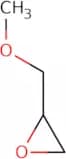
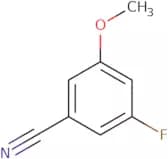
CAS:2-Methoxymethyloxirane (2MMO) is a fatty acid epoxide that reacts with the hydroxyl groups on collagen to form a cross-linked network. This reaction mechanism may be responsible for the thermal expansion of 2MMO and its stability at high temperatures. The phase transition temperature of 2MMO is in the range of 100-120°C, which is lower than that for most other common epoxides, such as ethylene oxide or propylene oxide. In vitro experiments have shown that 2MMO can inhibit autoimmune diseases by inhibiting the proliferation of T lymphocytes, monocytes, and neutrophils. 2MMO also has been shown to have cationic polymerization properties and can act as a solid catalyst. A detergent composition containing 2MMO was found to be more effective than one without it at removing inorganic acids from a surface.Fórmula:C4H8O2Pureza:Min. 95%Cor e Forma:Clear LiquidPeso molecular:88.11 g/mol3-Fluoro-5-methoxybenzonitrile
CAS:<p>3-Fluoro-5-methoxybenzonitrile is a useful chemical intermediate that can be used in organic synthesis. It is a versatile building block with a high quality and it is easy to use in the synthesis of complex compounds. 3-Fluoro-5-methoxybenzonitrile has been shown to react as a nucleophile, and it has been used as a reagent for the production of other compounds. This compound also has potential applications in research, such as being an intermediate for the production of pharmaceuticals and agrochemicals. 3-Fluoro-5-methoxybenzonitrile is not classified as hazardous and does not pose any significant risk to human health or the environment.</p>Fórmula:C8H6FNOPureza:Min. 95%Cor e Forma:PowderPeso molecular:151.14 g/mol6-Fluoro-1,3,4 ,5-tetrahydro-3-[4-[3-methoxy-4-(4-methyl-1H-imidazol-1-yl)phenyl]-1H-1 ,2,3-triazol-1-yl]-1-(2-trifluoroethyl)-2H-1-benzazepin-2-one
CAS:6-Fluoro-1,3,4,5-tetrahydro-3-[4-[3-methoxy-4-(4-methyl-1H-imidazol-1-yl)phenyl]-1H-- 1,2,3-triazol-1yl]-1-(2trifluoroethyl)-2H-1benzazepin-2one (6FTH) is an anticancer drug that belongs to the class of benzothiazole derivatives. It has been shown to have potent antiangiogenic and antiproliferative properties in preclinical studies. 6FTH has been shown to be effective against colon cancer and breast cancer cells in vitro. It also inhibits the growth of squamous cell carcinoma cells by downregulating the expression of proteins involved in tumorigenesis. The compound has been found to be safe when used as an adjuvant to a combination therapy containing cisplatinFórmula:C25H22F4N6O2Pureza:Min. 98 Area-%Cor e Forma:PowderPeso molecular:514.48 g/mol1-(3-((5-Chloro-2-methoxyphenyl)amino)-5-methyl-2,4-thiazolyl)ethan-1-one
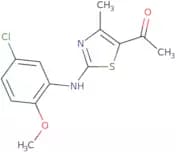
CAS:Please enquire for more information about 1-(3-((5-Chloro-2-methoxyphenyl)amino)-5-methyl-2,4-thiazolyl)ethan-1-one including the price, delivery time and more detailed product information at the technical inquiry form on this pageFórmula:C13H13ClN2O2SPureza:Min. 95%Peso molecular:296.77 g/mol6,7-Bis(2-methoxyethoxy)-3,4-dihydroquinazolin-4-one
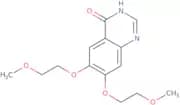
CAS:<p>This compound is a synthetic molecule that has been shown to have growth factor activity and may be useful in cancer research. The molecule is a nucleophile and reacts with epidermal growth factor (EGF) to form the corresponding adduct. This adduct can then react with chloride to form the corresponding chloro-adduct. It also binds to cellular proteins, such as antigen and factor receptors. The piperazine ring of this molecule is responsible for its binding affinity for these receptors. <br>The compound was expressed from a plasmid under normoxic conditions, but was not expressed under hypoxic conditions.</p>Fórmula:C14H18N2O5Pureza:Min. 95%Cor e Forma:White PowderPeso molecular:294.3 g/mol3-(4-ethoxyphenyl)-5-indol-3-yl-1H,4H,5H-1,2-diazin-6-one
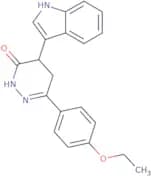
CAS:<p>Please enquire for more information about 3-(4-ethoxyphenyl)-5-indol-3-yl-1H,4H,5H-1,2-diazin-6-one including the price, delivery time and more detailed product information at the technical inquiry form on this page</p>Pureza:Min. 95%4-Bromo-3,5-dimethoxybenzaldehyde
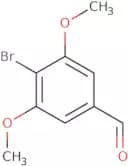
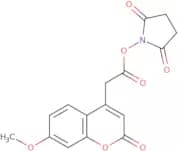
CAS:<p>4-Bromo-3,5-dimethoxybenzaldehyde is a compound that inhibits the replication of cells. It has been shown to induce apoptosis and inhibit tumor growth, including skin tumors and malignant melanoma cells. This chemical is synthesized by reacting an acrylonitrile with sodium hydroxide in a biphenyl amide. 4-Bromo-3,5-dimethoxybenzaldehyde has been used to inhibit bacterial growth, but it is not active against Mycobacterium tuberculosis or Mycobacterium avium complex.</p>Fórmula:C9H9BrO3Pureza:Min. 95%Cor e Forma:PowderPeso molecular:245.07 g/mol7-Methoxycoumarin-4-acetic acid N-succinimidyl ester
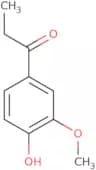
CAS:7-Methoxycoumarin-4-acetic acid N-succinimidyl ester is a fluorescent probe for the detection of metalloproteinases. It has been used in assays to measure matrix metalloproteinase activity and to study the kinetics of these enzymes. This compound can be used as a fluorescence focus for the study of extracellular matrix regulation. 7-Methoxycoumarin-4-acetic acid N-succinimidyl ester inhibits matrix metalloproteinases by binding to their active site and blocking access to substrates, preventing the breakdown of extracellular matrix proteins.Fórmula:C16H13NO7Pureza:Min. 97 Area-%Cor e Forma:Off-White PowderPeso molecular:331.28 g/mol4-Hydroxy-3-methoxypropiophenone
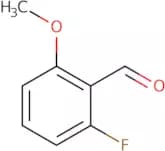
CAS:<p>4-Hydroxy-3-methoxypropiophenone is a contaminating compound that has been found in water vapor and may be generated by the thermal degradation of fatty acids. This chemical is also present in wood and lignin. The ether linkages in this chemical make it resistant to hydrolysis, making it difficult to remove from water or other substances. 4-Hydroxy-3-methoxypropiophenone is produced by the chronic bronchitis and filamentous fungus, but carbon sources are required for its production. It can be used as a starting material for the synthesis of other organic compounds with hydroxyl groups, such as phenols and coumarins.</p>Fórmula:C10H12O3Pureza:Min. 95%Cor e Forma:PowderPeso molecular:180.2 g/mol2-Fluoro-6-methoxybenzaldehyde
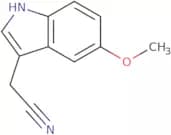
CAS:<p>2-Fluoro-6-methoxybenzaldehyde is a quinone that is used as an intermediate in the synthesis of other organic compounds. It has been shown to be a competitive inhibitor of malonate-induced fibrillation in heart muscle and also slows the reaction time. The pharmacokinetic properties of 2-fluoro-6-methoxybenzaldehyde have been evaluated in dogs, rats, and rabbits. In all three species, 2-fluoro-6-methoxybenzaldehyde showed no significant accumulation in any tissue after intravenous injection and was rapidly excreted unchanged in urine. 2-Fluoro-6-methoxybenzaldehyde may have some potential as an antihypertensive agent due to its ability to reduce blood pressure in rabbits.</p>Fórmula:C8H7FO2Pureza:Min. 95%Cor e Forma:PowderPeso molecular:154.14 g/mol5-Methoxyindole-3-acetonitrile
CAS:5-Methoxyindole-3-acetonitrile is a synthetic compound used as a reference for the synthesis of melatonin. It is produced by the addition of magnesium to 5-methoxyindole, followed by reaction with cyanide and nitrile. The synthesis of this compound was first published in 1938 and has since been used as a reference for many other studies. It has been shown that 5-methoxyindole-3-acetonitrile has high performance liquid chromatography properties, with a linear range from 0.5 to 50 mg/mL and an ultraviolet spectrum that falls within the region between 220 nm and 400 nm. A molecular modeling study was conducted on this compound, which showed that it conforms with 4-hydroxy indole ring systems found in natural products such as tryptophan and serotonin. This product also has fluorescent properties, which are caused by its electron withdrawing group (cyano).Fórmula:C11H10N2OPureza:Min. 95%Cor e Forma:PowderPeso molecular:186.21 g/mol3-(4-Ethoxyphenyl)propionic acid
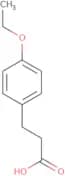
CAS:<p>3-(4-Ethoxyphenyl)propionic acid is a speciality chemical that is used in the production of other complex chemicals. It has been shown to be a useful intermediate in the production of pharmaceuticals, fine chemicals, and agrochemicals. 3-(4-Ethoxyphenyl)propionic acid is also a versatile building block for use in organic synthesis. It has been shown to be a useful building block for the synthesis of natural products, such as antibiotics and natural products with antiviral properties. This compound can also be used as an effective reagent for research purposes. 3-(4-Ethoxyphenyl)propionic acid is a high quality chemical with CAS number 4919-34-0.</p>Fórmula:C11H14O3Pureza:Min. 95%Cor e Forma:PowderPeso molecular:194.23 g/mol



![6-Fluoro-1,3,4 ,5-tetrahydro-3-[4-[3-methoxy-4-(4-methyl-1H-imidazol-1-yl)phenyl]-1H-1 ,2,3-triazo…](/_next/image/?url=https%3A%2Fstatic.cymitquimica.com%2Fproducts%2F3D%2Fthumb-webp%2FFB151723.webp&w=3840&q=75)