Éteres
Os éteres são compostos orgânicos que contêm um grupo funcional éter, caracterizado por um átomo de oxigênio ligado a dois radicais hidrocarbonetos. Esses compostos são valiosos na síntese e servem como solventes em várias reações químicas. Na CymitQuimica, oferecemos uma seleção de éteres de alta qualidade para apoiar suas aplicações de pesquisa e industriais, garantindo resultados confiáveis e eficazes. Nossa gama de éteres atende a diversos requisitos laboratoriais, desde experimentos de rotina até pesquisas avançadas.
Foram encontrados 40902 produtos de "Éteres"
Ordenar por
Pureza (%)
0
100
|
0
|
50
|
90
|
95
|
100
4-Methoxy propranolol
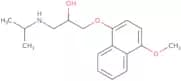
CAS:<p>4-Methoxy propranolol is an intermediate in the synthesis of propranolol, a beta blocker.</p>Fórmula:C17H23NO3Pureza:Min. 95%Peso molecular:289.37 g/mol2-Indol-3-yl-2-oxo-N-((3-(trifluoromethoxy)phenyl)methyl)ethanamide
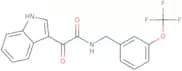
CAS:Please enquire for more information about 2-Indol-3-yl-2-oxo-N-((3-(trifluoromethoxy)phenyl)methyl)ethanamide including the price, delivery time and more detailed product information at the technical inquiry form on this pageFórmula:C18H13F3N2O3Pureza:Min. 95%Cor e Forma:PowderPeso molecular:362.3 g/mol2-Bromo-4-methoxybenzonitrile
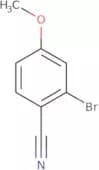
CAS:<p>2-Bromo-4-methoxybenzonitrile is a high quality reagent that is used as a versatile building block in the synthesis of complex organic compounds. It is a useful intermediate and can be used to form 2,4-dimethoxybenzaldehyde. This compound has been used as a reaction component in the production of pharmaceuticals, pesticides, and other fine chemicals. The chemical formula for 2-bromo-4-methoxybenzonitrile is C6H5BrO2.</p>Fórmula:C8H6BrNOPureza:Min. 95%Peso molecular:212.04 g/mol4-(3,4-Dimethoxyphenyl)-1,3-thiazol-2-amine
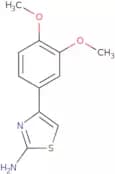
CAS:<p>Please enquire for more information about 4-(3,4-Dimethoxyphenyl)-1,3-thiazol-2-amine including the price, delivery time and more detailed product information at the technical inquiry form on this page</p>Fórmula:C11H12N2O2SPureza:Min. 95%Peso molecular:236.29 g/mol6-Methoxy-2-naphthaldehyde
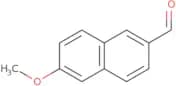
CAS:6-Methoxy-2-naphthaldehyde is a nonsteroidal antiinflammatory drug that belongs to the class of naphthalenes. It inhibits the formation of inflammatory prostaglandins, which are mediators of pain and inflammation. 6-Methoxy-2-naphthaldehyde has been shown to have cytotoxic effects on cancer cells and in vitro studies have shown that it can induce cell lysis. It has also been shown to be a potent fluorescence probe for use in biological applications. This compound binds to human serum proteins by hydrogen bonding interactions, which may affect its pharmacokinetic properties. In addition, this compound has been shown to inhibit the activity of detoxification enzymes such as CYP 2C9 and 2D6 at high concentrations, which may lead to unwanted side effects such as nausea or vomiting. The molecular docking analysis of 6-Methoxy-2-naphthaldehyde with the active site of human liver alcohol dehydrogenFórmula:C12H10O2Pureza:Min. 98 Area-%Cor e Forma:PowderPeso molecular:186.21 g/mol2,4-Dichloro-5-ethoxypyrimidine
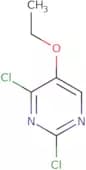
CAS:<p>2,4-Dichloro-5-ethoxypyrimidine is a chemical compound that is used as a reagent and a reaction component in organic synthesis. It is an intermediate for the production of other chemicals. The high purity of this compound makes it suitable for research purposes. It can be used as a versatile building block or as an intermediate to build complex compounds. 2,4-Dichloro-5-ethoxypyrimidine has CAS No. 280582-25-4. This chemical is also known by the name Et2N2Cl5O2P.</p>Fórmula:C6H6Cl2N2OPureza:Min. 95%Cor e Forma:SolidPeso molecular:193.03 g/mol3,4-Dimethoxypropiophenone
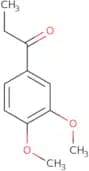
CAS:3,4-Dimethoxypropiophenone is a superacidic electrophile that is oxidized to produce oxidation products. It can be used in the manufacture of dyes and pharmaceuticals. The reaction mechanism for this compound starts with an electrophilic attack by one of the two carbonyl groups on a double bond in the propiophenone molecule. This produces an enol intermediate, which undergoes stepwise oxidation to form a carbonyl group, chloride ion, and acid catalyst. The acid catalyst can be recycled to reduce production costs. 3,4-Dimethoxypropiophenone also has stereoisomers that are chemically identical but have different three-dimensional shapes.Fórmula:C11H14O3Pureza:Min. 95%Cor e Forma:PowderPeso molecular:194.23 g/mol3-(2-Phenylethoxy)benzaldehyde
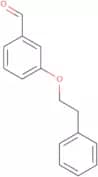
CAS:3-(2-Phenylethoxy)benzaldehyde is a benzaldehyde derivative with an ether group at the 3-position. It is used as a building block for the synthesis of organic compounds and as a reaction component in the preparation of research chemicals, speciality chemicals, and complex compounds. This compound has been shown to have high purity and to be a versatile building block for the synthesis of pharmaceuticals, agrochemicals, and other fine chemicals.Fórmula:C15H14O2Pureza:Min. 95%Cor e Forma:PowderPeso molecular:226.27 g/mol2-Bromo-5-methoxybenzaldehyde
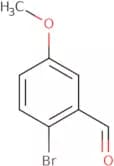
CAS:<p>2-Bromo-5-methoxybenzaldehyde is an organic compound that is used as a synthetic intermediate. It has been shown to be a substrate for the acid transporter SLC26A2, which transports it into cells. This compound has also been found in low levels in human tissues and fluids, where it may play a role in the development of cancer. 2-Bromo-5-methoxybenzaldehyde has been shown to inhibit the growth of cancer cells by uv absorption and terminal alkynes. The anticancer activity of this compound is due to its ability to react with functional groups such as benzyl groups and other alkyl groups.</p>Fórmula:C8H7BrO2Pureza:Min. 95%Cor e Forma:PowderPeso molecular:215.04 g/molEthoxyamine hydrochloride
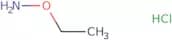
CAS:<p>Ethoxyamine hydrochloride is an organic compound that contains a hydroxyl group and a chlorine atom. It is an amine with properties of an acid. Ethoxyamine hydrochloride can be used in the treatment of metabolic disorders, such as nitro, dehydrogenase deficiency and amino acid transport disorder. The compound also has been shown to have anti-inflammatory effects, which may be due to its ability to inhibit the production of prostaglandin synthesis. This drug has been found to have no significant toxicity in humans and animals, and it has been shown to be safe for use in humans.</p>Fórmula:C2H7NO·HClPureza:Min. 95%Cor e Forma:White PowderPeso molecular:97.54 g/mol1,2,3-Trimethoxybenzene
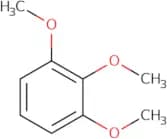
CAS:<p>1,2,3-Trimethoxybenzene is an organic compound with the formula CH(OCH)3. It is a colorless liquid that is soluble in water and polar organic solvents. The compound has been shown to undergo Friedel-Crafts reactions with amides to form diazonium salts, which are then hydrolyzed to give glycol ethers. It can be used as a structural probe for methyltransferase inhibitors such as trimethyl. 1,2,3-Trimethoxybenzene can also undergo demethylation and transfer reactions with nucleophiles such as hydrochloric acid or glycol ethers. The chemical shifts of 1,2,3-trimethoxybenzene in NMR spectra are characteristic for the methoxy groups that are present on the benzene ring.</p>Fórmula:C9H12O3Pureza:Min. 95%Cor e Forma:PowderPeso molecular:168.19 g/mol8-Methoxy-2-methylquinolin-5-amine monohydrochloride
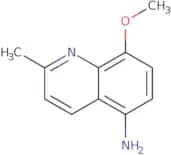
CAS:8-Methoxy-2-methylquinolin-5-amine monohydrochloride is a fine chemical that is used as a versatile building block in the synthesis of complex compounds. 8-Methoxy-2-methylquinolin-5-amine monohydrochloride is an intermediate for the production of research chemicals and pharmaceuticals. It can be used to synthesize speciality chemicals, useful scaffolds, and reagents. It also has a wide range of applications as a reaction component in synthetic organic chemistry. 8-Methoxy-2-methylquinolin-5-amine monohydrochloride has high purity and quality.Fórmula:C11H12N2O•HClPureza:Min. 95 Area-%Cor e Forma:PowderPeso molecular:224.73 g/molN-(2-(3,4-dimethoxyphenyl)ethyl)(4-chlorophenyl)formamide
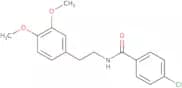
CAS:Produto Controlado<p>Please enquire for more information about N-(2-(3,4-dimethoxyphenyl)ethyl)(4-chlorophenyl)formamide including the price, delivery time and more detailed product information at the technical inquiry form on this page</p>Pureza:Min. 95%2-amino-4-(3,4-dimethoxyphenyl)-5-oxo-4,6,7,8-tetrahydro2H-chromene-3-carbonitrile
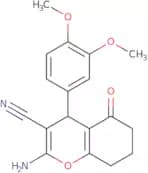
CAS:<p>Please enquire for more information about 2-amino-4-(3,4-dimethoxyphenyl)-5-oxo-4,6,7,8-tetrahydro2H-chromene-3-carbonitrile including the price, delivery time and more detailed product information at the technical inquiry form on this page</p>Fórmula:C18H18N2O4Pureza:Min. 95%Cor e Forma:PowderPeso molecular:326.35 g/mol1-[(5-Methoxy-1-methyl-1H-indol-3-yl)methyl]piperidine-4-carboxylic acid
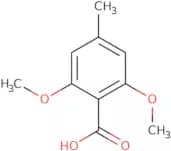
CAS:Produto ControladoPlease enquire for more information about 1-[(5-Methoxy-1-methyl-1H-indol-3-yl)methyl]piperidine-4-carboxylic acid including the price, delivery time and more detailed product information at the technical inquiry form on this pageFórmula:C17H22N2O3Pureza:Min. 95%Peso molecular:302.37 g/mol2,6-Dimethoxy-4-methylbenzoic acid
CAS:2,6-Dimethoxy-4-methylbenzoic acid is a carboxylic acid that is used as an intermediate in the production of lithium.Fórmula:C10H12O4Pureza:Min. 95%Cor e Forma:PowderPeso molecular:196.2 g/molN-[2-(2,3-Dimethoxyphenyl)ethyl]-2-chlorobenzamide
CAS:Produto ControladoN-[2-(2,3-Dimethoxyphenyl)ethyl]-2-chlorobenzamide is a versatile building block that can be used as a reaction component and reagent. It is an intermediate in the synthesis of pharmaceuticals and fine chemicals and has been shown to be useful in the synthesis of complex compounds. This compound reacts with nucleophiles, such as amines and alcohols, by replacing the chloride group with a variety of functional groups. The product is then hydrolyzed to release the original reactant. N-[2-(2,3-Dimethoxyphenyl)ethyl]-2-chlorobenzamide has a CAS number of 320576-19-0 and can be found at ChemDiv.com.Fórmula:C17H18ClNO3Pureza:Min. 95%Peso molecular:319.78 g/mol4,4'-Dimethoxybenzhydrol
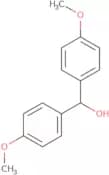
CAS:<p>4,4'-Dimethoxybenzhydrol is a reaction system that has been used to control experiments in which the nucleophile is an iron catalyst. The reaction system was also used to determine the reactivity of various functional groups. The linear plot of the rate of reaction versus concentration of cyclopentenes, hydroxyl group, and dehydrated functionalities indicated that these factors had little effect on the rate of reaction. However, it was found that lactams and trifluorides were able to increase the rate of reaction. Anilines were also found to be effective as they reacted with hydrogen peroxide to form phenoxides.</p>Fórmula:C15H16O3Pureza:Min. 95%Cor e Forma:White PowderPeso molecular:244.29 g/mol3-(tert-butyl)-4-((2-hydroxy-3-methoxyphenyl)methylene)-1-phenyl-2-pyrazolin-5-one
CAS:<p>Please enquire for more information about 3-(tert-butyl)-4-((2-hydroxy-3-methoxyphenyl)methylene)-1-phenyl-2-pyrazolin-5-one including the price, delivery time and more detailed product information at the technical inquiry form on this page</p>Pureza:Min. 95%2-Methoxypropyl acetate
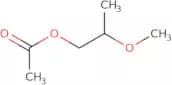
CAS:2-Methoxypropyl acetate is a cross-linking agent that is used in water treatment. It is used as an additive to deionized water and can be found in high concentrations in wastewater. 2-Methoxypropyl acetate reacts with xylene to produce light emission, which makes it suitable for use as a chemical marker. The optimum dose of 2-methoxypropyl acetate ranges from 0.025% to 0.2%. 2-Methoxypropyl acetate has been shown to be toxic when injected into rats at doses of 100 mg/kg body weight, but not at doses of 25 mg/kg body weight or less. This compound was also shown to cause protrusion and necrosis of the nasal septum in rats after administration at doses of 500 mg/kg body weight.Fórmula:C6H12O3Pureza:Min. 95%Cor e Forma:Colourless LiquidPeso molecular:132.16 g/mol

![1-[(5-Methoxy-1-methyl-1H-indol-3-yl)methyl]piperidine-4-carboxylic acid](/_next/image/?url=https%3A%2Fstatic.cymitquimica.com%2Fproducts%2F3D%2Fthumb-webp%2FFM128176.webp&w=3840&q=75)
![N-[2-(2,3-Dimethoxyphenyl)ethyl]-2-chlorobenzamide](/_next/image/?url=https%3A%2Fstatic.cymitquimica.com%2Fproducts%2F3D%2Fthumb-webp%2FFD66108.webp&w=3840&q=75)